
Revision Notes
Cambridge A Level World History (9489): A time of challenges: the USA, 1961-74 – Revision Notes
Revision notes for Cambridge 9489 Paper 4, the USA 1961-74: key terms, a timeline, presidents, Vietnam and civil rights condensed, exam traps and a self-test.
- Subject
- World History
- Level
- A LEVEL
- Topic
- Topic 6: American option: The USA, 1945-93
- Author
- Marlbridge Academic Team
- Updated
- Reviewed by
- Azam Siddique (what this means)
Aligned to Cambridge A Level World History (9489), 2027-2029. Official specification .
Syllabus page (what it covers and how it is assessed): Cambridge A Level World History.
Syllabus points this page covers
9489 (A Level)
- 5 A time of challenges: the USA, 1961–74
Found an error? Report a correction.
Need help with this topic? Request a free trial class for A Level World History (9489).
These notes condense A time of challenges: the USA, 1961-74, the second topic of the Paper 4 American option in Cambridge 9489. For explanation see the 1961-74 study guide; for essays and short questions see the 1961-74 practice questions.
Syllabus coverage
- 5.1 How significant were the presidencies of Kennedy, Johnson and Nixon for the USA?
- 5.2 How well did US governments deal with Cuba and Vietnam?
- 5.3 How much progress was made in achieving civil rights for African Americans?
- 5.4 Why were there challenges to authority?
Key terms
| Term | Meaning |
|---|---|
| New Frontier | Kennedy’s domestic and foreign programme, announced 1960 |
| Great Society | Johnson’s programme of social reform, 1964-68 |
| War on Poverty | Johnson’s anti-poverty measures under the Economic Opportunity Act (1964) |
| ExComm | Kennedy’s advisory committee in the Cuban Missile Crisis |
| Quarantine | The naval blockade of Cuba, October 1962 |
| Domino theory | Belief that Vietnam’s fall would lead to others falling to communism |
| Rolling Thunder | US bombing campaign against North Vietnam, 1965-68 |
| Vietnamisation | Nixon’s transfer of fighting to South Vietnamese forces |
| Silent majority | Nixon’s term (1969) for Americans who did not protest |
| New Federalism | Nixon’s revenue sharing with the states |
| Black Power | Movement for Black self-reliance and pride, popularised by Carmichael in 1966 |
| Identity politics | Campaigns based on group identity: gay rights, Native American rights, feminism |
| NOW | National Organization for Women, founded 1966 |
| AIM | American Indian Movement, founded 1968 |
Timeline to learn
| Date | Event |
|---|---|
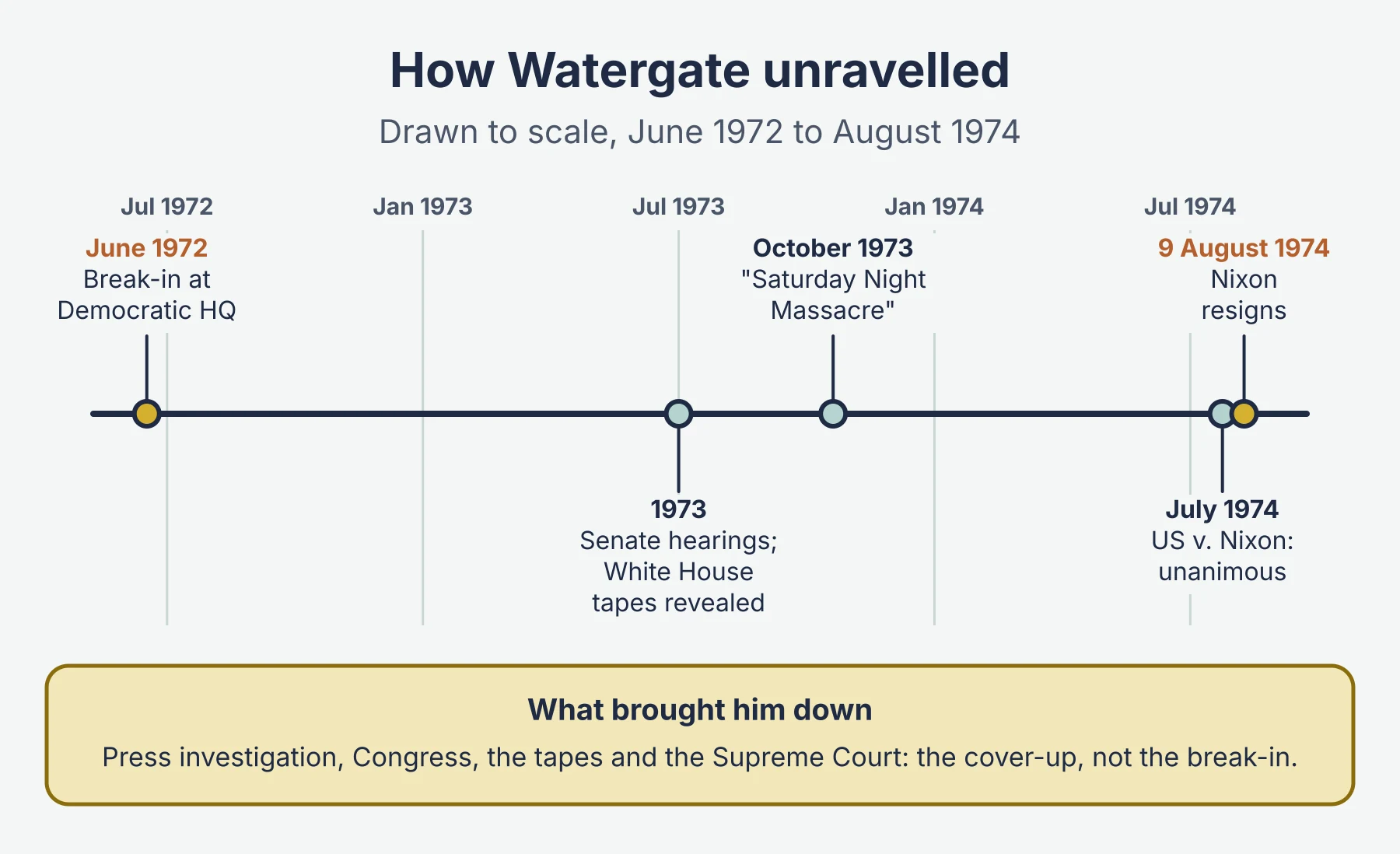
| Nov 1960 | Kennedy defeats Nixon |
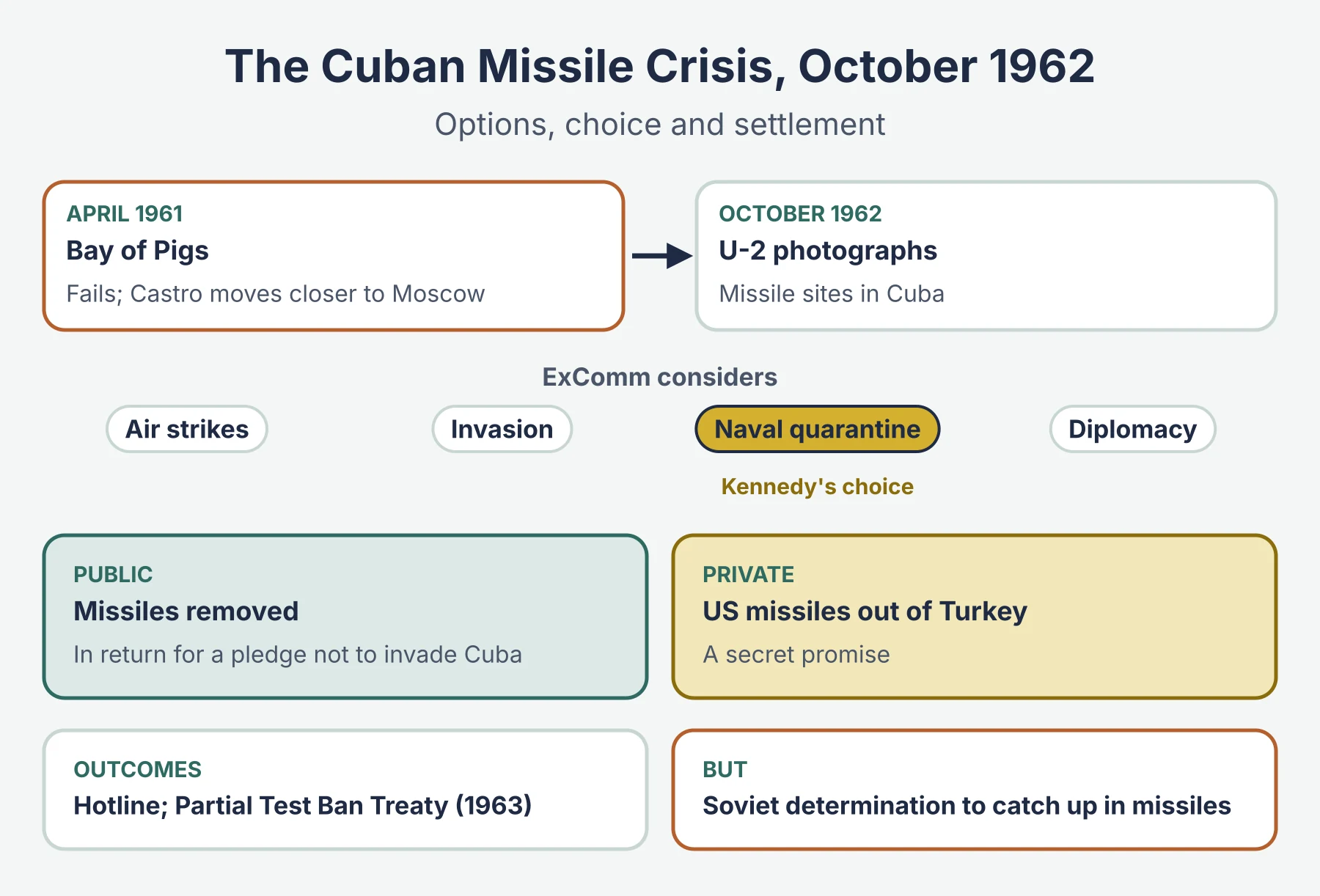
| April 1961 | Bay of Pigs |
| May 1961 | Freedom Rides |
| Oct 1962 | Cuban Missile Crisis; Ole Miss crisis (Sept-Oct) |
| 1963 | Birmingham (April-May); Equal Pay Act; March on Washington (Aug); Diem killed (Nov); Kennedy assassinated (22 Nov) |
| 1964 | Civil Rights Act (July); Freedom Summer; Gulf of Tonkin (Aug); Economic Opportunity Act; Johnson landslide |
| 1965 | Malcolm X killed (Feb); Selma (March); Rolling Thunder and combat troops; Medicare, Medicaid, ESEA; Voting Rights Act (Aug); Watts riots |
| 1966 | NOW founded; “Black Power”; Black Panthers founded |
| 1967 | Loving v. Virginia |
| 1968 | Tet (Jan); My Lai (March, revealed 1969); King assassinated (April); Fair Housing Act; Chicago convention (Aug); Nixon elected |
| 1969 | Stonewall riots |
| 1970 | Cambodia invasion; Kent State (May); EPA created |
| Aug 1971 | New Economic Policy |
| 1972 | Watergate break-in (June); Equal Employment Opportunity Act; Nixon re-elected |
| Jan 1973 | Paris Peace Accords; Roe v. Wade; Wounded Knee occupation (Feb-May) |
| Aug 1974 | Nixon resigns |
| April 1975 | Fall of Saigon |
5.1 Presidents compared
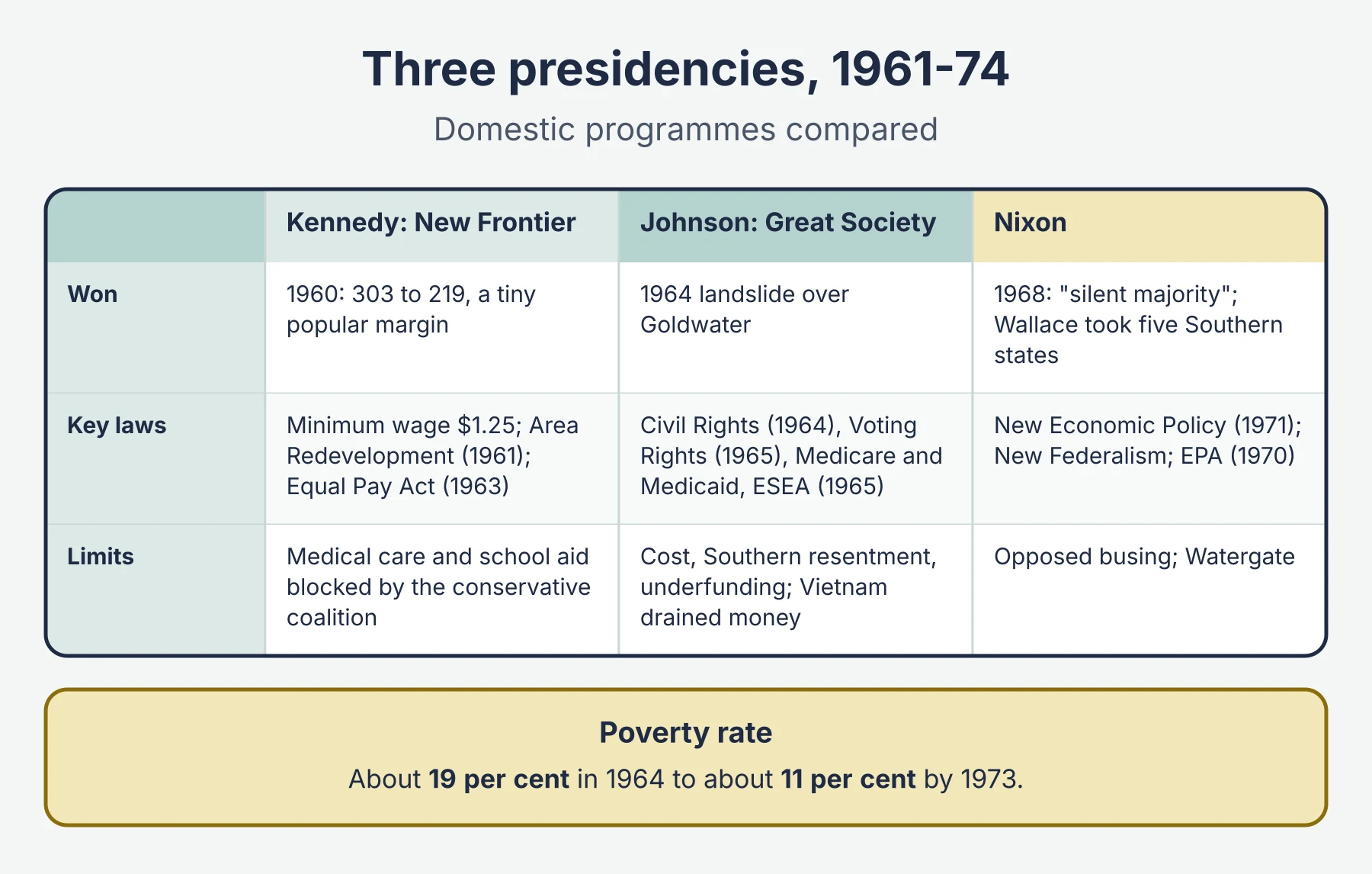
| Kennedy | Johnson | Nixon | |
|---|---|---|---|
| Key laws | Minimum wage $1.25; Area Redevelopment; Equal Pay Act | Civil Rights Act; Voting Rights Act; Medicare and Medicaid; ESEA; Economic Opportunity Act | EPA; Clean Air Act; revenue sharing; NEP |
| Blocked or failed | Medical care; education aid | Underfunded by Vietnam; urban riots | Family Assistance Plan; trust destroyed by Watergate |
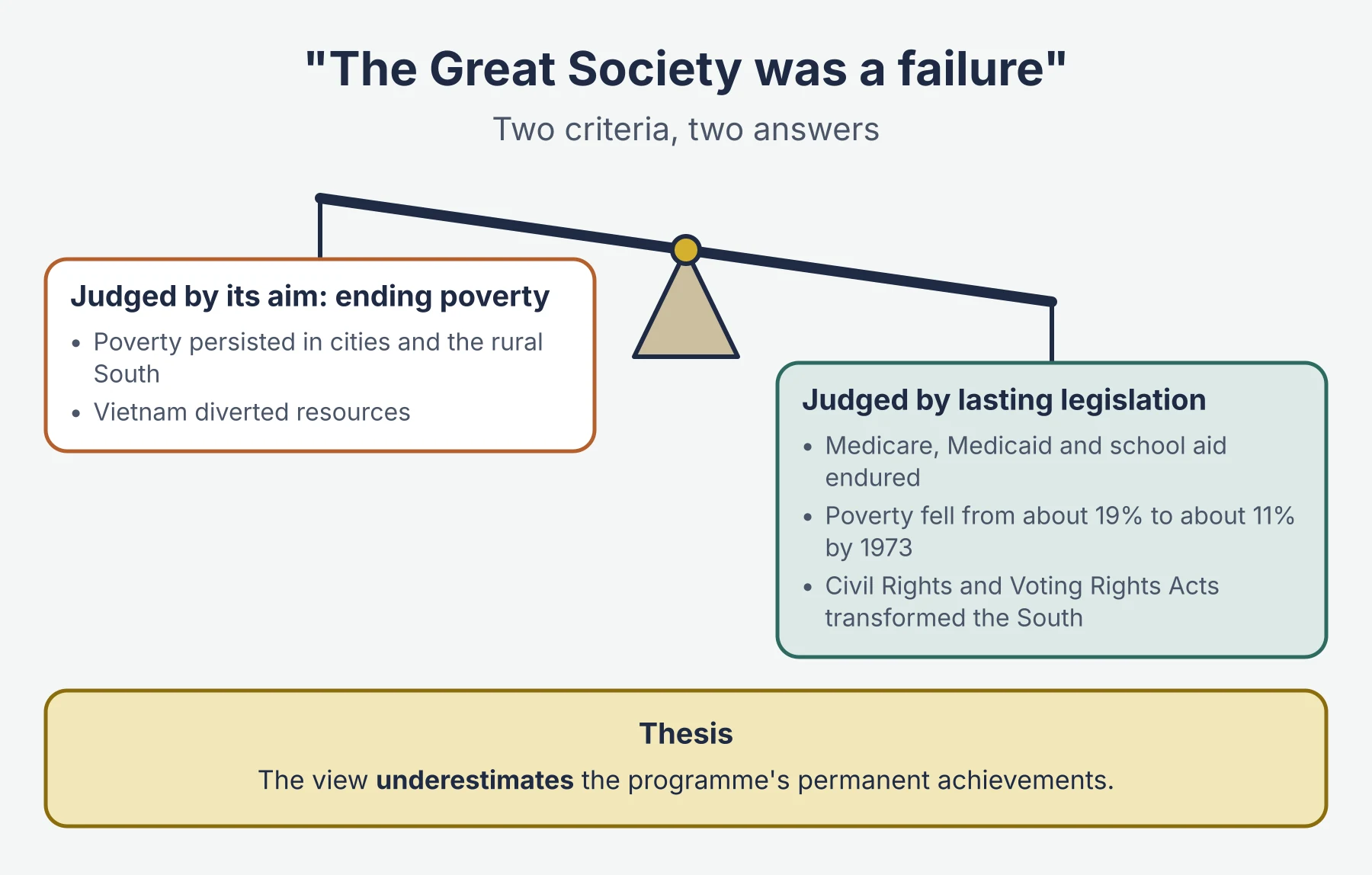
| Significance | Rhetoric and agenda-setting | Largest social reform since the New Deal | Pragmatic conservatism; presidential power checked |
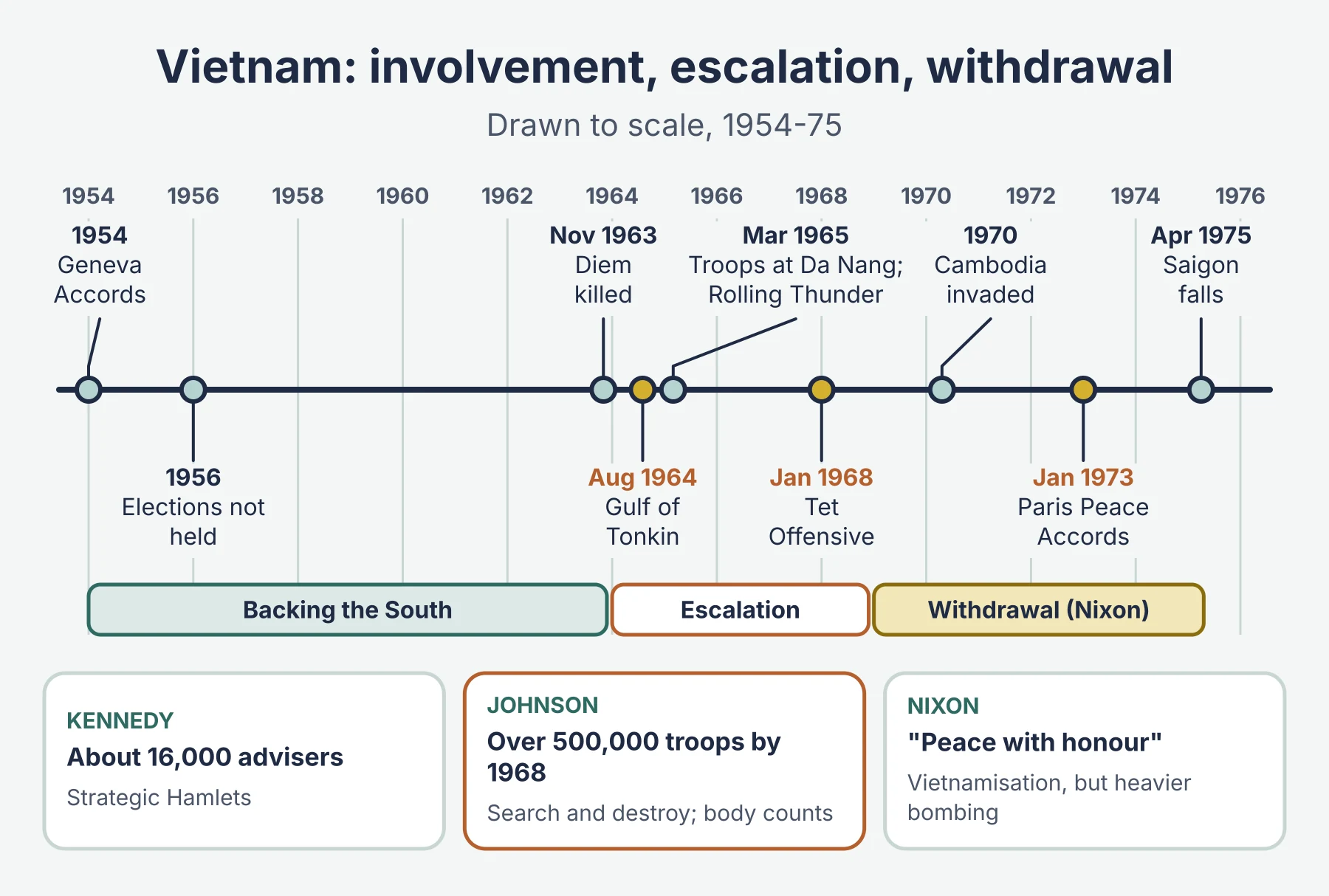
5.2 Vietnam – the four stages
- Commitment (1954-63): Geneva, Diem, domino theory, advisers rising to about 16,000.
- Escalation (1964-65): Tonkin Resolution, Rolling Thunder, combat troops.
- Stalemate (1965-68): search and destroy, body counts, Ho Chi Minh trail, peak of over 500,000 troops.
- Exit (1968-75): Tet, Vietnamisation, Cambodia, bombing, Paris Accords, fall of Saigon.
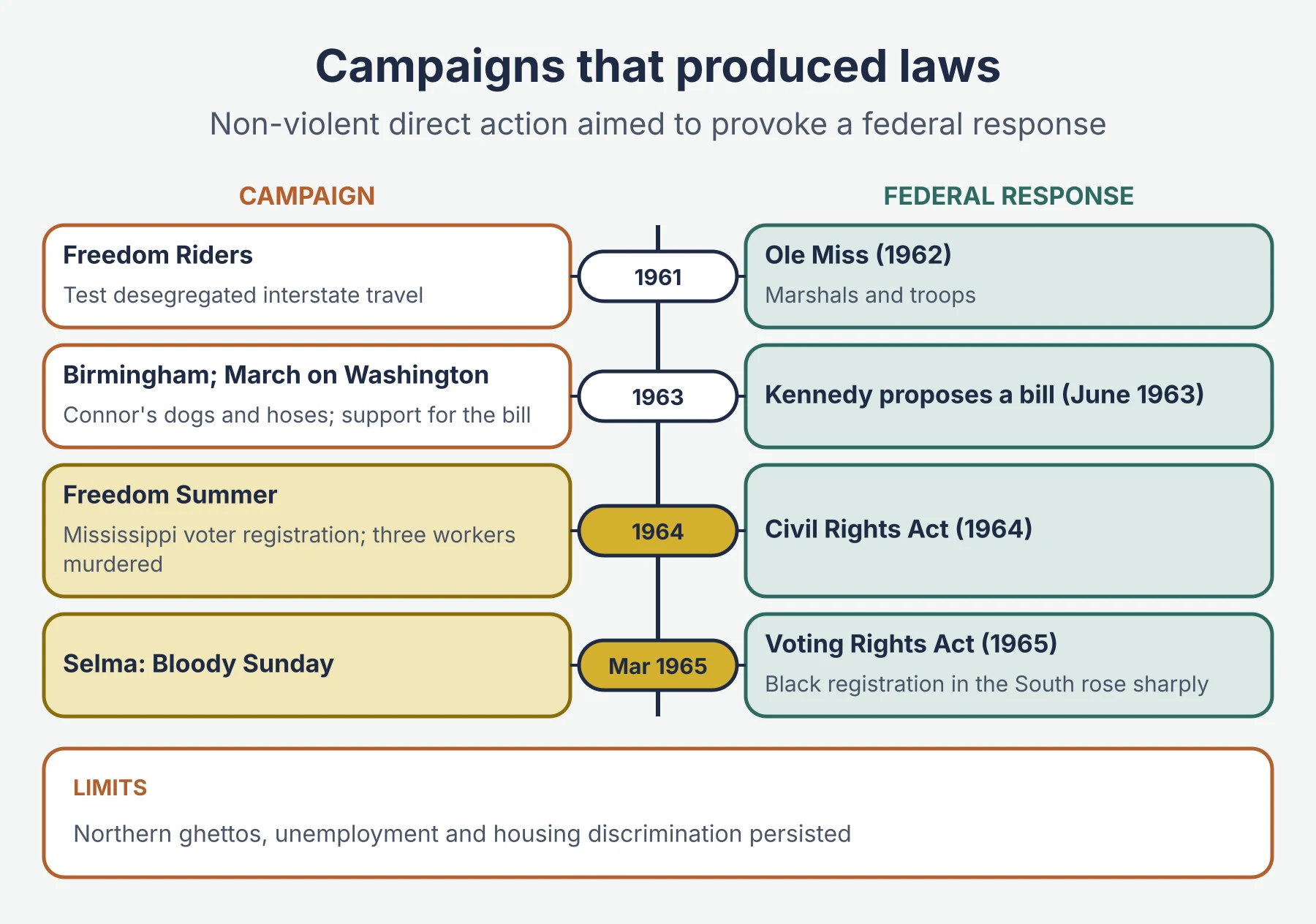
5.3 Civil rights – the balance sheet
- Campaigns: Freedom Rides, Birmingham, March on Washington, Freedom Summer, Selma.
- Opposition: literacy tests and registrars; Connor and Wallace; filibusters; Klan violence.
- Federal action: marshals and troops; 1964, 1965, 1968, 1972 laws; Loving (1967).
- Verdict: legal equality largely won by 1968; economic and northern inequality persisted.
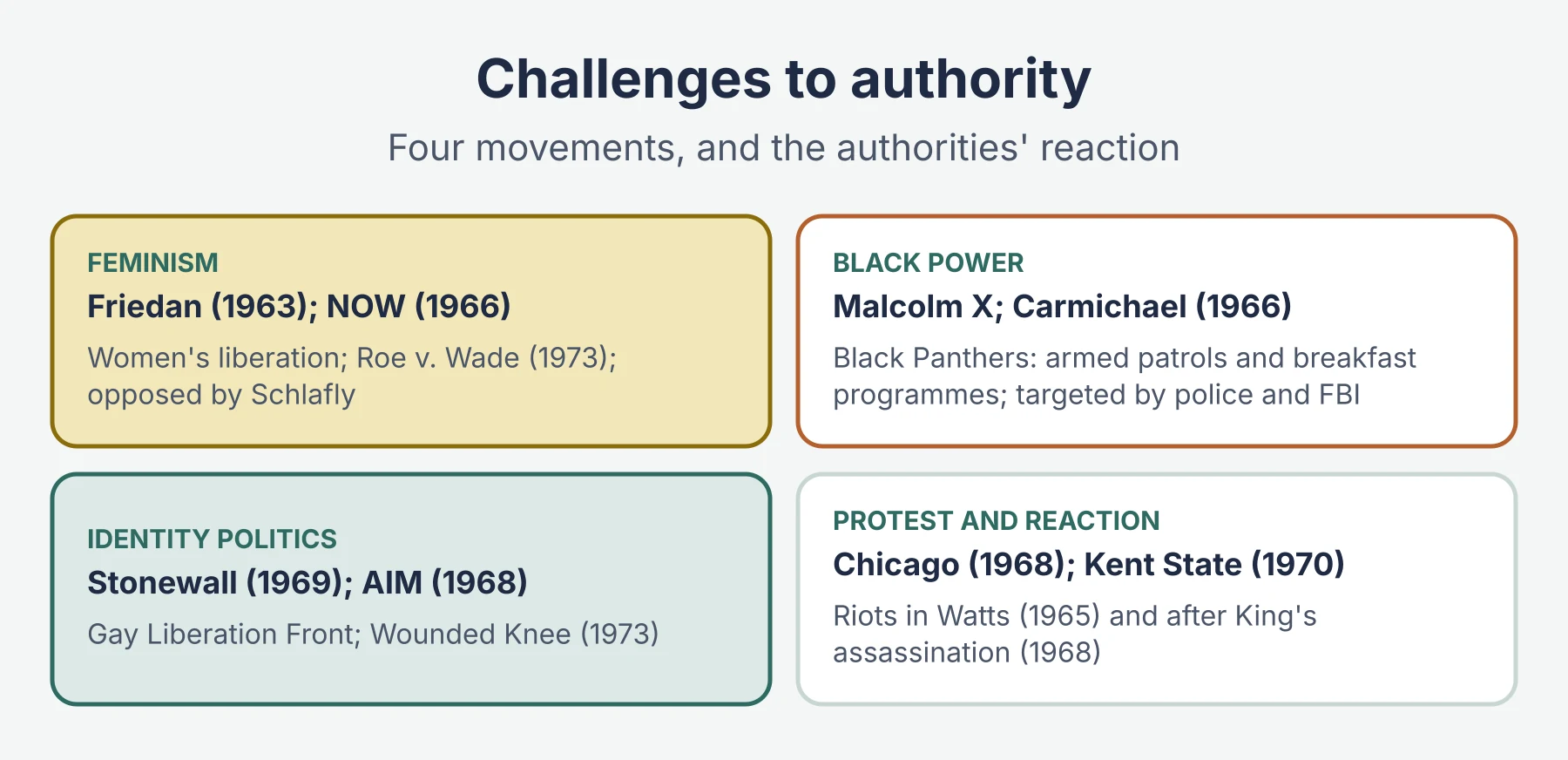
5.4 Challenges – why?
- Long-term: affluence and education produced a confident youth generation; discrimination remained.
- Triggers: Vietnam and the draft; assassinations; the slow pace of change.
- Groups: feminists, Black Power, gay rights, Native Americans, anti-war students.
- Authorities’ reaction: police in Chicago (1968), the National Guard at Kent State (1970), FBI surveillance.
Exam traps
- Tet was a communist military setback but a US political defeat.
- Kennedy and civil rights: cautious before June 1963.
- Nixon: expanded environmental and some welfare policy – not simply a conservative.
- Voting Rights Act is 1965, not 1964.
- “How well” questions on Cuba: weigh the Bay of Pigs against the missile crisis outcome.
Self-test
- What were Kennedy’s margins in 1960? 303 electoral votes to 219, with a very narrow popular vote margin.
- What did the 1963 Equal Pay Act require? Equal pay for men and women doing equal work.
- What did the Economic Opportunity Act (1964) create? War on Poverty programmes such as the Job Corps and VISTA.
- What did Kennedy secretly agree in October 1962? To remove US missiles from Turkey.
- Where was Vietnam divided in 1954? At the 17th parallel.
- What did the Gulf of Tonkin Resolution allow? The President to take all necessary measures to repel attacks, without a declaration of war.
- What was Vietnamisation? Handing the fighting to South Vietnamese forces while withdrawing US troops.
- What happened at Selma on 7 March 1965? State troopers attacked marchers on the Edmund Pettus Bridge (Bloody Sunday).
- Which 1967 case struck down bans on interracial marriage? Loving v. Virginia.
- Who founded the Black Panthers? Bobby Seale and Huey Newton.
- What happened at Kent State in May 1970? National Guardsmen shot dead four students during an anti-war protest.
- Which ruling forced Nixon to release the tapes? United States v. Nixon (1974).
Official syllabus
Cambridge International AS & A Level History (9489) syllabus for 2027, 2028 and 2029 – cambridgeinternational.org (Paper 4, American option, topic 5).
Related resources
-
Study guides
Cambridge A Level World History (9489): Truman, Eisenhower and post-war USA, 1945-61
Study guide to Cambridge 9489 Paper 4 topic 4, the USA 1945-61: Truman's Fair Deal and McCarthyism, Eisenhower's presidency, 1950s society and containment.
World History · Cambridge · A Level
Read guide -
Practice questions
Cambridge A Level World History (9489): Truman, Eisenhower and post-war USA, 1945-61 – Practice Questions
Twelve original practice questions on Cambridge 9489 USA 1945-61, Truman and Eisenhower: short recall items and Paper 4-style essays with mark-scheme answers.
World History · Cambridge · A Level
Try questions -
Revision notes
Cambridge A Level World History (9489): Truman, Eisenhower and post-war USA, 1945-61 – Revision Notes
Revision notes for Cambridge 9489 Paper 4, the USA 1945-61: key terms, a timeline, Truman and Eisenhower compared, 1950s society, exam traps and a self-test.
World History · Cambridge · A Level
Revise topic
Get free revision emails (optional)
Occasional emails with practice questions, worked explanations and links to free resources for the qualification and subjects you choose. No spam, and you can unsubscribe from any email. The free tools on this site never need an email.