
Study Guides
Cambridge O Level Second Language Urdu (3248): Exercise 3 Note-making
How to make brief Urdu notes under supplied headings in 3248 Paper 1 Exercise 3: mapping the text to headings, writing good notes and preparing for the summary.
- Subject
- Urdu Language
- Level
- O LEVELS
- Topic
- Paper 1 – Reading and Writing
- Author
- Marlbridge Academic Team
- Updated
- Reviewed by
- Farheen Zehra (what this means)
Aligned to Cambridge O Level Urdu Language (3248), 2027-2029. Official specification .
Syllabus page (what it covers and how it is assessed): Cambridge O Level Urdu Language.
Found an error? Report a correction.
Need help with this topic? Request a free trial class for O Level Urdu Language (3247 / 3248).
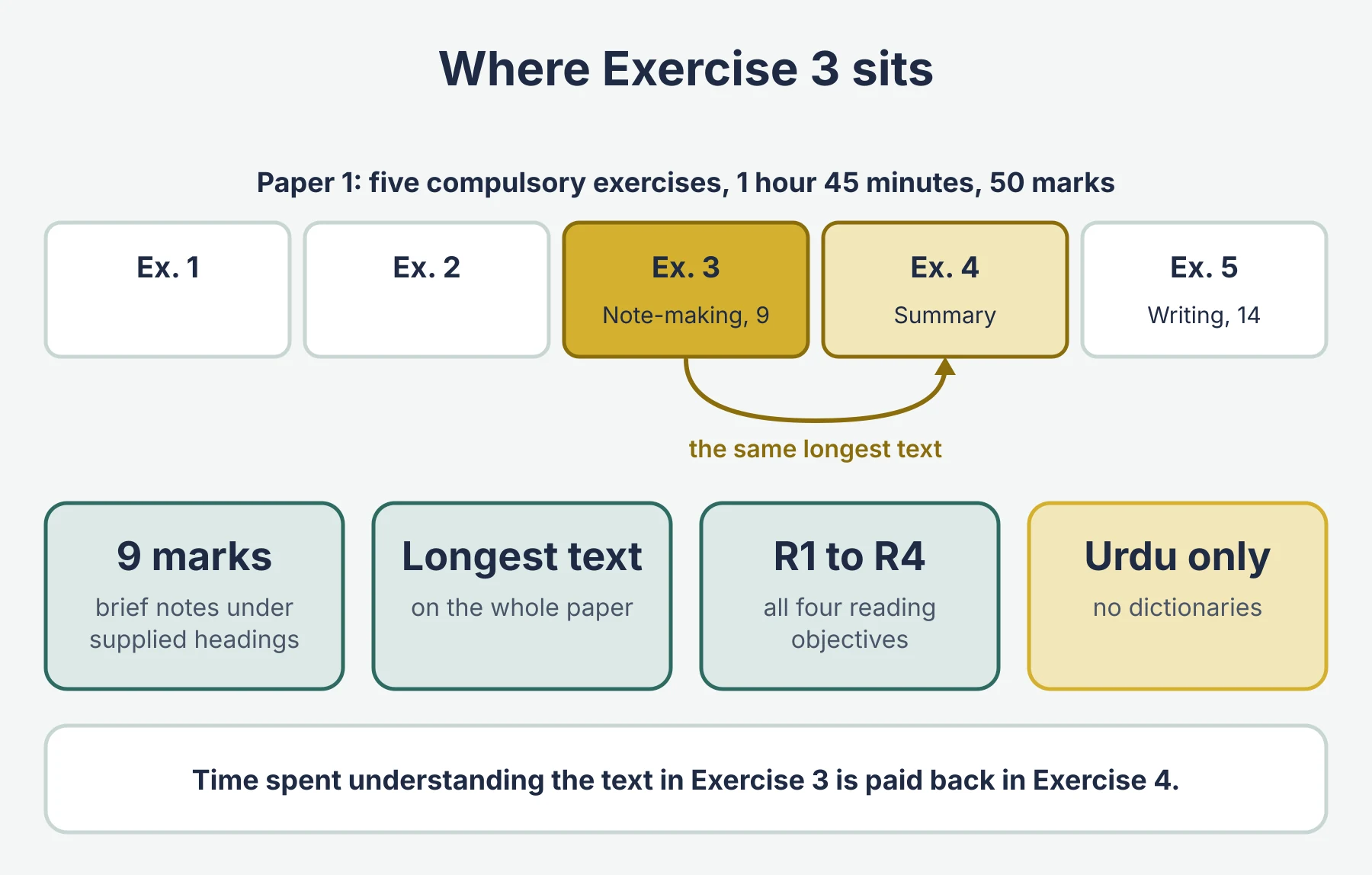
This guide covers Exercise 3 of Cambridge O Level Second Language Urdu 3248 Paper 1 Reading and Writing. The syllabus describes it as Note-making: “candidates read a longer text printed in the question paper and make brief notes under a number of supplied headings”. It is worth 9 marks and tests reading objectives R1 to R4. For the whole paper and its five exercises, see the O Level Urdu Paper 1 study guide.
Where Exercise 3 sits
Exercise 3 is the third of five exercises, all compulsory, in a paper of 1 hour 45 minutes. It uses the longest text on the paper, and that same text is the source for Exercise 4, the summary. Time spent understanding the text well in Exercise 3 is therefore paid back in Exercise 4. All questions and answers are in Urdu, and dictionaries may not be used.
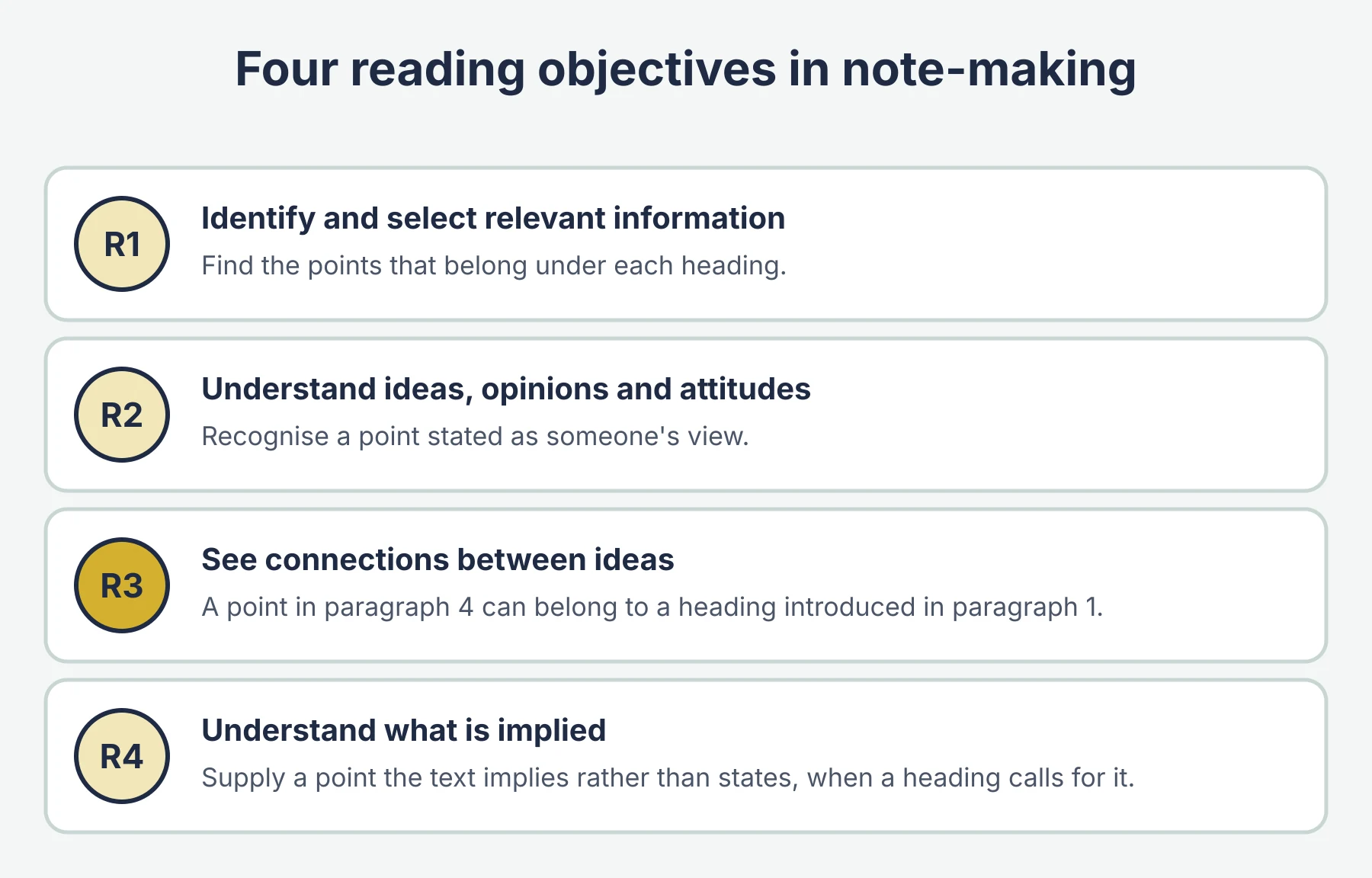
The four reading objectives all apply:
| Objective | In note-making |
|---|---|
| R1 identify and select relevant information | find the points that belong under each heading |
| R2 understand ideas, opinions and attitudes | recognise a point stated as someone’s view |
| R3 show understanding of the connections between ideas, opinions and attitudes | see that a point in paragraph 4 belongs to a heading introduced in paragraph 1 |
| R4 understand what is implied but not directly stated | supply a point the text implies rather than states, when a heading calls for it |
The subject content says the same skills in other words: “identify the important points or themes within an extended piece of writing” and “draw conclusions from an extended text and recognise connections between related ideas within a text”.
What counts as a note
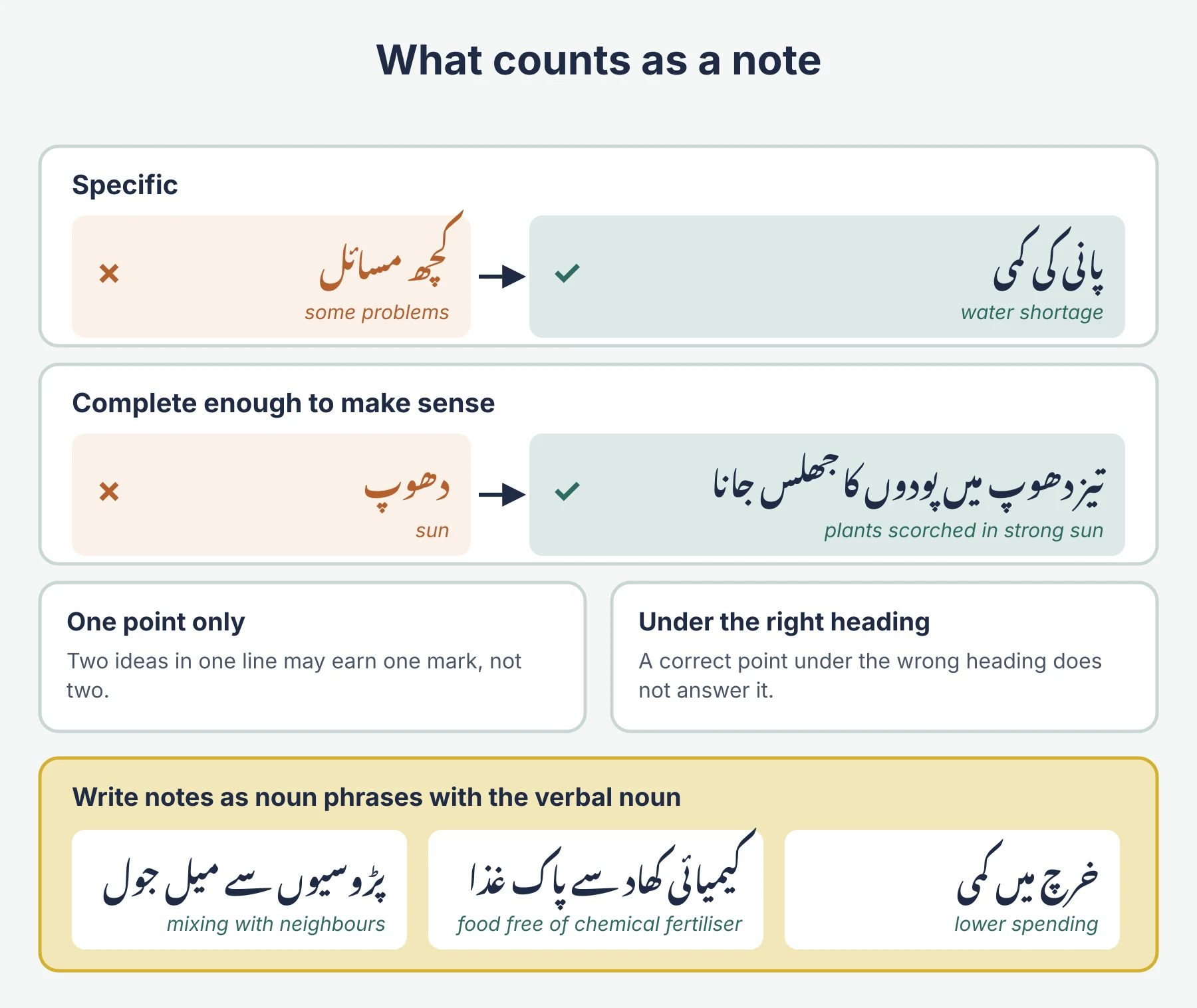
A note is brief: the syllabus says so. Full sentences are not required. A good note is:
- One point only. Two ideas in one line may earn one mark, not two.
- Specific. پانی کی کمی is a point; کچھ مسائل is not.
- Complete enough to make sense. دھوپ alone is too thin; تیز دھوپ میں پودوں کا جھلس جانا carries the point.
- Under the right heading. A correct point under the wrong heading does not answer that heading.
In Urdu, notes are most naturally written as noun phrases built with the verbal noun: خرچ میں کمی، کیمیائی کھاد سے پاک غذا، پڑوسیوں سے میل جول. They are short, precise and easy to turn into sentences later for the summary.
Mapping the text to the headings
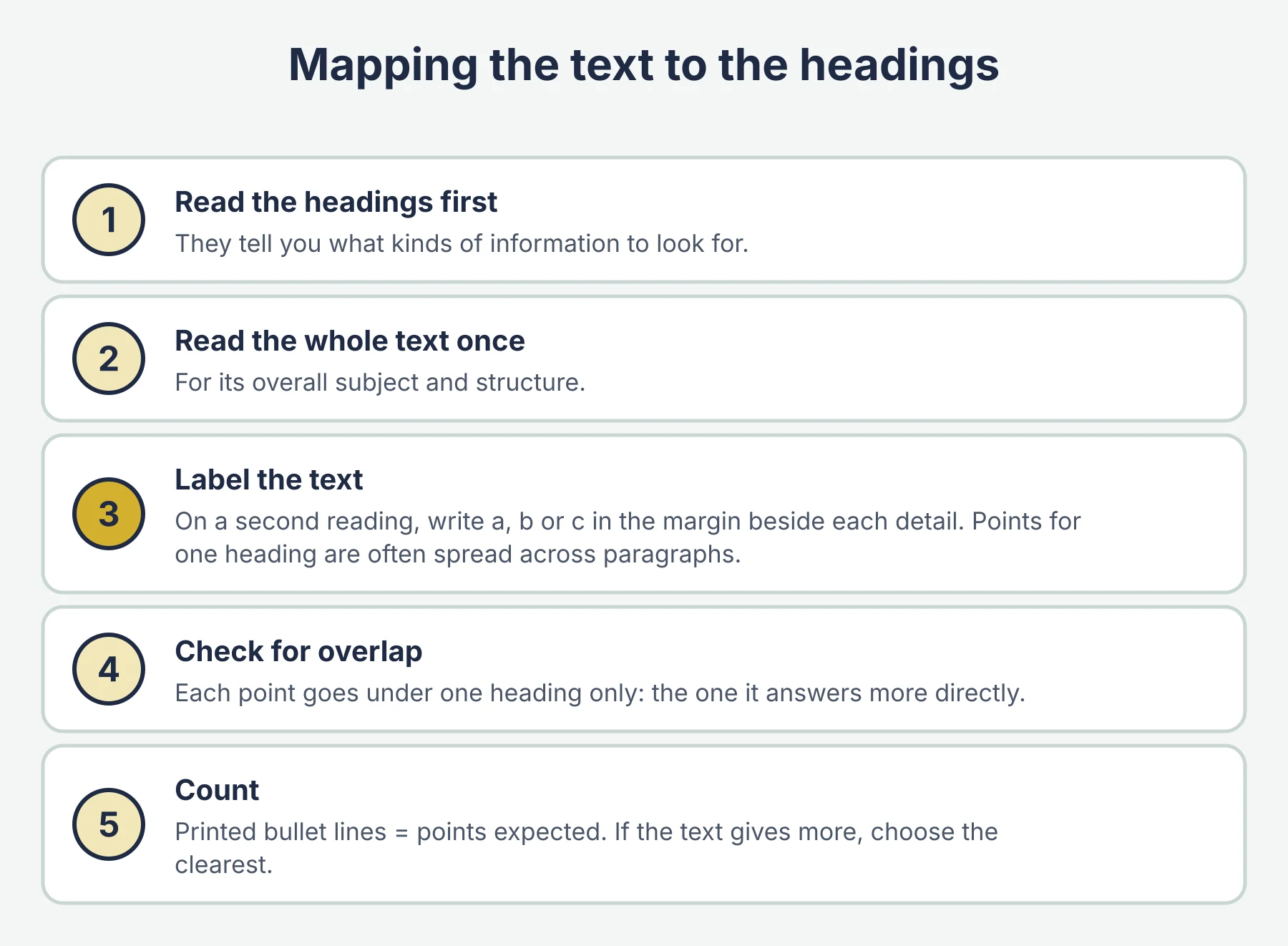
- Read the headings first. They tell you what kinds of information to look for.
- Read the whole text once for its overall subject and structure.
- Label the text. On a second reading, write a letter in the margin (a, b, c) beside each detail that belongs to a heading. Points for one heading are often spread across several paragraphs.
- Check for overlap. Each point should go under one heading only. If it seems to fit two, decide which heading it answers more directly.
- Count. If bullet lines are printed under a heading, treat their number as the number of points expected. Where the text gives more points than lines, choose the clearest ones.
Worked example
The article below is original, written for this guide.
چھتوں پر سبزیاں: شہری باغبانی کا بڑھتا ہوا شوق
شہر کی ایک رہائشی عمارت کی چھت پر آج کل ٹماٹر، مرچیں اور پودینہ اُگ رہے ہیں۔ یہ باغ عمارت کے مکینوں نے مل کر بنایا ہے۔ ان کا کہنا ہے کہ گھر میں سبزیاں اُگانے سے بازار کا خرچ کم ہوا ہے اور کیمیائی کھادوں سے پاک غذا بھی ملتی ہے۔ ایک خاتون نے بتایا کہ شام کو پودوں کو پانی دیتے ہوئے پڑوسیوں سے ملاقات ہو جاتی ہے، جس سے محلے داری بڑھی ہے۔ ماہرین کے مطابق چھت پر پودے گرمیوں میں عمارت کو کچھ ٹھنڈا بھی رکھتے ہیں۔
لیکن یہ کام آسان نہیں۔ شروع میں کئی پودے تیز دھوپ میں جھلس گئے۔ پانی کی کمی بھی ایک مسئلہ تھی، اور بعض مکینوں کو ڈر تھا کہ گیلی مٹی سے چھت کو نقصان پہنچے گا۔ کچھ لوگ شروع میں جوش سے شامل ہوئے مگر جلد ہی دلچسپی کھو بیٹھے۔
زرعی ماہرین شروع کرنے والوں کو مشورہ دیتے ہیں کہ پہلے سال صرف دو تین آسان پودے لگائیں، جیسے پودینہ اور ہری مرچ۔ گملوں کے نیچے پلاسٹک کی ٹرے رکھیں تاکہ پانی چھت پر نہ پھیلے، اور دوپہر کی دھوپ سے بچانے کے لیے ہلکا سا سایہ دار جال لگائیں۔ ان کے بقول باورچی خانے کے بچے ہوئے چھلکوں سے گھر پر کھاد بنانا بھی سستا اور مفید طریقہ ہے۔
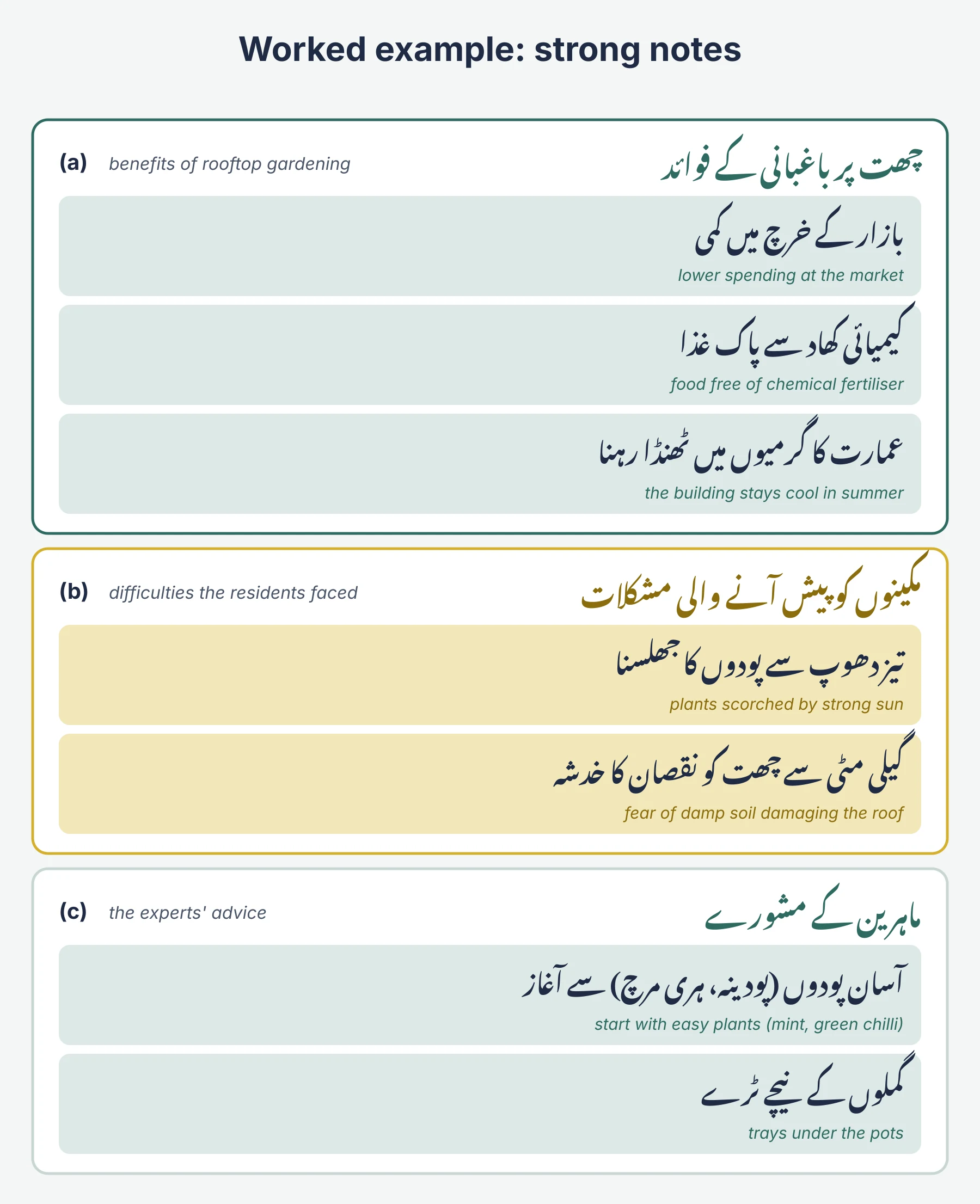
Headings: (a) چھت پر باغبانی کے فوائد (b) مکینوں کو پیش آنے والی مشکلات (c) ماہرین کے مشورے
Strong notes, with commentary:
| Heading | Note | Why it works |
|---|---|---|
| (a) | بازار کے خرچ میں کمی | one specific benefit, briefly |
| (a) | کیمیائی کھاد سے پاک غذا | a second, separate benefit |
| (a) | عمارت کا گرمیوں میں ٹھنڈا رہنا | a point from the end of the paragraph, easily missed |
| (b) | تیز دھوپ سے پودوں کا جھلسنا | the cause and the effect in one phrase |
| (b) | گیلی مٹی سے چھت کو نقصان کا خدشہ | a fear, not an event: still a difficulty |
| (c) | آسان پودوں (پودینہ، ہری مرچ) سے آغاز | the example in brackets supports the point |
| (c) | گملوں کے نیچے ٹرے | short, but still a clear piece of advice |
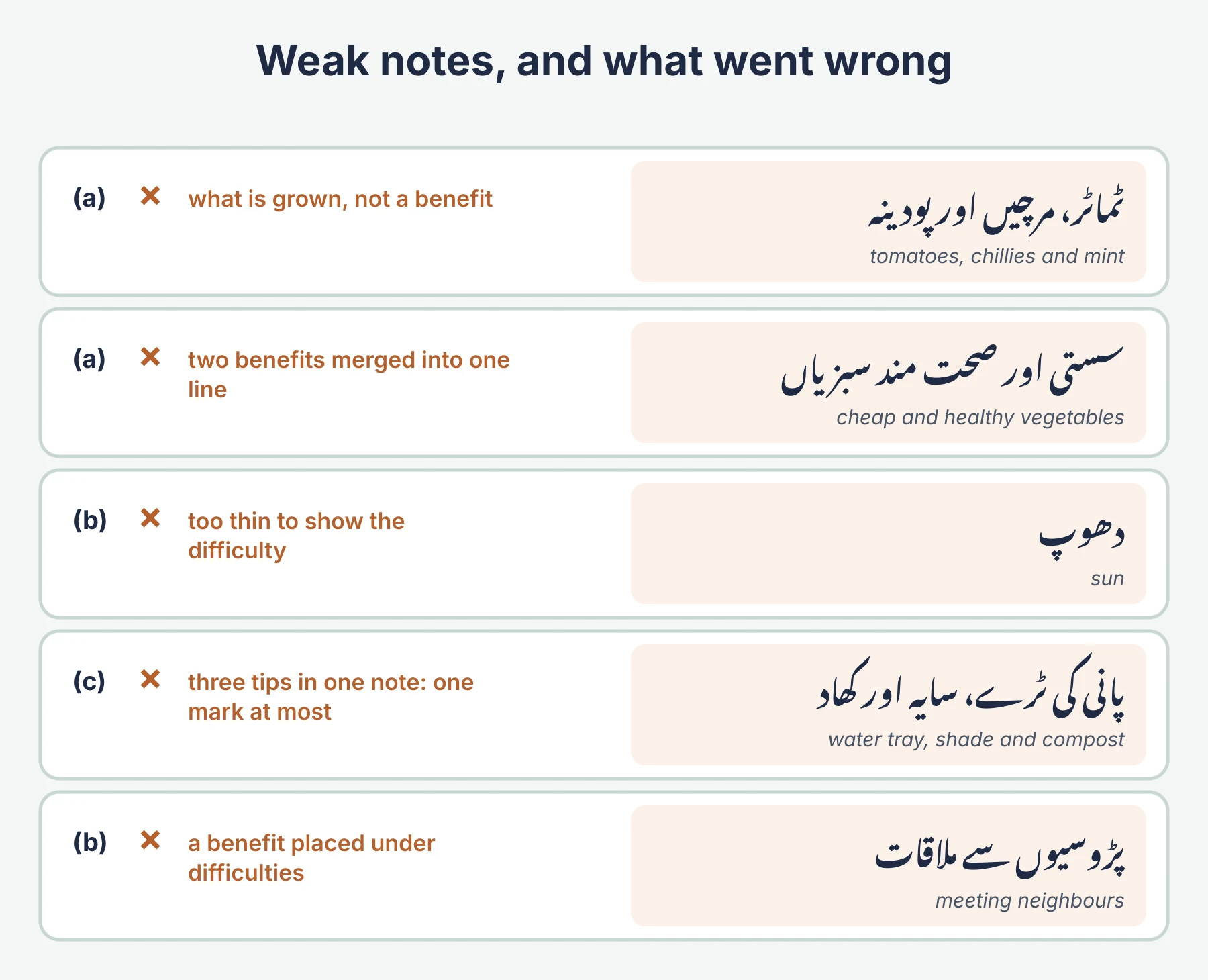
Weak notes, and what went wrong:
| Note | Problem |
|---|---|
| (a) ٹماٹر، مرچیں اور پودینہ | what is grown, not a benefit |
| (a) سستی اور صحت مند سبزیاں | two benefits merged into one line |
| (b) دھوپ | too thin to show the difficulty |
| (c) پانی کی ٹرے، سایہ اور کھاد | three tips in one note: one mark at most |
| (b) پڑوسیوں سے ملاقات | a benefit placed under difficulties |
From notes to summary
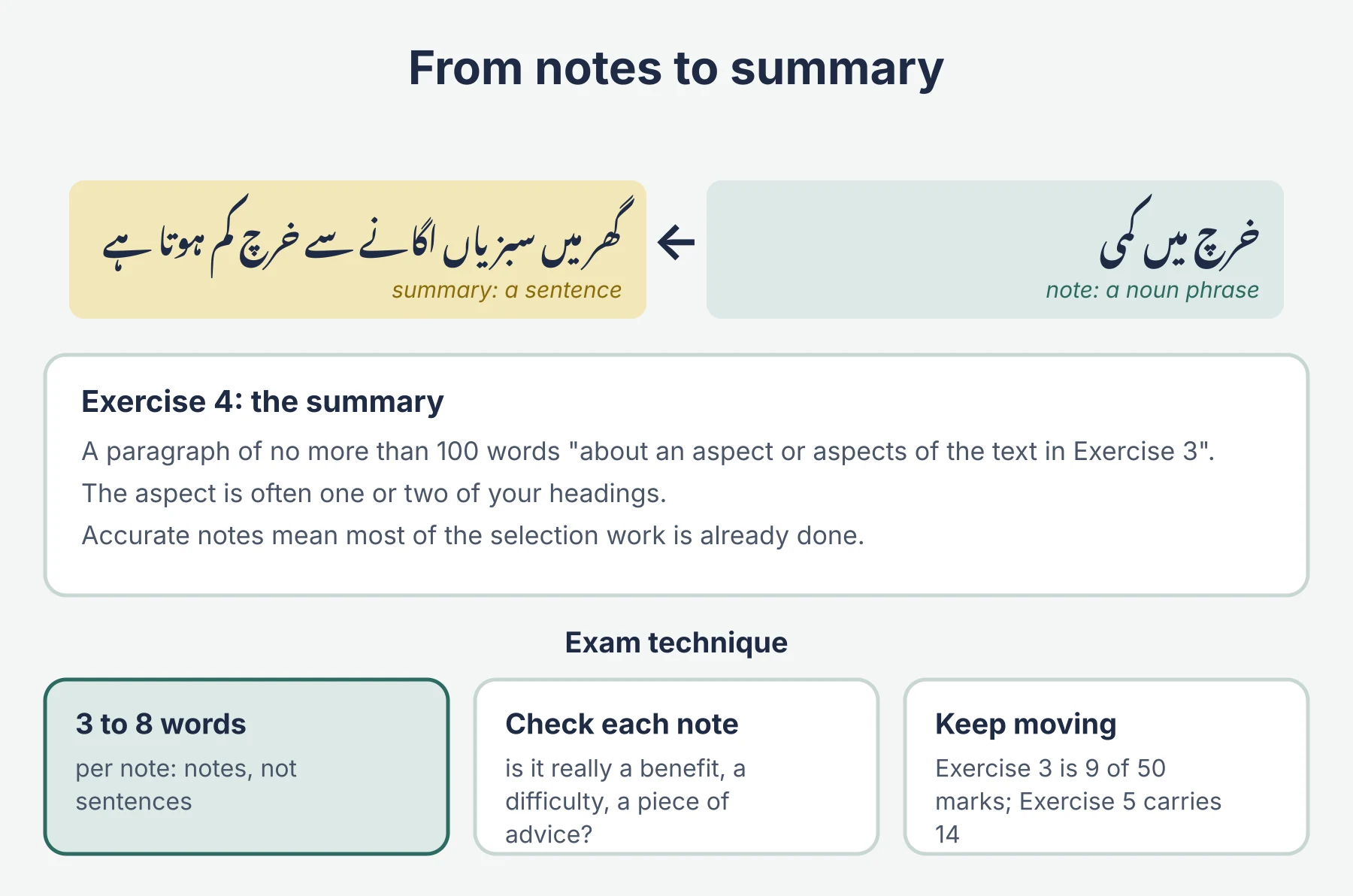
Exercise 4 asks for a paragraph-length summary of no more than 100 words “about an aspect or aspects of the text in Exercise 3”. The aspect is often one or two of your headings. Notes written as clear noun phrases convert quickly: خرچ میں کمی becomes گھر میں سبزیاں اگانے سے خرچ کم ہوتا ہے. If your notes are accurate, most of the selection work for the summary is already done.
Common mistakes
- Copying whole sentences from the text. It wastes time and often merges several points.
- Leaving out the key qualifier: کچھ لوگ or شروع میں can be part of the point.
- Writing a general heading word (فوائد، مسائل) as if it were a note.
- Repeating one point in different words to fill a second line.
- Missing points at the end of a paragraph or in a quotation from someone in the text.
- Answering from your own knowledge of the subject instead of from the text.
Exam technique
- Read the headings before the text, and label the text as you read it the second time.
- Write notes, not sentences: aim for three to eight words each.
- Check each note against its heading: “is this really a benefit / difficulty / piece of advice?”
- Keep moving: Exercise 3 is 9 of the paper’s 50 marks, and Exercise 5 carries 14.
More resources on this topic
Related resources
-
Practice questions
Cambridge O Level Second Language Urdu (3248): Exercise 3 Note-making – Practice Questions
Original note-making drills and a full 9-mark Exercise 3 task on a new Urdu blog for 3248 Paper 1, with model notes, marking points and common errors.
Urdu Language · Cambridge · O Level
Try questions -
Revision notes
Cambridge O Level Second Language Urdu (3248): Exercise 3 Note-making – Revision Notes
Condensed notes on 3248 Paper 1 Exercise 3 Note-making: the task facts, what a good Urdu note looks like, mapping to headings, traps and a self-test.
Urdu Language · Cambridge · O Level
Revise topic -
Study guides
Cambridge O Level Second Language Urdu (3248): Exercise 4 Summary
How to write an Urdu summary of at most 100 words in 3248 Paper 1 Exercise 4: choosing points, using your own words, linking ideas and checking length.
Urdu Language · Cambridge · O Level
Read guide
Get free revision emails (optional)
Occasional emails with practice questions, worked explanations and links to free resources for the qualification and subjects you choose. No spam, and you can unsubscribe from any email. The free tools on this site never need an email.