
Revision Notes
Edexcel A Level Urdu (9UR0): Folklore and Tradition (لوک رسوم و روایت) – Revision Notes
9UR0 Theme 2.1 notes on folklore and tradition (لوک رسوم و روایت): romances, dastan, Sufi music, weddings, a model paragraph and a self-test.
- Subject
- Urdu Language
- Level
- A LEVELS
- Topic
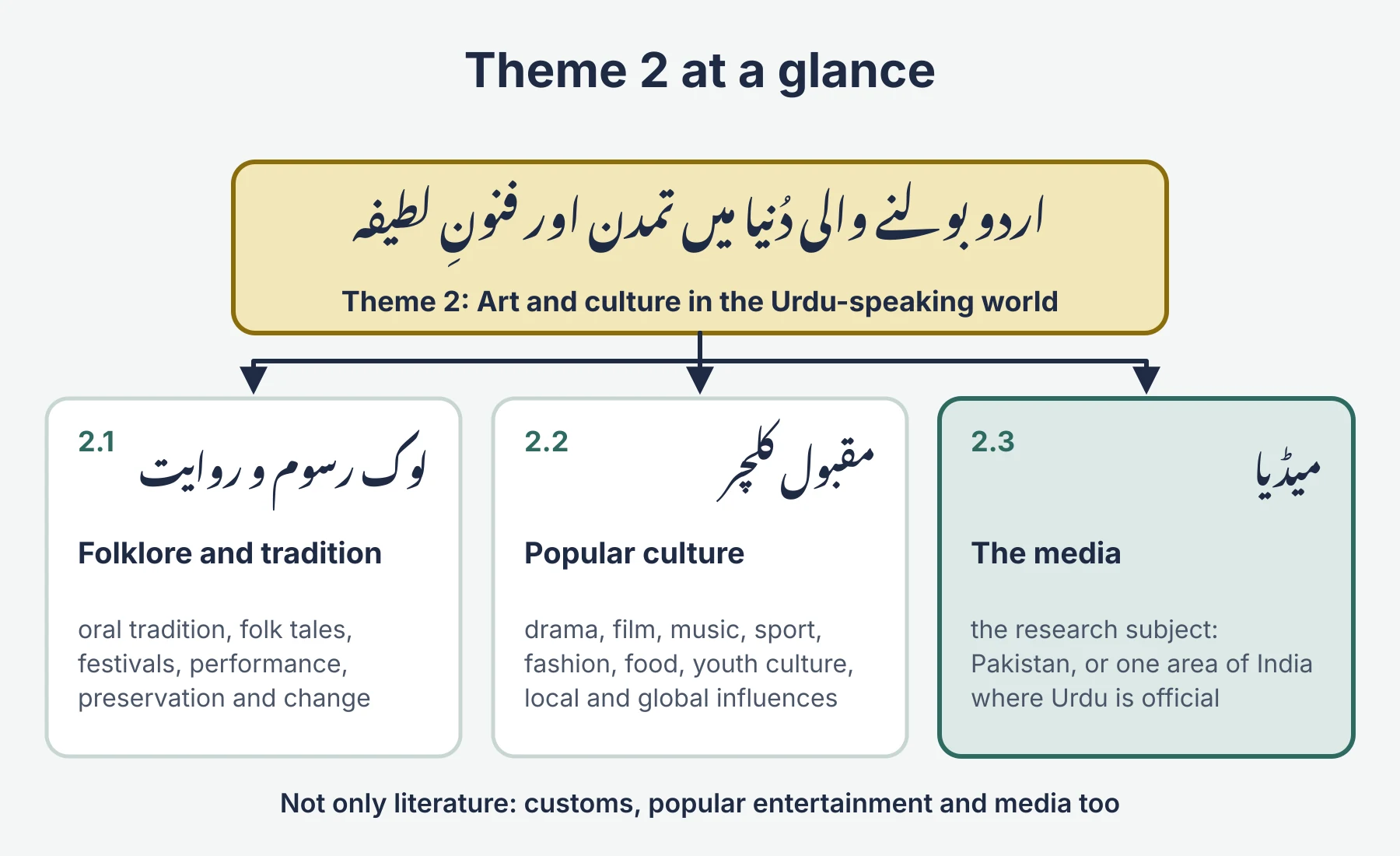
- Theme 2: Art and culture in the Urdu-speaking world (اردو بولنے والی دُنیا میں تمدن اور فنونِ لطیفہ)
- Author
- Marlbridge Academic Team
- Updated
- Reviewed by
- Farheen Zehra (what this means)
Aligned to Pearson Edexcel A Level Urdu Language (9UR0), 2018. Official specification .
Syllabus page (what it covers and how it is assessed): Pearson Edexcel A Level Urdu Language.
Syllabus points this page covers
9UR0
- 2.1 لوک رسوم و روایت
Found an error? Report a correction.
Need help with this topic? Request a free trial class for A Level Urdu Language (9UR0).
Revision notes for sub-theme 2.1 of Theme 2 in Pearson Edexcel A Level Urdu (9UR0): folklore and tradition (لوک رسوم و روایت). For the wider theme, read the Theme 2 study guide.
Key ideas
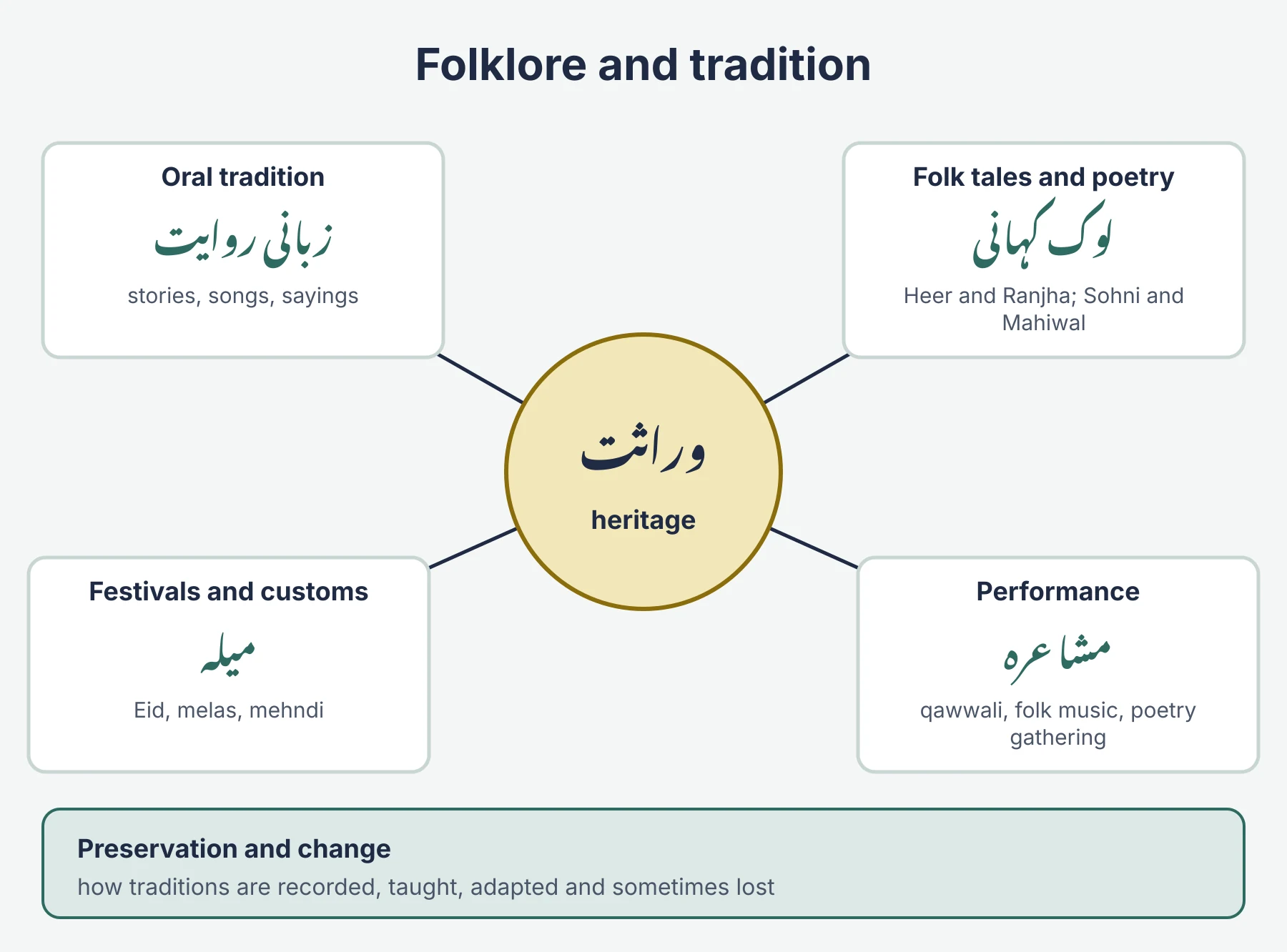
- Oral tradition (زبانی روایت): stories, songs and sayings passed on by speaking and performance.
- Folk tales and poetry: romances such as Heer and Ranjha (the Punjabi poem attributed to Waris Shah, eighteenth century) and Sohni and Mahiwal, told in several regional languages.
- Festivals and customs: Eid celebrations, melas (fairs), wedding customs such as the mehndi, seasonal festivals.
- Performance traditions: qawwali, folk music, storytelling and the mushaira (poetry gathering).
- Preservation and change: how traditions are recorded, taught, adapted and sometimes lost.
Issues and perspectives
What counts as folklore. لوک means ‘folk’ or ‘of the people’, so folklore covers the culture ordinary people create and pass on, often without a known author: tales, songs, proverbs (کہاوتیں), riddles (پہیلیاں), lullabies (لوریاں), games, crafts and customs. Its main channel has traditionally been زبانی روایت, from grandparents to children and from performers to audiences, which is why versions of the same story differ from place to place.
The great romances. The folk romances of the region share themes of true love, loyalty, sacrifice and conflict with family or social expectations. Alongside Heer and Ranjha and Sohni and Mahiwal, سسی پنوں (Sassi and Punnun) is closely linked to Sindh and Balochistan and to the poetry of the Sindhi Sufi poet Shah Abdul Latif Bhittai. Ask what these stories say about the society that tells them: lovers usually defy family or clan, and the tragic endings can be read as criticism of rigid social rules.
Dastan and storytelling. The داستان is a long, often magical tale of adventure; داستانِ امیر حمزہ is the best-known Urdu example. داستان گوئی, the art of telling such tales aloud, almost disappeared in the twentieth century but has been revived by modern performers, which is a good example of how a tradition can be renewed rather than simply lost.
Sufi shrines and music. The عرس (the annual commemoration at a Sufi saint’s shrine, مزار) brings together devotion, music and fairs. قوالی, devotional music associated with Sufi shrines, has reached worldwide audiences through performers such as Nusrat Fateh Ali Khan and the Sabri Brothers, showing that a tradition can travel far beyond its origins.
Wedding customs. A typical wedding sequence includes the مہندی (henna ceremony), the بارات (the groom’s procession), the رخصتی (the bride’s departure from her parents’ home) and the ولیمہ (the reception given by the groom’s family). Many people value these customs as sources of joy and identity; critics point to rising costs, display and pressure on families, especially through جہیز (dowry).
Preservation and change. Urbanisation, television and smartphones mean fewer children hear stories from elders, and some crafts and songs are fading. On the other hand, institutions such as لوک ورثہ, Pakistan’s national institute of folk heritage in Islamabad, record and display traditions, and television, music programmes and social media give old songs and stories new audiences. The key debate is whether change keeps traditions alive or empties them of meaning.
Vocabulary
| Urdu | Meaning |
|---|---|
| لوک کہانی | folk tale |
| لوک گیت | folk song |
| رسم | custom |
| میلہ | fair |
| داستان | long tale |
| مشاعرہ | poetry gathering |
| وراثت | heritage |
| زبانی روایت | oral tradition |
| روایتی | traditional |
| کہاوت | proverb |
| پہیلی | riddle |
| لوری | lullaby |
| قوالی | qawwali, devotional Sufi music |
| عرس | annual commemoration at a Sufi shrine |
| مزار | shrine, tomb |
| داستان گوئی | the art of storytelling |
| مہندی | henna ceremony |
| بارات | the groom’s wedding procession |
| رخصتی | the bride’s departure |
| ولیمہ | wedding reception given by the groom’s family |
| ثقافتی ورثہ | cultural heritage |
| نسل در نسل | from generation to generation |
| تہذیب | civilisation, culture |
Writing about tradition
Use a general statement, an example, an opinion with a condition (اگر … تو) and a recommendation (اس لیے …). Explain why a tradition matters rather than only listing it.
Grammar to control
- Plural feminine subjects take plural feminine verbs: لوک گیت اور کہانیاں … ہوتی رہی ہیں.
- Passive: پیش کی جاتی ہیں agrees with the feminine plural داستانیں.
Useful sentences with grammar notes
- شادی کی رسموں میں مہندی کی رسم خاص اہمیت رکھتی ہے۔ (Among wedding customs, the mehndi has special importance.) رسم is feminine, so رکھتی ہے; note the oblique plural رسموں after میں.
- ہماری نانیاں دادیاں ہمیں لوک کہانیاں سنایا کرتی تھیں۔ (Our grandmothers used to tell us folk tales.) The habitual سنایا کرنا: the participle سنایا stays unchanged and کرتی تھیں agrees with the feminine plural subject.
- اگر ان روایات کو محفوظ نہ کیا گیا تو یہ ہمیشہ کے لیے کھو جائیں گی۔ (If these traditions are not preserved, they will be lost for ever.) With کو the passive is masculine (کیا گیا); the main verb agrees with روایات (feminine plural): کھو جائیں گی.
- داستان گوئی کا فن ایک بار پھر زندہ ہو رہا ہے۔ (The art of storytelling is coming alive once again.) فن is masculine, so ہو رہا ہے.
- کہاوتیں ہمیں بزرگوں کی دانائی کا پتا دیتی ہیں۔ (Proverbs show us the wisdom of our elders.) Feminine plural subject, feminine plural verb.
Model paragraph
لوک روایات کسی بھی قوم کی پہچان ہوتی ہیں۔ پاکستان کے مختلف علاقوں میں ہیر رانجھا، سسی پنوں اور سوہنی مہینوال جیسی لوک داستانیں صدیوں سے سنائی جا رہی ہیں، اور ان میں محبت، وفاداری اور قربانی جیسے موضوعات ملتے ہیں۔ شادیوں میں مہندی کی رسم اور مزاروں پر قوالی کی محفلیں بھی اسی ورثے کا حصہ ہیں۔ تاہم شہروں کی تیز رفتار زندگی اور موبائل فون کی وجہ سے بچے اب بزرگوں سے کہانیاں کم سنتے ہیں۔ میرے خیال میں اگر اسکول اور میڈیا ان روایات کو نئے انداز میں پیش کریں تو نئی نسل بھی ان سے جڑی رہ سکتی ہے۔
Translation: Folk traditions are the identity of any nation. In different regions of Pakistan, folk tales such as Heer Ranjha, Sassi Punnun and Sohni Mahiwal have been told for centuries, and in them we find themes such as love, loyalty and sacrifice. The mehndi custom at weddings and the qawwali gatherings at shrines are also part of this heritage. However, because of the fast pace of city life and mobile phones, children now hear fewer stories from their elders. In my view, if schools and the media present these traditions in a new way, the new generation can also stay connected to them.
Why it works: a general claim, three named examples with their themes, a counter-point introduced with تاہم, and a conditional recommendation. سنائی جا رہی ہیں is a passive in the continuous tense, agreeing with داستانیں.
Discussion and essay prompts
- «جدید دور میں لوک روایات کی کوئی اہمیت نہیں رہی۔» (Folk traditions no longer have any importance in the modern age.) Do you agree?
- «شادی کی رسمیں اب خوشی سے زیادہ بوجھ بن گئی ہیں۔» (Wedding customs have now become more of a burden than a joy.) Discuss.
- Who is responsible for preserving traditions: families, schools, the media or the state?
- What do the folk romances tell us about the society that tells them?
Exam traps
- Treating Theme 2 as only literature; it also covers customs, entertainment and media.
- A list of cultural items with no explanation of importance.
- Research for Theme 2 spread across several countries: use one only (Pakistan, or one area of India where Urdu is an official language).
- Describing every tradition as either perfect or harmful; weigh value against cost.
- Agreement with feminine nouns such as رسم, روایت, داستان and کہاوت.
- Spelling the names of the romances inconsistently; learn سوہنی مہینوال, ہیر رانجھا and سسی پنوں.
Self-test
- What does لوک رسوم و روایت refer to?
- Give the Urdu for ‘poetry gathering’ and ‘folk song’.
- Name two folk romances mentioned in this sub-theme.
- Why is the verb ہیں in داستانیں پیش کی جاتی ہیں?
- How many countries or areas may Theme 2 research cover?
- Which romance is associated with Shah Abdul Latif Bhittai?
- What is داستان گوئی, and why is it a good example of renewal?
- Put these in order: ولیمہ، مہندی، رخصتی، بارات.
- What is an عرس?
- Give the Urdu for ‘proverb’, ‘riddle’ and ‘lullaby’.
- In ہماری نانیاں دادیاں ہمیں لوک کہانیاں سنایا کرتی تھیں, what does سنایا کرتی تھیں express?
- Name one way traditions are being preserved.
Answers: 1. Folk customs and tradition. 2. مشاعرہ and لوک گیت. 3. Heer and Ranjha, and Sohni and Mahiwal. 4. The subject is plural and the feminine plural passive agrees with it. 5. One. 6. Sassi and Punnun (سسی پنوں). 7. The art of telling long tales aloud; it almost disappeared but has been revived by modern performers. 8. مہندی، بارات، رخصتی، ولیمہ. 9. The annual commemoration at a Sufi saint’s shrine. 10. کہاوت, پہیلی and لوری. 11. A habitual action in the past: ‘used to tell’. 12. For example, the work of Lok Virsa (لوک ورثہ), recording traditions, or new versions on television and social media.
Related resources
-
Revision notes
Edexcel A Level Urdu (9UR0): The Media (میڈیا) – Revision Notes
9UR0 Theme 2.3 notes on the media (میڈیا), the research subject: broadcasting, digital media, freedom, a model paragraph and a self-test.
Urdu Language · Pearson Edexcel · A Level
Revise topic -
Revision notes
Edexcel A Level Urdu (9UR0): Popular Culture (مقبول کلچر) – Revision Notes
9UR0 Theme 2.2 notes on popular culture (مقبول کلچر): drama, music, cricket, global influence, a model paragraph and a self-test.
Urdu Language · Pearson Edexcel · A Level
Revise topic -
Study guides
Edexcel A-Level Urdu: Theme 2, Art and Culture in the Urdu-Speaking World (9UR0)
Folklore, popular culture and the media in the Urdu-speaking world: ideas, vocabulary and model Urdu writing for Theme 2 of Pearson Edexcel GCE A-Level Urdu (9UR0).
Urdu Language · Pearson Edexcel · A Level
Read guide
Get free revision emails (optional)
Occasional emails with practice questions, worked explanations and links to free resources for the qualification and subjects you choose. No spam, and you can unsubscribe from any email. The free tools on this site never need an email.