
Study Guides
IB DP Business Management: International marketing (HL only)
Study guide to IB DP Business Management 4.6 (HL only): the opportunities and threats of entering and operating internationally, with worked examples.
- Subject
- Business
- Level
- IB
- Topic
- Unit 4: Marketing
- Author
- Marlbridge Academic Team
- Updated
- Reviewed by
- Salman Ahmad (what this means)
Aligned to International Baccalaureate IB Diploma Programme Business (DP Business Management), First assessment 2024. Official specification .
Syllabus page (what it covers and how it is assessed): IB Diploma Programme Business.
Syllabus points this page covers
DP Business Management
- 4.6 International marketing (HL only)
Found an error? Report a correction.
Need help with this topic? Request a free trial class for IB Diploma Programme Business (DP Business Management).
This guide covers section 4.6, International marketing, in Unit 4 (Marketing) of the IB Business management guide, first assessment 2024. The whole section is HL only, so SL candidates do not need it.
Use it with the revision notes and the practice questions. The course hub is IB DP Business Management, the printable list is the syllabus checklist, and the free diagnostics show where to start. Earlier pages that help: the Unit 4 study guide, the Unit 4 revision notes, the Unit 4 practice set and the guide to growth and multinational companies.
All businesses and figures here are invented. The guide lists no definitions for this section, so where a term is defined below it is the standard textbook form.
What 4.6 asks you to know
| Content point in the guide | Depth of teaching in the guide | Where this guide covers it |
|---|---|---|
| The opportunities and threats posed by entering and operating internationally | AO3, synthesis and evaluation | Every section below |
There is one content point, but it is tagged AO3. That is the top level of the guide’s depth scale, so a question can ask you to evaluate, discuss, justify or recommend, not only to state or explain. The guide’s glossary defines “evaluate” as making an appraisal by weighing up the strengths and limitations, and “recommend” as presenting an advisable course of action with supporting reasons for the situation given. You therefore need a stock of opportunities and threats, and the habit of weighing them for the business in the case.
Two words in the content point matter. “Entering” is the decision to go abroad and how. “Operating” is what happens after: running the marketing mix, the supply chain and the finances in a foreign market over time. Threats and opportunities exist at both stages.
The guide’s assessment outline says paper 1 draws on Units 1 to 5 excluding HL extension topics, while paper 2 and paper 3 at HL include them. So 4.6 belongs to the HL papers that include extension topics, not to paper 1.
Where 4.6 sits in the course
Several other sections give you ideas to reuse here:
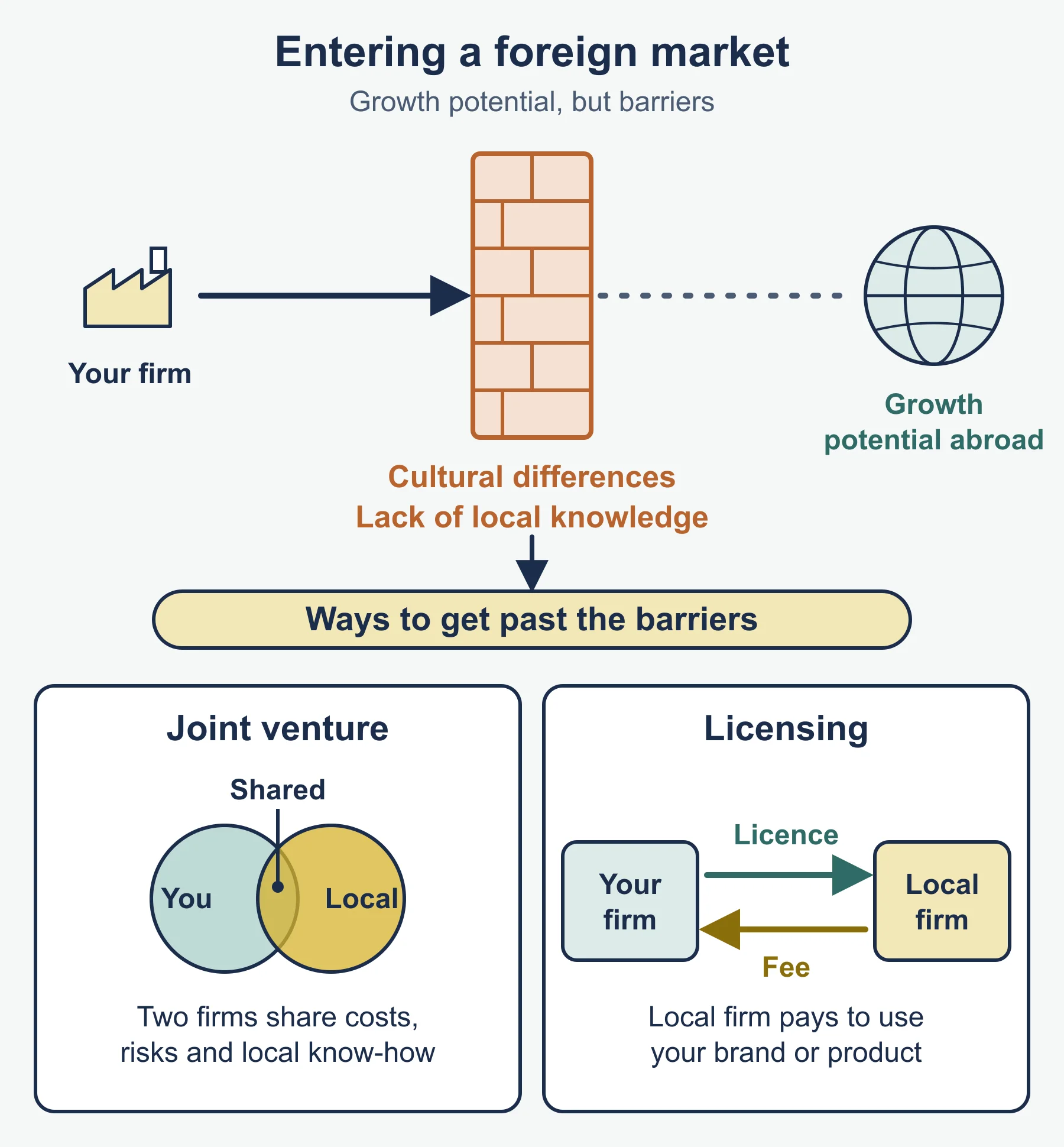
- Section 1.5 lists joint ventures, strategic alliances and franchising as external growth methods. Each can also be a route abroad.
- Section 1.6 asks for the impact of multinational companies on host countries. That is the host country’s view. Section 4.6 is the business’s view of the same move.
- Section 4.5 covers the seven Ps, including cultural variation in employee-customer relationships under People. Those ideas drive the adaptation question later in this guide.
- The finance units give you the tools to test an international plan with numbers.
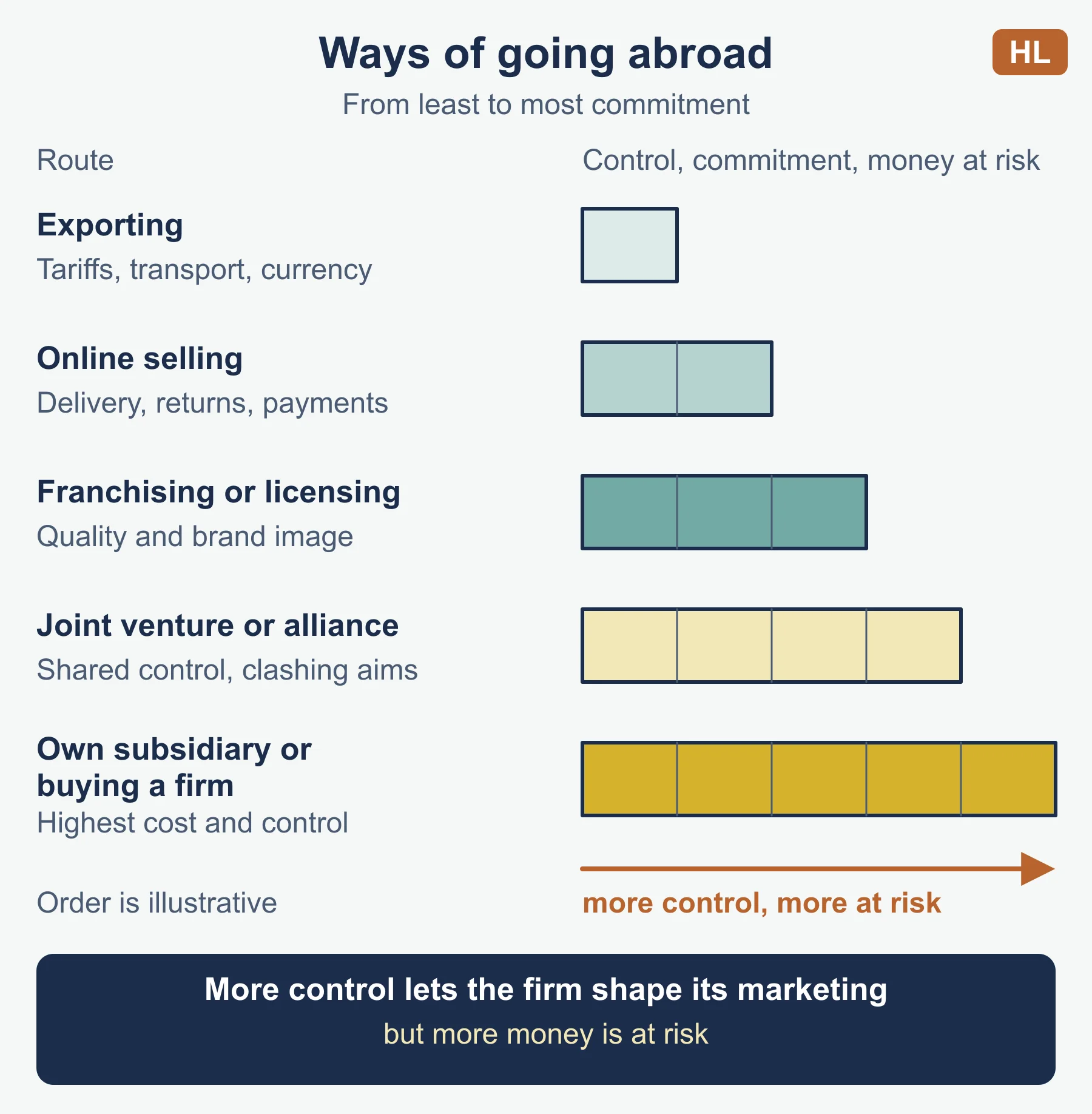
Ways of going abroad
The guide does not list entry methods under 4.6, so treat this list as background that helps you apply the opportunities and threats. It is a standard textbook list, not a guide list.
| Route | What it means | Typical exposure |
|---|---|---|
| Exporting | Making at home and selling abroad, directly or through a distributor | Tariffs, transport costs, exchange rates, less control of the final sale |
| Online selling | Shipping to foreign customers from a website | Delivery times, returns, payment and consumer protection differences |
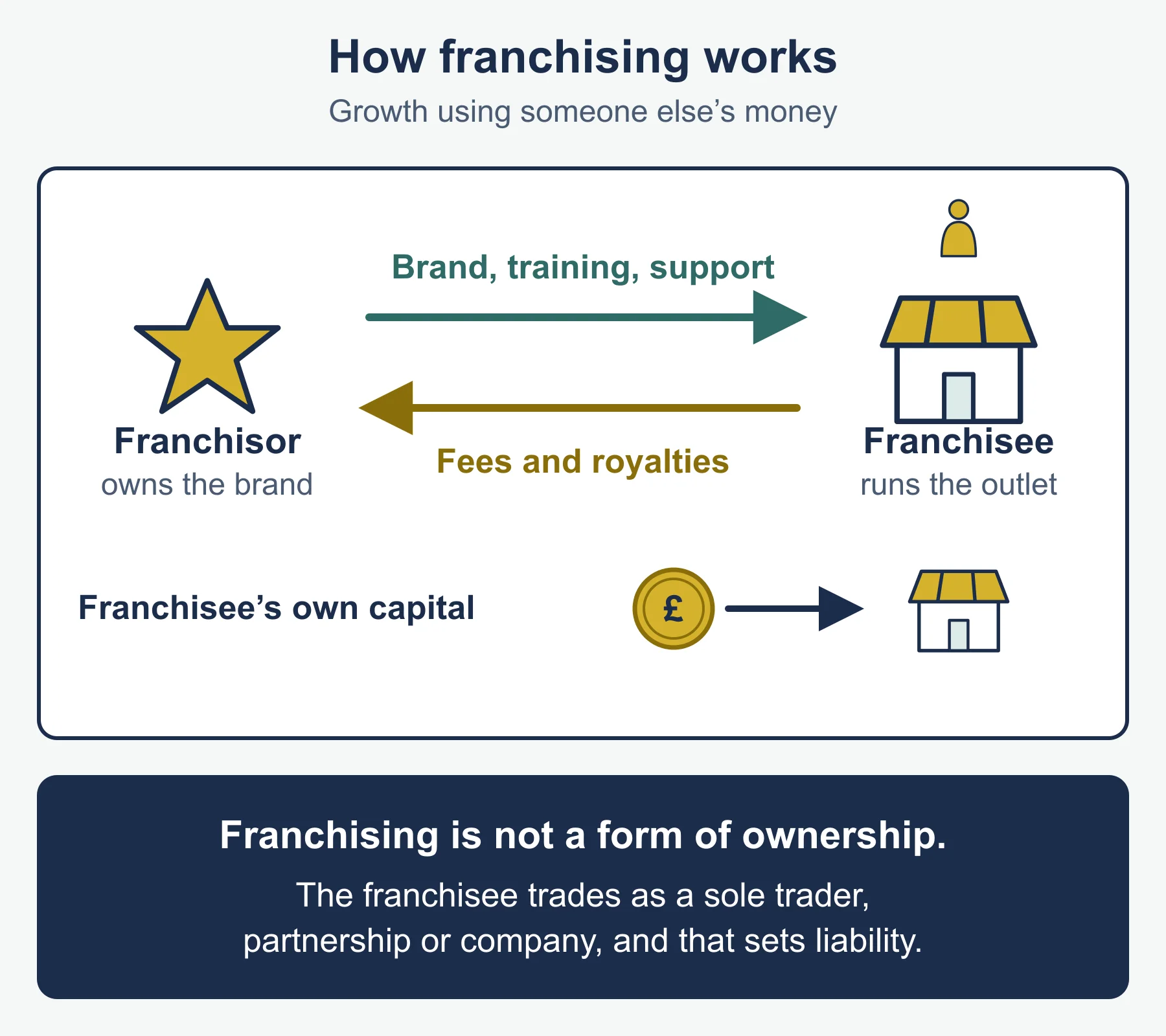
| Franchising or licensing | A foreign firm uses the brand and system in return for fees | Quality control, brand image in the hands of others |
| Joint venture or alliance | Sharing a venture with a local partner | Shared control, clashes of aims, shared profit |
| Own subsidiary or acquisition | Setting up or buying a firm in the foreign market | High cost and commitment, highest control |
The more control and commitment a route gives, the more money is at risk, and the more the business can shape its marketing.
Opportunities of entering and operating internationally
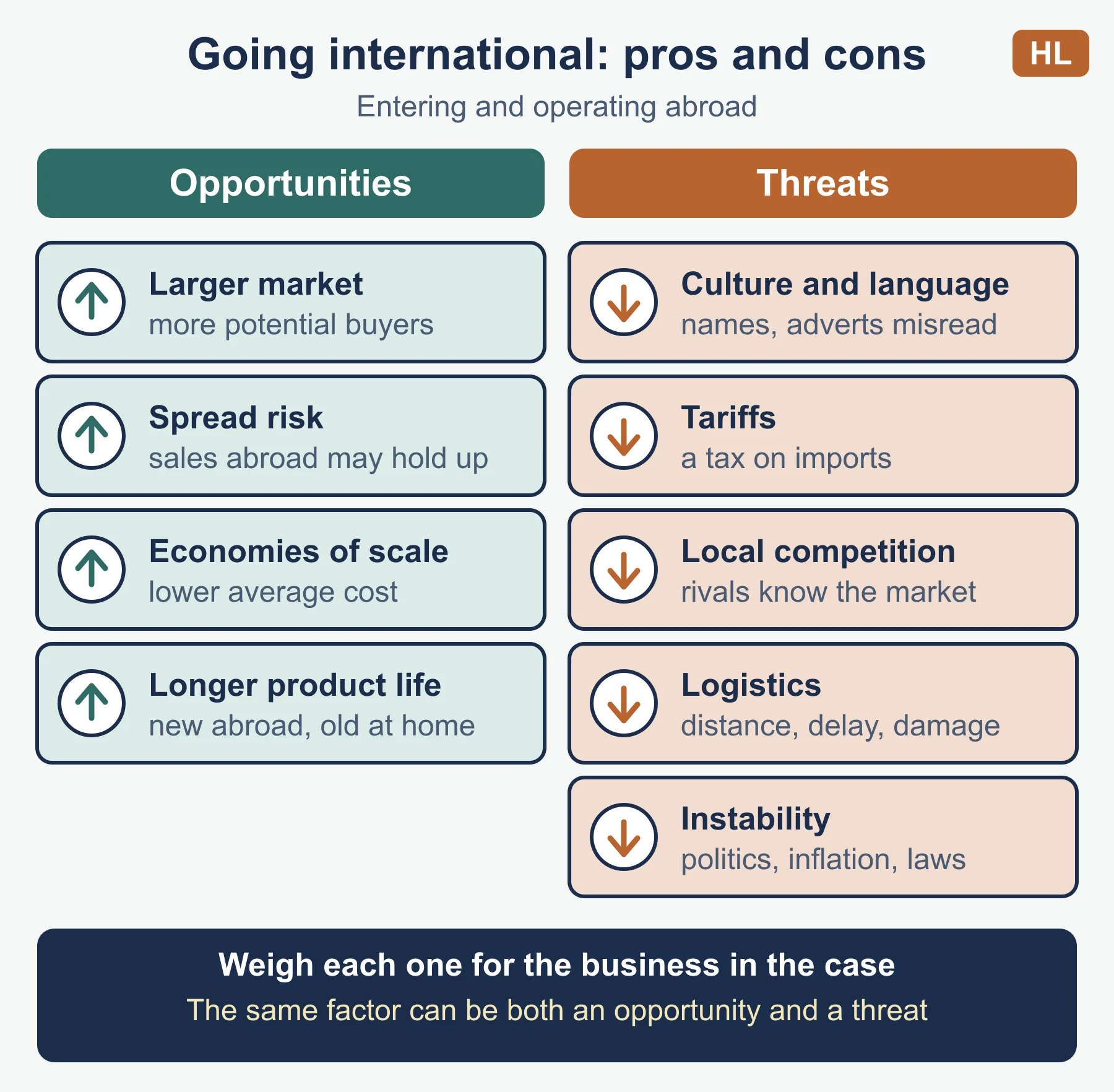
An opportunity here is a possible benefit that a foreign market offers beyond what the home market gives. The main ones:
- A larger customer base. The home market may be small or saturated. Foreign markets add potential buyers without changing the product.
- Spreading risk. If the home economy slows, sales abroad may hold up. Selling in several countries at different stages of the economic cycle can smooth revenue.
- Economies of scale. Producing more means each unit carries a smaller share of fixed costs, so average cost falls, as section 1.5 explains.
- Lower costs. Operating abroad may give cheaper labour, materials or premises, or help from local government. This is an operating opportunity, as much as a sales one.
- Extending the product life. A product that is mature at home may be new and growing in another country, so it earns longer.
- Brand and reputation. A product with a clear unique selling point may gain a premium image if it is seen as foreign or well known elsewhere.
- Learning and ideas. Contact with new customers, rivals and suppliers can feed product development.
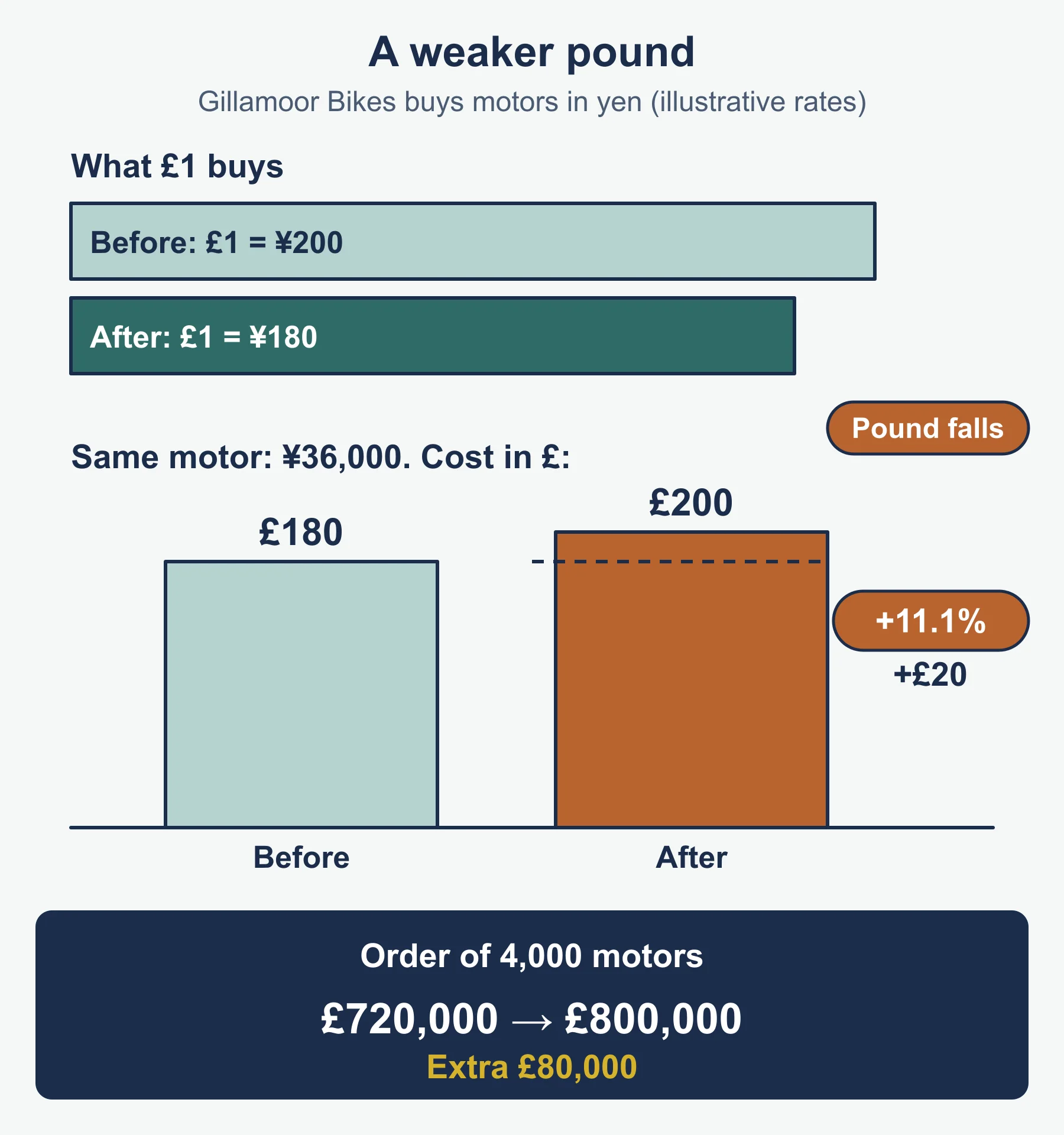
- Exchange rate gains. A weaker home currency can make exports cheaper to buyers abroad, or a stronger one can cut the cost of imported materials.
Opportunities are not automatic. Each depends on conditions in the case: how big the target group really is, how well the product fits, and how strong local rivals are.
Threats of entering and operating internationally
A threat is a possible harm or cost that foreign trading adds. The main ones:
- Cultural and language differences. Colors, names, humour, symbols and customs can change how an advert or product is read. A name that works at home may mean something poor elsewhere. Tastes in food, clothing and services differ.
- Exchange rate movements. Revenue earned in a foreign currency is worth more or less when it is converted back. Costs paid in another currency can rise unexpectedly.
- Tariffs and other trade barriers. A tariff is a tax on imports. It raises the final price or cuts the exporter’s margin. Quotas and license rules can also limit sales.
- Legal and regulatory differences. Rules on labeling, ingredients, advertising, data, product safety and employment vary. The guide names no particular laws, so describe these in general terms and use the details in the case.
- Local competition. Local firms know the market, language and distribution channels. They may also have stronger loyalty.
- Logistics and supply chains. Longer distances mean more cost, delay and risk of damage or loss.
- Political and economic instability. Changes of government, unrest, inflation or new restrictions can stop trading or raise costs quickly.
- Higher marketing and set-up costs. Market research, translation, new packaging and local staff add cost before sales arrive.
- Ethical and reputation risk. Using overseas suppliers or workers can bring criticism if conditions fall short of what customers expect. This links to CSR in section 1.3.
- Weak control. Using partners or distributors can mean less control over how the brand is presented.
Marketing across borders: standardize or adapt?
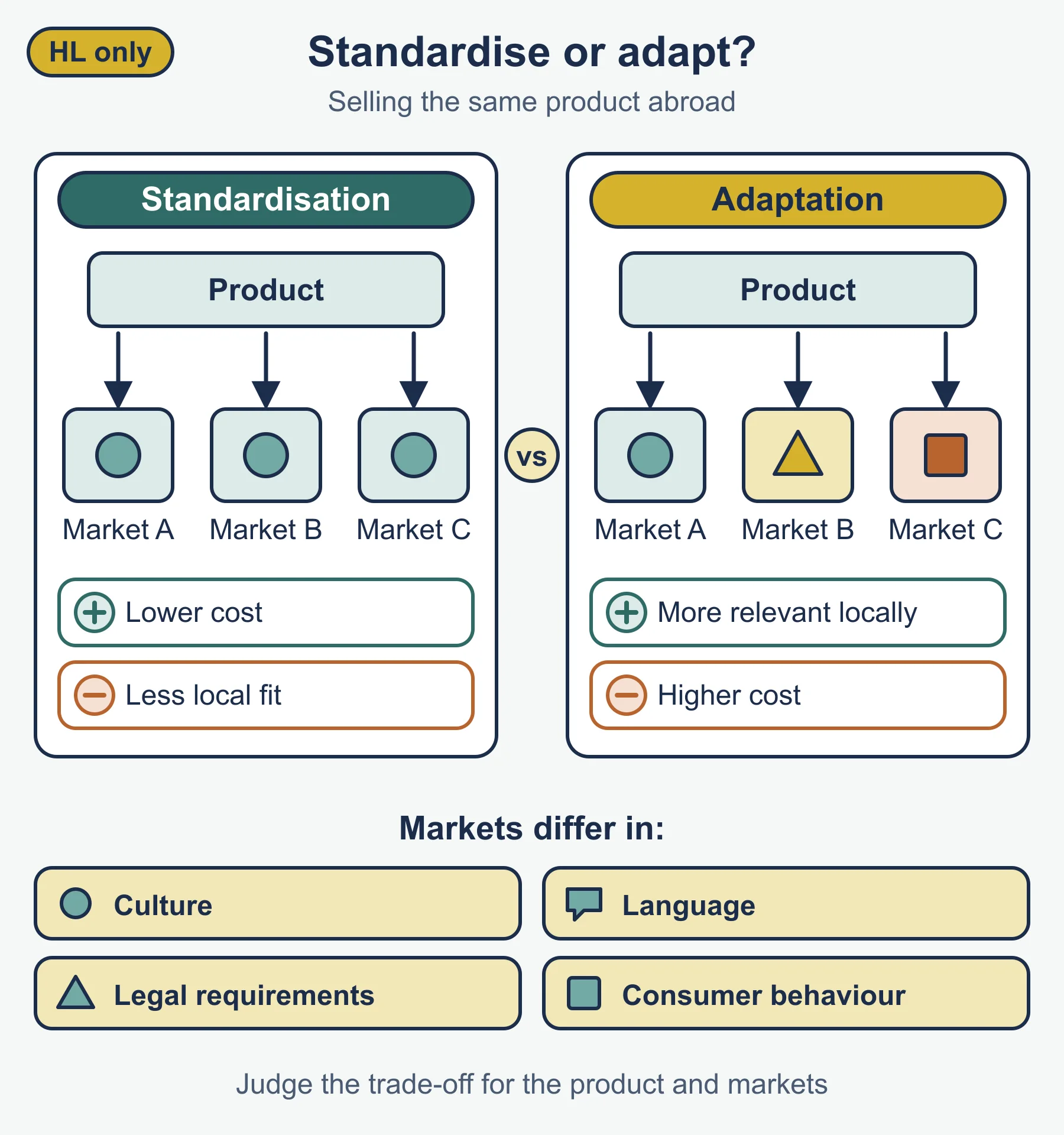
A central choice when operating abroad is whether to use the same marketing mix everywhere (standardization) or change parts of it for each market (adaptation). Both terms are standard textbook ones.
- Standardizing keeps costs low, builds one global image and is simple to manage. Its risk is a poor fit with local tastes and rules.
- Adapting improves the fit with local customers and may protect against legal problems. Its risk is higher cost, a mixed brand image and more management.
Many firms adapt only some of the seven Ps. Price may vary with tariffs and income levels, promotion with language and culture, place with local retail habits, and product with taste or rules, while the brand name and core design stay the same.
Opportunity and threat meet here. A larger market gives scale only if costs stay under control, and every adaptation adds cost.
The guide lists Hofstede’s cultural dimensions (HL only) among the tools to integrate in Unit 4, and in Units 2 and 5. The guide does not list the dimensions themselves, so use the tool in general terms: it compares national cultures on a set of scales, which can help predict whether a product, advert or management style will transfer. Treat such comparisons as a guide, not a rule, because customers within one country differ.
Worked example 1: tariff and exchange rate effects on a price
Valmorrow Teas, based in a country that uses the US dollar (USD), exports boxes of tea to a market that uses the euro (EUR).
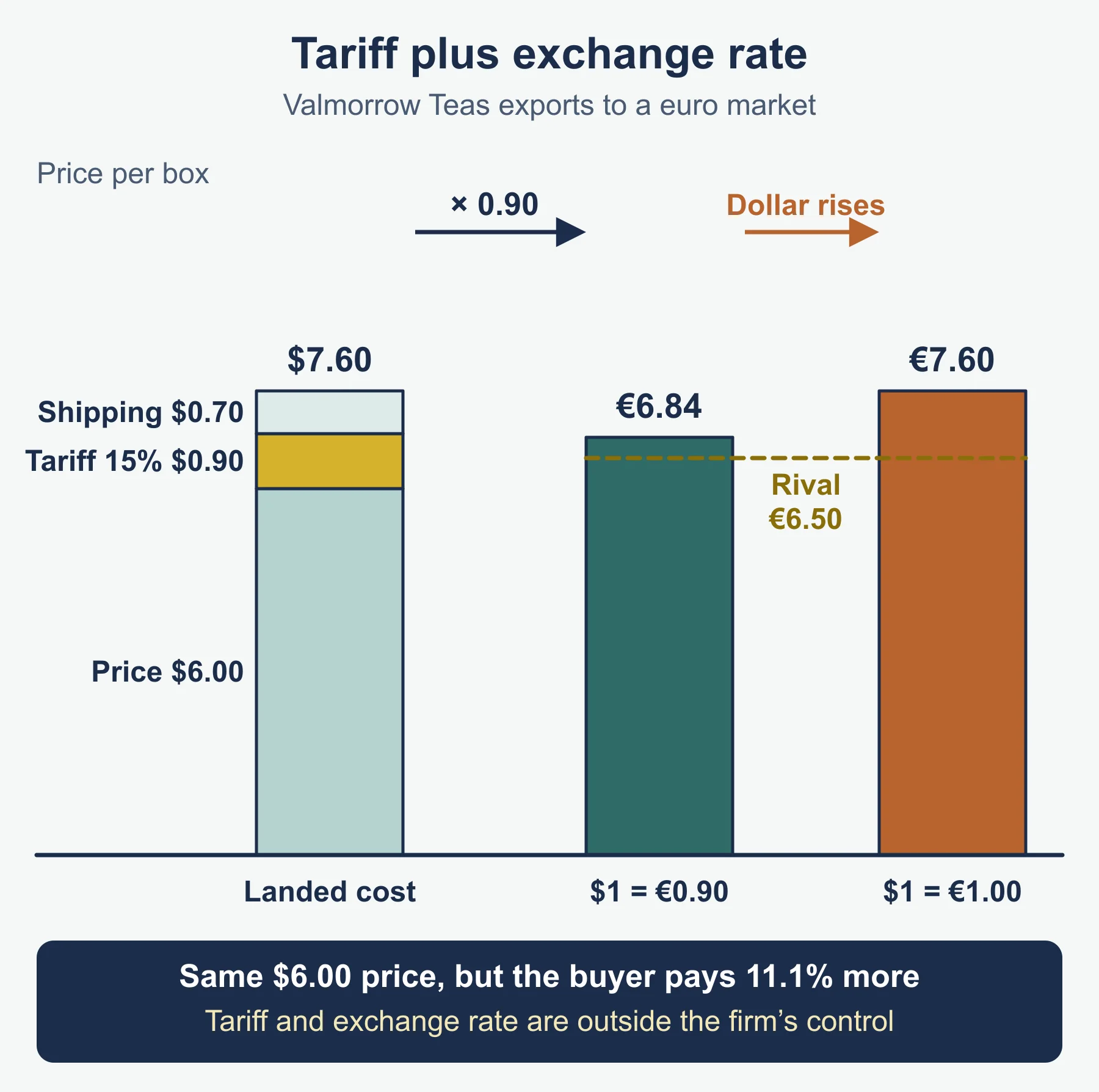
- Price charged by Valmorrow per box: USD 6.00.
- Tariff in the target country: 15% of that price.
- Shipping and handling: USD 0.70 per box.
- Exchange rate at launch: USD 1 = EUR 0.90.
Step 1. Tariff = 15% of USD 6.00 = USD 0.90.
Step 2. Landed cost = 6.00 + 0.90 + 0.70 = USD 7.60.
Step 3. In euros = 7.60 x 0.90 = EUR 6.84 per box.
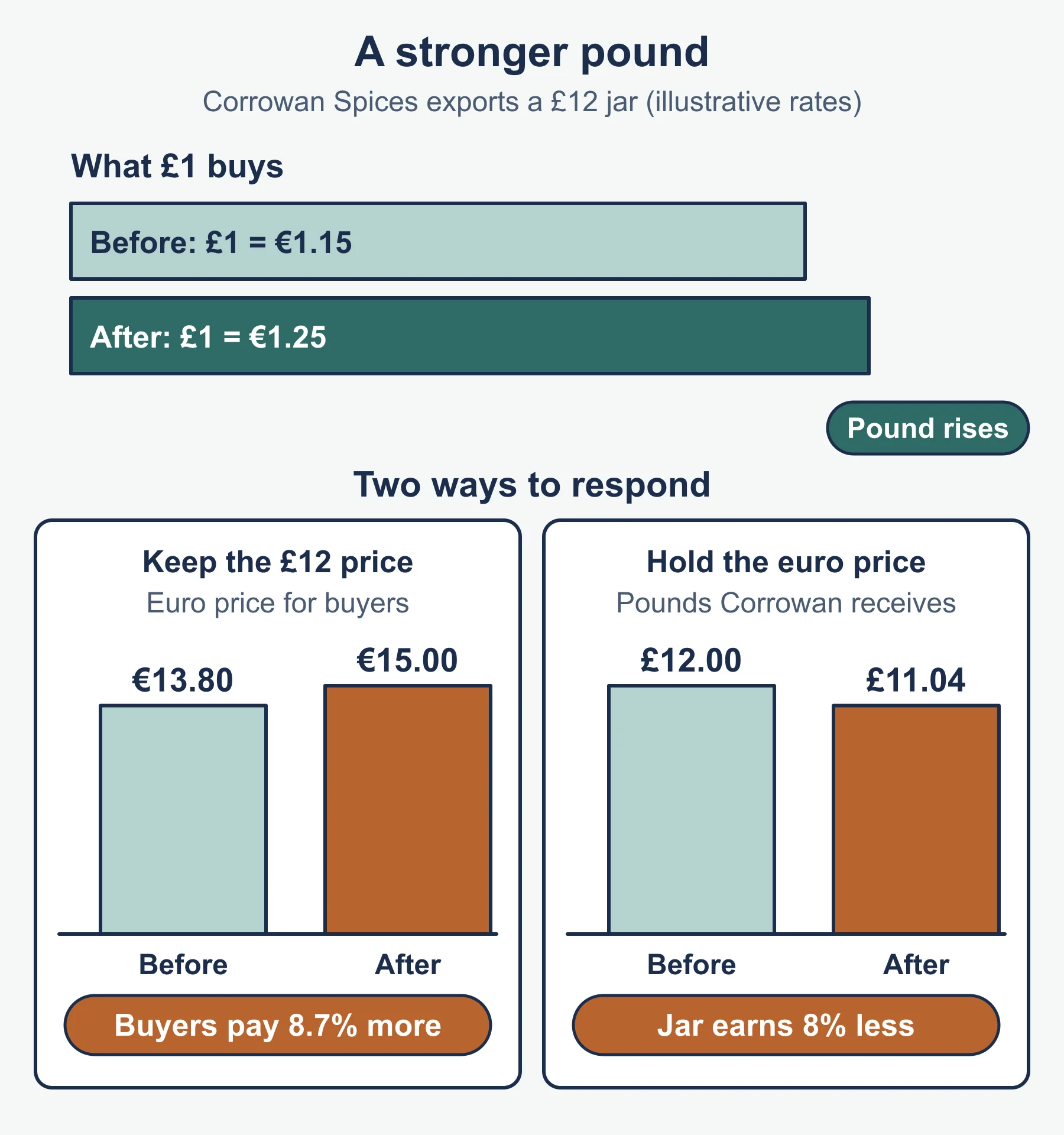
Now the dollar strengthens to USD 1 = EUR 1.00.
Step 4. The same box now costs 7.60 x 1.00 = EUR 7.60.
Step 5. Rise = (7.60 - 6.84) / 6.84 x 100 = 11.1%, with no change in Valmorrow’s own price.
Judgment: both the tariff and the currency are outside the firm’s control. They are threats because each raises the euro price. If local rivals charge around EUR 6.50, Valmorrow may have to cut its margin or find a different channel. Whether it stays depends on how strongly buyers value the product.
Worked example 2: currency and revenue
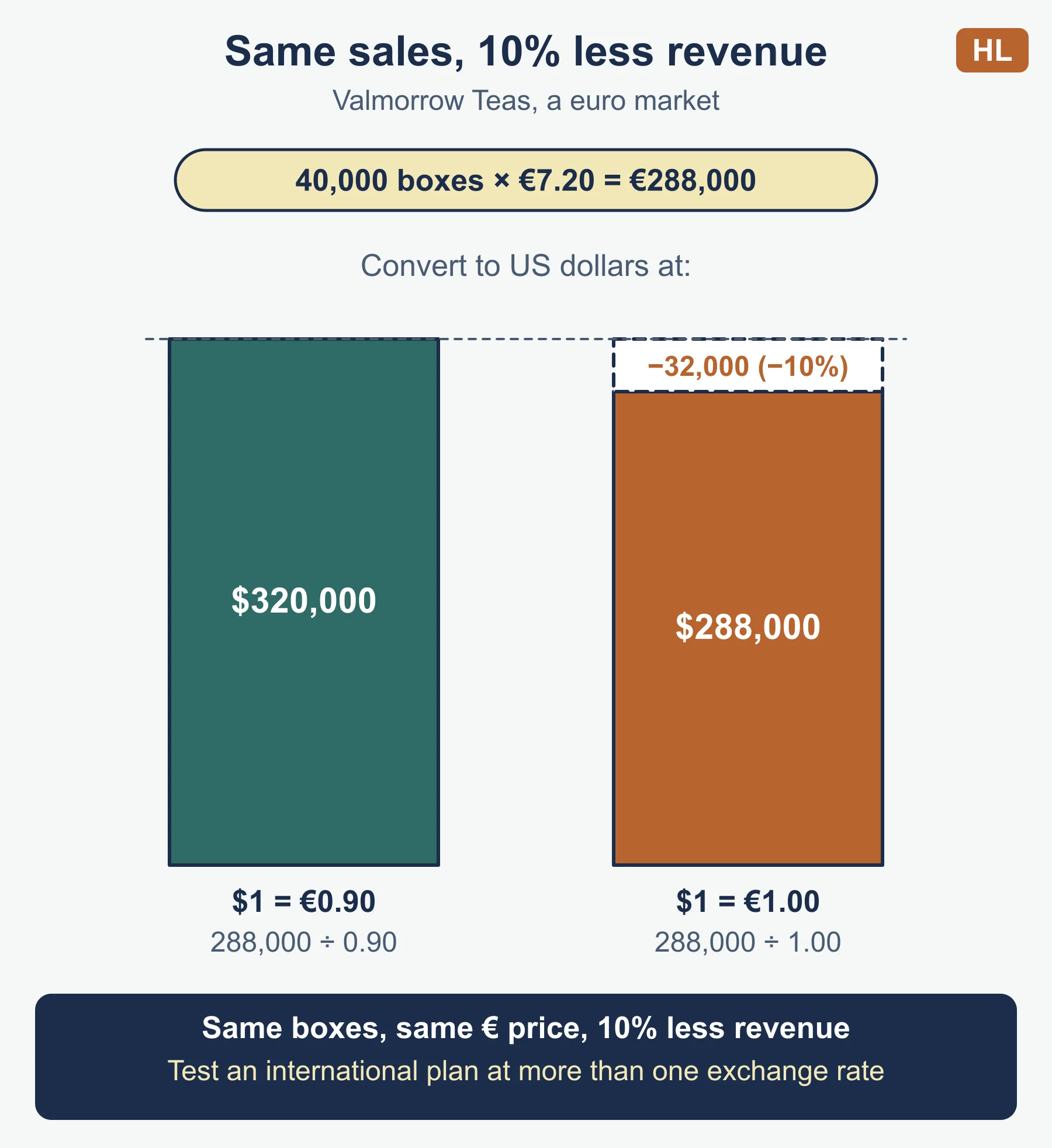
Valmorrow sells 40,000 boxes in the euro market at EUR 7.20 each in a year.
- Revenue in euros = 40,000 x 7.20 = EUR 288,000.
- At USD 1 = EUR 0.90, this converts to 288,000 / 0.90 = USD 320,000.
- At USD 1 = EUR 1.00, it converts to USD 288,000.
- The fall is USD 32,000, which is 10% of USD 320,000.
The same sales volume and price produce 10% less home-currency revenue. Currency movement can wipe out a profit margin on an otherwise sound plan, so an international plan should be tested at more than one exchange rate.
Worked example 3: is adaptation worth the cost?
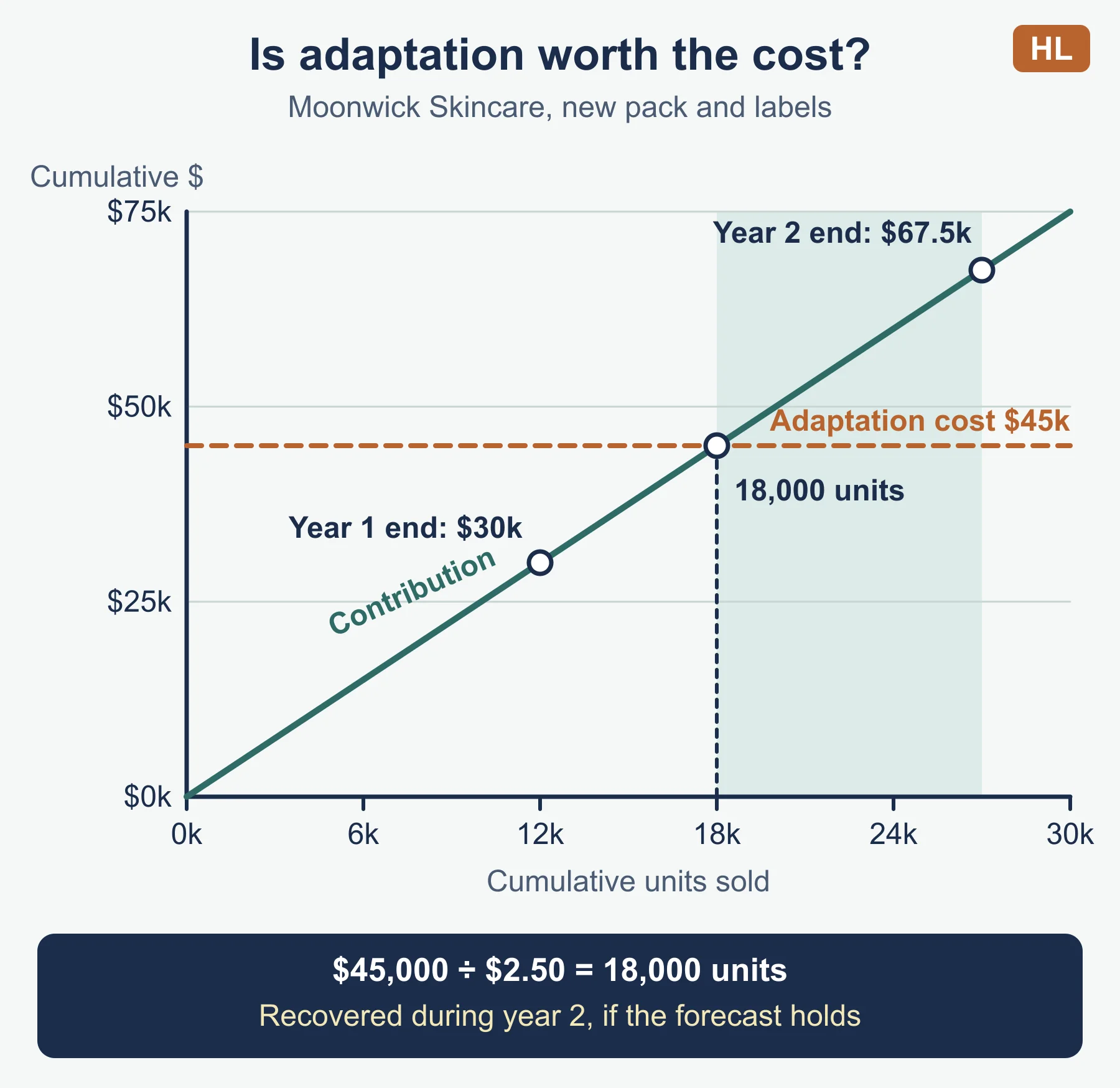
Moonwick Skincare must change its pack and labels for a new market. The change costs USD 45,000 once. Each unit sold earns a contribution of USD 2.50 (selling price less variable cost).
- Units needed to cover the cost = 45,000 / 2.50 = 18,000 units.
If the market is likely to buy 12,000 units in year 1 and 15,000 in year 2, cumulative sales of 27,000 pass 18,000 during year 2. The cost is recovered, provided the forecast holds. A forecast is uncertain, so the firm should consider whether it can bear the cost if demand is lower.
Evaluating a decision to go international
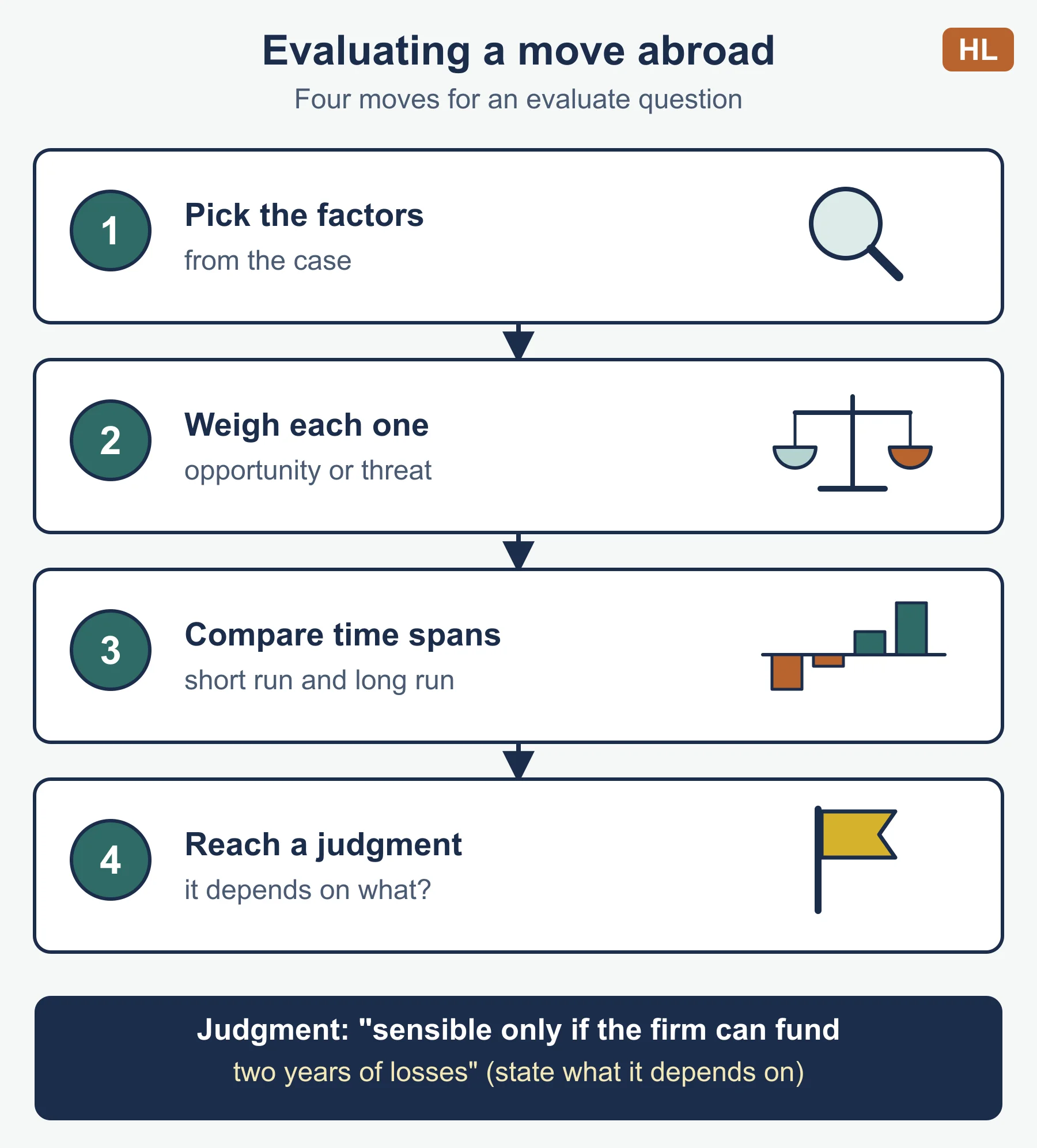
When a question says evaluate, discuss, justify or recommend, build the answer in four moves:
- Pick the relevant factors from the case, such as market size, growth, tariffs, currency, culture, local rivals and the firm’s cash.
- Weigh each factor as an opportunity or threat, using figures where the case gives them.
- Compare short run and long run. Start-up costs fall early, benefits may come later.
- Reach a judgment that depends on something in the case, such as “this is sensible only if the firm can fund two years of losses”.
Common errors
- Listing opportunities and threats with no link to the business in the case.
- Treating all international moves as good because “the market is bigger”.
- Forgetting that the same factor can be both: a weaker home currency helps exporters but raises the cost of imported inputs.
- Confusing a tariff (a tax on imports) with a quota (a limit on quantity).
- Calculating a euro price without including the tariff or the shipping.
- Describing laws that the case does not name, instead of using the case.
- Concluding “it depends” without saying what it depends on.
Frequently asked questions
What are the opportunities of entering international markets? Opportunities include a larger customer base, spreading risk across economies, economies of scale, lower costs, extending a product’s life, brand prestige, new ideas, and helpful exchange rate moves. None is automatic; each depends on conditions in the case.
What are the threats of operating internationally? Threats include cultural and language differences, exchange rate movements, tariffs and other trade barriers, legal and regulatory differences, strong local competitors, logistics problems, political or economic instability, higher set-up costs, ethical and reputation risk, and weaker control when using partners.
How does international marketing in 4.6 differ from MNCs in 1.6? Section 1.6 asks about the impact of multinational companies on host countries, which is the host country’s view. Section 4.6 looks at the opportunities and threats from the business’s own point of view.
What are the ways a business can enter a foreign market? Common routes are exporting, online selling, franchising or licensing, a joint venture or alliance, and an own subsidiary or acquisition. The guide does not list entry methods under 4.6, but more control and commitment usually put more money at risk.
Official syllabus
IB Diploma Programme Business management guide (first assessment 2024), International Baccalaureate Organization, Unit 4, section 4.6 International marketing (HL only).
Get free revision emails (optional)
Occasional emails with practice questions, worked explanations and links to free resources for the qualification and subjects you choose. No spam, and you can unsubscribe from any email. The free tools on this site never need an email.
Related resources
-
Practice questions
IB DP Business Management: International marketing (HL only) – Practice Questions
Original practice questions with worked answers on IB DP Business Management 4.6 (HL only): international opportunities, threats and exchange rates.
Business · International Baccalaureate · IB
Try questions -
Revision notes
IB DP Business Management: International marketing (HL only) – Revision Notes
Condensed revision notes for IB DP Business Management 4.6 (HL only): international opportunities, threats, adaptation, key calculations and a self-test.
Business · International Baccalaureate · IB
Revise topic -
Study guides
IB DP Business Management: Introduction to marketing and Marketing planning
Study guide to IB DP Business Management 4.1 and 4.2: orientation, market share and growth, segmentation, targeting, positioning and USPs.
Business · International Baccalaureate · IB
Read guide
Related articles
-
teaching
A Level tuition in Dubai: Cambridge or Pearson Edexcel International A Level?
Schools in Dubai and Abu Dhabi teach either Cambridge International AS & A Level or Pearson Edexcel International A Level. How the two are structured, why it matters for tuition, and how online classes from Lahore work.
9 October 2026
-
curriculum guides
Choosing subjects at IGCSE and A Level
How subject choices at 14 and 16 affect university options later, and how to keep pathways open without overloading a timetable.
28 July 2026
Studying this with a teacher
Working through Business IB?
This page is free and stays free. If you would rather be taught it, Marlbridge runs Business classes one-to-one, online in your own time zone. The first trial class is free. WhatsApp replies within an hour (8am–11pm Pakistan time, every day); email the same day.
IB Business teachers at Marlbridge

