
Revision Notes
IB DP Business Management: Introduction to finance and Sources of finance – Revision Notes
Condensed revision notes for IB DP Business Management 3.1 and 3.2: expenditure types, each source of finance compared, and a quick self-test.
- Subject
- Business
- Level
- IB
- Topic
- Unit 3: Finance and accounts
- Author
- Marlbridge Academic Team
- Updated
- Reviewed by
- Salman Ahmad (what this means)
Aligned to International Baccalaureate IB Diploma Programme Business (DP Business Management), First assessment 2024. Official specification .
Syllabus page (what it covers and how it is assessed): IB Diploma Programme Business.
Syllabus points this page covers
DP Business Management
- 3.1 Introduction to finance
- 3.2 Sources of finance
Found an error? Report a correction.
Need help with this topic? Request a free trial class for IB Diploma Programme Business (DP Business Management).
Quick recall for sections 3.1 Introduction to finance and 3.2 Sources of finance in the IB Business management guide (first assessment 2024), SL and HL. For full explanations and worked examples go to the study guide. Test yourself with the practice questions. Wider unit material is in the Unit 3 revision notes. Course hub: IB DP Business Management. Tick-list: printable checklist. Find gaps with the free diagnostics.
Definitions to know
| Term | Meaning (standard form) |
|---|---|
| Finance | Money a business needs to start, run and grow |
| Capital expenditure | Spending on non-current assets that last beyond a year, or on improving them |
| Revenue expenditure | Spending on everyday running costs whose benefit ends within the year |
| Internal source | Finance generated inside the business or by its owner |
| External source | Finance obtained from outside the business |
| Short-term finance | Repaid within about a year |
| Long-term finance | Repaid over several years, or never |
| Collateral | An asset pledged to a lender as security for a loan |
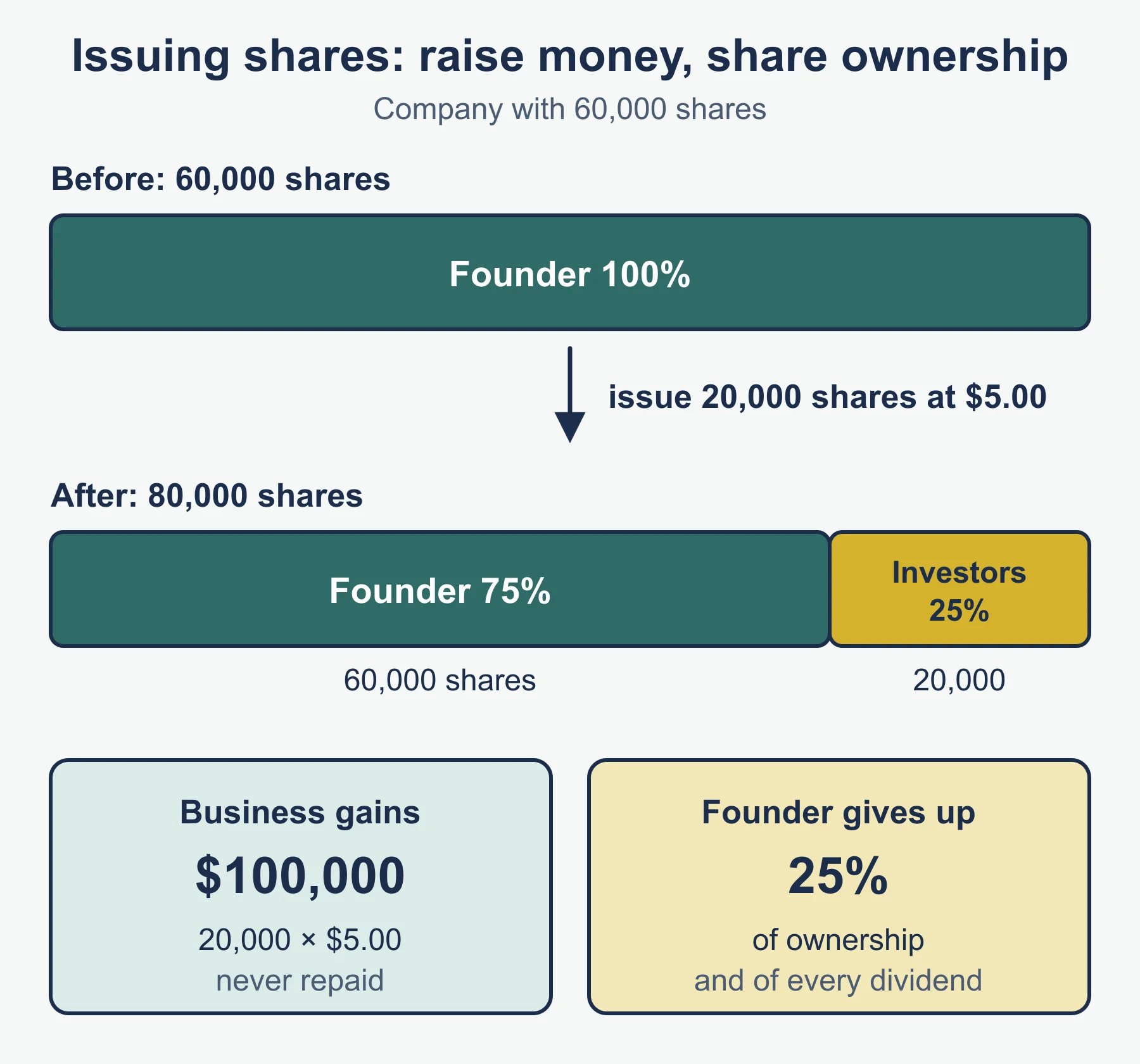
| Dilution | A fall in each existing owner’s percentage share when new shares are issued |
3.1 in a nutshell
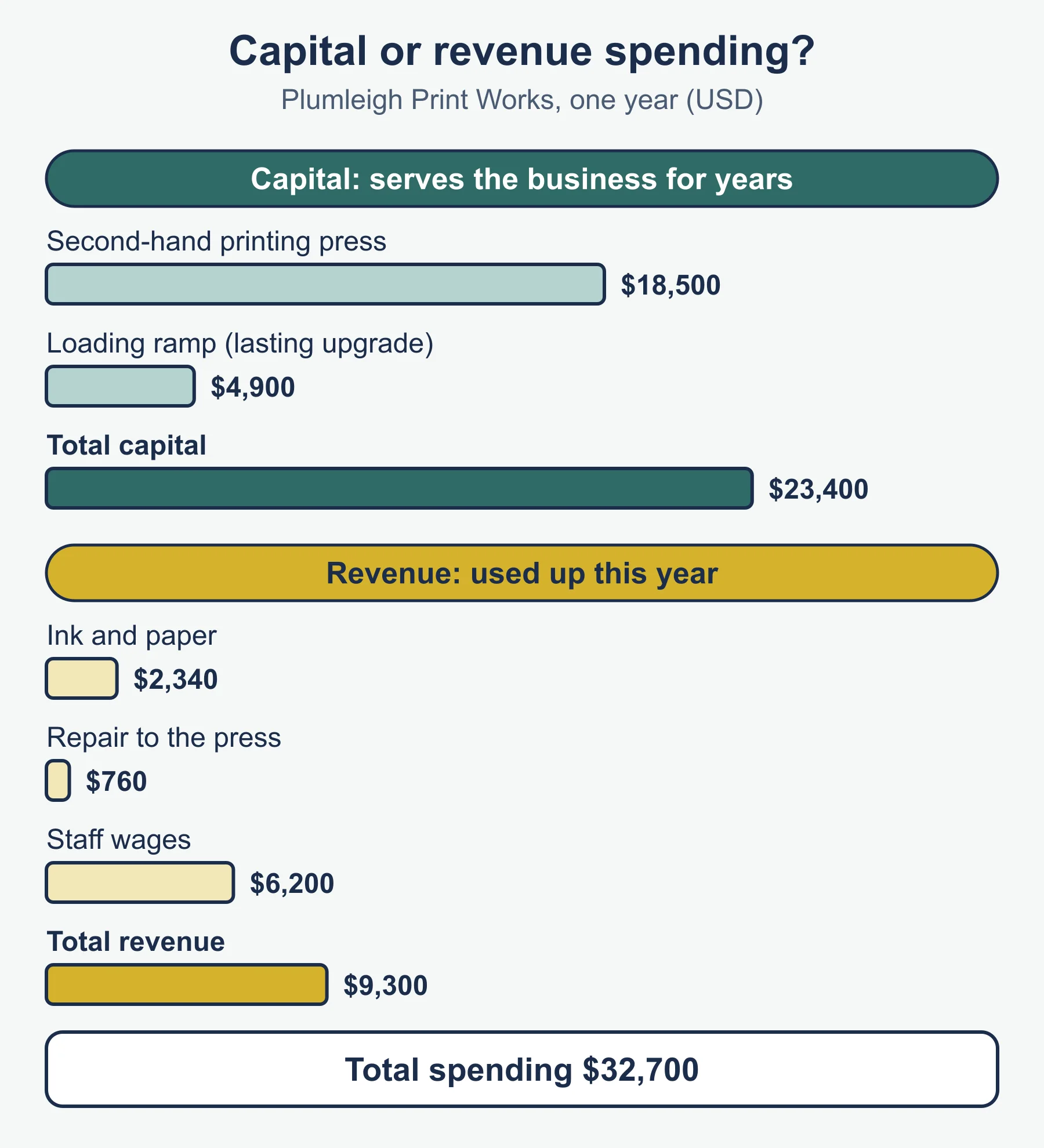
- Role of finance: start-up costs, day-to-day cash needs, and growth or change. It also gives a cushion in a poor period.
- Capital expenditure: machines, vehicles, buildings, major upgrades. Large, occasional.
- Revenue expenditure: wages, materials, rent, utilities, ordinary repairs. Smaller, recurring.
- The test: does it benefit the business beyond this year (capital) or only keep it running now (revenue)?
- Link: capital spending usually needs longer-term finance. Revenue spending is met from trading cash.
Method in steps: classify spending
- Ask whether the item will still be useful in more than a year.
- If yes, and it buys or improves an asset, it is capital.
- If it restores an asset to its working condition or is a running cost, it is revenue.
- Add each group separately. Check that the two totals add up to the whole.
Small example: Mossby Signs buys a cutting machine for USD 12,000 and a large-format printer for USD 3,500, then spends USD 900 on vinyl and USD 450 on a service for an older machine. Capital is 12,000 + 3,500 = USD 15,500. Revenue is 900 + 450 = USD 1,350.
3.2 sources at a glance
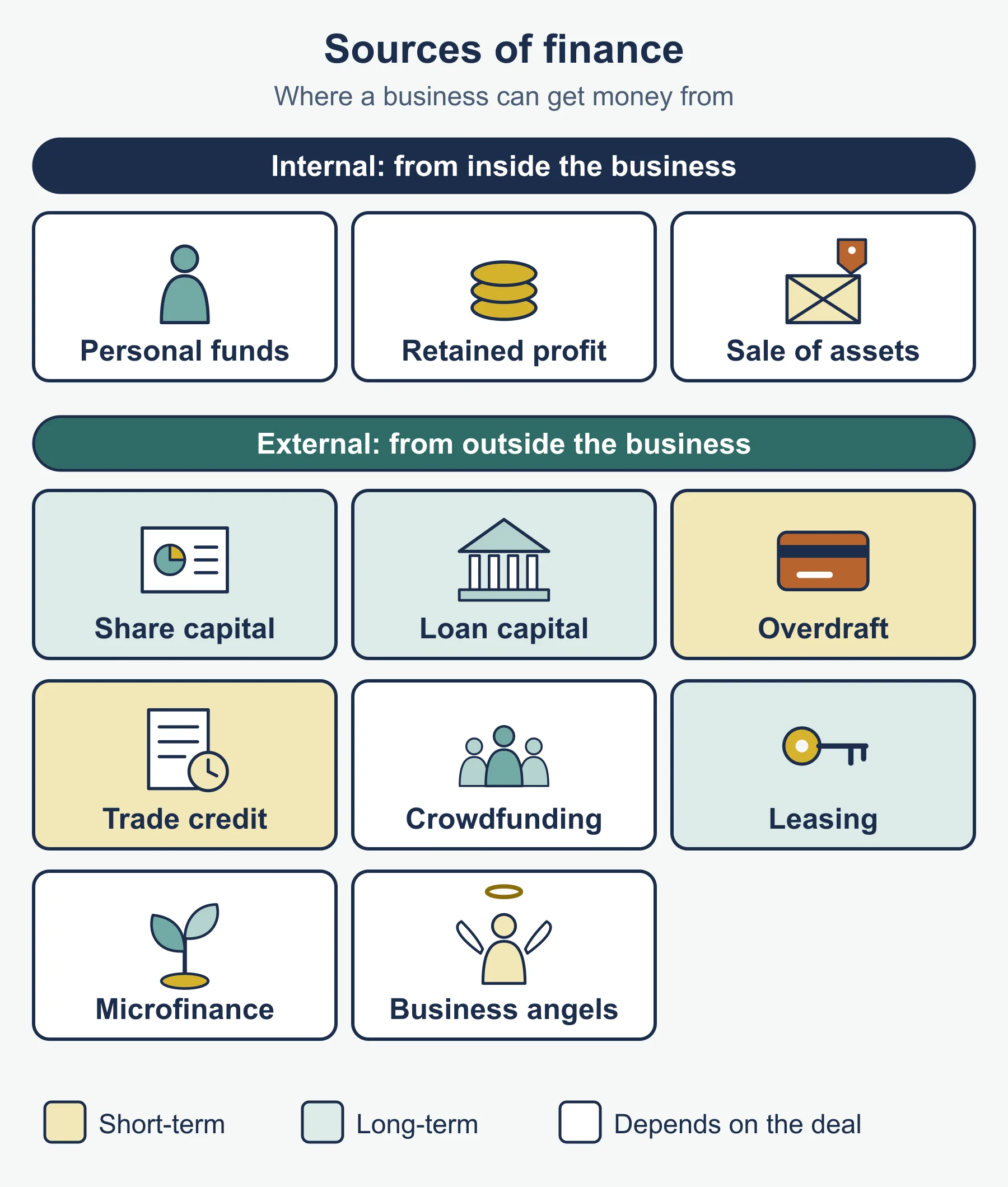
Internal
| Source | Key points for | Key points against |
|---|---|---|
| Personal funds (sole traders) | Quick, no interest, full control | Limited amount, personal risk |
| Retained profit | No interest, no outside party | Needs past profit, less for dividends |
| Sale of assets | No debt, uses idle resources | Few spare assets, may weaken capacity |
External
| Source | Typical term | Key points for | Key points against |
|---|---|---|---|
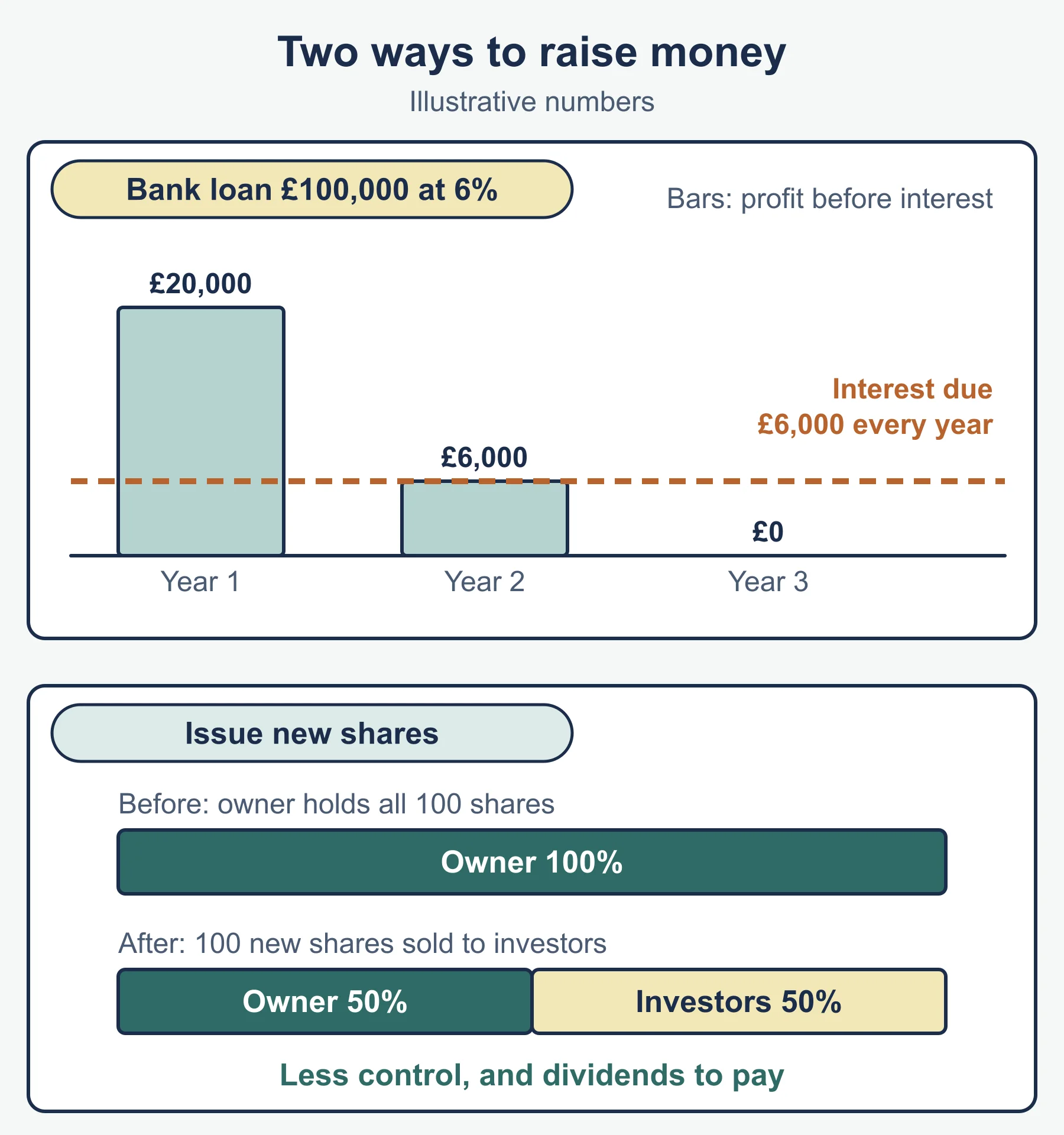
| Share capital | Long, no repayment | No repayment, no interest | Ownership diluted, dividends expected |
| Loan capital | Long | Keeps ownership, fixed cost | Interest due whatever the profit, collateral |
| Overdraft | Short | Flexible, pay only on use | High rate, can be recalled |
| Trade credit | Short | No interest if on time | Lost discounts, relationship risk |
| Crowdfunding | Varies | Tests demand, many small backers | Needs a good campaign, may fall short |
| Leasing | Medium to long | No large upfront cost | Total cost can exceed buying, no ownership |
| Microfinance providers | Short to medium | Small loans for those refused by banks | Small amounts, costly interest |
| Business angels | Long | Funds plus advice and contacts | Gives up ownership and some control |
Must-know distinctions
- Internal versus external: the question is where the money comes from, not how long it lasts.
- Share capital versus loan capital: shares give ownership and may earn dividends, but need no repayment. Loans are repaid with interest and give no ownership.
- Overdraft versus loan: an overdraft is a flexible short-term facility. A loan is a fixed sum over a set term.
- Leasing versus buying: leasing spreads the cost and avoids a big payment. Buying costs more at first and gives ownership.
- Crowdfunding versus business angel: many small contributors online versus one wealthy individual who usually wants a share and takes an interest.
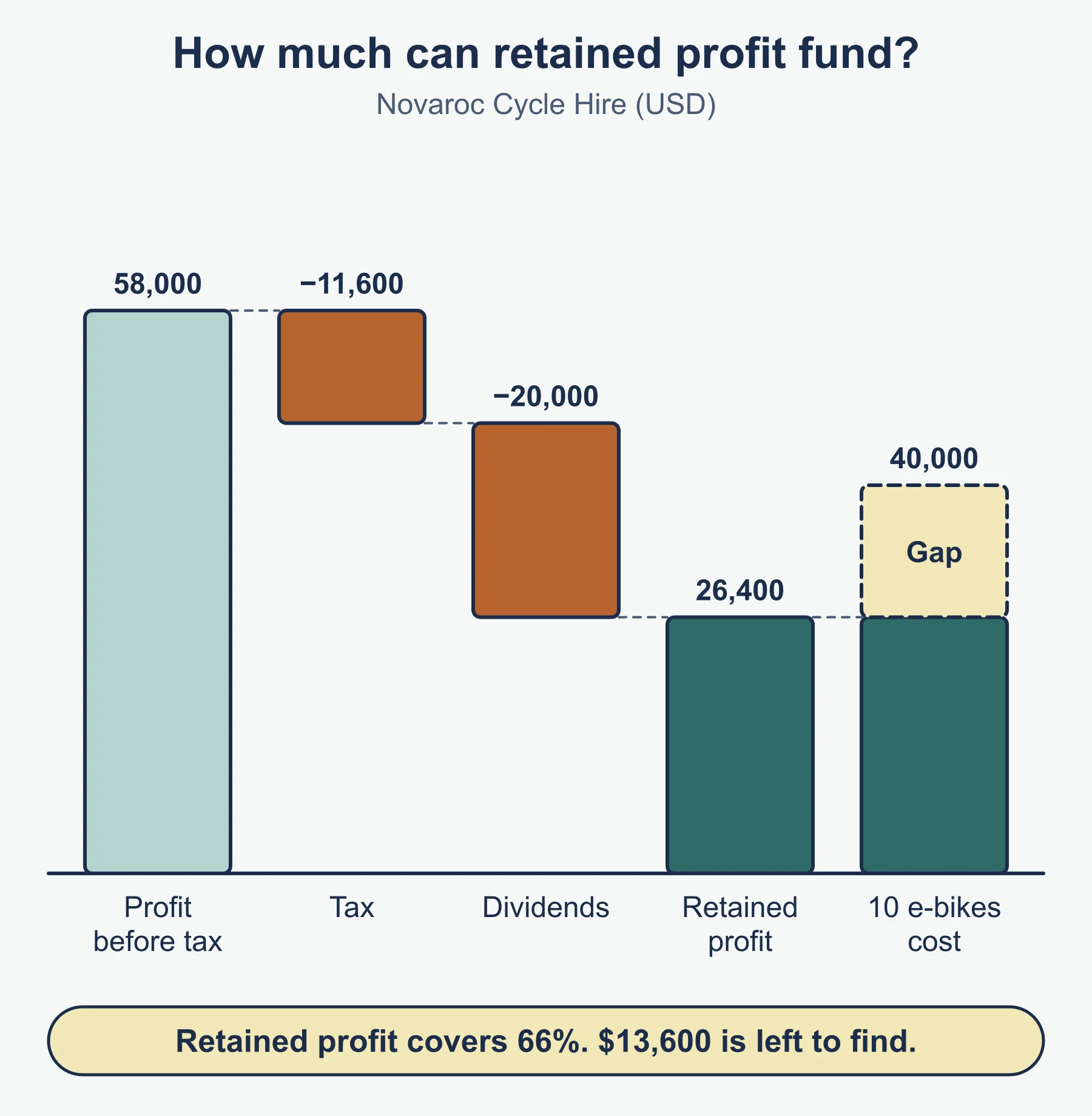
- Profit versus retained profit: retained profit is what remains after tax and dividends, and it is not necessarily held as cash.
Matching source to situation (AO3)
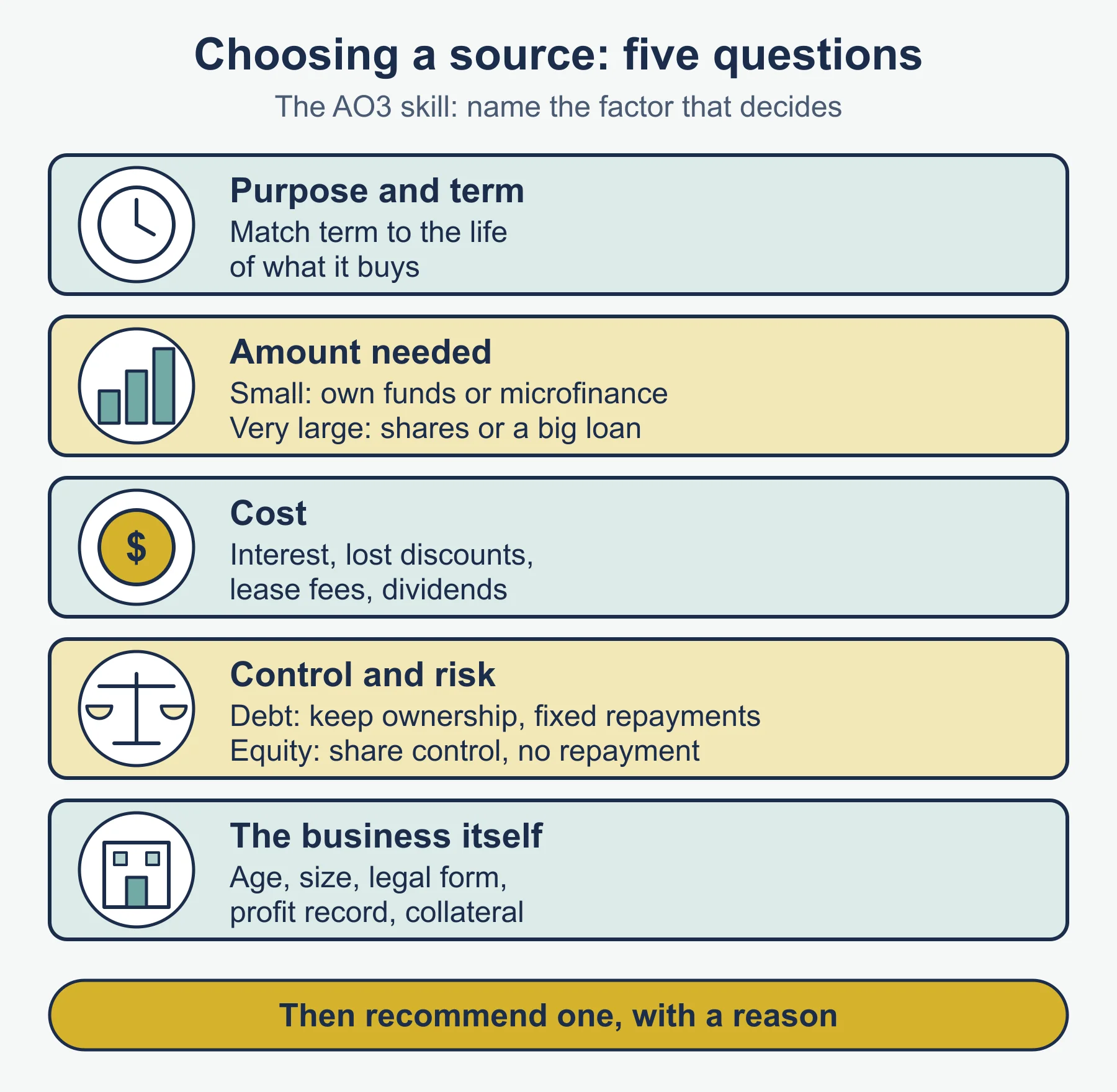
Run through these in order.
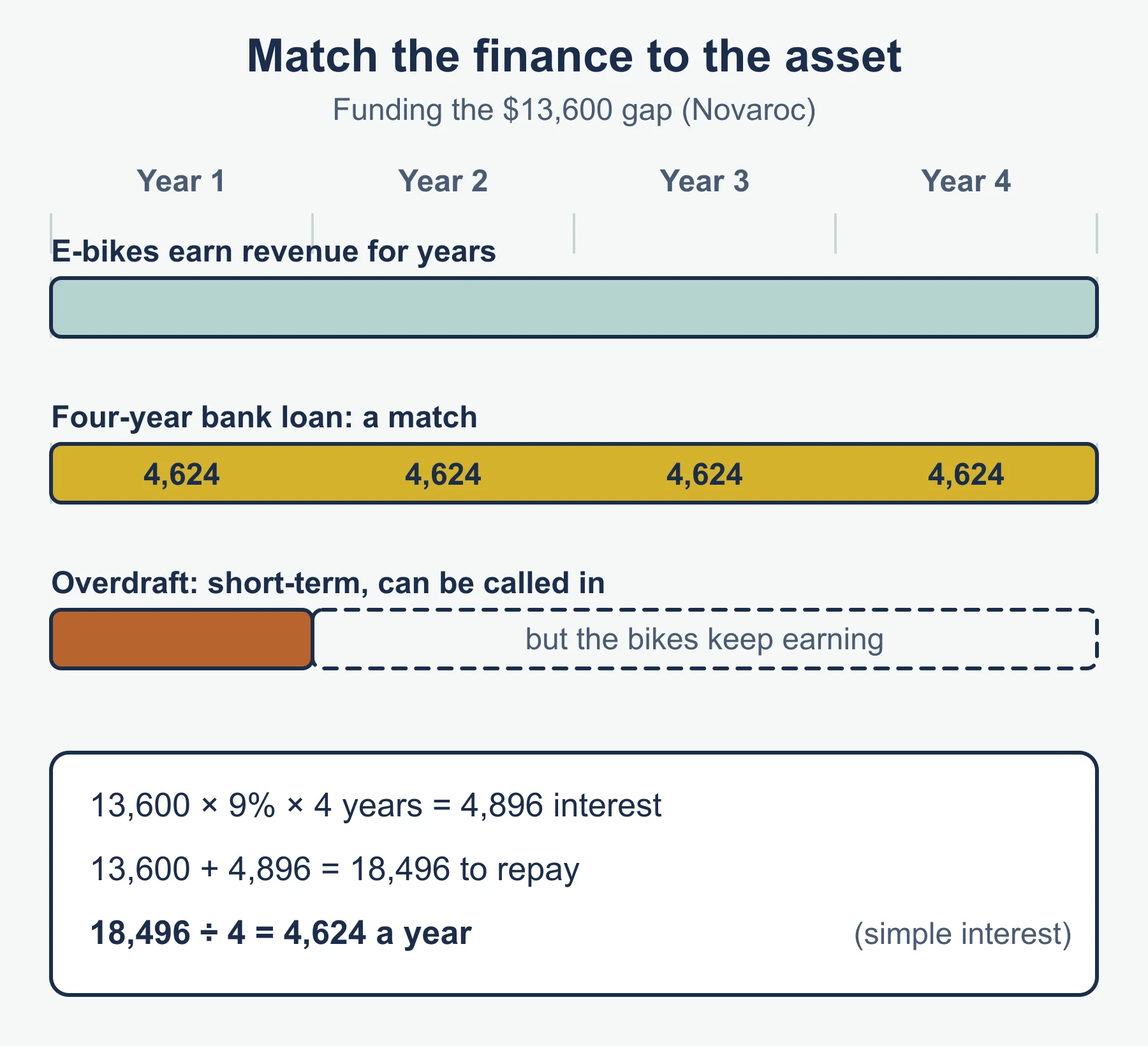
- What is the money for, and how long will it help the business? Match short with short and long with long.
- How much is needed? Small gaps suit personal funds, trade credit, an overdraft or microfinance. Large sums point to loans or shares.
- What does it cost in interest, fees or shared profit?
- How much control or risk is the owner willing to give up?
- What can this particular business actually access, given its age, record and legal form?
Finish with a clear judgment that says which factor mattered most and what would change your view.
Quick pairings to test against: a seasonal stock gap fits an overdraft or trade credit; a new factory fits a long-term loan or share issue; an unproven idea with no collateral may suit crowdfunding or a business angel; a tiny trader refused by banks may suit a microfinance provider.
Formulas and calculations to recall
The guide does not give formulas for these two sections. These are the standard forms.
| Calculation | Standard form |
|---|---|
| Retained profit | Profit after tax minus dividends |
| Funds raised by a share issue | Number of new shares x issue price |
| Ownership after an issue | Shares held / total shares after the issue x 100 |
| Simple interest | Amount x annual rate x time in years |
| Total cost of a loan (simple interest) | Amount borrowed + interest |
| Total cost of leasing | Regular payment x number of payments |
Always show the formula, the substitution and the unit. A number with no unit and no working is easy to lose marks on.
Command words for these sections
Use the glossary meanings from the guide.
- Define: give the precise meaning of the term. State: give a specific name, value or other brief answer without explanation or calculation.
- Outline: a brief account or summary.
- Explain: a detailed account with reasons or causes, so always add a “because” link to the business.
- Calculate: a numerical answer with the stages of working shown.
- Distinguish: make clear the differences between two items.
- Justify: give valid reasons or evidence to support an answer or conclusion. Recommend: present an advisable course of action with supporting evidence or reasons in relation to the situation given.
- Evaluate: weigh up strengths and limitations, then reach a conclusion.
Quick self-test
- State the difference between capital and revenue expenditure.
- A business spends USD 12,000 on a van and USD 1,350 on fuel and tyres. Calculate the capital expenditure.
- Profit after tax is USD 31,000 and dividends are USD 9,500. Calculate retained profit.
- Name two internal sources of finance.
- A firm borrows USD 8,000 on an overdraft at 15% a year for three months. Calculate the interest, using simple interest.
- A company issues 24,000 new shares at USD 2.50 each. Calculate the funds raised.
- The owner held all 36,000 shares before that issue and buys none of the new ones. Calculate the owner’s percentage afterwards.
- A machine costs USD 7,000. Compare the total of a three-year loan at 6% simple interest on the original sum with leasing at USD 250 a month for 36 months.
- Why is an overdraft a poor match for buying a building?
- Identify one reason a start-up might choose a business angel over a bank loan.
Answers
- Capital expenditure buys or improves assets used for more than a year. Revenue expenditure covers running costs used up within the year.
- USD 12,000 (the van). The fuel and tyres are revenue expenditure.
- 31,000 - 9,500 = USD 21,500.
- Any two of personal funds (for sole traders), retained profit, sale of assets.
- 8,000 x 0.15 x 3/12 = USD 300.
- 24,000 x 2.50 = USD 60,000.
- 36,000 / (36,000 + 24,000) = 36,000 / 60,000 = 60%.
- Loan: interest 7,000 x 0.06 x 3 = 1,260, so total USD 8,260. Lease: 250 x 36 = USD 9,000. The lease costs USD 740 more and gives no ownership unless the contract says so.
- A building lasts for decades but an overdraft is short-term, flexible and can be recalled, so repayment would not match the benefit.
- Without collateral or a trading record a bank may refuse. An angel may accept the risk, and may add experience and contacts.
Where marks are usually lost
- Writing “buying equipment” as the whole answer to “identify a source of finance”. Equipment is a use, not a source.
- Giving only advantages of a source and no limitation, or the reverse.
- Labelling every source as long-term or every source as short-term. Check the term in the table above.
- Not linking the source to the business in the stem. Use its size, age, legal form or the purpose given.
- Saying “loans are cheap” without comparing interest or repayment against likely returns.
- Mixing up capital expenditure with capital employed or share capital. They are different ideas.
- Treating retained profit as spare cash available on demand.
- Ending an appropriateness question without a judgment or a justification.
Frequently asked questions
What is the difference between internal and external sources of finance? Internal sources come from inside the business or its owner: personal funds for sole traders, retained profit and sale of assets. External sources come from outside, such as share capital, loan capital, overdrafts, trade credit, crowdfunding, leasing, microfinance providers and business angels.
What is the difference between share capital and loan capital? Share capital gives investors ownership and may earn them dividends, but it never has to be repaid. Loan capital keeps ownership with the existing owners but must be repaid with interest whatever the profit.
Why is an overdraft a poor way to buy a building? A building lasts for decades, but an overdraft is short-term, flexible and can be recalled by the bank, so repayment would not match the period over which the building brings benefits.
Is retained profit the same as cash in the bank? No. Retained profit is a record of profit kept in the business after tax and dividends, and it may already have been spent on assets, so it is not necessarily held as cash.
Official syllabus
IB Diploma Programme Business management guide, first assessment 2024, published by the International Baccalaureate Organization. Sections 3.1 Introduction to finance and 3.2 Sources of finance.
Get free revision emails (optional)
Occasional emails with practice questions, worked explanations and links to free resources for the qualification and subjects you choose. No spam, and you can unsubscribe from any email. The free tools on this site never need an email.
Related resources
-
Study guides
IB DP Business Management: Investment appraisal
Study guide to IB DP Business Management section 3.8: payback period, average rate of return and NPV (HL only), with worked examples and judgement skills.
Business · International Baccalaureate · IB
Read guide -
Practice questions
IB DP Business Management: Investment appraisal – Practice Questions
Original IB DP Business Management practice questions on 3.8 Investment appraisal: payback, ARR and NPV (HL only), with fully worked answers.
Business · International Baccalaureate · IB
Try questions -
Revision notes
IB DP Business Management: Investment appraisal – Revision Notes
Condensed IB DP Business Management revision notes for 3.8 Investment appraisal: payback, ARR, NPV (HL only), method steps, a self-test and common slips.
Business · International Baccalaureate · IB
Revise topic
Related articles
-
teaching
A Level tuition in Dubai: Cambridge or Pearson Edexcel International A Level?
Schools in Dubai and Abu Dhabi teach either Cambridge International AS & A Level or Pearson Edexcel International A Level. How the two are structured, why it matters for tuition, and how online classes from Lahore work.
9 October 2026
-
curriculum guides
Choosing subjects at IGCSE and A Level
How subject choices at 14 and 16 affect university options later, and how to keep pathways open without overloading a timetable.
28 July 2026
Studying this with a teacher
Working through Business IB?
This page is free and stays free. If you would rather be taught it, Marlbridge runs Business classes one-to-one, online in your own time zone. The first trial class is free. WhatsApp replies within an hour (8am–11pm Pakistan time, every day); email the same day.
IB Business teachers at Marlbridge

