
Revision Notes
IB DP Business Management: Profitability, liquidity and efficiency ratios (HL only) – Revision Notes
Condensed IB DP Business Management revision notes on ratio analysis: formulae, method steps, strategies, insolvency and a self-test for 3.5 and 3.6.
- Subject
- Business
- Level
- IB
- Topic
- Unit 3: Finance and accounts
- Author
- Marlbridge Academic Team
- Updated
- Reviewed by
- Salman Ahmad (what this means)
Aligned to International Baccalaureate IB Diploma Programme Business (DP Business Management), First assessment 2024. Official specification .
Syllabus page (what it covers and how it is assessed): IB Diploma Programme Business.
Syllabus points this page covers
DP Business Management
- 3.5 Profitability and liquidity ratio analysis
- 3.6 Efficiency ratio analysis (HL only)
Found an error? Report a correction.
Need help with this topic? Request a free trial class for IB Diploma Programme Business (DP Business Management).
Use these notes after the study guide, which explains each ratio in full. They condense sections 3.5 (Profitability and liquidity ratio analysis, SL/HL) and 3.6 (Efficiency ratio analysis, HL only) of the IB Business management guide, first assessment 2024. Money figures are in dollars and the businesses are invented.
Links: Business Management hub, printable checklist, practice set, Unit 3 overview, Unit 3 revision notes and the free diagnostics.
Formulae (as the guide’s appendix gives them)
| Ratio | Formula | Unit | Level |
|---|---|---|---|
| Gross profit margin | gross profit ÷ sales revenue × 100 | % | SL/HL |
| Profit margin | profit before interest and tax ÷ sales revenue × 100 | % | SL/HL |
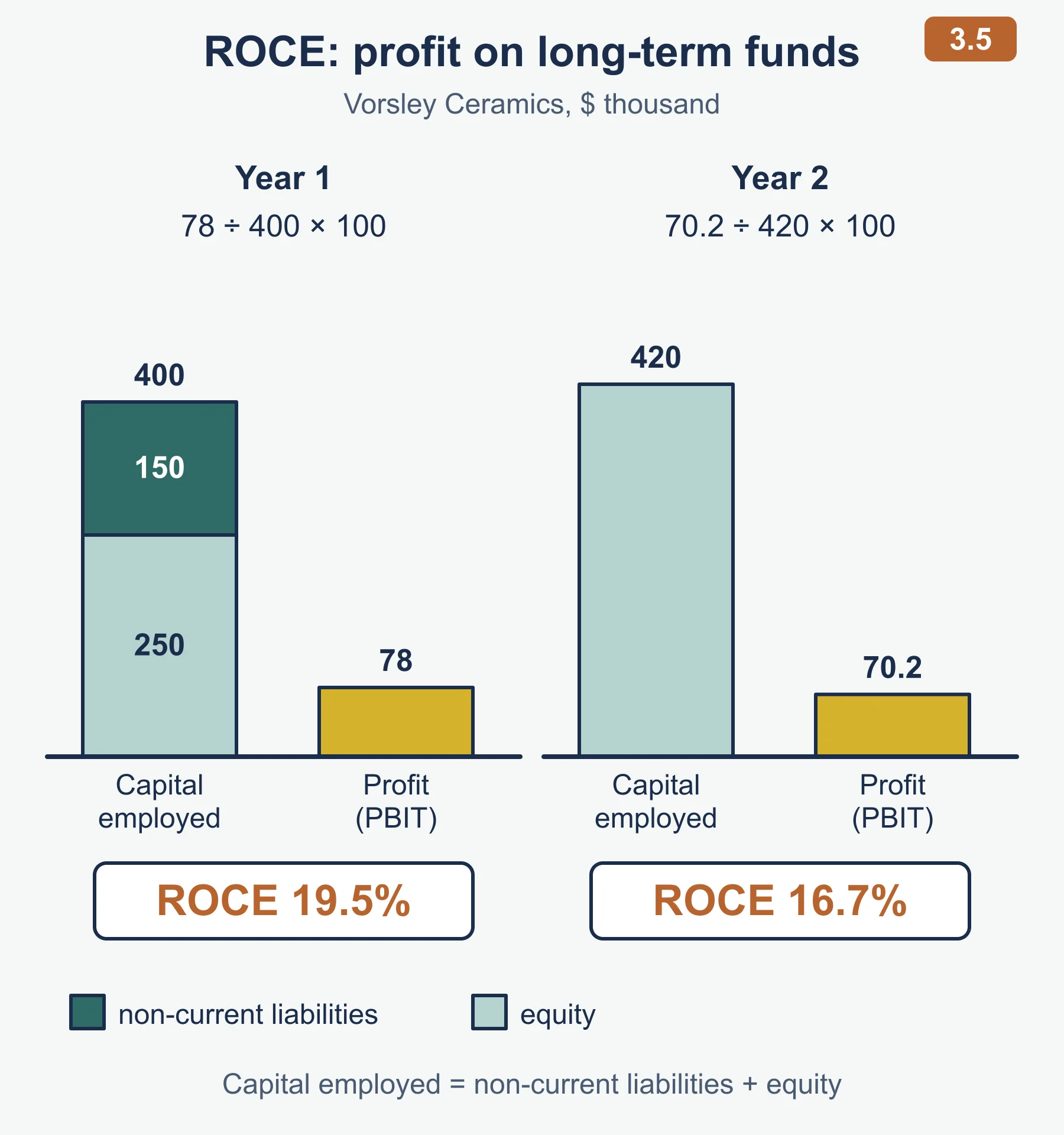
| ROCE | profit before interest and tax ÷ capital employed × 100 | % | SL/HL |
| Current ratio | current assets ÷ current liabilities | ratio | SL/HL |
| Acid test (quick) ratio | (current assets − stock) ÷ current liabilities | ratio | SL/HL |
| Stock turnover (times) | cost of sales ÷ average stock | times | HL only |
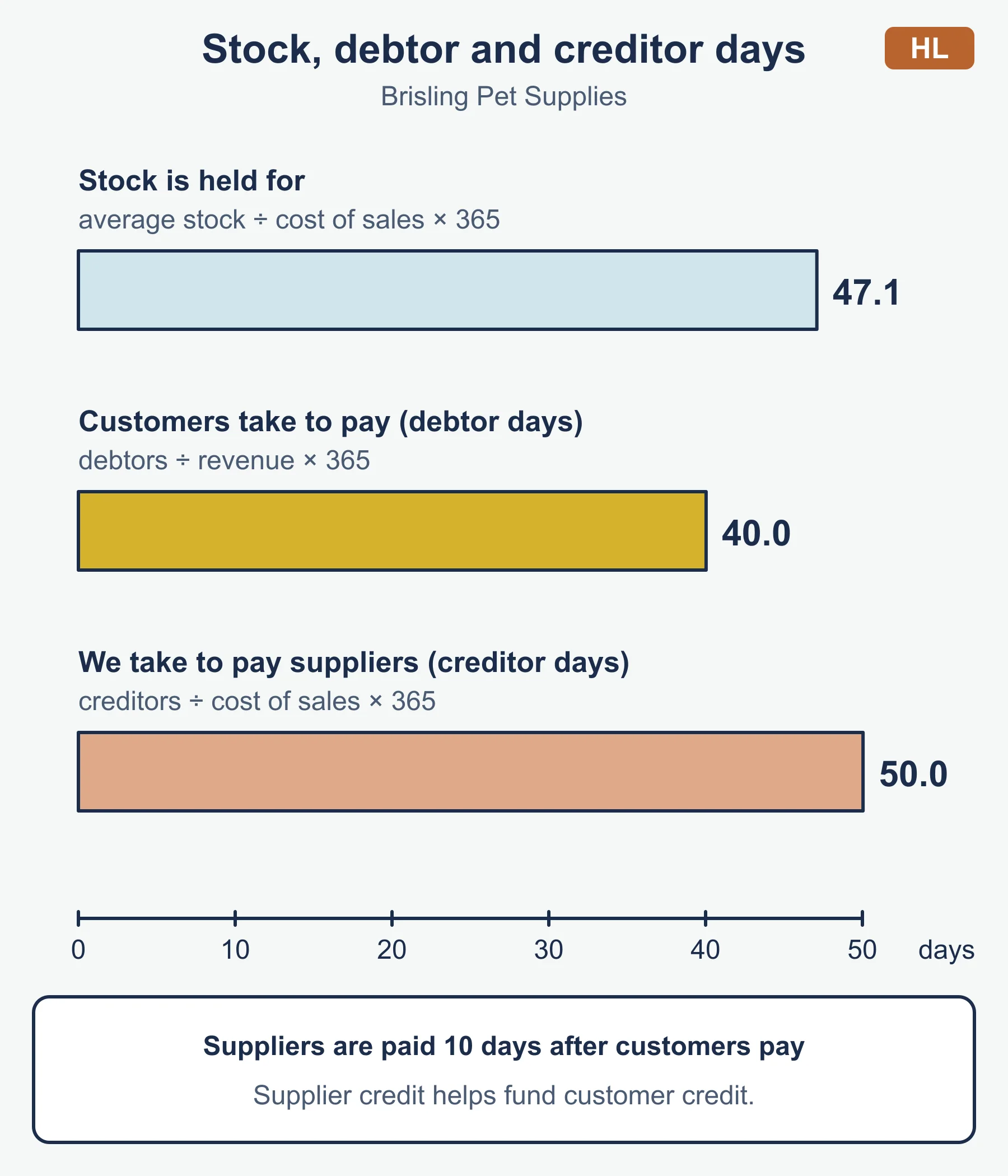
| Stock turnover (days) | average stock ÷ cost of sales × 365 | days | HL only |
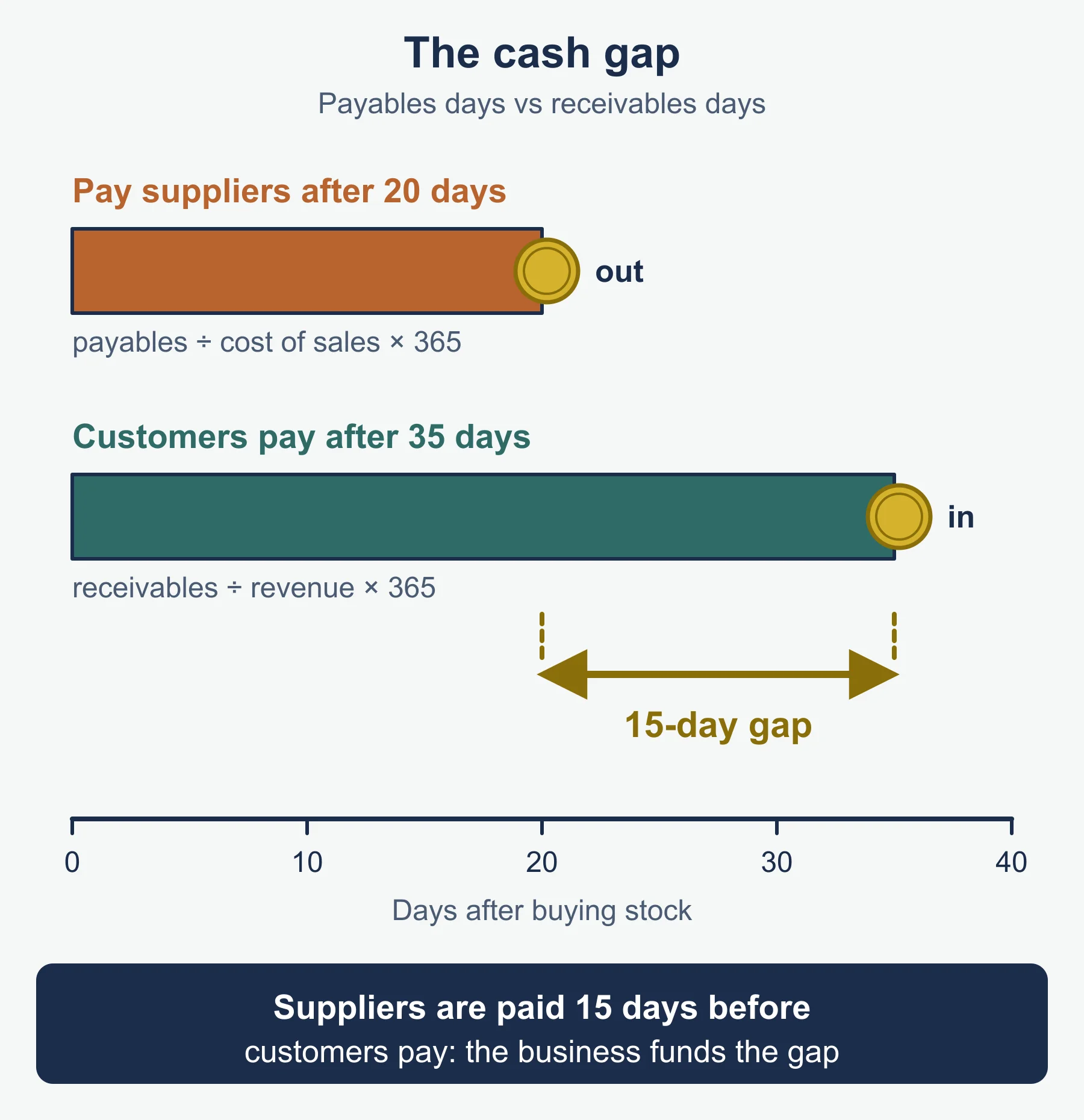
| Debtor days | debtors ÷ total sales revenue × 365 | days | HL only |
| Creditor days | creditors ÷ cost of sales × 365 | days | HL only |
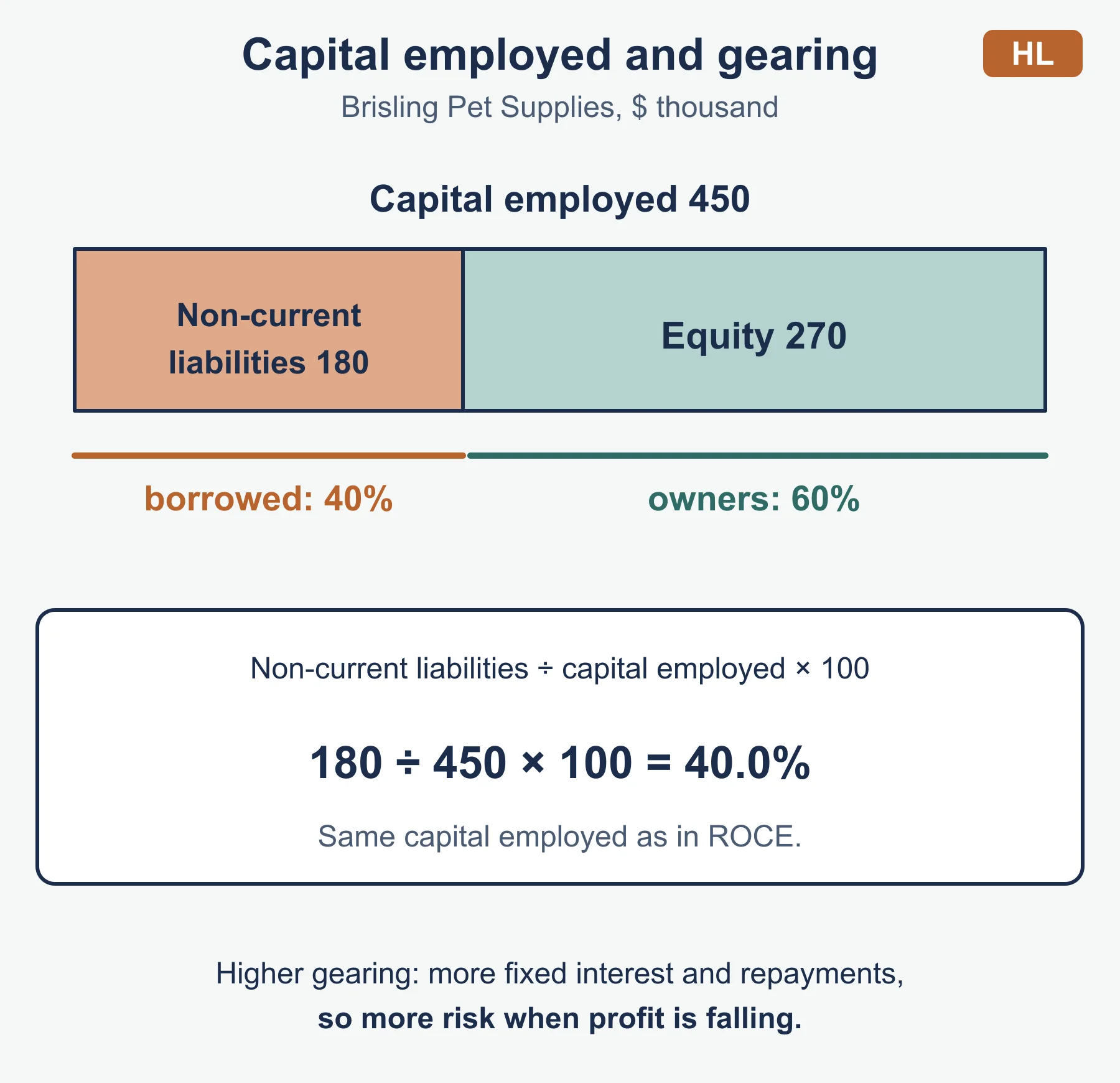
| Gearing ratio | non-current liabilities ÷ capital employed × 100 | % | HL only |
Supporting definitions:
- Capital employed = non-current liabilities + equity.
- Average stock = (opening stock + closing stock) ÷ 2.
- The guide’s appendix says students are given the formulae in the examination. You still need to know which line of the accounts each input comes from.
Where each input comes from
| Input | Found in |
|---|---|
| Sales revenue, cost of sales, gross profit, profit before interest and tax | Statement of profit or loss (profit and loss account) |
| Current assets (stock, debtors, cash), current liabilities (creditors, overdraft) | Statement of financial position (balance sheet) |
| Non-current liabilities, equity, so capital employed | Statement of financial position |
| Opening stock | Last year’s statement of financial position or the figure the case gives |
Method in steps
- Write the formula. Name the profit figure or the stock figure you are using.
- Collect each input and check whether the case gives a total or a list that you must add.
- Substitute, calculate, and show the working.
- State the unit (%, times, days or a plain ratio) and a sensible rounding.
- For comment, evaluate or recommend questions, compare with another year, another business or an objective, and use case facts.
Worked reminders
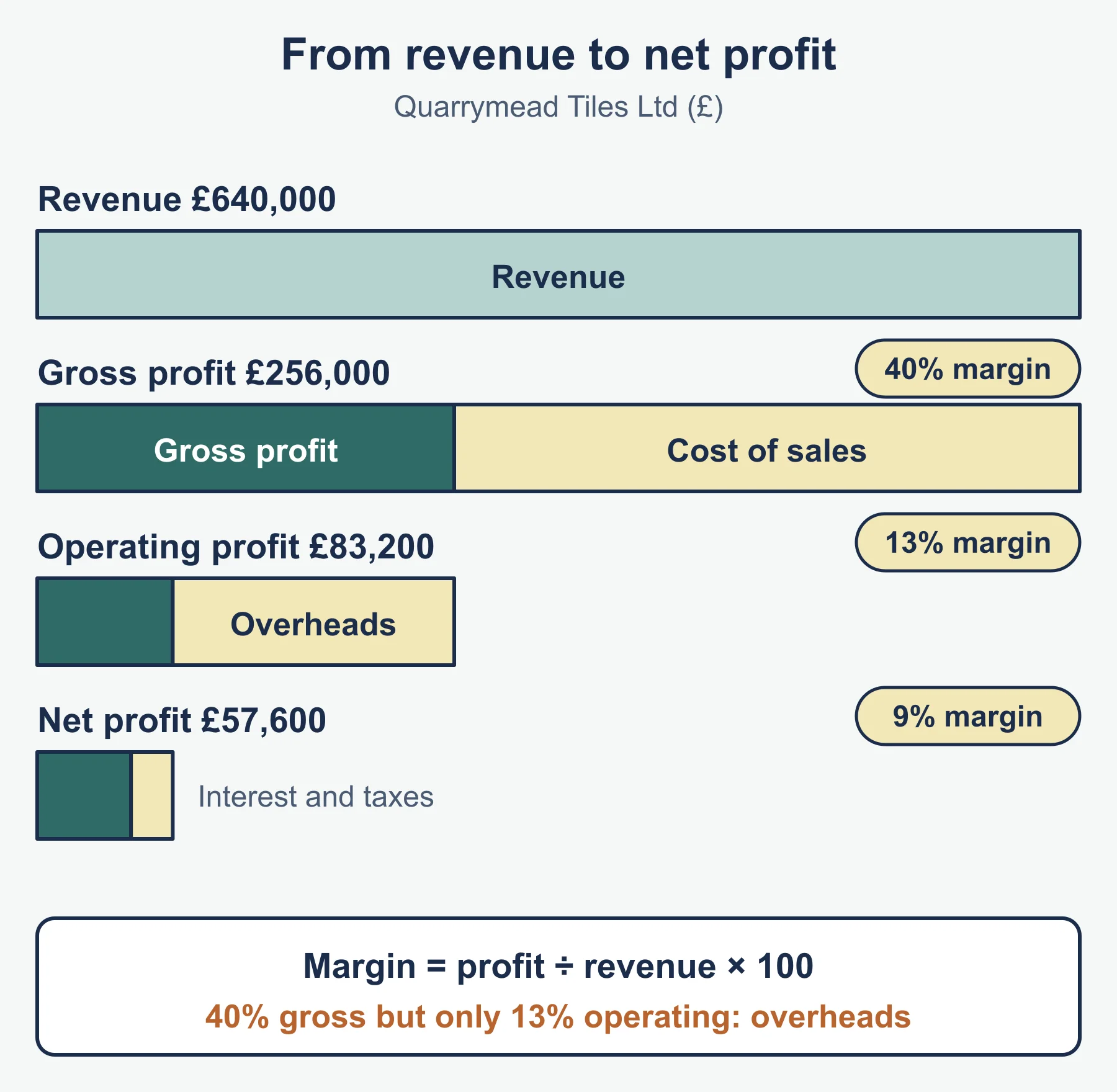
Profitability: Gromwell Bakery
Sales revenue 350,000, cost of sales 210,000, other expenses 84,000, non-current liabilities 120,000, equity 200,000.
Gross profit = 350,000 - 210,000 = 140,000 -> margin = 40.0%
Profit before interest and tax = 140,000 - 84,000 = 56,000
Profit margin = 56,000 / 350,000 x 100 = 16.0%
Capital employed = 120,000 + 200,000 = 320,000
ROCE = 56,000 / 320,000 x 100 = 17.5%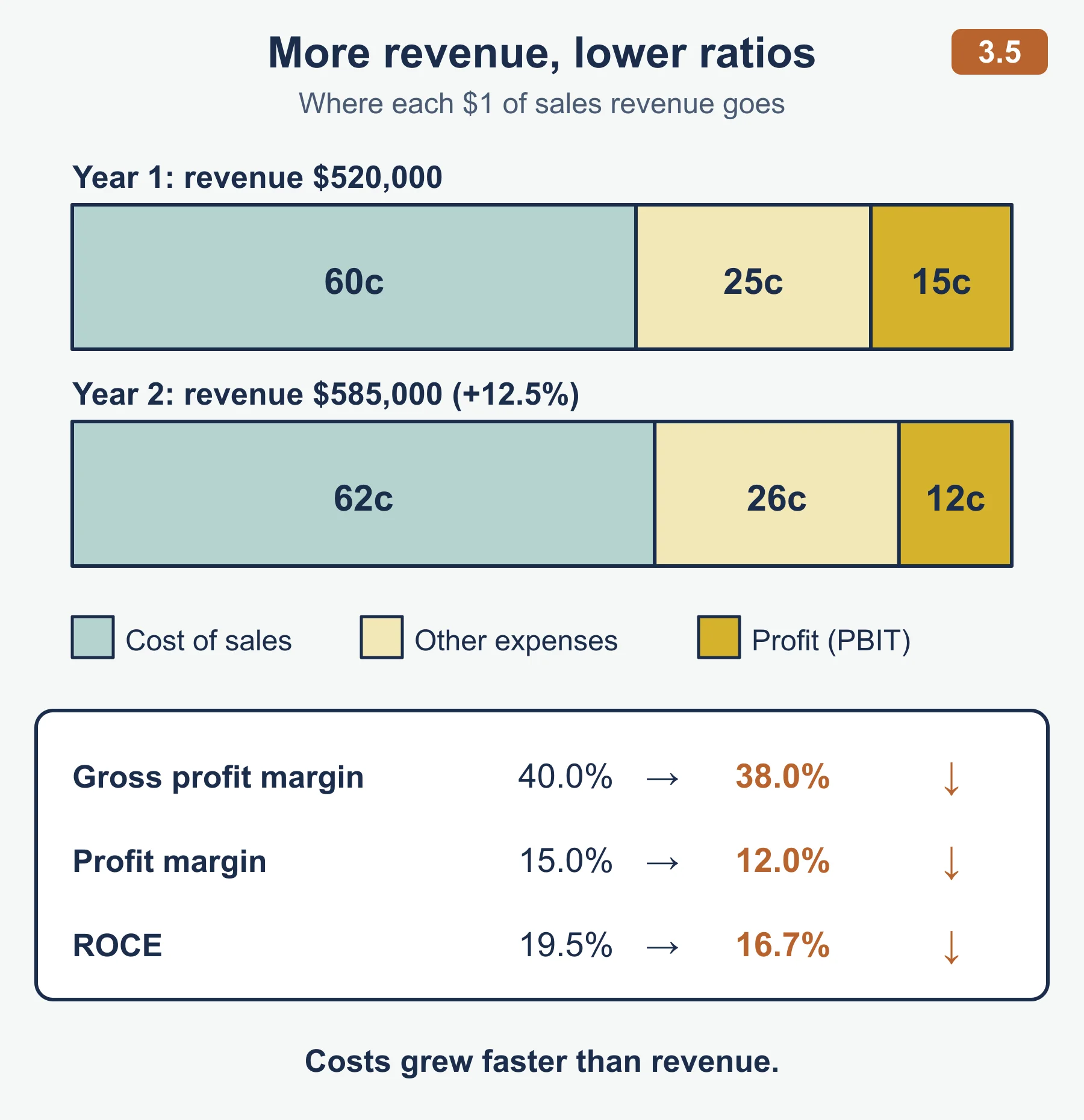
Liquidity: Faldane Toys
Stock 40,000, debtors 18,000, cash 7,000; current liabilities 50,000.
Current assets = 40,000 + 18,000 + 7,000 = 65,000
Current ratio = 65,000 / 50,000 = 1.3
Acid test = (65,000 - 40,000) / 50,000 = 0.5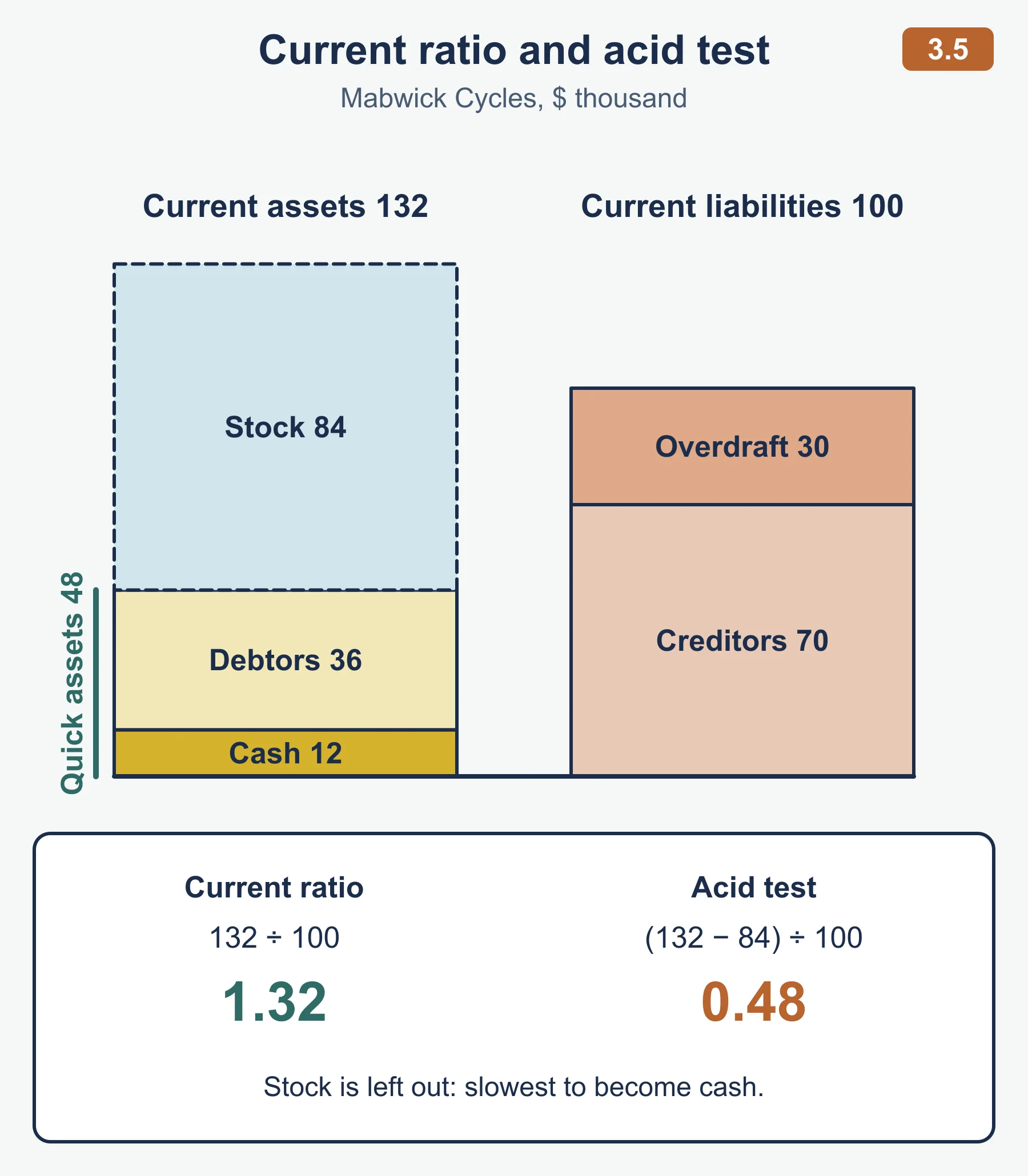
Efficiency (HL): Sawtry Timber
Cost of sales 455,000; sales revenue 700,000; opening stock 55,000; closing stock 75,000; debtors 56,000; creditors 39,000; non-current liabilities 90,000; equity 210,000.
Average stock = (55,000 + 75,000) / 2 = 65,000
Stock turnover = 455,000 / 65,000 = 7.0 times
Stock turnover in days = 65,000 / 455,000 x 365 = 52.1 days
Debtor days = 56,000 / 700,000 x 365 = 29.2 days
Creditor days = 39,000 / 455,000 x 365 = 31.3 days
Gearing = 90,000 / (90,000 + 210,000) x 100 = 30.0%
Strategies at a glance
| Ratio | Raise or lower? | Possible strategies |
|---|---|---|
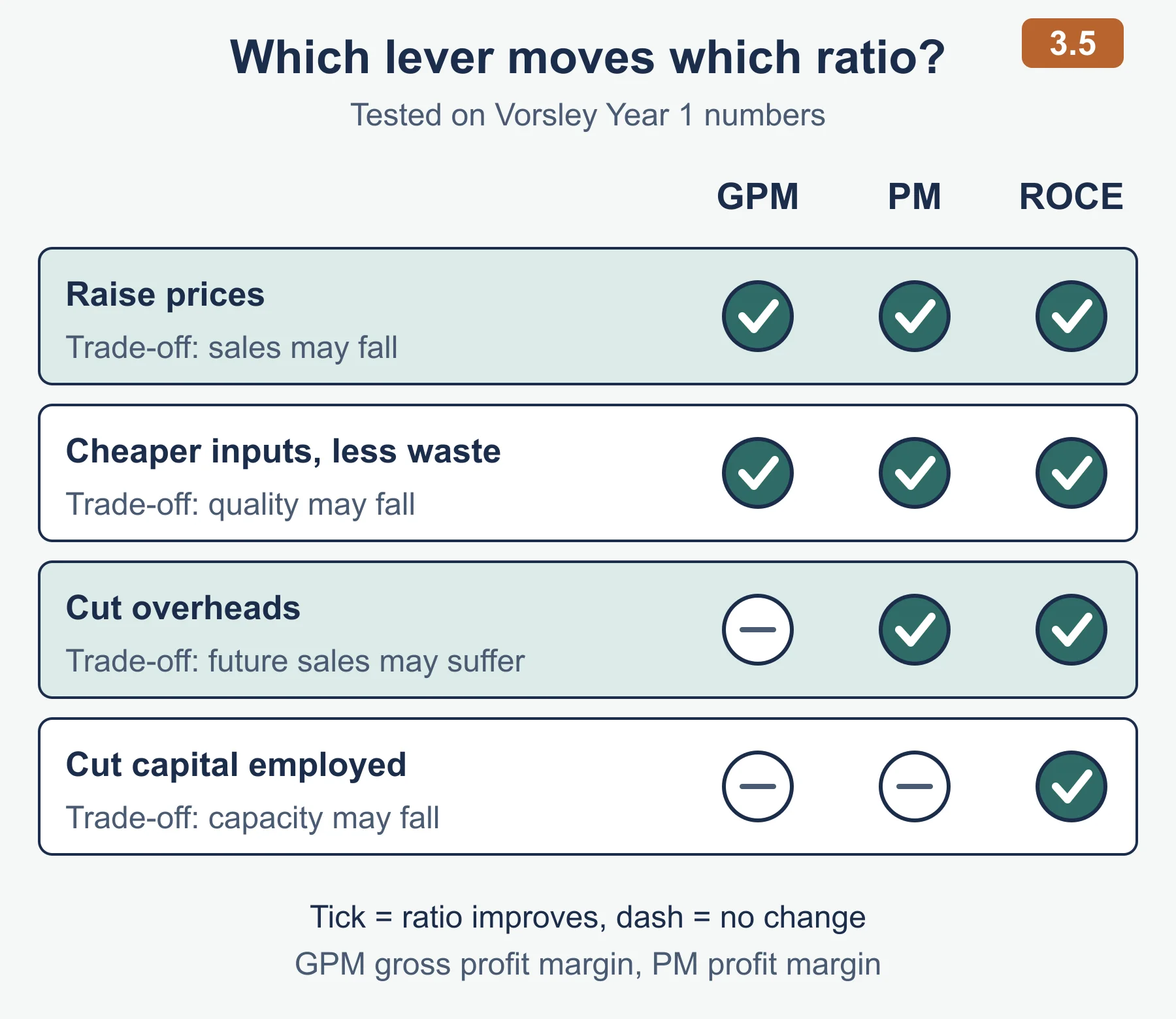
| Gross profit margin | Raise | Higher selling price, cheaper inputs, richer product mix, less waste |
| Profit margin | Raise | Gross profit strategies plus lower overheads |
| ROCE | Raise | More profit before interest and tax, or less capital employed |
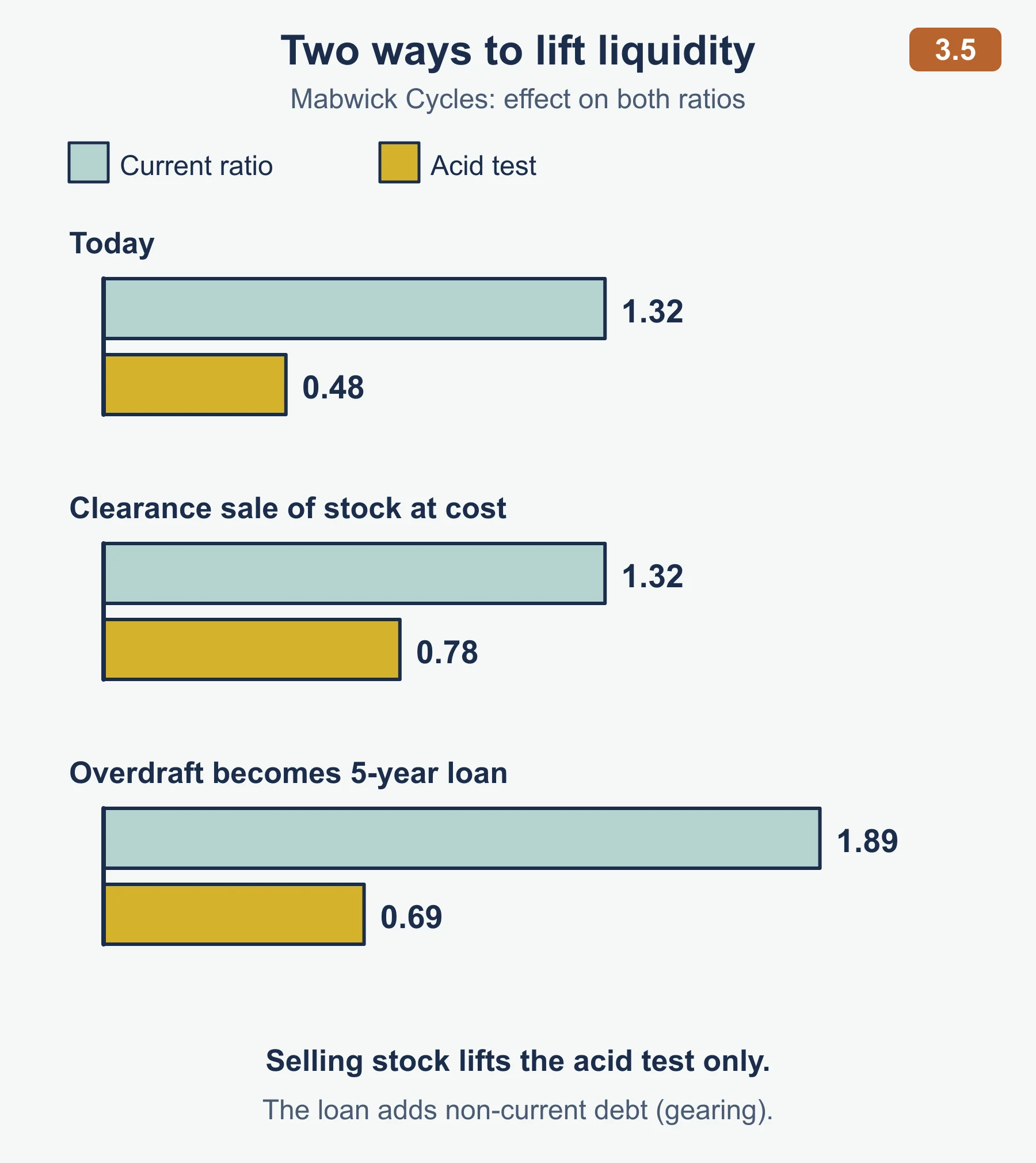
| Current ratio | Raise if too low | Sell stock above cost, replace short-term debt with long-term finance, sell unused assets, raise equity |
| Acid test | Raise if too low | Turn stock into cash, speed up debtor payments, extend supplier credit, replace overdraft with a longer loan |
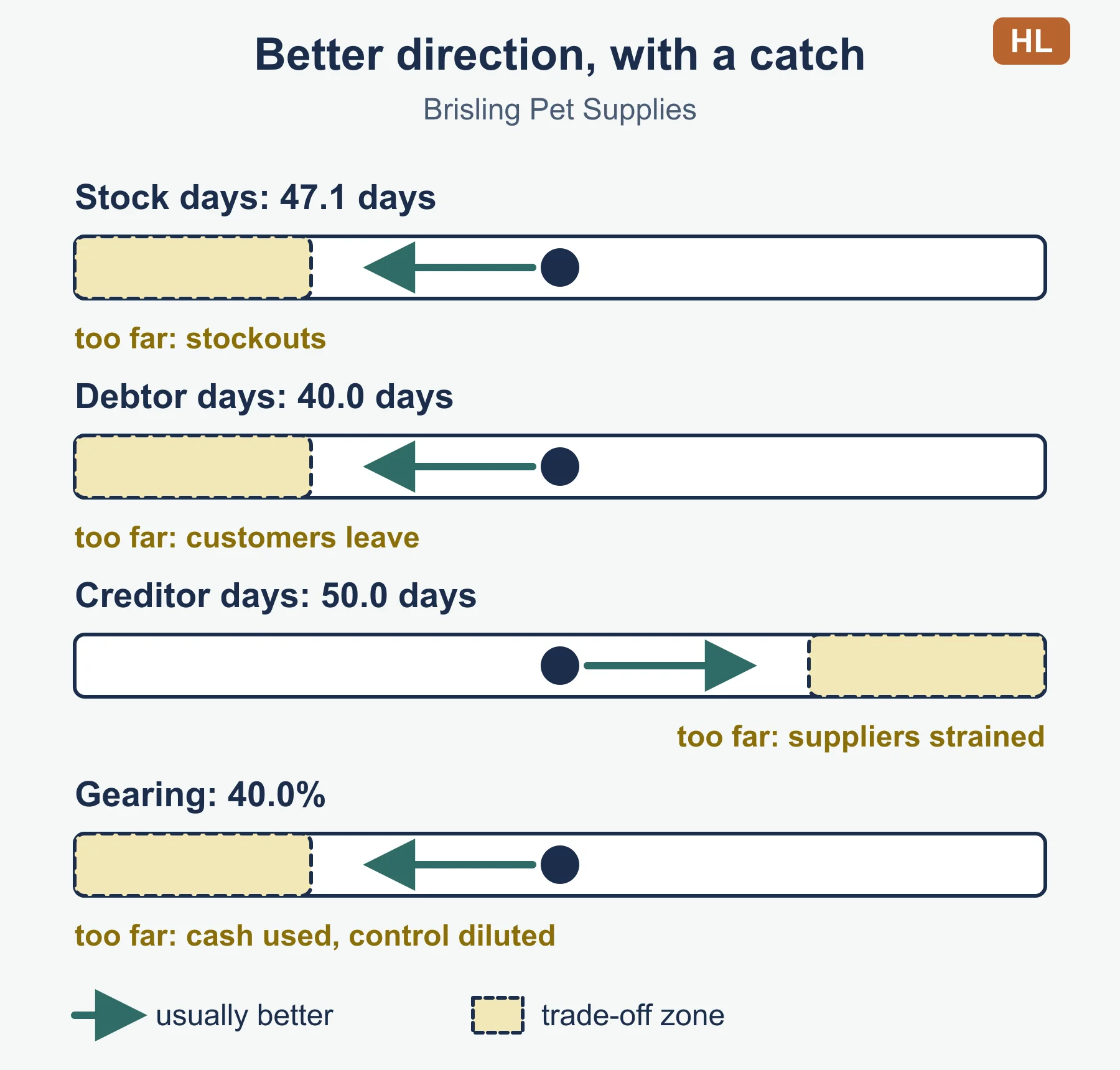
| Stock turnover | More times, fewer days | Just-in-time ordering, drop slow lines, promote old stock |
| Debtor days | Lower | Credit control, early payment discounts, shorter terms, factoring |
| Creditor days | Longer, within terms | Negotiate extended terms with suppliers |
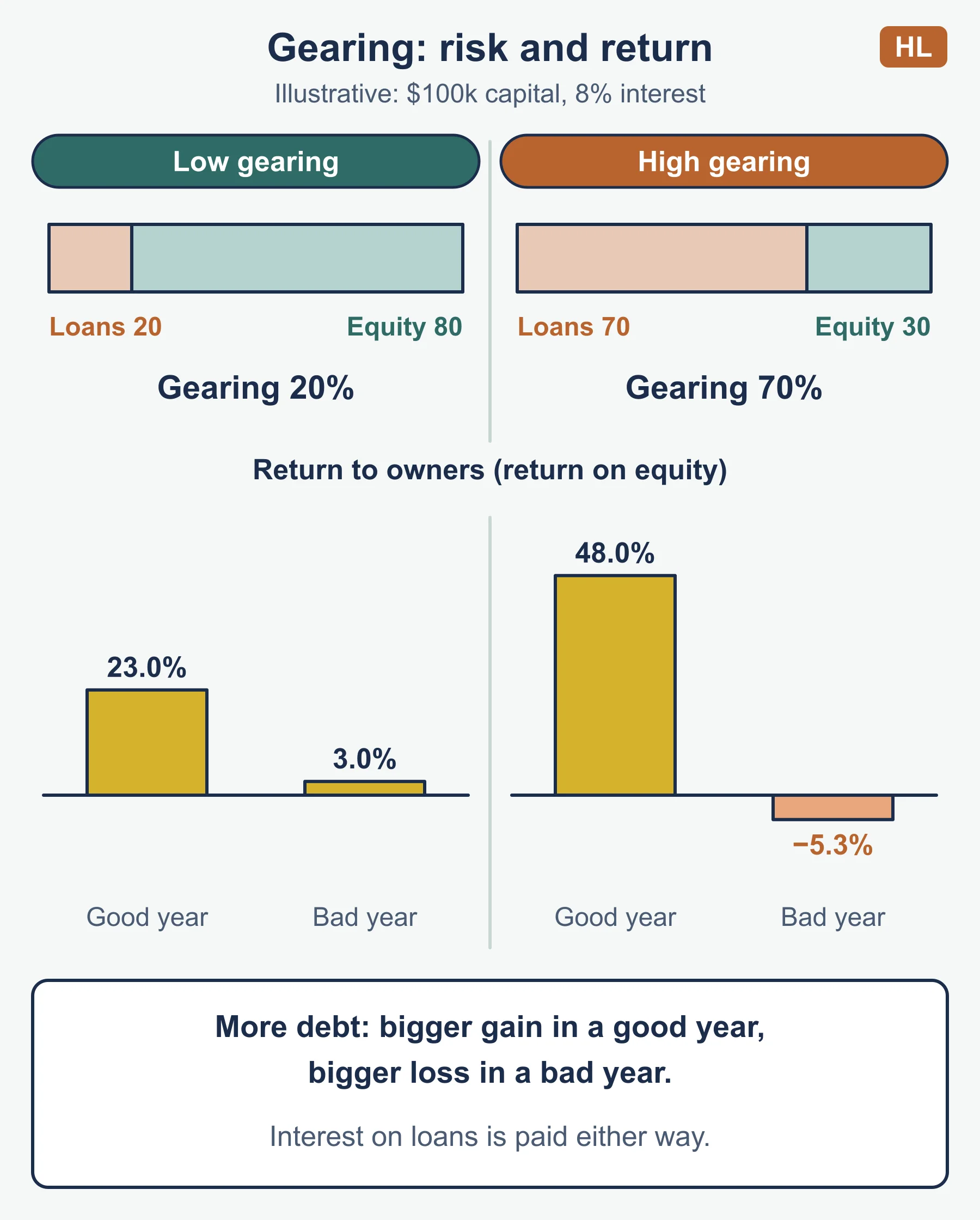
| Gearing | Lower, if risk is the concern | Repay debt from retained profit, issue shares |
For every strategy, add the cost or risk. A strategy without a trade-off earns less than one that weighs it.
Must-know distinctions
- Profit margin versus gross profit margin. The first is after overheads (profit before interest and tax). The second is after cost of sales only.
- Profit margin versus ROCE. One compares profit with sales revenue; the other compares it with long-term funds.
- Current ratio versus acid test. The acid test removes stock because it is the slowest current asset to turn into cash.
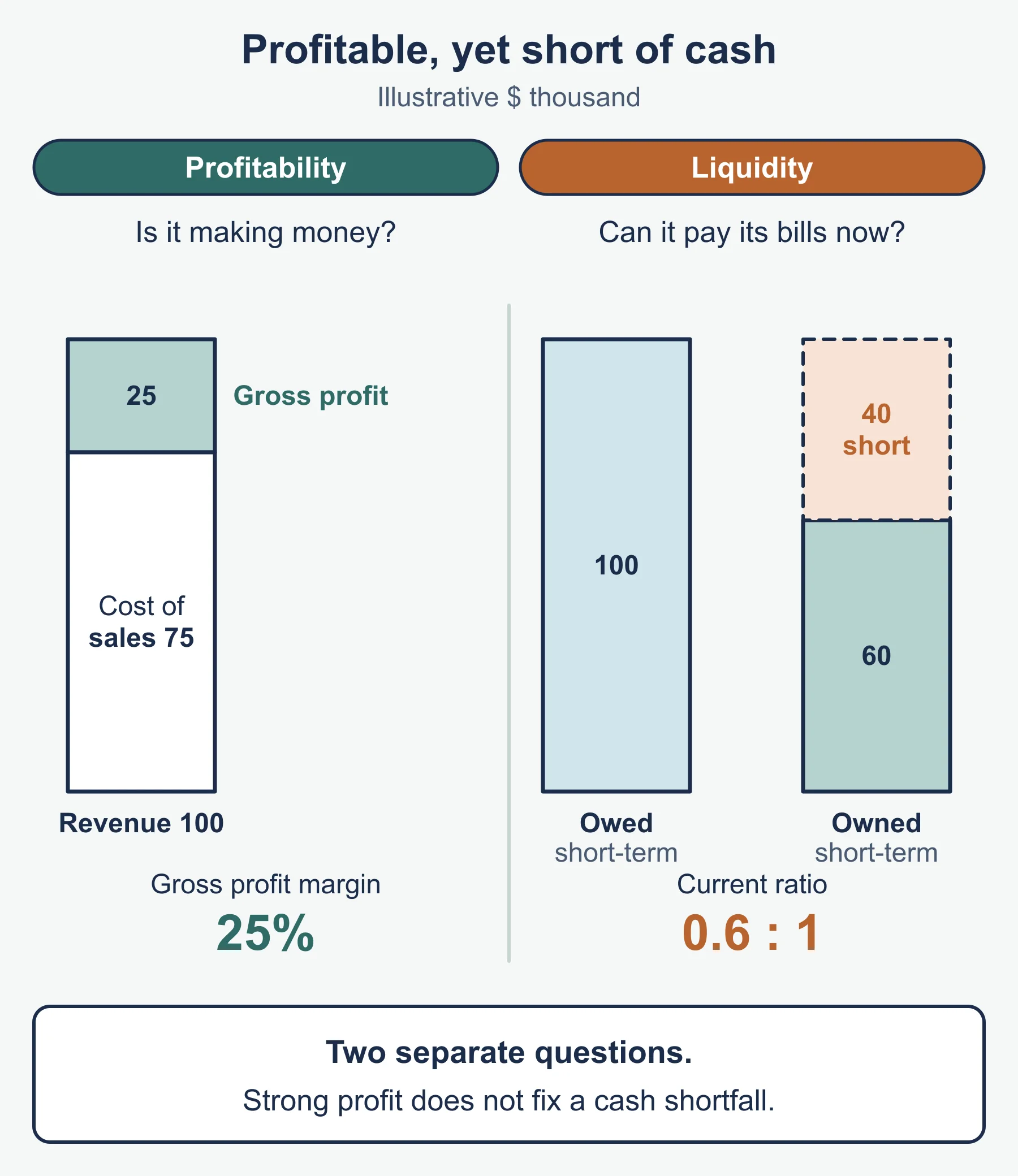
- Profitability versus liquidity. One asks “is the business earning profit?” The other asks “can it pay what it owes soon?”
- Debtors versus creditors. Debtors owe the business money. Creditors are owed money by the business. Debtor days use sales revenue; creditor days use cost of sales.
- Insolvency versus bankruptcy (HL only). Insolvency is being unable to pay debts as they fall due. Bankruptcy is a legal process or status that can follow. The guide gives only the heading, so these are general definitions; rules differ between countries.
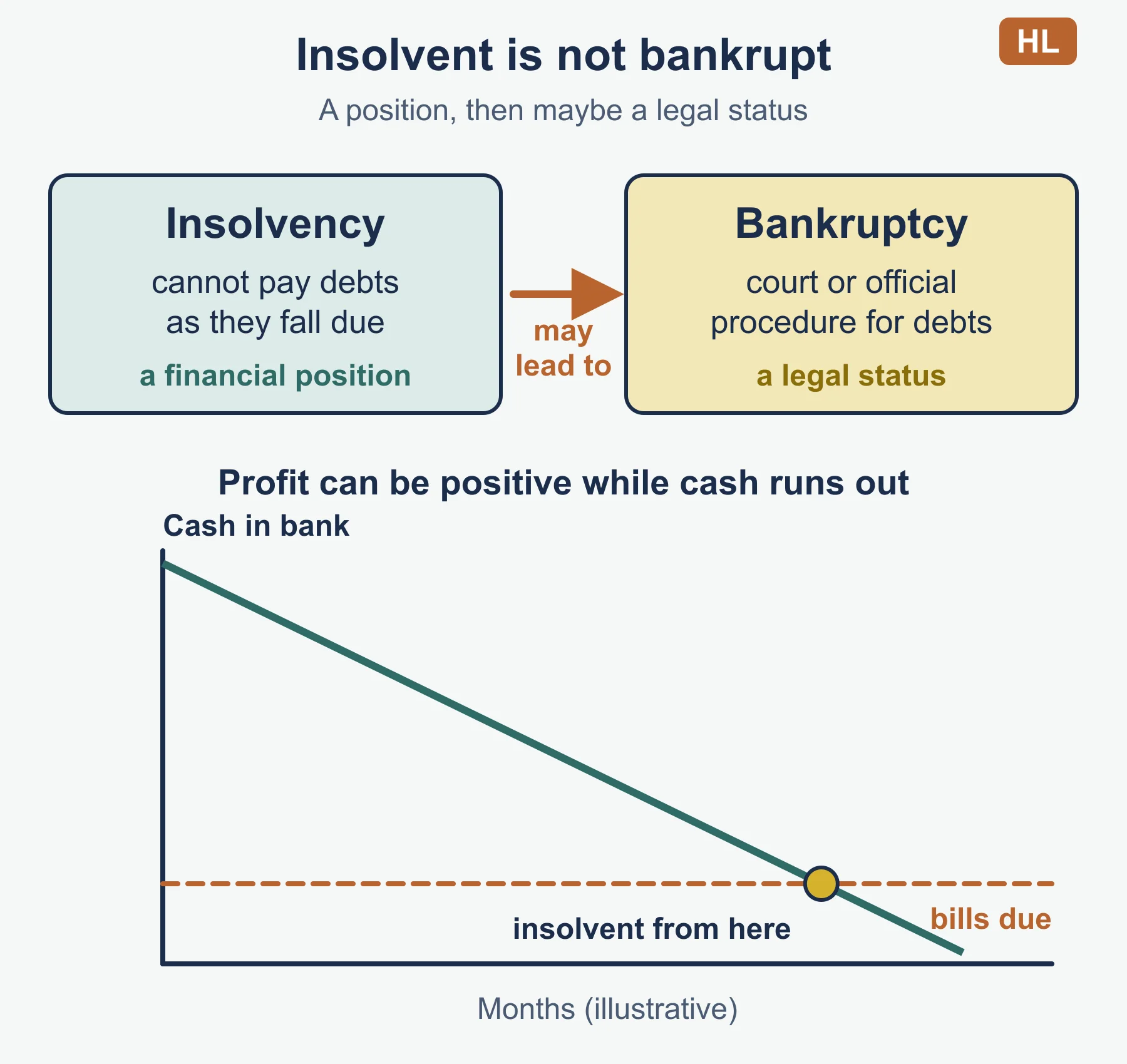
Why profitable businesses can become insolvent
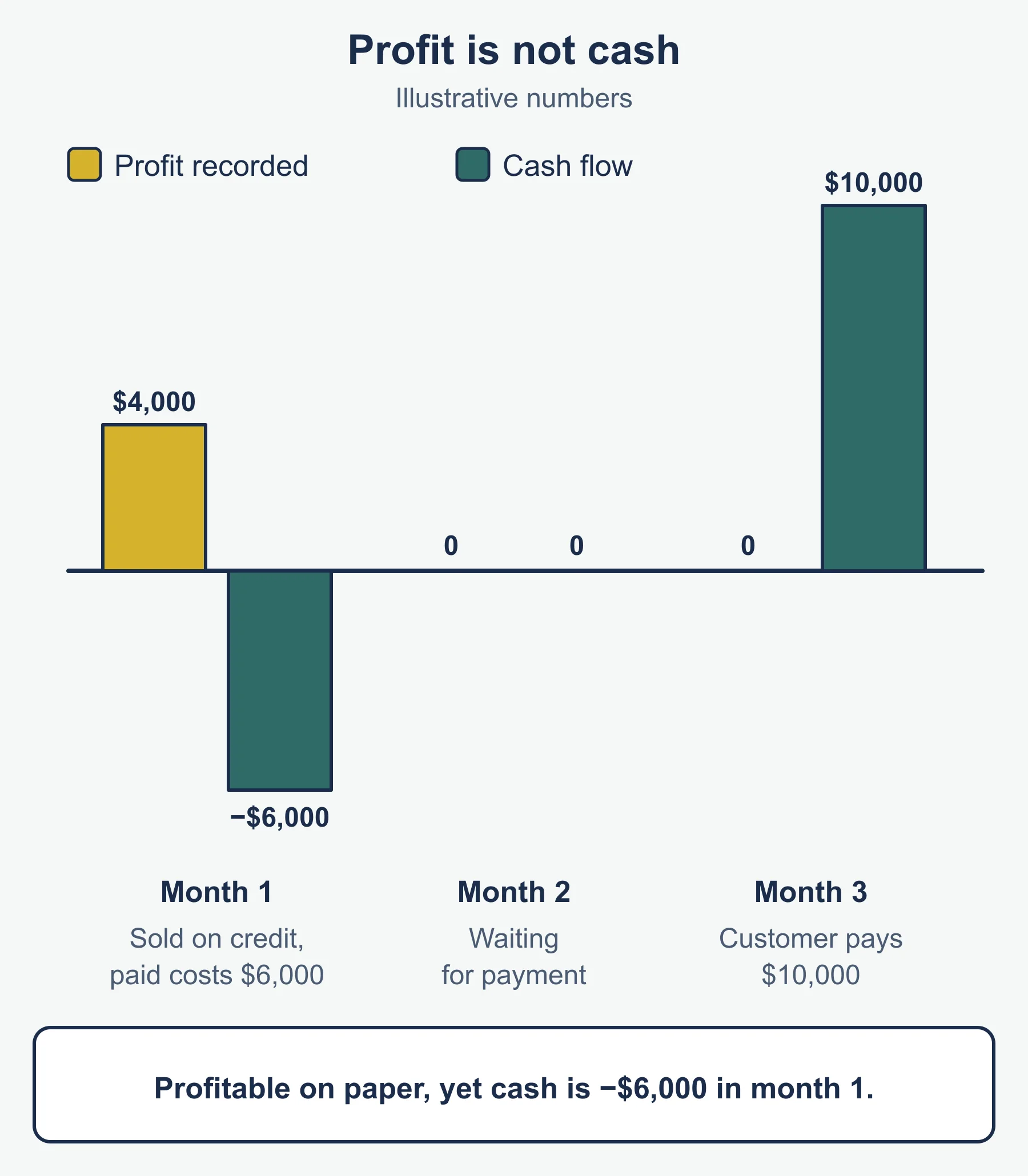
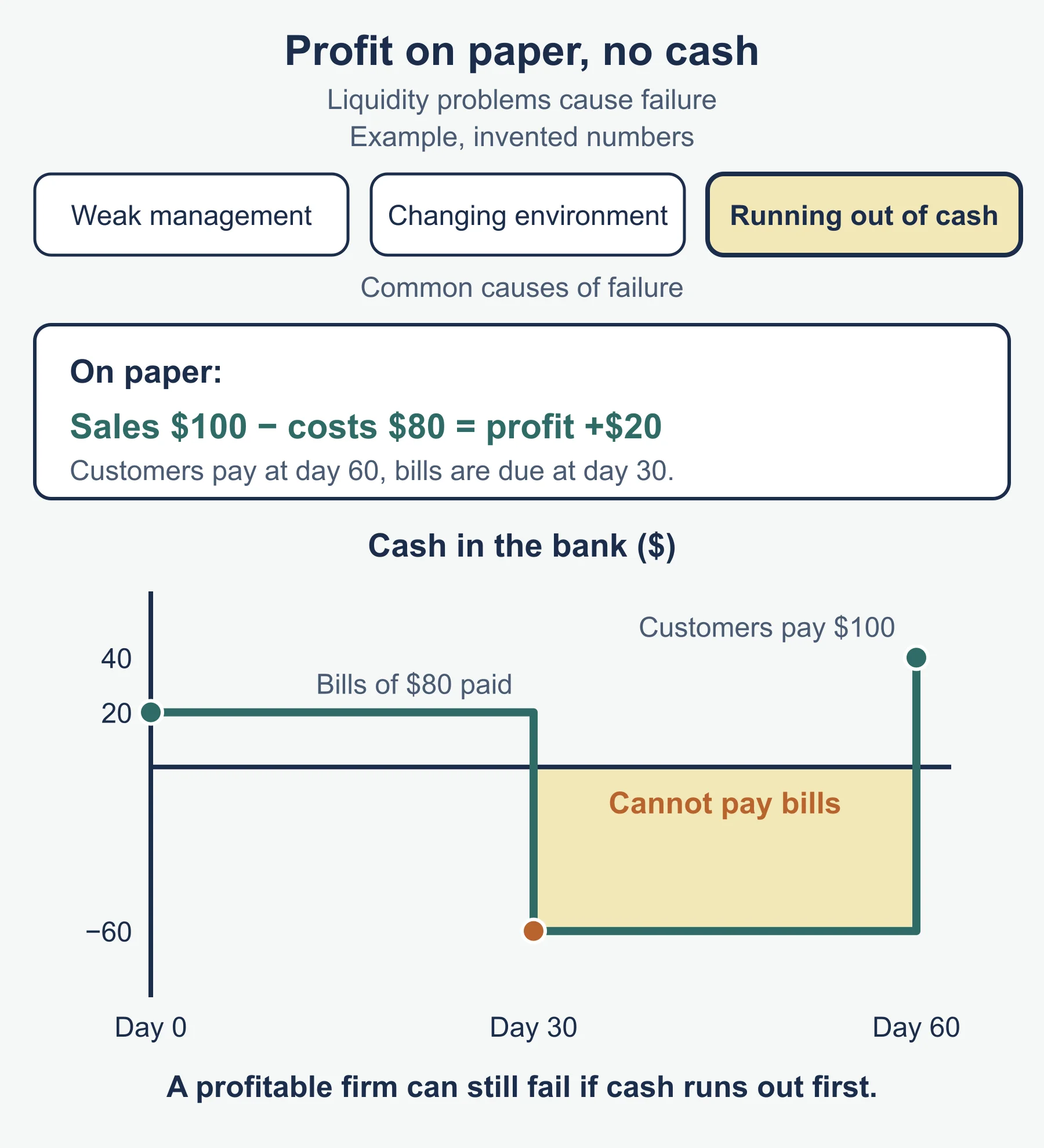
- A sale increases profit when made, but the cash may not arrive for weeks.
- Stock bought for cash sits on the shelf before it is sold.
- Suppliers or lenders may demand payment before customers have paid.
- A fast-growing business must buy stock and equipment before it receives the extra revenue.
The result is a shortage of cash even with a healthy statement of profit or loss. Liquidity ratios and the gap between debtor days and creditor days help to show this.
Interpreting ratios
- Compare over time, with similar businesses and with the objective stated in the case.
- One ratio is not enough. A strong gross profit margin with weak liquidity points to a cash problem, not a pricing problem.
- Accounts rely on choices and estimates, so treat a ratio as evidence, not proof.
- Name the stakeholder: owners look at ROCE and margins, suppliers at liquidity and creditor days, lenders at gearing.
Quick self-test
- A business has gross profit of 78,000 and sales revenue of 260,000. Calculate the gross profit margin.
- Profit before interest and tax is 21,000 on sales revenue of 300,000. Calculate the profit margin.
- Profit before interest and tax is 36,000. Non-current liabilities are 100,000 and equity is 140,000. Calculate ROCE.
- Current assets are 90,000, of which stock is 40,000. Current liabilities are 60,000. Calculate the current ratio and the acid test ratio.
- (HL) Cost of sales is 240,000 and average stock is 30,000. Calculate stock turnover in times and in days.
- (HL) Debtors are 24,000 and total sales revenue is 292,000. Calculate debtor days.
- (HL) Creditors are 15,000 and cost of sales is 182,500. Calculate creditor days.
- (HL) Non-current liabilities are 60,000 and equity is 90,000. Calculate the gearing ratio.
- (HL) Opening stock is 18,000 and closing stock is 22,000. State the average stock.
- State one way to improve the acid test ratio and one way to reduce debtor days.
- (HL) Distinguish between insolvency and bankruptcy.
Answers
- 78,000 ÷ 260,000 × 100 = 30.0%
- 21,000 ÷ 300,000 × 100 = 7.0%
- Capital employed = 100,000 + 140,000 = 240,000. 36,000 ÷ 240,000 × 100 = 15.0%
- Current ratio = 90,000 ÷ 60,000 = 1.5. Acid test = (90,000 − 40,000) ÷ 60,000 = 0.83 (2 d.p.)
- 240,000 ÷ 30,000 = 8.0 times; 30,000 ÷ 240,000 × 365 = 45.6 days
- 24,000 ÷ 292,000 × 365 = 30.0 days
- 15,000 ÷ 182,500 × 365 = 30.0 days
- Capital employed = 60,000 + 90,000 = 150,000. 60,000 ÷ 150,000 × 100 = 40.0%
- (18,000 + 22,000) ÷ 2 = 20,000
- Any sensible pair, for example a stock clearance sale for cash (acid test) and early payment discounts or stricter credit control (debtor days).
- Insolvency means being unable to pay debts when they fall due. Bankruptcy is the legal status or procedure that can follow it.
Where marks are usually lost
- Using profit after interest, or only net profit, where the guide’s formula uses profit before interest and tax.
- Forgetting to multiply by 365, or giving a days figure as a percentage.
- Using sales revenue for creditor days or stock turnover, when the formula uses cost of sales.
- Taking closing stock when the question asks you to use average stock.
- Calculating capital employed from the wrong lines, or leaving out non-current liabilities or equity.
- Saying the acid test is lower “because of stock” without stating what stock is and why it is removed.
- Judging a ratio good or bad without a comparison or a case reference.
- Suggesting a strategy with no cost, or one that improves a different ratio from the one asked.
- Treating insolvency and bankruptcy as the same thing.
- Showing no working when the question says calculate.
Frequently asked questions
How do you calculate capital employed? Capital employed is non-current liabilities plus equity. It is used as the denominator in ROCE and in the gearing ratio.
What is the difference between the current ratio and the acid test ratio? The current ratio is current assets divided by current liabilities. The acid test removes stock from current assets first, because stock is the slowest current asset to turn into cash.
Are the ratio formulas given in the IB Business Management exam? The guide’s appendix says students are given the formulae in the examination. You still need to know where each input comes from and how to interpret the result.
Why can a profitable business become insolvent? A sale adds to profit when it is made, but the cash may not arrive for weeks, while stock and equipment may need paying for first. The result can be a shortage of cash even with a healthy statement of profit or loss.
Official syllabus
International Baccalaureate Organization, Business management guide, first assessment 2024: sections 3.5 and 3.6, the formulae for ratio analysis and the glossary of command terms.
Get free revision emails (optional)
Occasional emails with practice questions, worked explanations and links to free resources for the qualification and subjects you choose. No spam, and you can unsubscribe from any email. The free tools on this site never need an email.
Related resources
-
Study guides
IB DP Business Management: Budgets (HL only)
Study guide to IB DP Business Management 3.9 (HL only): cost and profit centres, constructing a budget, variances and budgets in decision-making.
Business · International Baccalaureate · IB
Read guide -
Practice questions
IB DP Business Management: Budgets (HL only) – Practice Questions
Original practice questions with worked answers on IB DP Business Management 3.9 (HL only): centres, budgets, variances and decisions.
Business · International Baccalaureate · IB
Try questions -
Revision notes
IB DP Business Management: Budgets (HL only) – Revision Notes
Condensed revision notes for IB DP Business Management 3.9 (HL only): centres, budget layout, variance rules, F and A labels, and decisions.
Business · International Baccalaureate · IB
Revise topic
Related articles
-
teaching
A Level tuition in Dubai: Cambridge or Pearson Edexcel International A Level?
Schools in Dubai and Abu Dhabi teach either Cambridge International AS & A Level or Pearson Edexcel International A Level. How the two are structured, why it matters for tuition, and how online classes from Lahore work.
9 October 2026
-
curriculum guides
Choosing subjects at IGCSE and A Level
How subject choices at 14 and 16 affect university options later, and how to keep pathways open without overloading a timetable.
28 July 2026
Studying this with a teacher
Working through Business IB?
This page is free and stays free. If you would rather be taught it, Marlbridge runs Business classes one-to-one, online in your own time zone. The first trial class is free. WhatsApp replies within an hour (8am–11pm Pakistan time, every day); email the same day.
IB Business teachers at Marlbridge

