
Study Guides
IB DP Geography: Unit 5: Human development and diversity – Study Guide
Development opportunities, changing identities and cultures, and local responses to global interactions in the Higher Level extension of IB Diploma Programme Geography.
- Subject
- Geography
- Level
- IB
- Topic
- Unit 5: Human development and diversity
- Author
- Marlbridge Academic Team
- Updated
- Reviewed by
- Azam Siddique (what this means)
Aligned to International Baccalaureate IB Diploma Programme Geography (DP Geography), First assessments 2019. Official specification .
Syllabus page (what it covers and how it is assessed): IB Diploma Programme Geography.
Syllabus points this page covers
DP Geography
- 12.1 Development opportunities
- 12.2 Changing identities and cultures
- 12.3 Local responses to global interactions
This page covers all 3 subtopics recorded here in topic 12, Unit 5: Human development and diversity.
This guide covers Unit 5, Human development and diversity, in the Higher Level extension of IB Diploma Programme Geography (first assessments 2019). Where Unit 4 explained how places are linked, Unit 5 asks what those links do to people: who gets opportunities to improve their lives, how cultures and identities change when ideas and goods move quickly, and how communities respond locally to forces that are global in origin. The unit rewards balanced, example-led writing because almost every claim in it has a counter-claim.
Where this fits in the course
Unit 5 sits between the framework of Unit 4 (power, networks, flows) and the risk-focused Unit 6. You will often draw on Unit 4 ideas, such as foreign investment, migration and communication flows, as the causes of the changes you evaluate here. Keep a small bank of detailed case studies, ideally one that shows development gains, one that shows cultural change, and one that shows local resistance or adaptation, so you can reuse their detail across different questions.
12.1 Development opportunities
Development is improvement in people’s economic, social and political well-being, not only growth in income. Measures differ in what they capture.
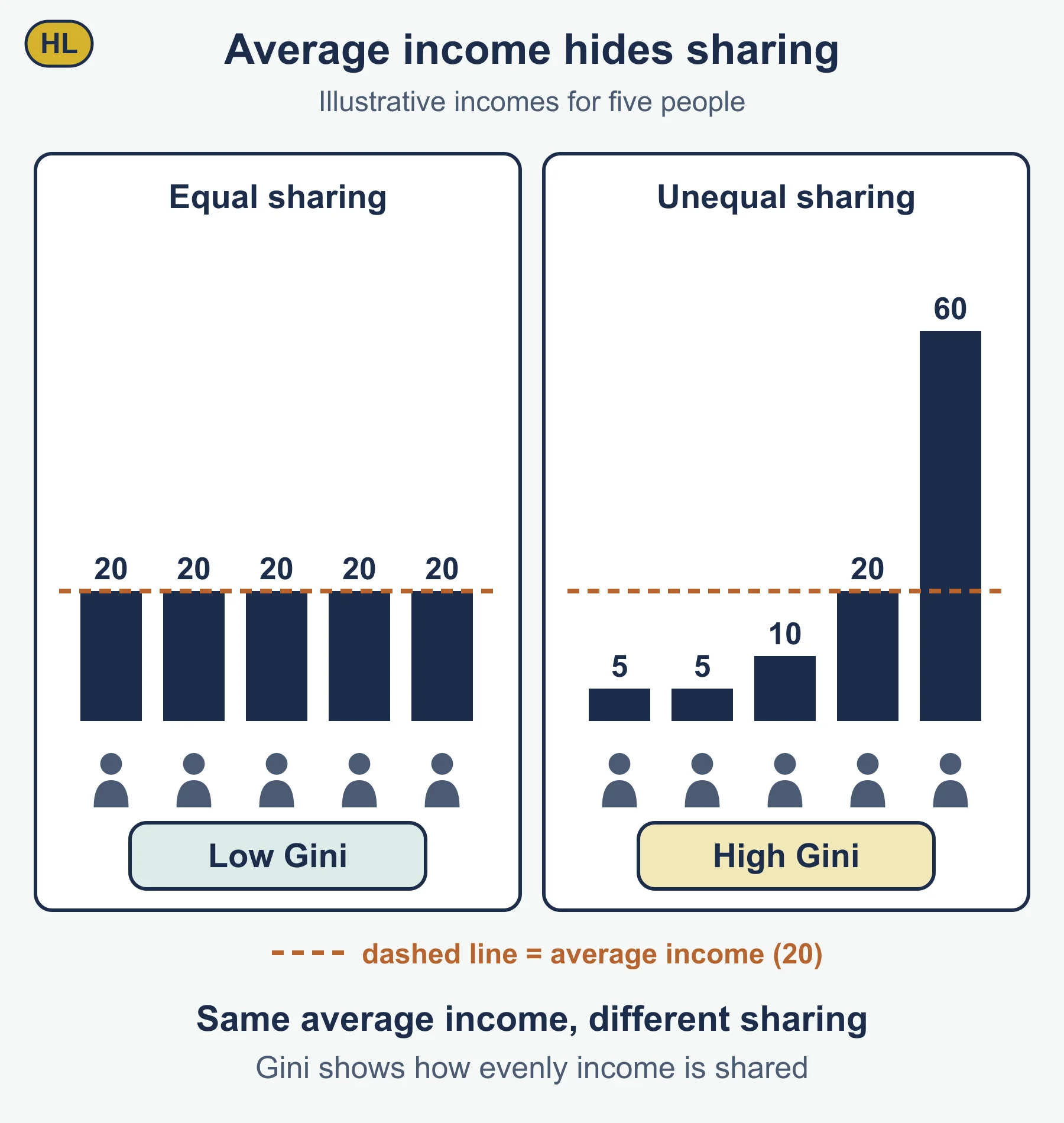
- Income measures, such as gross national income per capita, are simple but ignore distribution and non-monetary well-being.
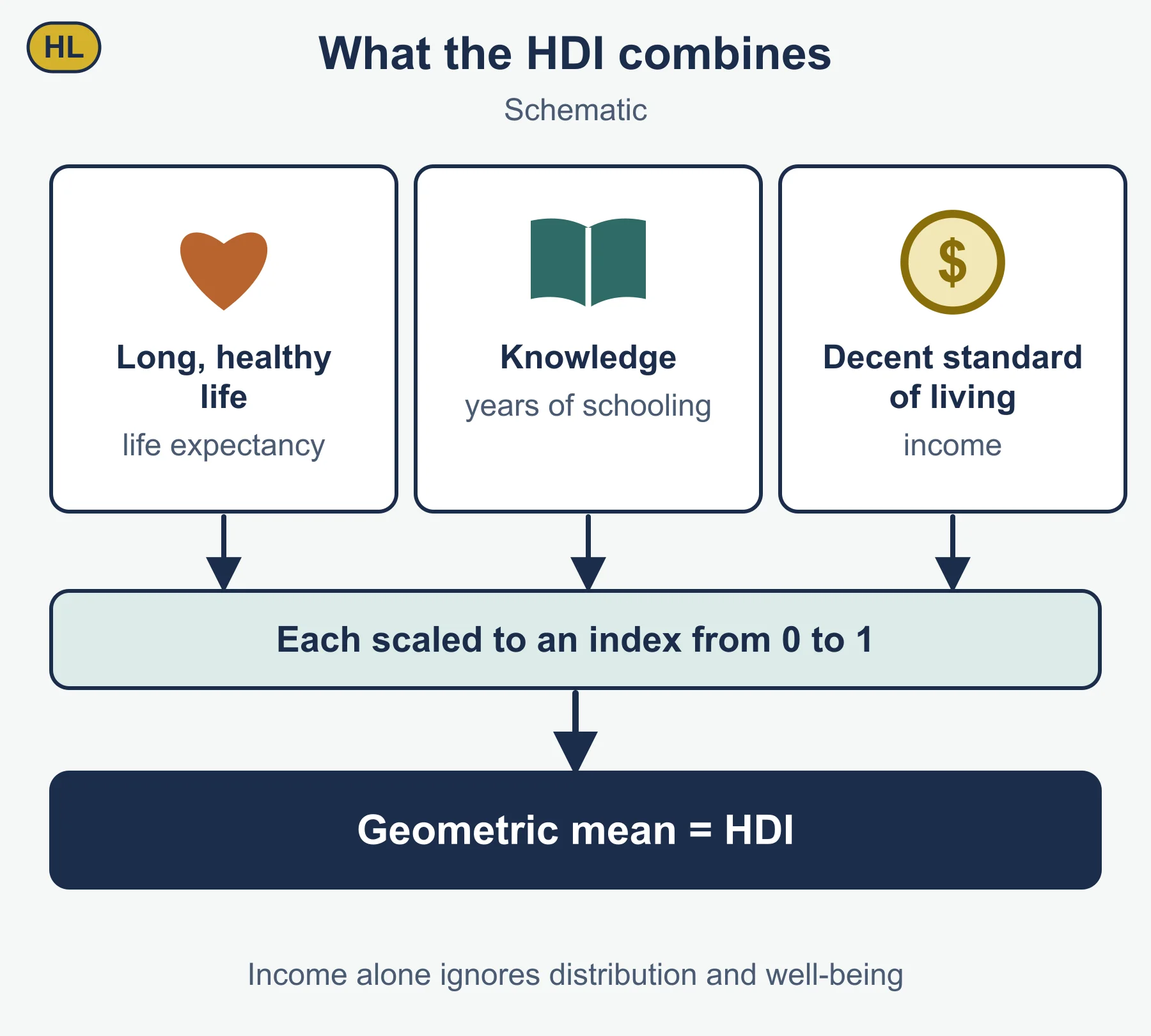
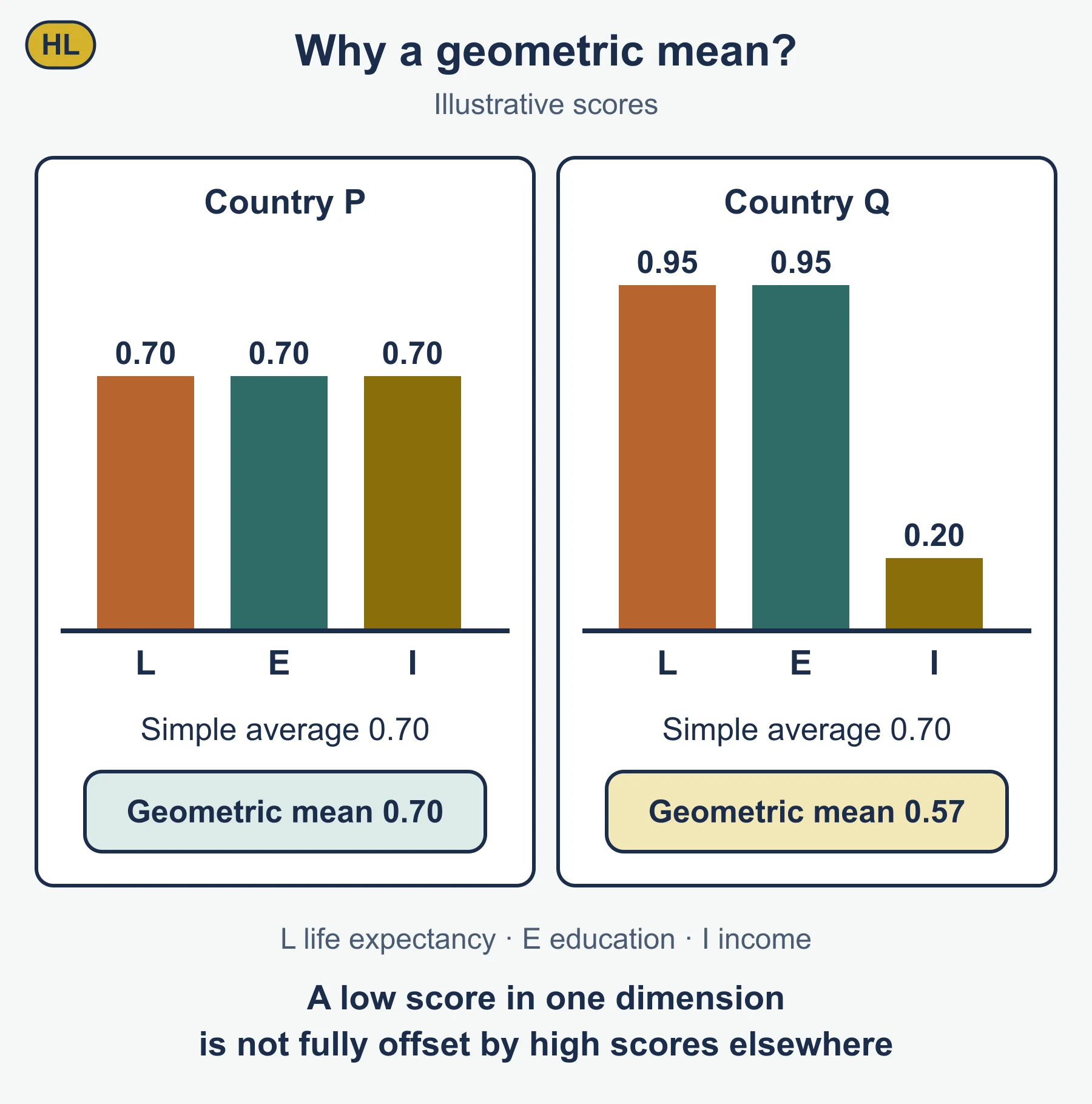
- The Human Development Index (HDI) combines three dimensions: a long and healthy life (life expectancy), knowledge (years of schooling) and a decent standard of living (income). The dimension scores are combined with a geometric mean.
- Inequality measures, for example the Gini coefficient, show how evenly income is shared within a country. A country can rise on average income while inequality widens.
- Other approaches look at gender equality, poverty in several dimensions, and happiness or well-being.
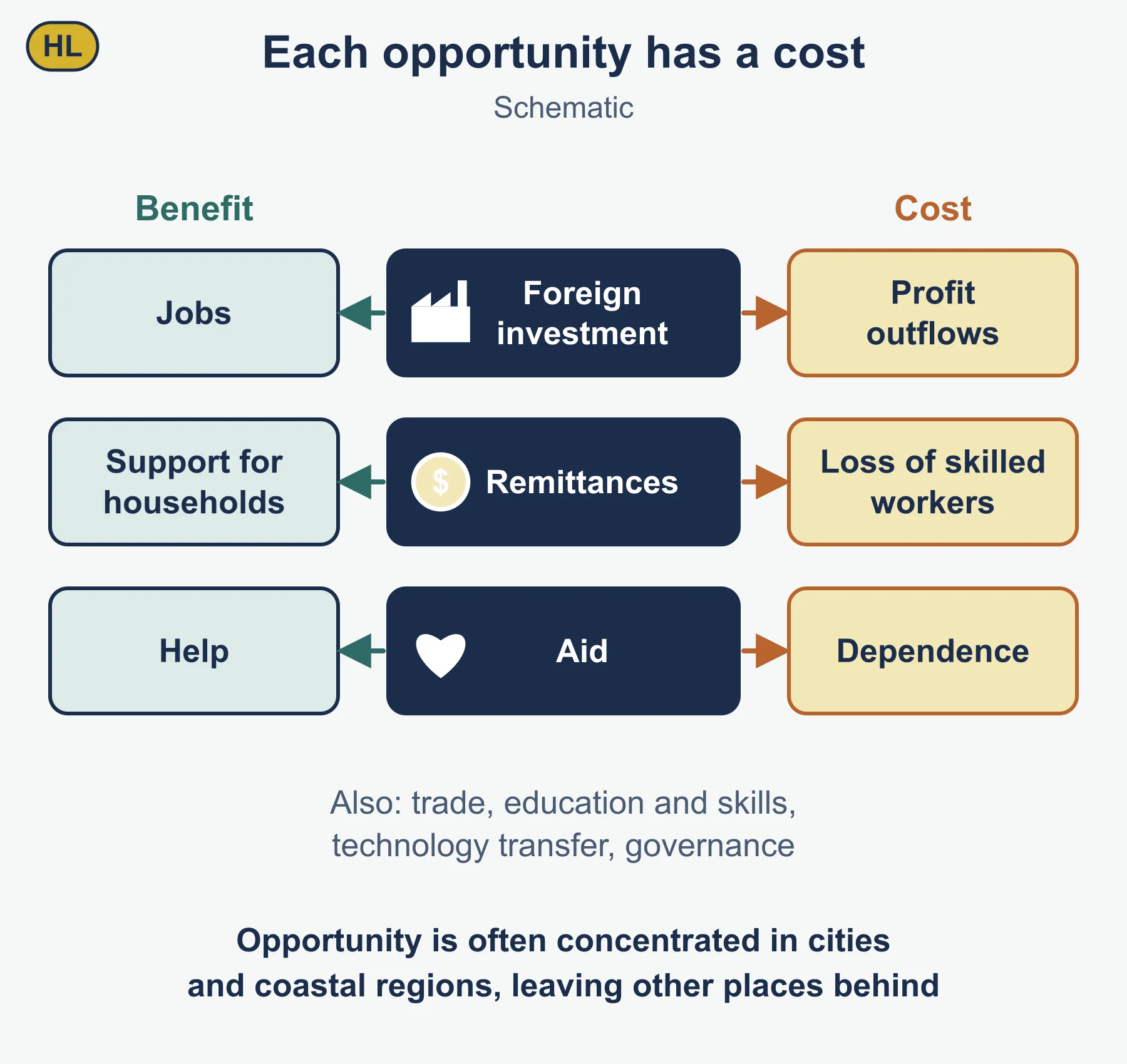
Opportunities for development arise through trade, foreign direct investment, aid, remittances, education and skills, technology transfer and the quality of governance. Each has costs. Foreign investment may bring jobs but also profit outflows; remittances can support households but may signal the loss of skilled workers; aid can help but may create dependence. Spatial inequality matters too: opportunity is often concentrated in cities and coastal regions, leaving rural or remote places behind. Strong answers also recognise that gender, ethnicity and age affect who can take opportunities.
12.2 Changing identities and cultures
Culture covers language, religion, food, dress, values and practices; identity is how individuals and groups see themselves and are seen by others. Global interactions change both.
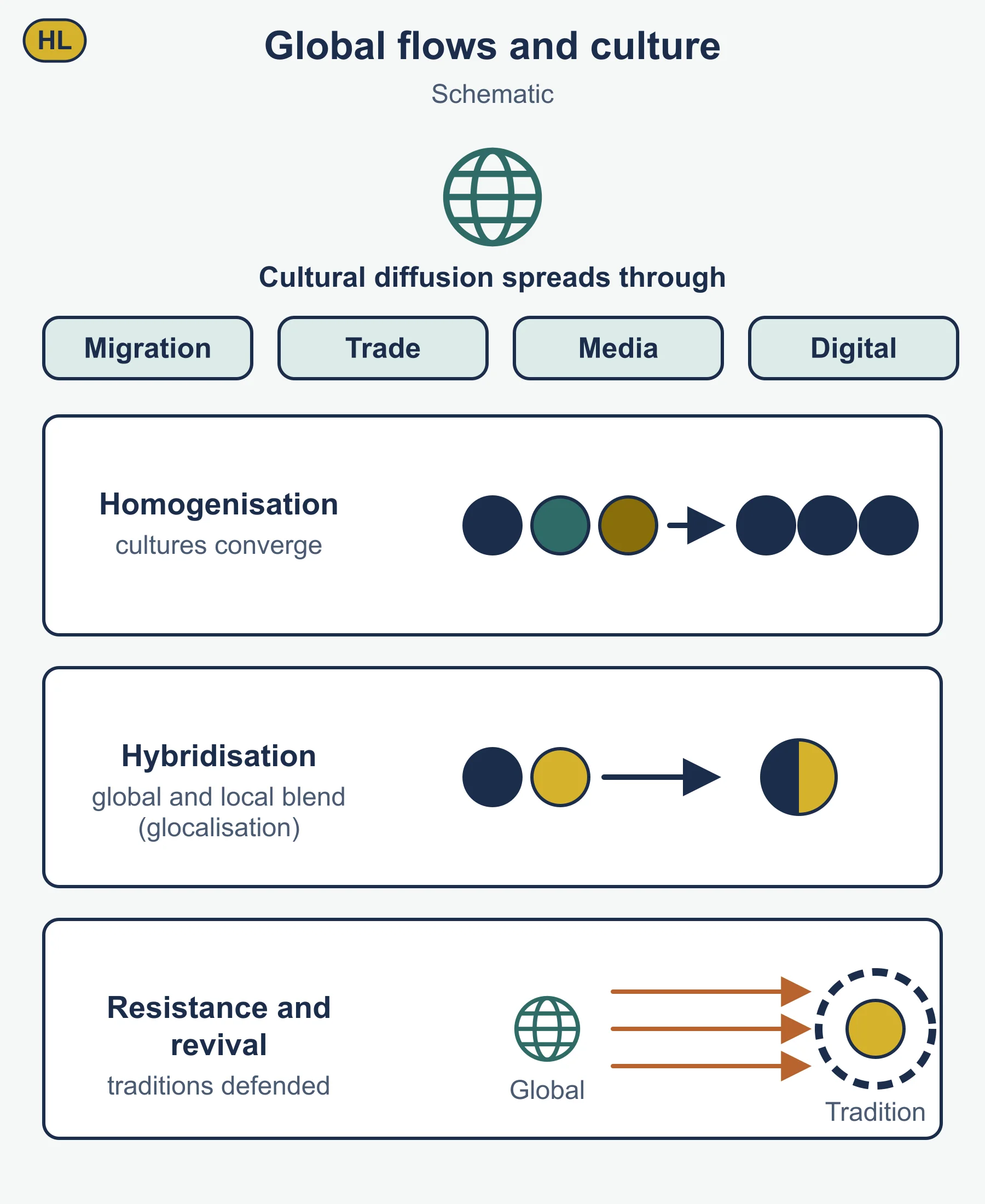
- Cultural diffusion is the spread of cultural traits between places, through migration, trade, media and digital networks.
- Cultural homogenisation is the argument that cultures converge towards a shared, often Western or commercial, pattern.
- Hybridisation and glocalisation (a term associated with Roland Robertson) describe the blending of global and local features, for example global brands adapting products to local tastes.
- Cultural resistance and revival occur when communities defend or reinvigorate traditions, language or heritage because they feel threatened.
- Multiple identities: people often hold overlapping local, national, ethnic and global identities, and migration and digital life can intensify this.
You should be able to argue both that globalisation erodes diversity and that it creates new cultural forms. The best responses give evidence for each side from a named place and then reach a judgement about which is stronger in that context. Remember that media, language and migration do not affect all age groups or social classes in the same way.
12.3 Local responses to global interactions
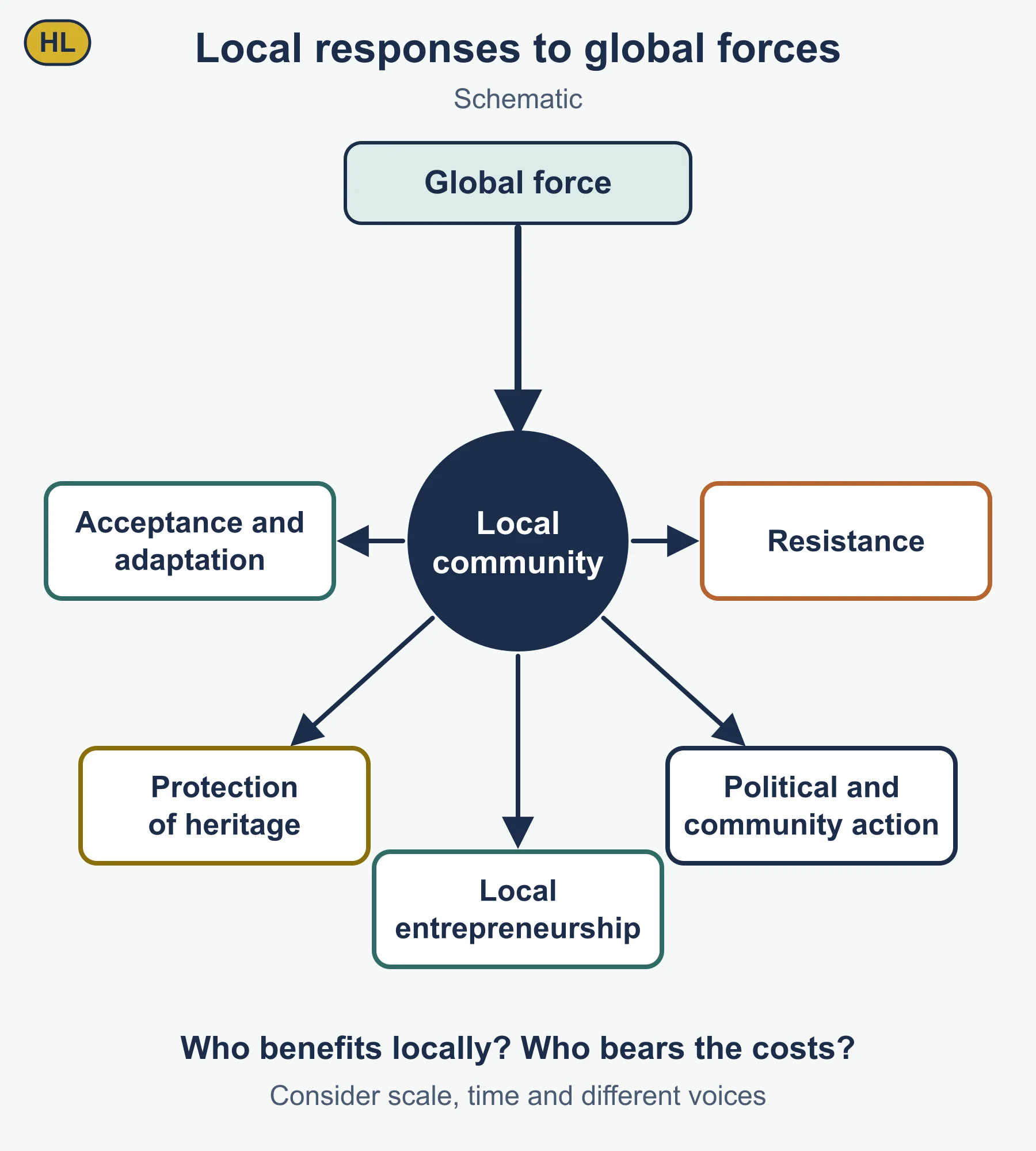
Local communities are not passive. Their responses fall into broad types.
- Acceptance and adaptation: using new technology, markets or ideas to improve livelihoods.
- Resistance: protest, boycotts or campaigns against corporations, policies or cultural change. A well-known example of a movement defending local food culture is Slow Food, founded in Italy in the 1980s.
- Protection of heritage: cultural quotas, language laws, protected designations for local products and heritage listing.
- Local entrepreneurship: small firms using global platforms to reach international customers, or cooperatives and fair trade schemes that capture more value locally.
- Political and community action: local governments and civil society shaping how global investment is accepted.
The central evaluative question is who benefits locally and who bears the costs. Consider scale (household, community, region, nation), time (short-term gain, long-term loss) and the different voices within a place.
Worked example: calculating an HDI-style index
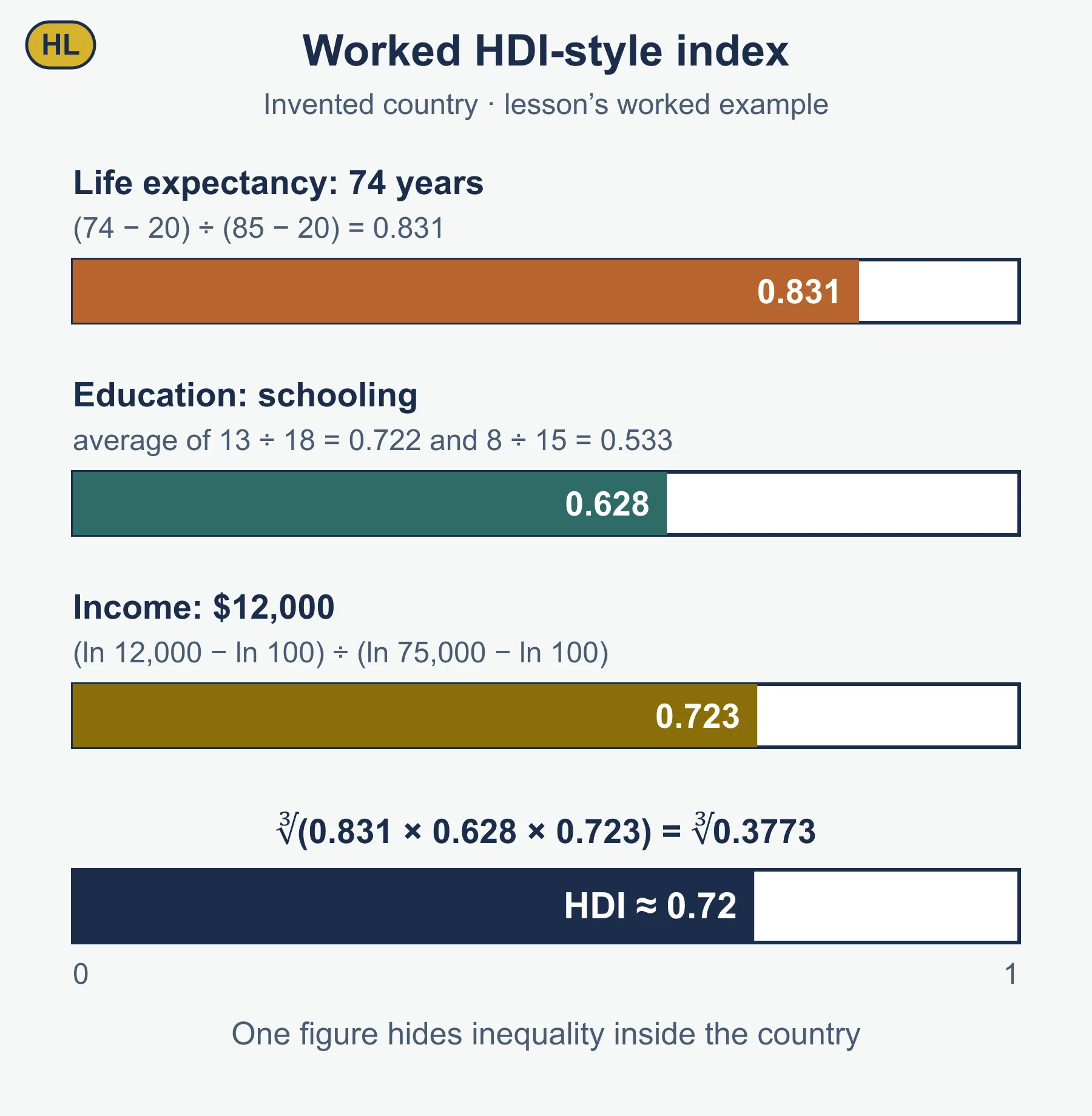
The HDI method converts each dimension to an index between 0 and 1 using fixed minimum and maximum values, then takes the geometric mean. The figures below are for an invented country and the goalposts used are the commonly published ones; check the current values in your course materials.
- Life expectancy 74.0 years, scaled between 20 and 85: (74 - 20) / (85 - 20) = 54 / 65 = 0.831.
- Education: expected years of schooling 13.0 over a maximum of 18 gives 0.722; mean years of schooling 8.0 over 15 gives 0.533. Their average is (0.722 + 0.533) / 2 = 0.628.
- Income: GNI per capita 12,000 dollars, using logarithms between 100 and 75,000: (ln 12,000 - ln 100) / (ln 75,000 - ln 100) = 0.723.
Geometric mean: cube root of (0.831 x 0.628 x 0.723) = cube root of 0.3773 = 0.723, which is about 0.72.
Evaluation: the index hides inequality inside the country, ignores environmental cost and gender gaps unless adjusted versions are used, and the single figure of 0.72 says nothing about which regions or groups sit far below it. Under a command term such as evaluate, say what the measure shows and what it cannot show.
Common mistakes
- Equating development with economic growth alone.
- Treating cultural change as automatically a loss. Many communities choose to adopt and adapt.
- Writing about “local people” as a single group that thinks one way.
- Naming a case study but giving no specific detail, dates or outcomes you can be sure of.
- Forgetting to link back to global interactions: every response in 12.3 must be a response to a global force.
Exam technique
Match the command term. Discuss needs more than one perspective and a conclusion; evaluate needs a judgement; examine needs a careful consideration of the argument or concept; explain needs reasons. Use a short plan, define development or culture precisely at the start where relevant, include named evidence, and make the final sentence a direct answer.
Check your understanding
- Name the three dimensions of the HDI. Answer: A long and healthy life, knowledge (education) and a decent standard of living (income).
- Why may a country with rising average income still have little improvement in well-being for many people? Answer: Inequality may be widening, so gains are concentrated among a small group.
- Distinguish homogenisation from glocalisation. Answer: Homogenisation is cultures becoming alike; glocalisation is global products or ideas adapted to local conditions.
- Calculate the life expectancy index for 68 years using minimum 20 and maximum 85. Answer: (68 - 20) / 65 = 48 / 65 = 0.738.
- Give two types of local response to global interactions. Answer: For example, adaptation using new technology, or organised resistance and heritage protection.
- Why is the geometric mean used in the HDI rather than a simple average? Answer: It means a low score in one dimension cannot be fully offset by a high score in another.
- State one limitation of using HDI to compare countries. Answer: It hides inequality within countries and omits factors such as environmental impact.
Get free revision emails (optional)
Occasional emails with practice questions, worked explanations and links to free resources for the qualification and subjects you choose. No spam, and you can unsubscribe from any email. The free tools on this site never need an email.
Related resources
-
Study guides
IB DP Geography: Option E: Leisure, tourism and sport – Study Guide
A study guide to the Leisure, tourism and sport option in IB DP Geography: leisure patterns, tourism and sport at different scales, and sustainable management.
Geography · International Baccalaureate · IB
Read guide -
Study guides
IB DP Geography: Option B: Oceans and coastal margins – Study Guide
A study guide to the Oceans and coastal margins option in IB DP Geography: ocean circulation, coastal processes, coastal management and future ocean governance.
Geography · International Baccalaureate · IB
Read guide -
Study guides
IB DP Geography: Unit 4: Power, places and networks – Study Guide
Global power, networks and flows, and the human and physical influences on global interactions, taught for the Higher Level extension of IB Diploma Programme Geography.
Geography · International Baccalaureate · IB
Read guide
Related articles
-
teaching
A Level tuition in Dubai: Cambridge or Pearson Edexcel International A Level?
Schools in Dubai and Abu Dhabi teach either Cambridge International AS & A Level or Pearson Edexcel International A Level. How the two are structured, why it matters for tuition, and how online classes from Lahore work.
9 October 2026
-
curriculum guides
Choosing subjects at IGCSE and A Level
How subject choices at 14 and 16 affect university options later, and how to keep pathways open without overloading a timetable.
28 July 2026
Studying this with a teacher
Working through Geography IB?
This page is free and stays free. Marlbridge is not offering Geography classes at the moment, so there is no tuition to book for it. The free study resources stay open to everyone.