
Revision Notes
IGCSE Business: Business and the international economy (Cambridge 0264) – Revision Notes
Condensed revision notes on globalisation, tariffs, quotas, MNCs, external costs and benefits and exchange rates for Cambridge IGCSE Business 0264.
- Subject
- Business
- Level
- IGCSE
- Topic
- External influences on business activity
- Author
- Marlbridge Academic Team
- Updated
- Reviewed by
- Salman Ahmad (what this means)
Aligned to Cambridge IGCSE Business (0264), For examination in 2027, 2028 and 2029. Official specification .
Syllabus page (what it covers and how it is assessed): Cambridge IGCSE Business.
Syllabus points this page covers
0264
- 6.2 Business and the international economy
Found an error? Report a correction.
Need help with this topic? Request a free trial class for IGCSE Business (0450 / 0264).
These notes condense section 6.2 (Business and the international economy) of the Cambridge IGCSE Business 0264 syllabus for examination in 2027, 2028 and 2029. Both papers are based on all the subject content. For full explanations and worked examples, read the study guide, then test yourself with the practice questions. The course hub, the printable checklist and the free diagnostics help you plan the rest of your revision.
Key terms
| Term | Meaning |
|---|---|
| Globalisation | Growing links between countries’ economies, so trade and the movement of money, people and ideas increase (standard meaning) |
| Free trade agreement | Deal between countries to cut or remove trade barriers between them |
| Newly industrialised country | A country whose manufacturing sector has grown quickly |
| Import tariff | A tax on imported goods |
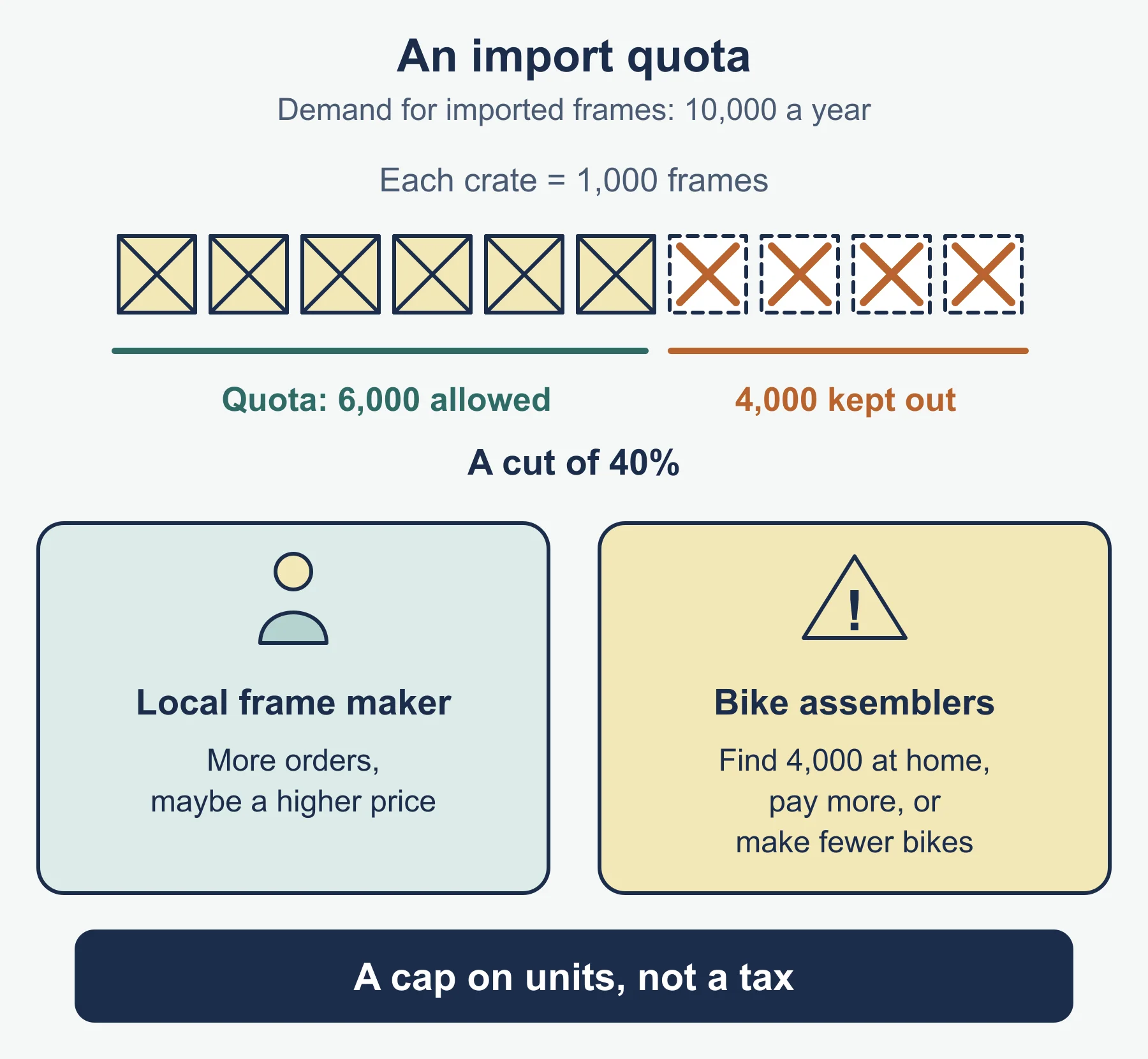
| Import quota | A cap on how many units of a good may enter the country in a set time |
| Multinational company (MNC) | A business with operations in more than one country (standard meaning) |
| Repatriation of profits | Sending profits made in a host country back to the MNC’s home country |
| External cost | A cost of a business decision borne by other people or society |
| External benefit | A benefit of a business decision received by other people or society |
| Appreciation | A currency becomes worth more against other currencies |
| Depreciation | A currency becomes worth less against other currencies |
6.2.1 Globalisation
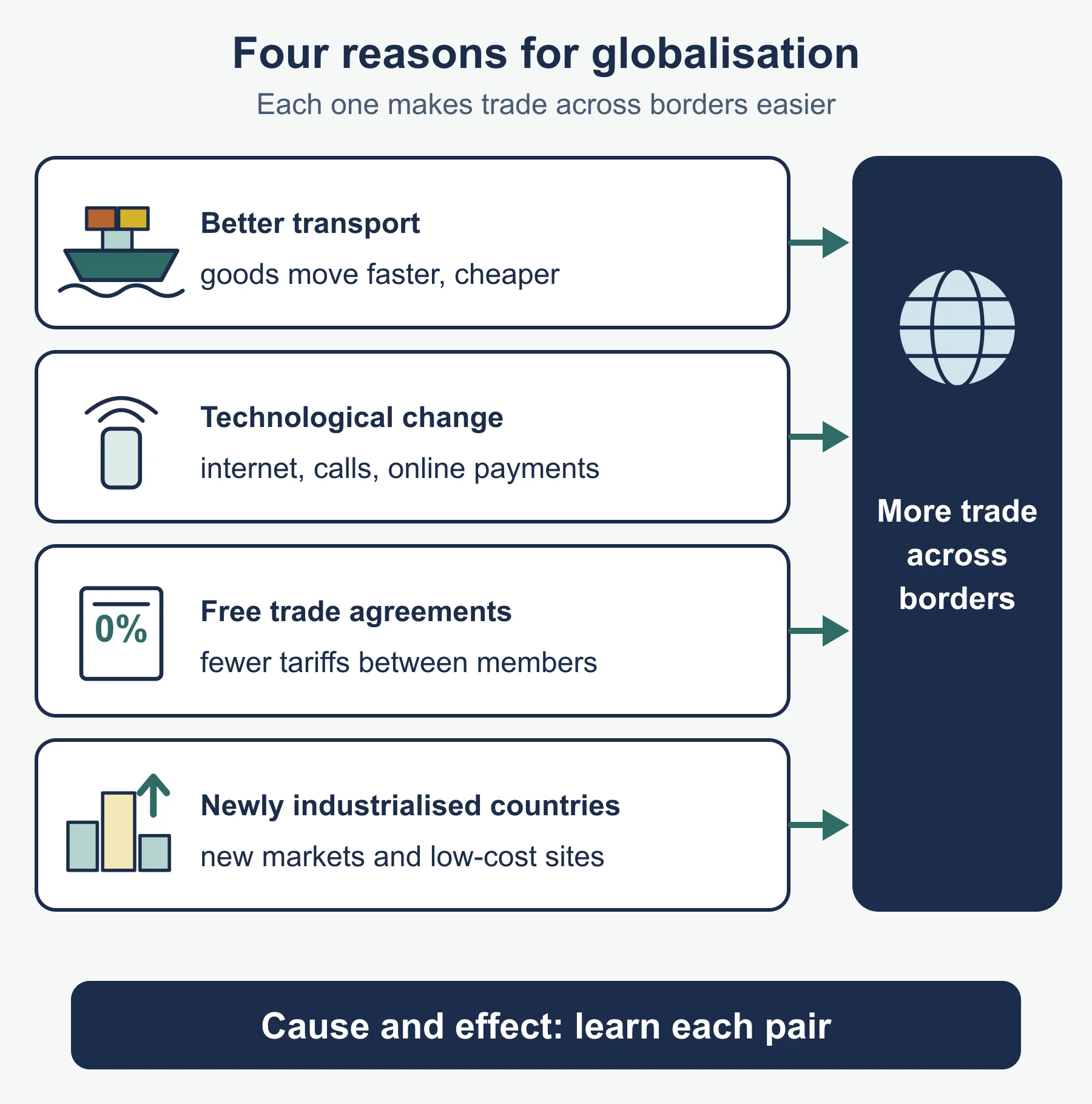
Reasons (four to learn)
- Improved transport links: faster, cheaper movement of goods.
- Technological change, including communication: easier contact, selling and payment across borders.
- Free trade agreements: lower barriers between member countries.
- Newly industrialised countries: new markets and new sources of low-cost production.
Memory aid: Transport, Technology, Trade deals, New industrial countries.
Opportunities and threats
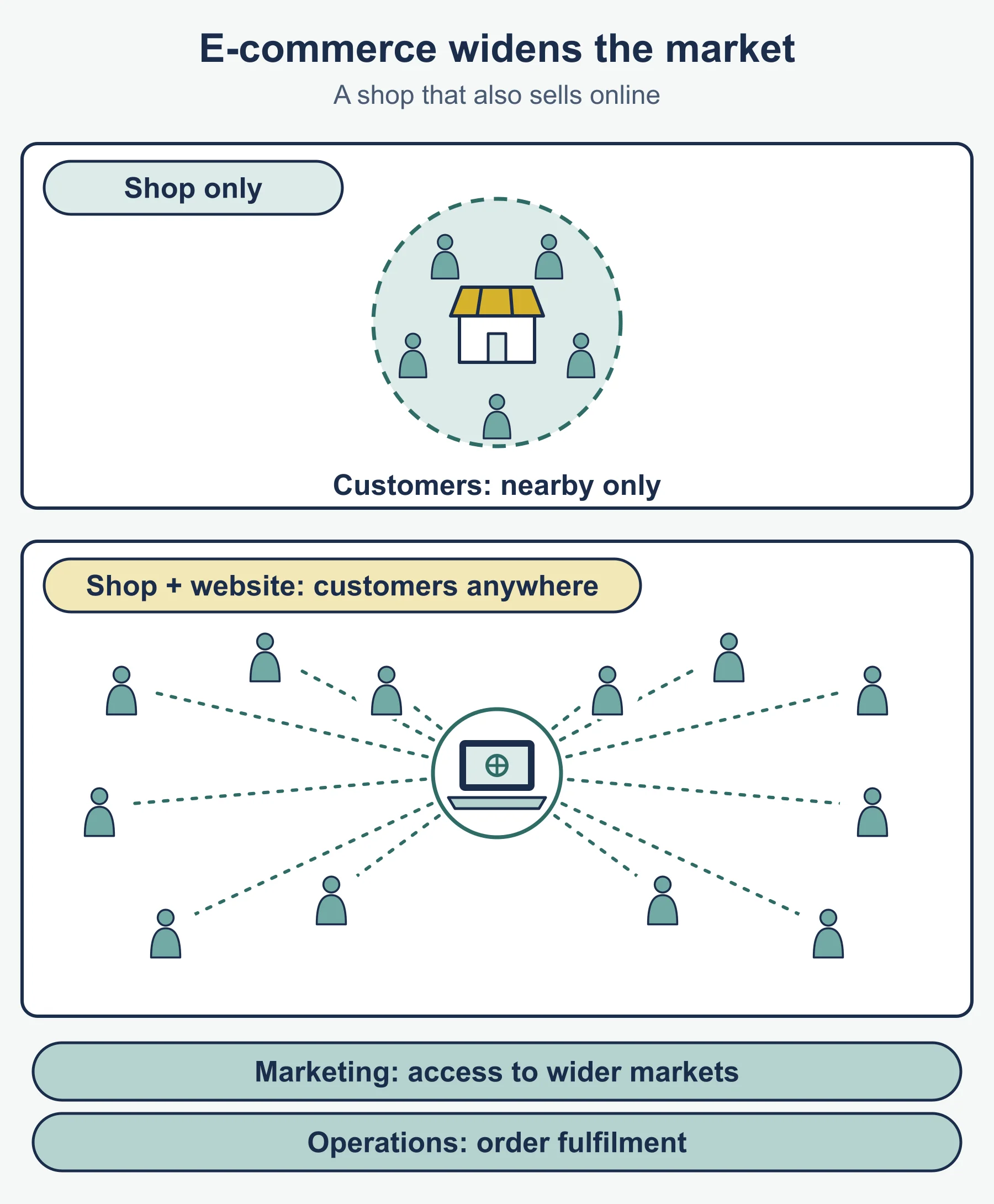
- Opportunities: new markets, lower costs, economies of scale, wider choice of suppliers, spread of risk.
- Threats: more foreign competition, loss of market share to cheap imports, supply disruption, costs of adapting to new markets, changes in trade rules and exchange rates.
Method for a 4-mark “explain” on an opportunity or threat:
- Name one point (for example, new markets).
- Say what it does to the business (more customers, so more sales revenue).
- Link to the business in the stem (for example, its product or size).
- Add a consequence (higher profit, or a need for more capital).
Tariffs and quotas
| Import tariff | Import quota | |
|---|---|---|
| What it is | A tax per unit or a percentage of value | A cap on quantity |
| Importer | Higher cost, lower profit or higher price | Limited supply; must look elsewhere |
| Local producer | Imports dearer, so easier to compete | Fewer rivals, may raise price |
| Exporter into the market | Dearer for customers, sales may fall | Sales capped |
| Customers | Higher prices | Less choice, often higher prices |
| Government | Gains tax revenue | Does not itself raise tax revenue |
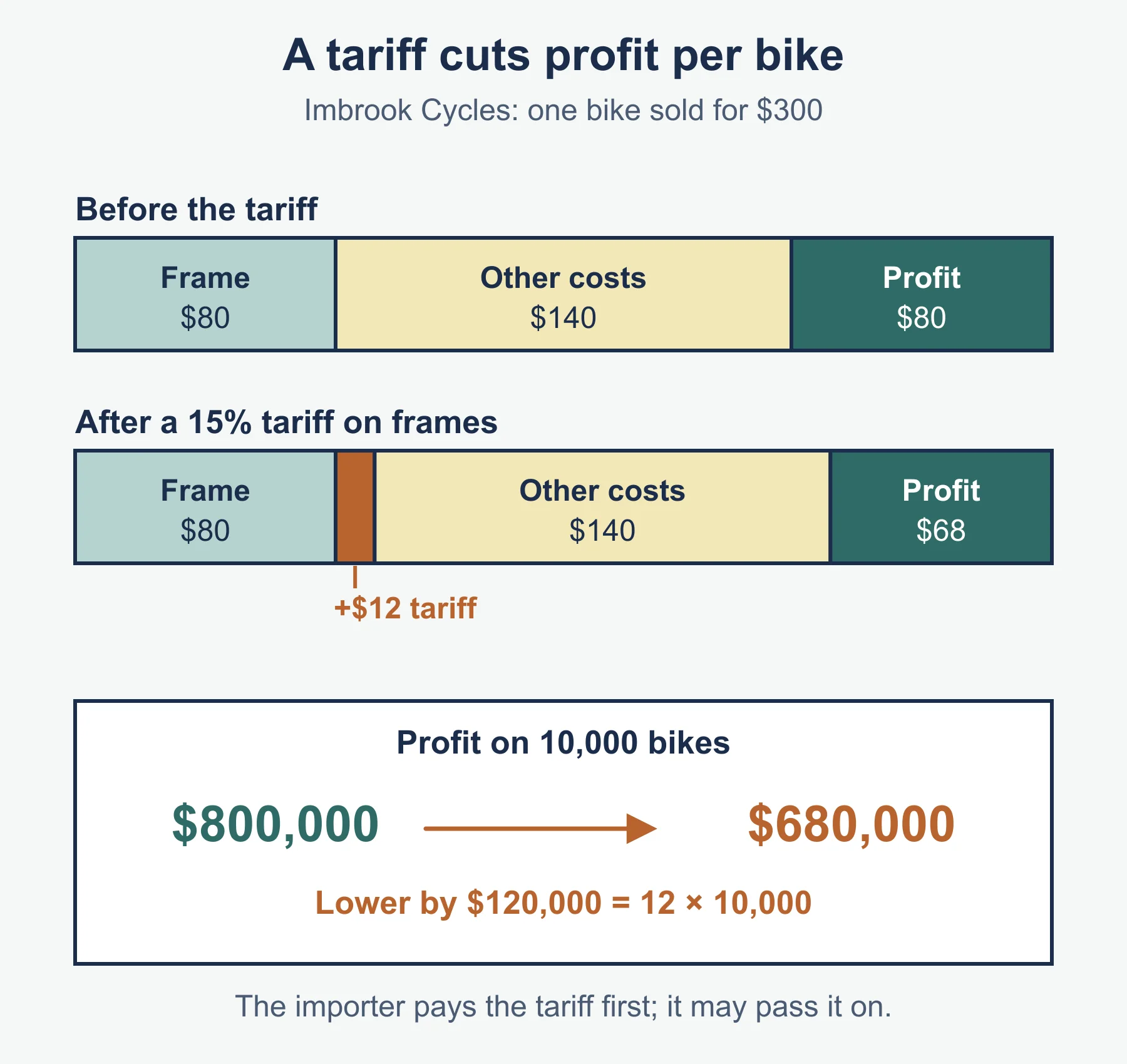
Tariff cost reminder: new cost per unit = old cost x (1 + tariff rate). Extra cost = tariff per unit x units imported.
Ways a business can respond: raise its price, accept lower profit, find a local or tariff-free supplier, or produce inside the country.
6.2.2 MNCs
Advantages to the business
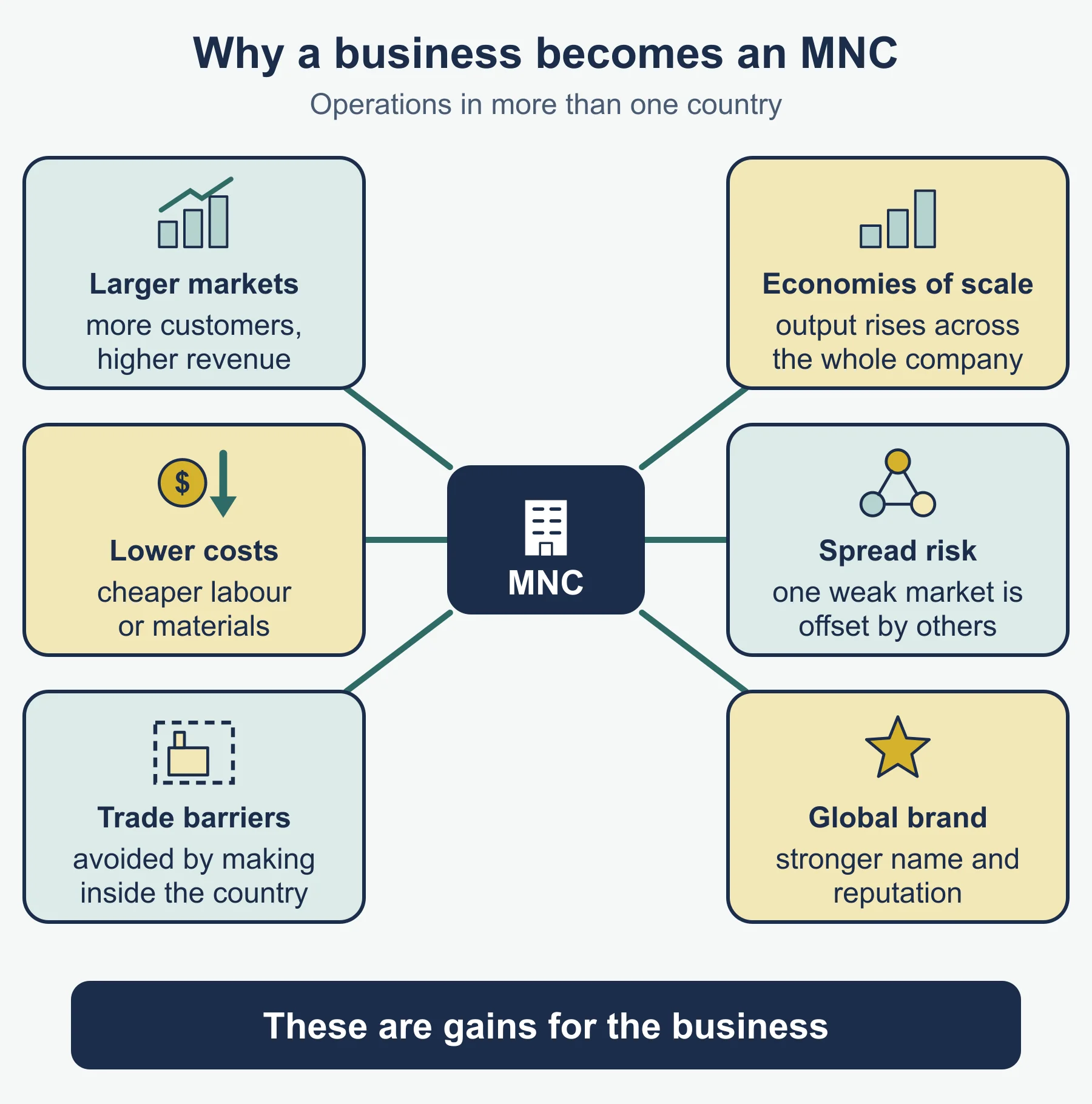
- Larger markets and more sales revenue.
- Lower costs of labour, materials and transport.
- Avoids tariffs and quotas by producing inside the country.
- Economies of scale.
- Spreads risk across countries.
- Stronger global brand.
Advantages for the host country
| Point | Link to explain |
|---|---|
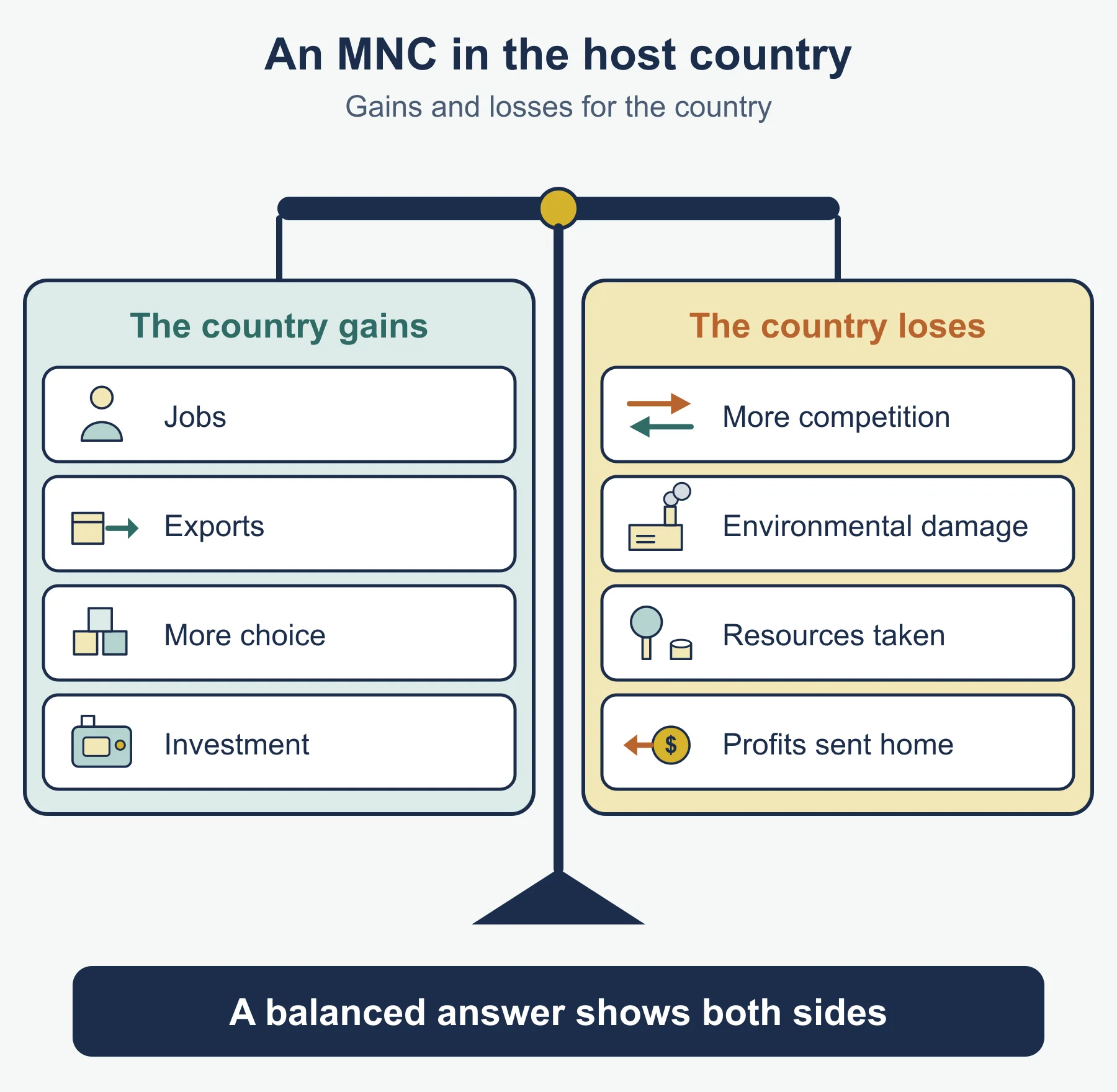
| Jobs | Local incomes and spending rise; suppliers gain work |
| Exports | Overseas buyers bring income into the country |
| Increased choice | Consumers get new products, often at lower prices |
| Investment | Money spent on buildings, machines and training |
Disadvantages for the host country
| Point | Link to explain |
|---|---|
| Increased competition | Local firms may lose customers or close |
| Environmental damage | Pollution, waste and congestion |
| Exploitation of natural resources | Resources used up, with little lasting benefit |
| Repatriation of profits | Profit leaves the country instead of being spent there |
Must-know distinction: always say whose viewpoint you are giving, the MNC’s or the host country’s. A point such as “profits are sent home” is good for the MNC’s owners but a disadvantage for the host country.
6.2.3 External costs and benefits
- Private cost: paid by the business. Private benefit: gained by the business.
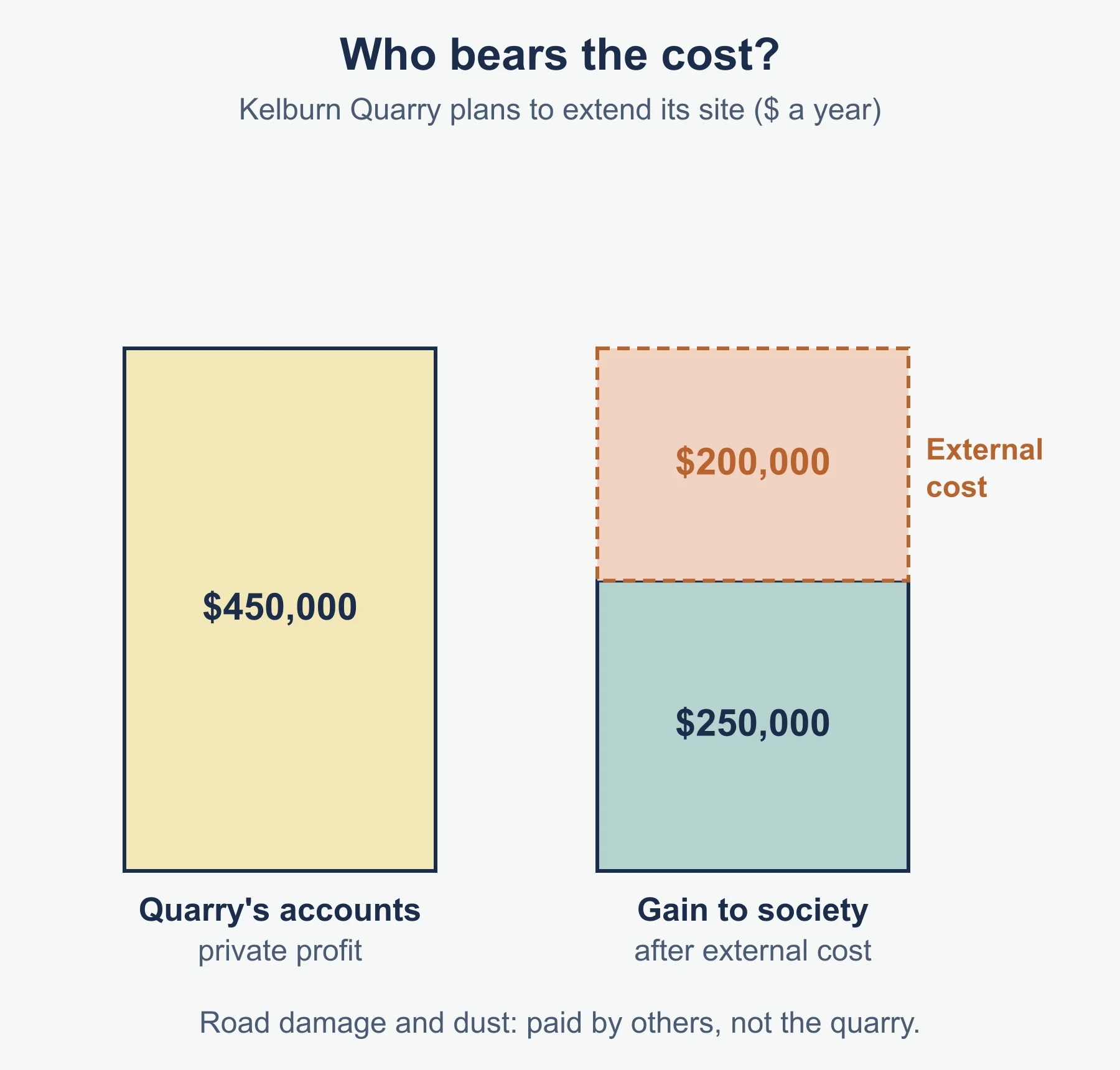
- External cost: paid by others (noise, pollution, damaged roads).
- External benefit: gained by others (trained workers, improved transport).
- The social picture = private benefit - external costs + external benefits.
Method for a calculation:
- Write the private profit.
- Add all external costs together.
- Subtract external costs from the private profit.
- Add any external benefits.
- State what the answer means for society or the community.
Small reminder: a firm earns 120,000 private profit and causes 45,000 of external cost. Profit after counting the external cost = 120,000 - 45,000 = 75,000.
6.2.4 Exchange rates
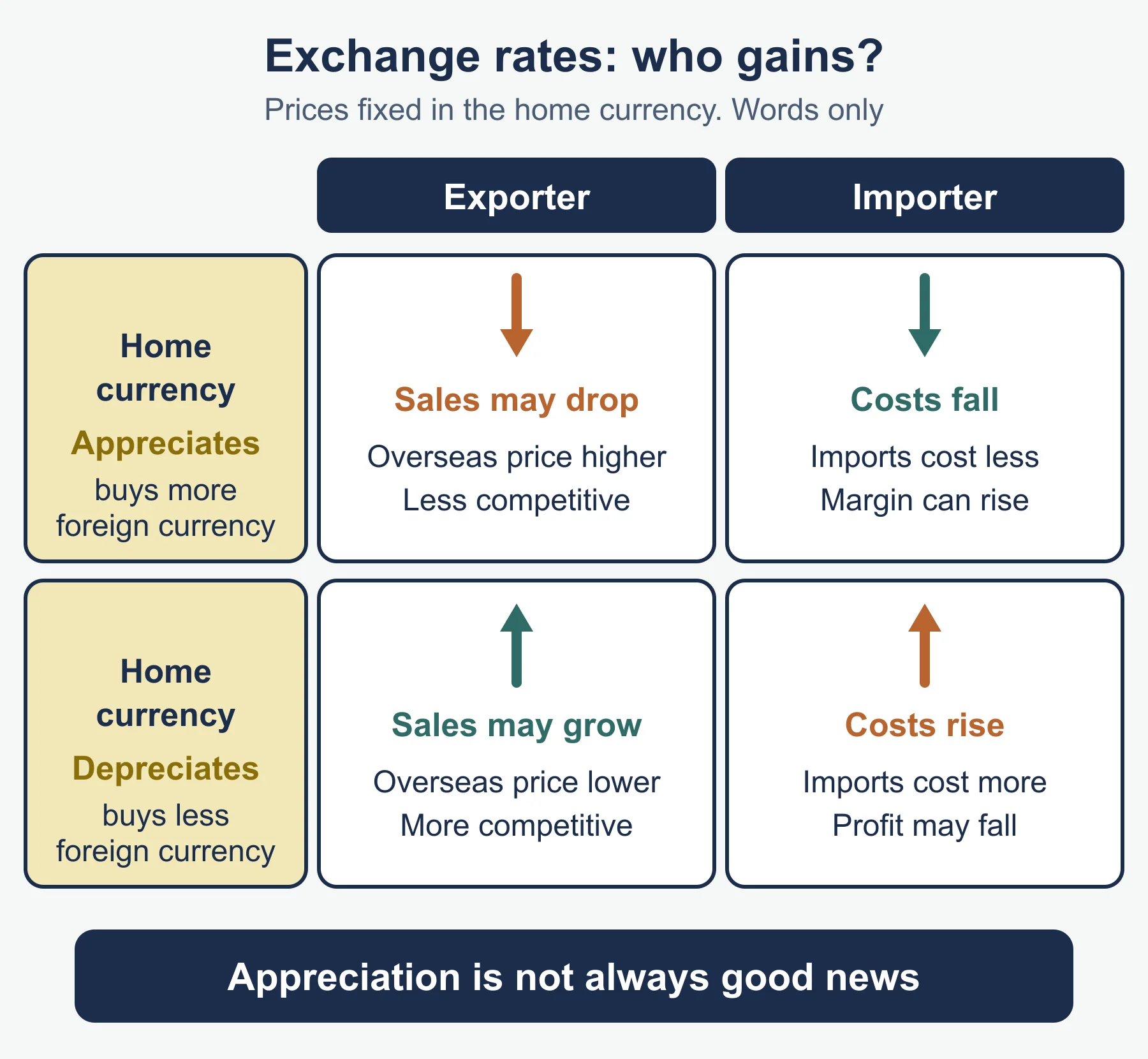
| Exporter | Importer | |
|---|---|---|
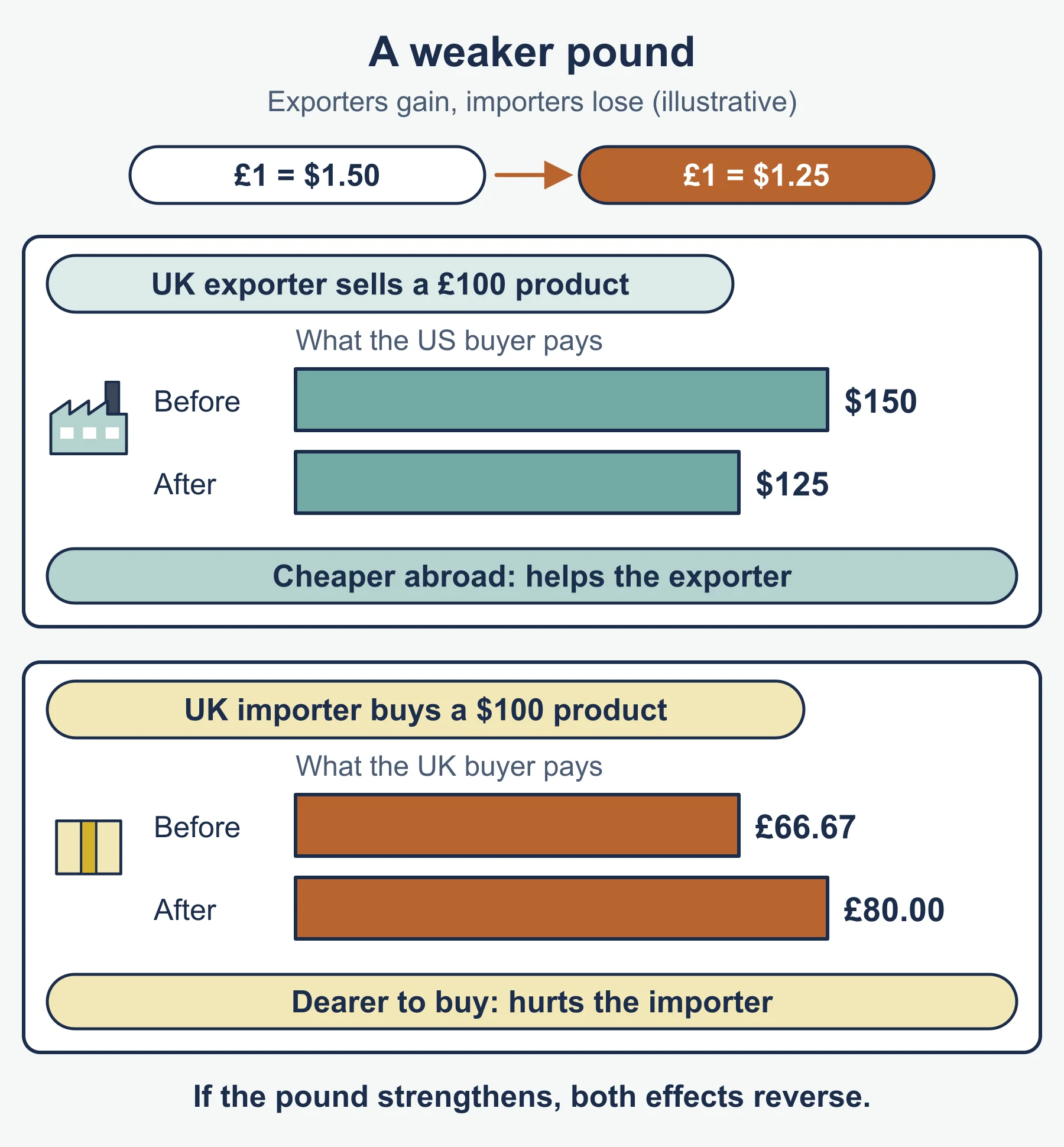
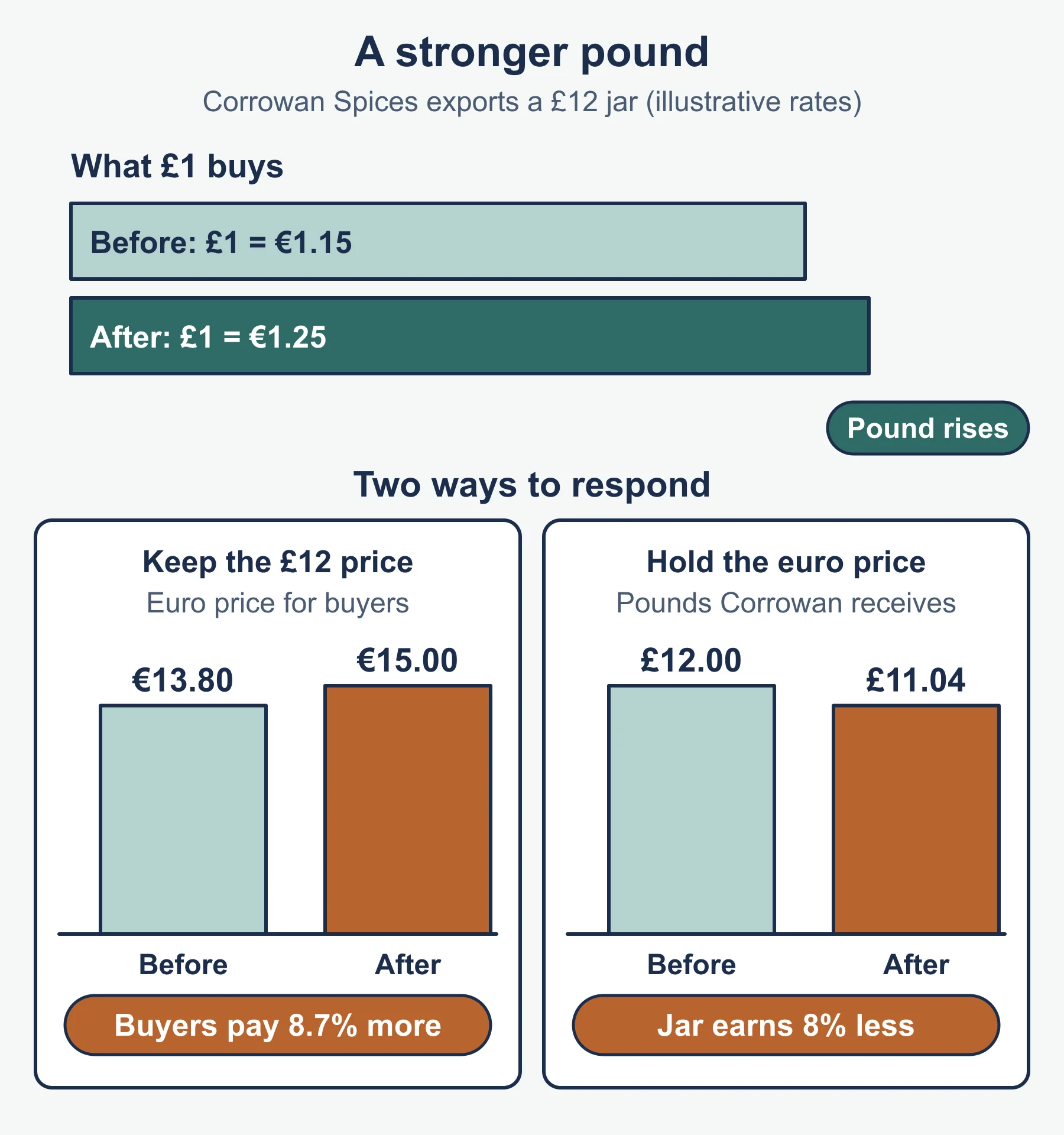
| Home currency appreciates | Prices abroad rise, competitiveness falls, sales may fall | Import prices and costs fall, margins may rise |
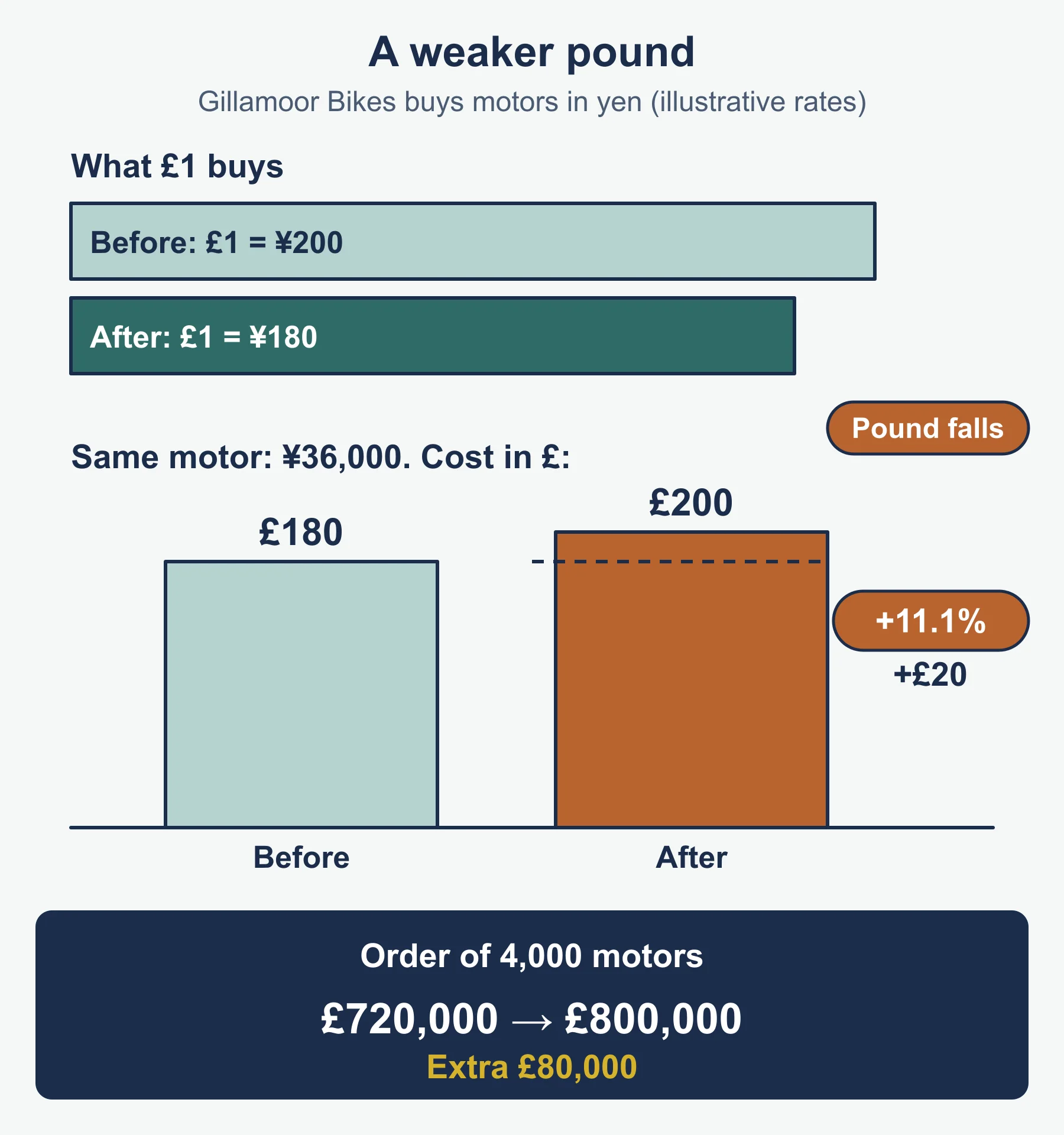
| Home currency depreciates | Prices abroad fall, competitiveness rises, sales may rise | Import prices and costs rise, margins may fall |
- Three effects to name: price, costs, competitiveness.
- The syllabus states that candidates will not be assessed on exchange rate calculations, so revise the direction and reasons of the effects, not conversion sums.
- Appreciation is not simply good. It helps importers and hurts exporters. Depreciation is the reverse.
- Possible responses: cut costs, look for new markets, change suppliers, accept a lower margin.
Evaluation prompts
For “evaluate”, “justify” or “recommend” questions, weigh both sides and then decide.
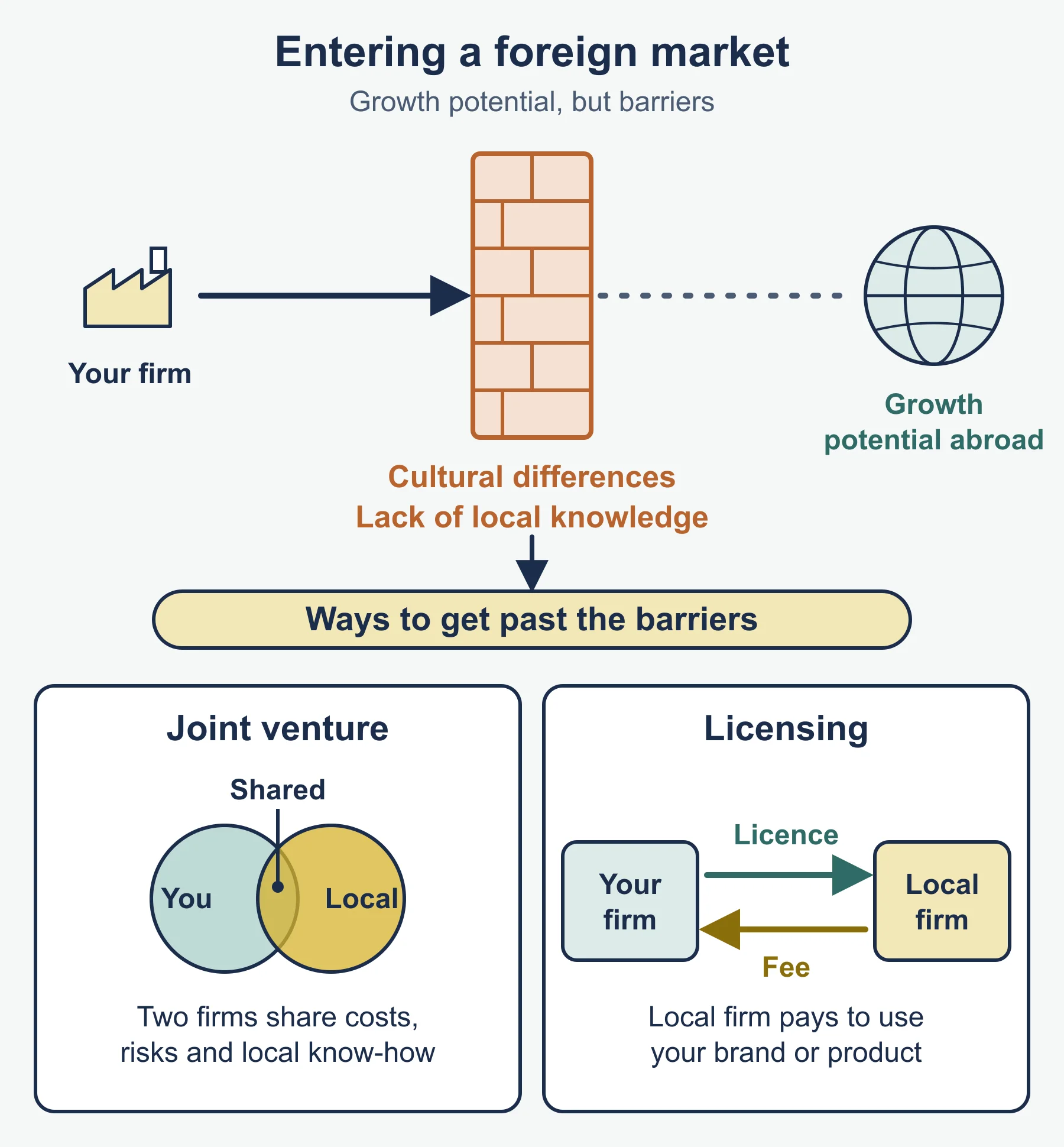
- Becoming an MNC: lower costs and larger markets against the cost of setting up, the risk of operating in an unfamiliar country and a loss of control over distant sites. Judge by the size of the business and how much it can afford to lose.
- Responding to a tariff: a higher price keeps the margin but may lose customers; a new supplier may cut cost but carries quality risk. Judge by how price-sensitive the customers are.
- Exporting when the home currency appreciates: sales may fall, but a firm with a strong brand or unique product may keep its customers. Judge by how easily buyers can switch.
- Host country and an MNC: jobs and investment against lost profits and pressure on local firms. Judge by how much is spent locally and how many local firms are harmed.
Close with a clear decision, a reason tied to the figures or facts in the stem and one condition under which your view would change.
Must-know distinctions
- Tariff (tax) versus quota (quantity limit).
- Opportunity (a gain a business can use) versus threat (a danger to the business).
- Advantage to an MNC versus advantage to the host country.
- Private cost versus external cost.
- Appreciation versus depreciation.
Quick self-test
- State two reasons for globalisation.
- Define import quota.
- A country imposes a 25% tariff on a part that costs 60 to import. State the new cost per part.
- A business imports 4,000 of those parts. Calculate the extra annual cost caused by the tariff.
- Name two disadvantages for a host country of an MNC.
- What is meant by repatriation of profits?
- A business makes 90,000 private profit and causes 35,000 of external cost. Calculate its profit after counting that cost.
- Give one example of an external benefit.
- Explain one effect of appreciation on an exporter.
- Explain one effect of depreciation on a business that imports materials.
- A quota cuts imports from 12,000 units to 9,000. Calculate the percentage cut.
Answers
- Any two of: improved transport links, technological change including communication, free trade agreements, newly industrialised countries.
- A cap on how many units of a good may enter the country in a set time.
- 60 x 1.25 = 75.
- Extra cost per part = 15; 15 x 4,000 = 60,000.
- Any two of: increased competition, environmental damage, exploitation of natural resources, repatriation of profits.
- Profits made in the host country go back to the home country of the MNC.
- 90,000 - 35,000 = 55,000.
- For example, workers trained by a firm who later work for other firms, or a road built by a firm that other drivers also use.
- Its goods cost more for overseas customers, so it is less competitive and may sell less abroad.
- The materials cost more in home currency, so its costs rise and profit may fall unless it raises prices.
- (12,000 - 9,000) / 12,000 x 100 = 25%.
Where marks are usually lost
- Describing a tariff as a ban, or mixing it up with a quota.
- Listing a reason for globalisation without saying how it helps trade.
- Giving host-country points when the question asks for advantages to the MNC.
- Not applying the answer to the business or country in the stem.
- Writing “profit goes abroad” without saying that this means less income stays in the host country.
- Calling pollution a cost without saying that others pay for it.
- Mixing up appreciation and depreciation, or the direction of the effect on exporters and importers.
- Giving a one-sided answer to “evaluate” or “justify” and not reaching a judgement.
Frequently asked questions
What is the difference between an import tariff and an import quota? An import tariff is a tax on imports, charged per unit or as a percentage of value, which raises the importer’s cost. An import quota is a cap on the quantity of a good that can be imported.
How does an appreciation of the currency affect exporters and importers? When the home currency appreciates, prices to overseas customers rise, so exporters become less competitive and sales may fall. Importers gain, because imported supplies become cheaper.
What are the disadvantages of an MNC for a host country? The syllabus gives increased competition for local firms, environmental damage, exploitation of natural resources and repatriation of profits as examples.
How can a business respond to an import tariff? It can raise its price, accept lower profit, find a local or tariff-free supplier, or produce inside the country. Weigh the cost of each option against the tariff.
Official syllabus
Aligned to section 6.2 of the Cambridge IGCSE Business 0264 syllabus for examination in 2027, 2028 and 2029, published by Cambridge University Press & Assessment (Cambridge International Education).
Get free revision emails (optional)
Occasional emails with practice questions, worked explanations and links to free resources for the qualification and subjects you choose. No spam, and you can unsubscribe from any email. The free tools on this site never need an email.
Related resources
-
Study guides
IGCSE Business: Economic issues (Cambridge 0264)
Study guide to the business cycle, taxes, government spending and interest rates for Cambridge IGCSE Business 0264, with worked examples.
Business · Cambridge · IGCSE
Read guide -
Practice questions
IGCSE Business: Economic issues (Cambridge 0264) – Practice Questions
Original practice questions with worked answers on the business cycle, taxes, government spending and interest rates for Cambridge IGCSE Business 0264.
Business · Cambridge · IGCSE
Try questions -
Revision notes
IGCSE Business: Economic issues (Cambridge 0264) – Revision Notes
Condensed revision notes on the business cycle, tax, government spending and interest rates for Cambridge IGCSE Business 0264, with a self-test.
Business · Cambridge · IGCSE
Revise topic
Related articles
-
teaching
A Level tuition in Dubai: Cambridge or Pearson Edexcel International A Level?
Schools in Dubai and Abu Dhabi teach either Cambridge International AS & A Level or Pearson Edexcel International A Level. How the two are structured, why it matters for tuition, and how online classes from Lahore work.
9 October 2026
-
curriculum guides
Choosing subjects at IGCSE and A Level
How subject choices at 14 and 16 affect university options later, and how to keep pathways open without overloading a timetable.
28 July 2026
Studying this with a teacher
Working through Business IGCSE?
This page is free and stays free. If you would rather be taught it, Marlbridge runs Business classes one-to-one and in small groups of up to 15, online in your own time zone. The first trial class is free. WhatsApp replies within an hour (8am–11pm Pakistan time, every day); email the same day.
Cambridge Business teachers at Marlbridge

