
Revision Notes
OxfordAQA IGCSE Accounting: Sole traders and other organisations (9215) – Revision Notes
Condensed revision notes on sole traders' income statements, statement of financial position adjustments and comparing business types for OxfordAQA 9215.
- Subject
- Accounting
- Level
- IGCSE
- Topic
- Preparation of financial statements
- Author
- Marlbridge Academic Team
- Updated
- Reviewed by
- Javaid Iqbal Sabri (what this means)
Aligned to OxfordAQA IGCSE Accounting (9215), First teaching 2024, first examined 2026. Official specification .
Syllabus page (what it covers and how it is assessed): OxfordAQA IGCSE Accounting.
Syllabus points this page covers
9215
- Sole traders, partnerships and limited companies compared
Found an error? Report a correction.
Need help with this topic? Request a free trial class for IGCSE Accounting (9215).
These notes condense section 3.4 of the OxfordAQA International GCSE Accounting (9215) specification, version 1.2, for exams from May/June 2026 onwards (first teaching 2024, first examined 2026). They cover the concepts used in preparing financial statements, comparing sole traders, partnerships and limited companies, and sole traders’ statements. For full explanations and long worked examples, read the study guide. Then try the practice questions. Other links: subject hub, checklist, free diagnostics and the verification notes. All amounts are in dollars.
Formulas and rules
| Item | Rule |
|---|---|
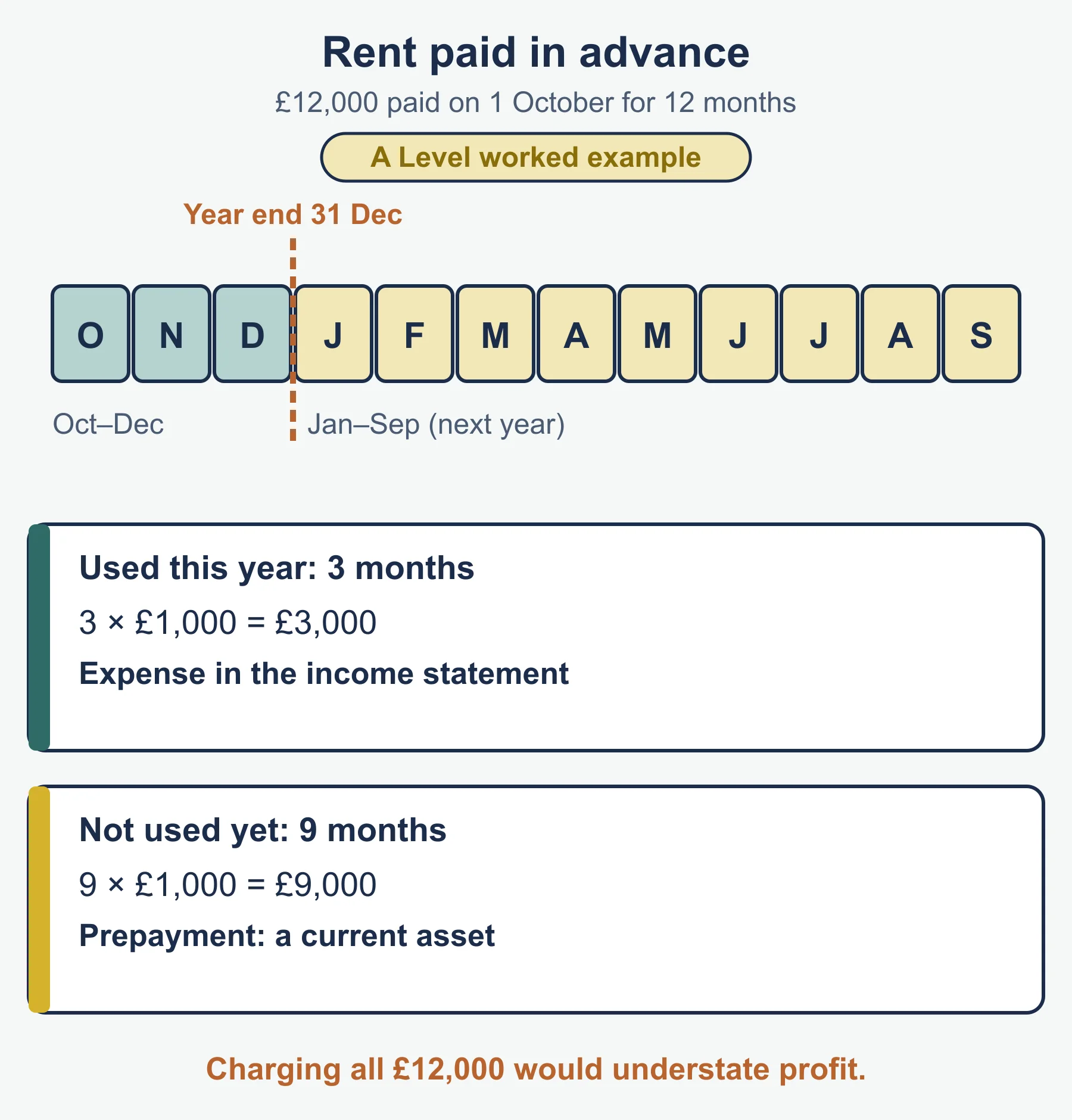
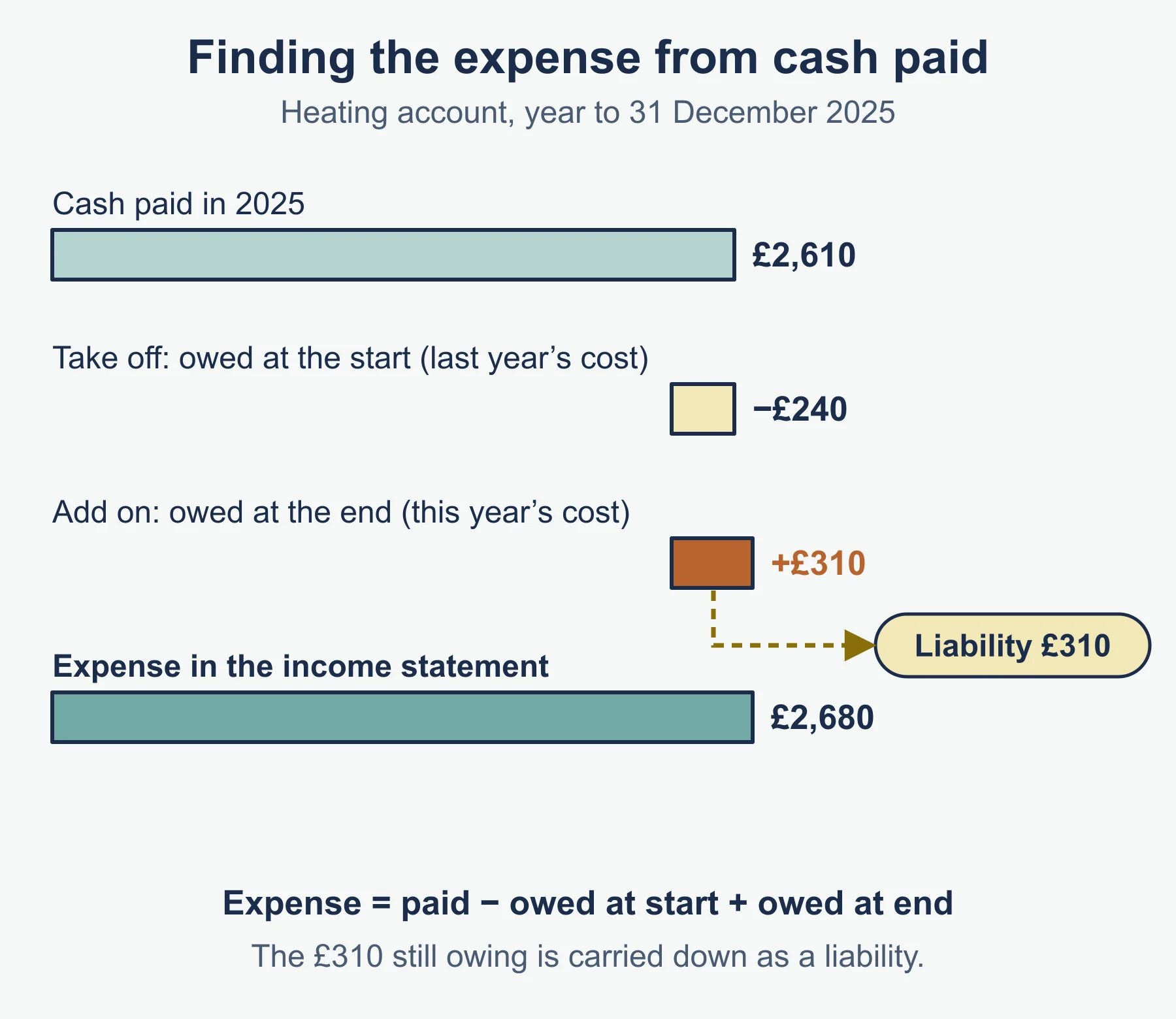
| Expense charged | Paid + owing at end - paid in advance at end (and adjust for opening balances) |
| Income earned | Received + income due - income received in advance |
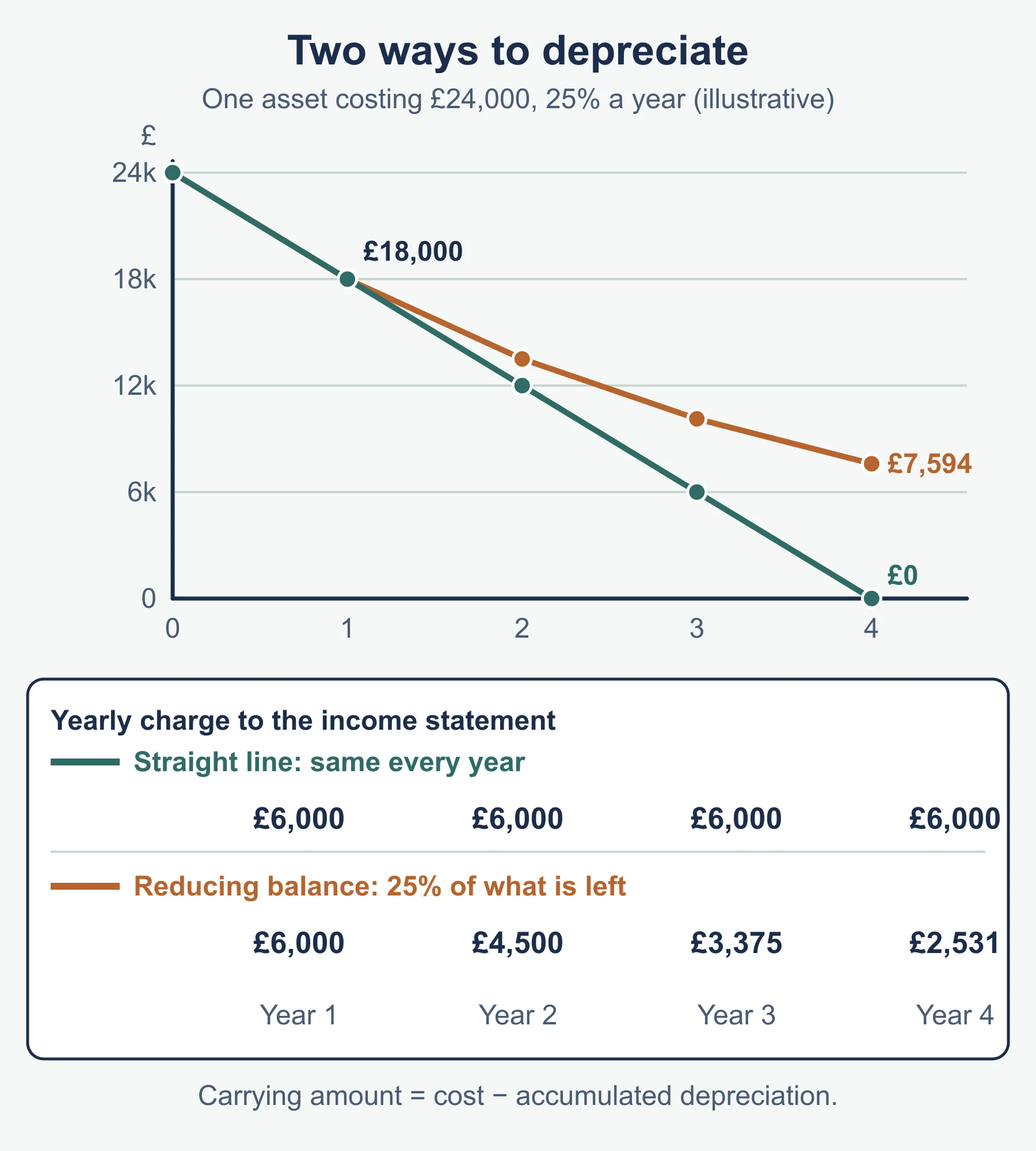
| Straight line depreciation | (Cost - residual value) / years of use |
| Reducing balance | Percentage x net book value at start of year |
| Provision for doubtful debts | Percentage x receivables after irrecoverable debts; charge only the change |
| Net book value | Cost - provision for depreciation |
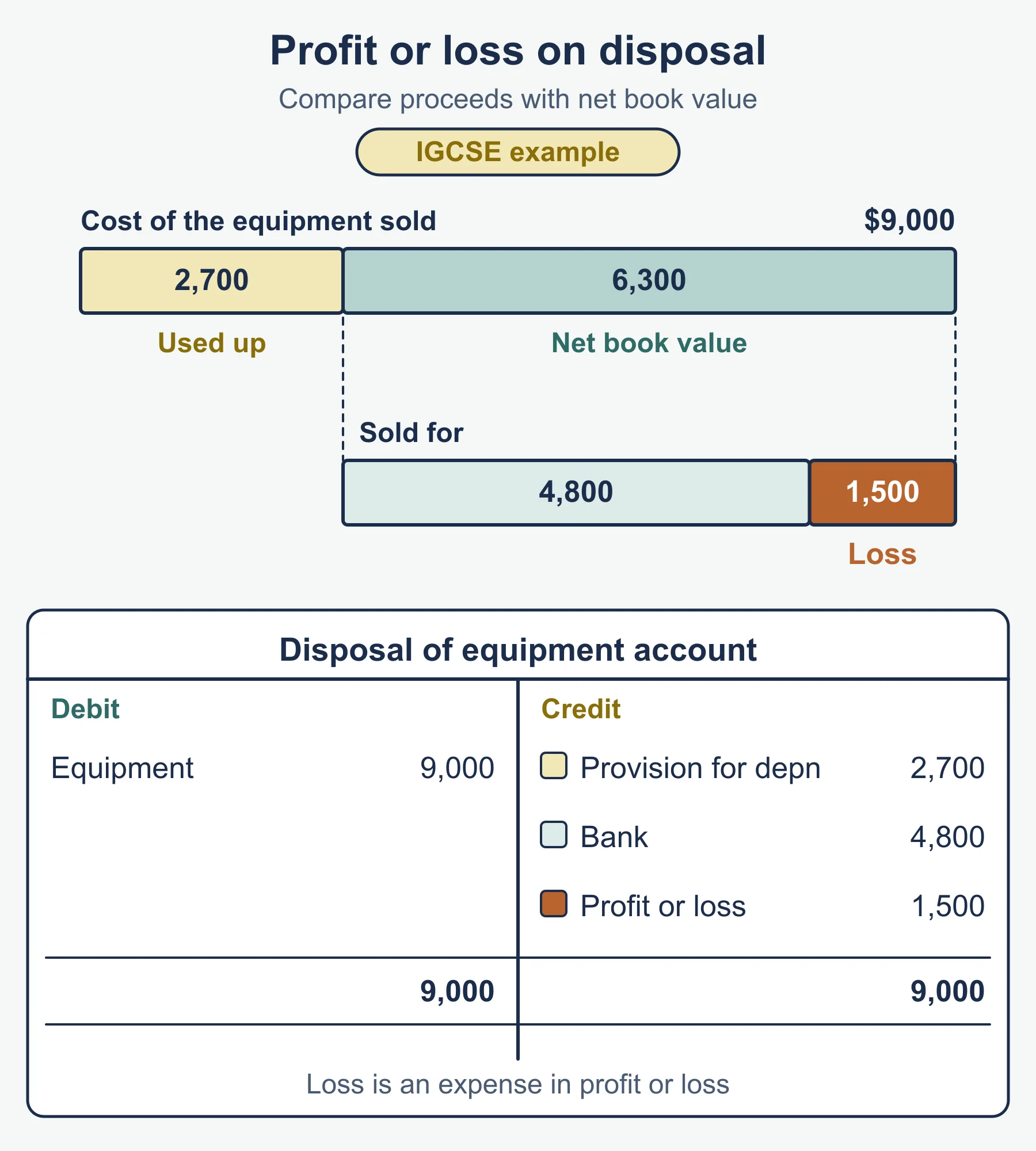
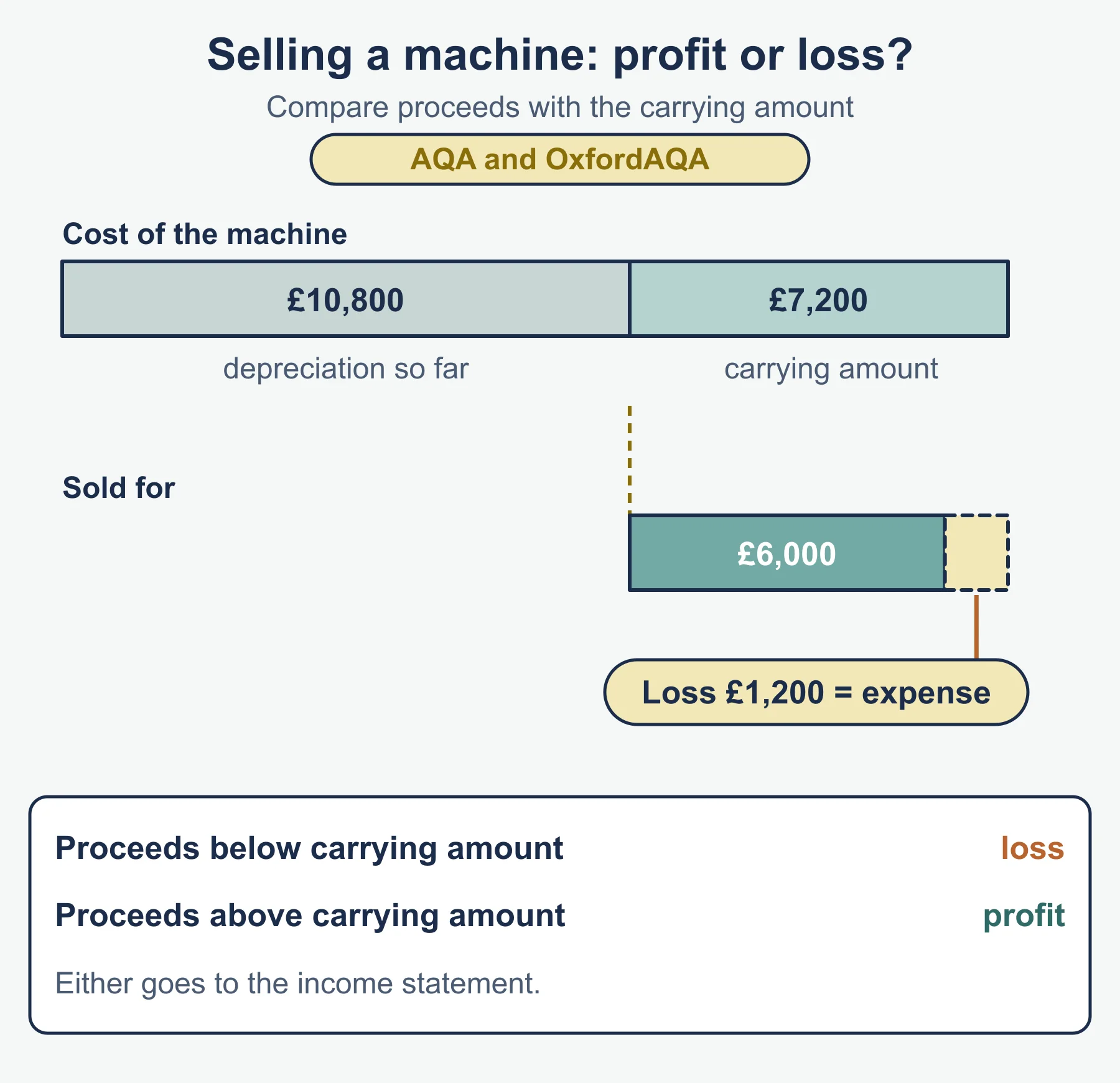
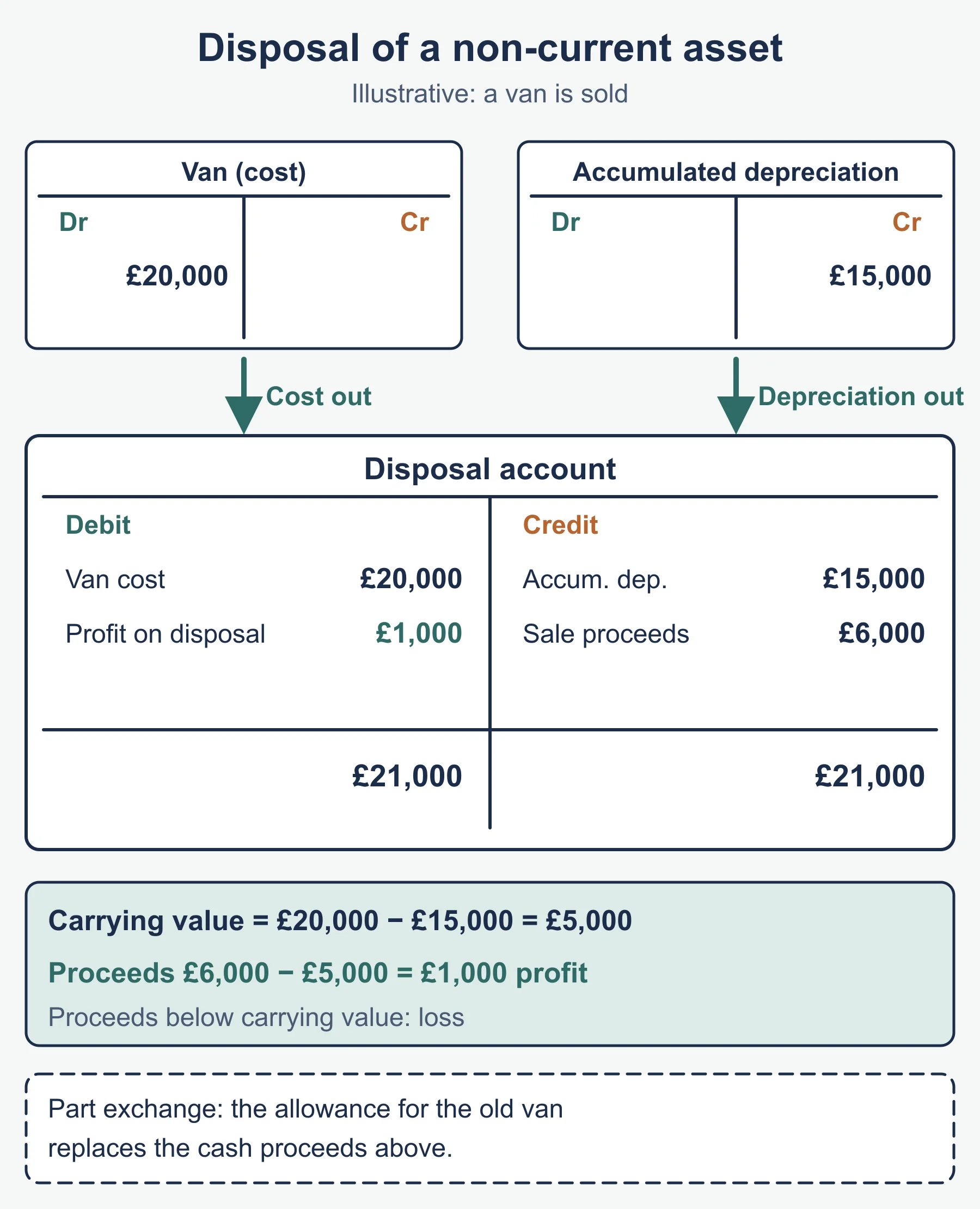
| Profit or loss on disposal | Proceeds - net book value |
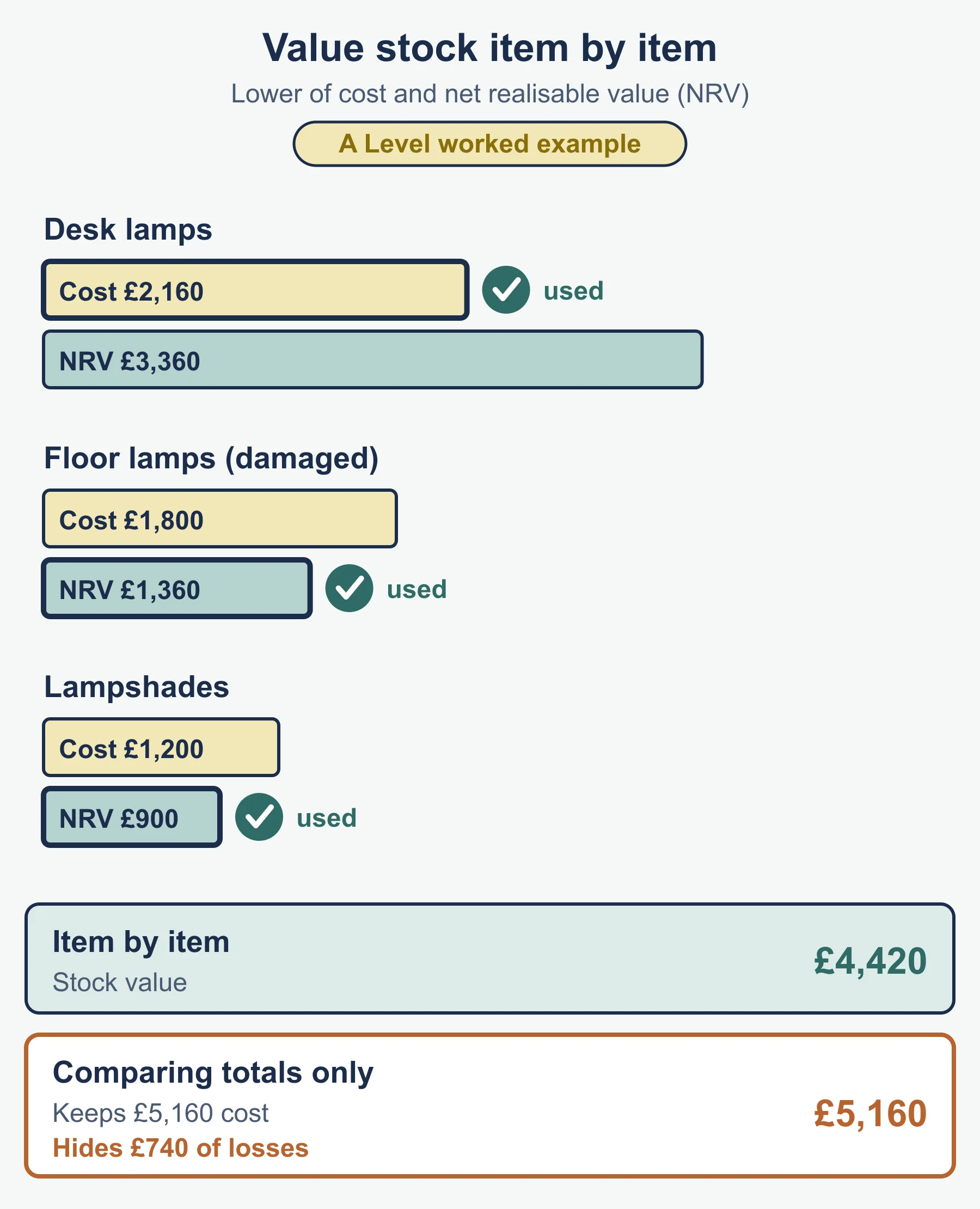
| Inventory | Lower of cost and net realisable value |
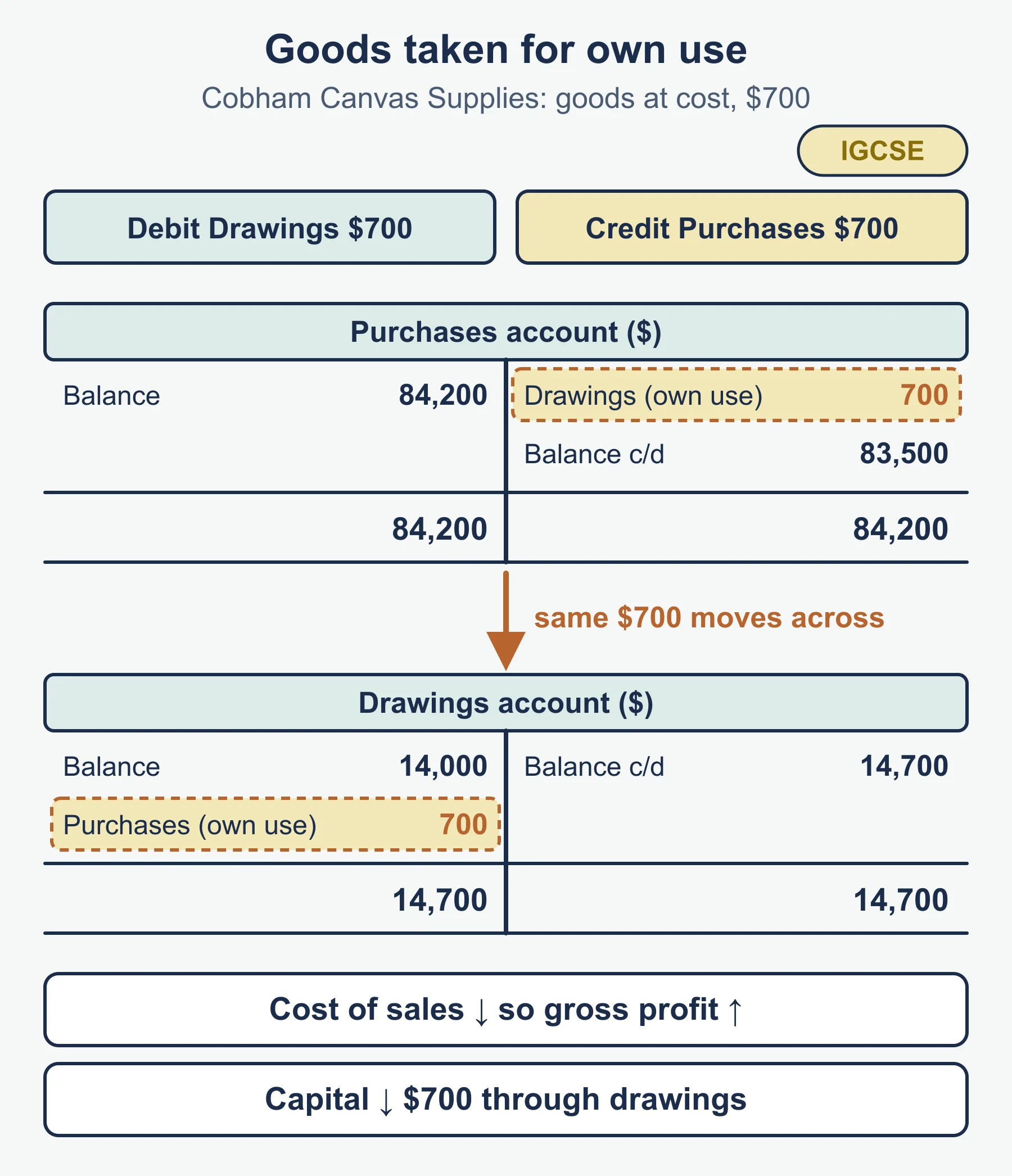
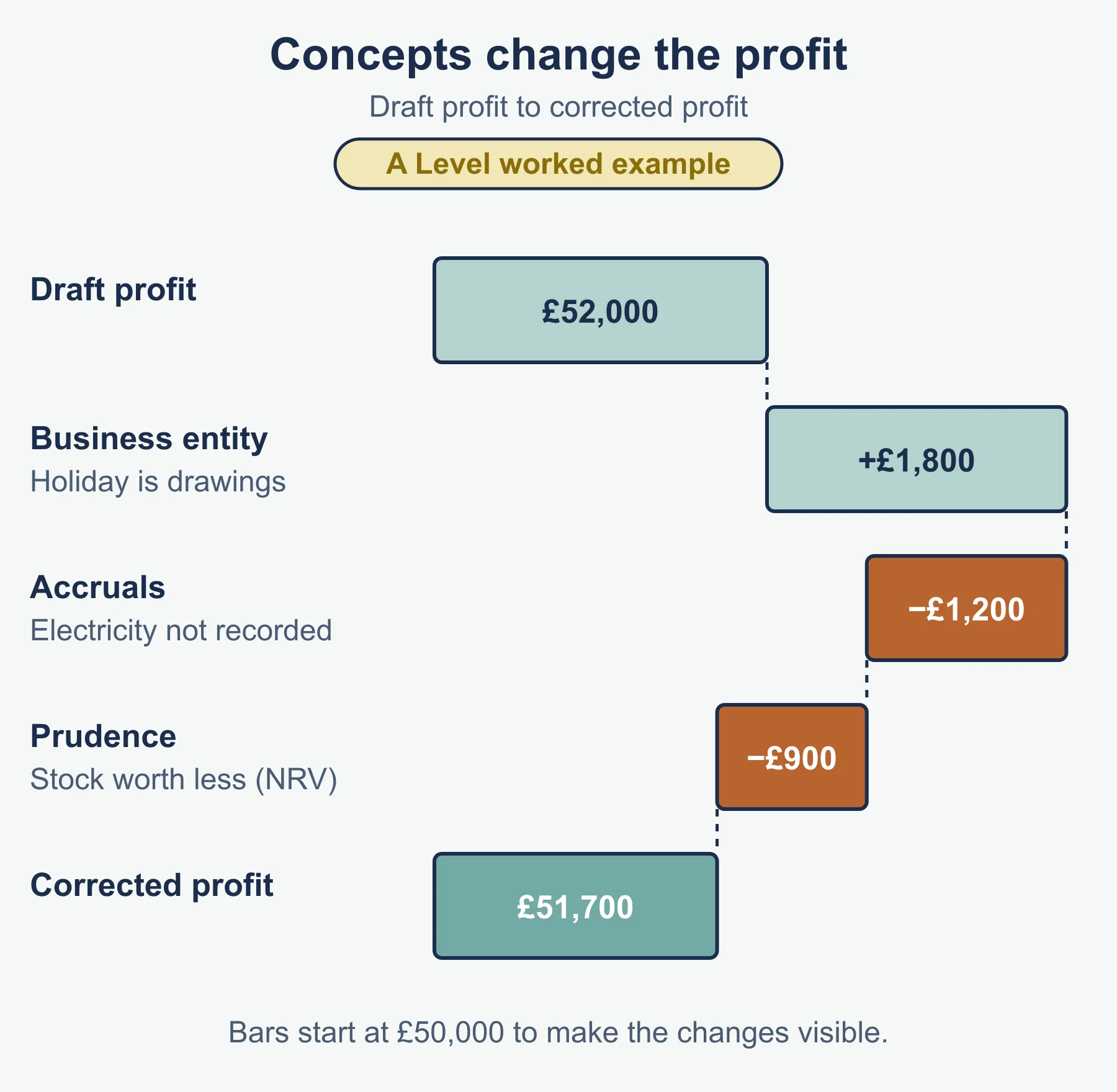
| Goods taken for own use | Debit drawings, credit purchases, at cost |
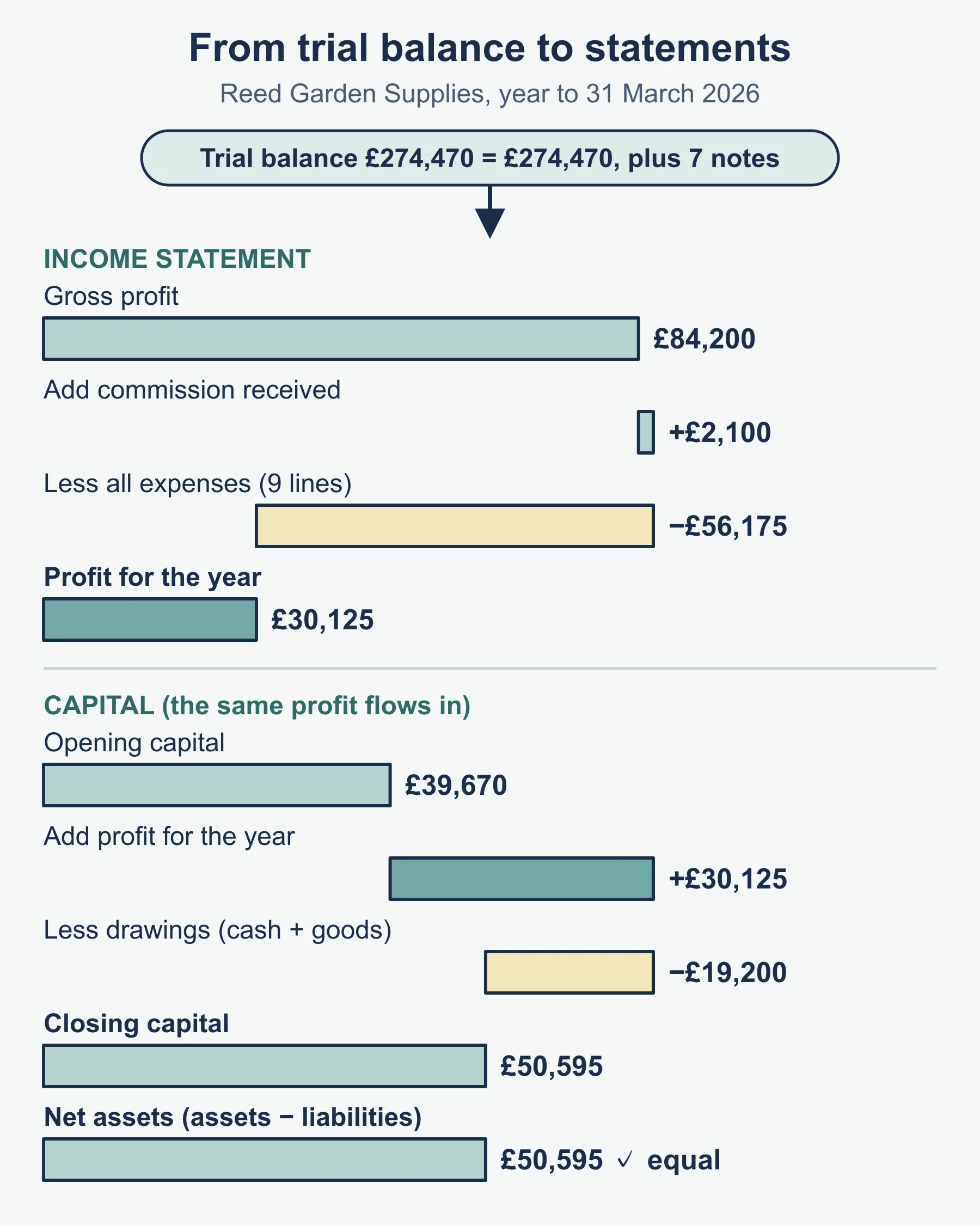
| Closing capital | Opening capital + net profit - drawings |
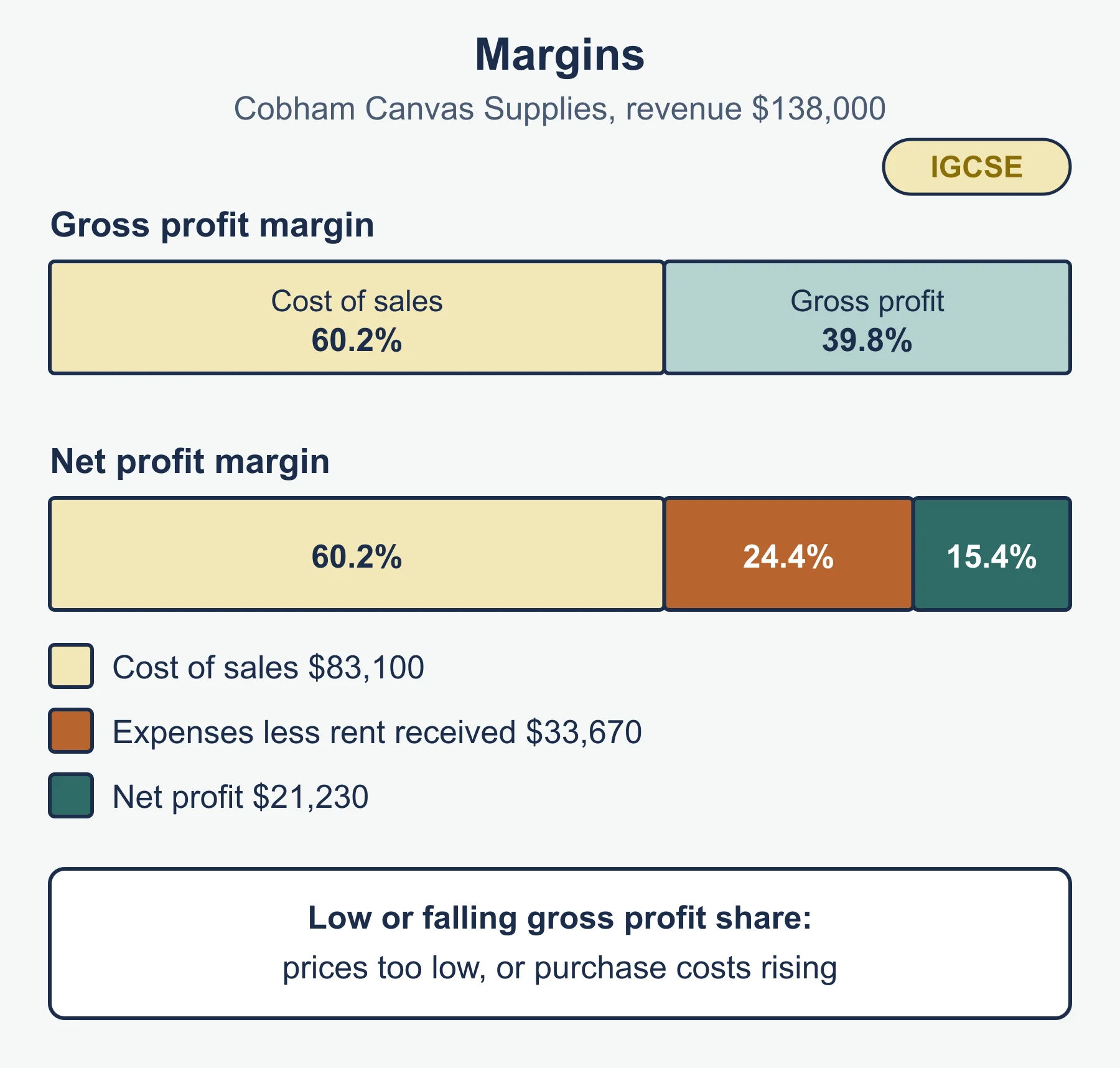
| Gross profit | Revenue - cost of sales |
| Net profit | Gross profit + other income - expenses |
FIFO, AVCO and LIFO inventory valuation are stated as not examined.
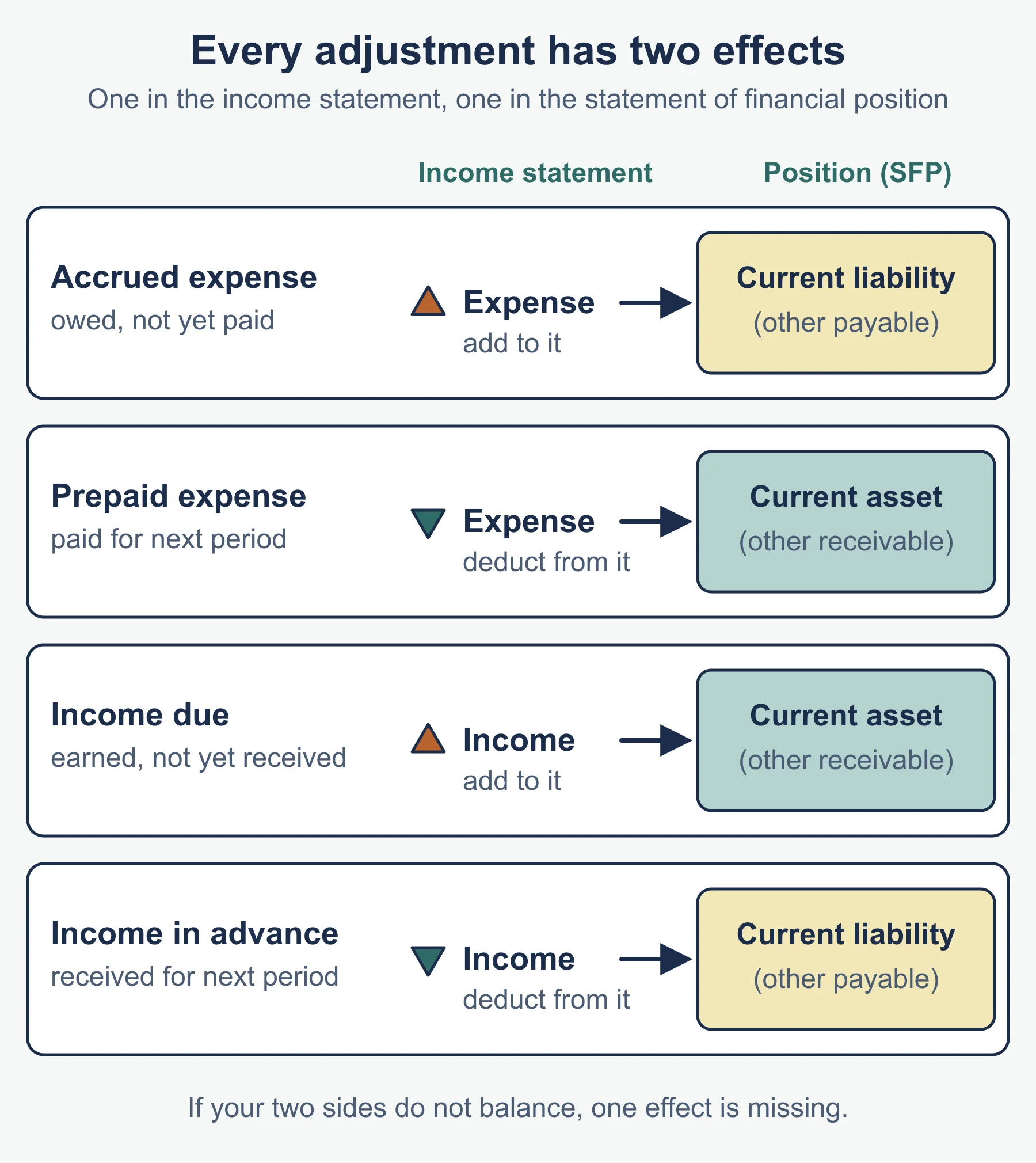
Where each adjustment goes
| Adjustment | Income statement | Statement of financial position |
|---|---|---|
| Other payables | Increases the expense | Current liabilities |
| Other receivables | Reduces the expense | Current assets |
| Income due | Increases income | Current assets (other receivables) |
| Income received in advance | Reduces income | Current liabilities |
| Depreciation | Expense | Reduces non-current assets to net book value |
| Irrecoverable debt | Expense | Reduces trade receivables |
| Provision change | Expense (or reduction of expense if the provision falls) | Trade receivables shown net |
| Closing inventory | Deducted in cost of sales | Current assets |
| Own goods | Reduces purchases | Increases drawings, reduces capital |
Method in steps
- Underline each adjustment and note the accounts affected.
- Calculate each adjusted figure separately.
- Build the income statement: revenue, cost of sales (trading business only), gross profit, other income, expenses, net profit.
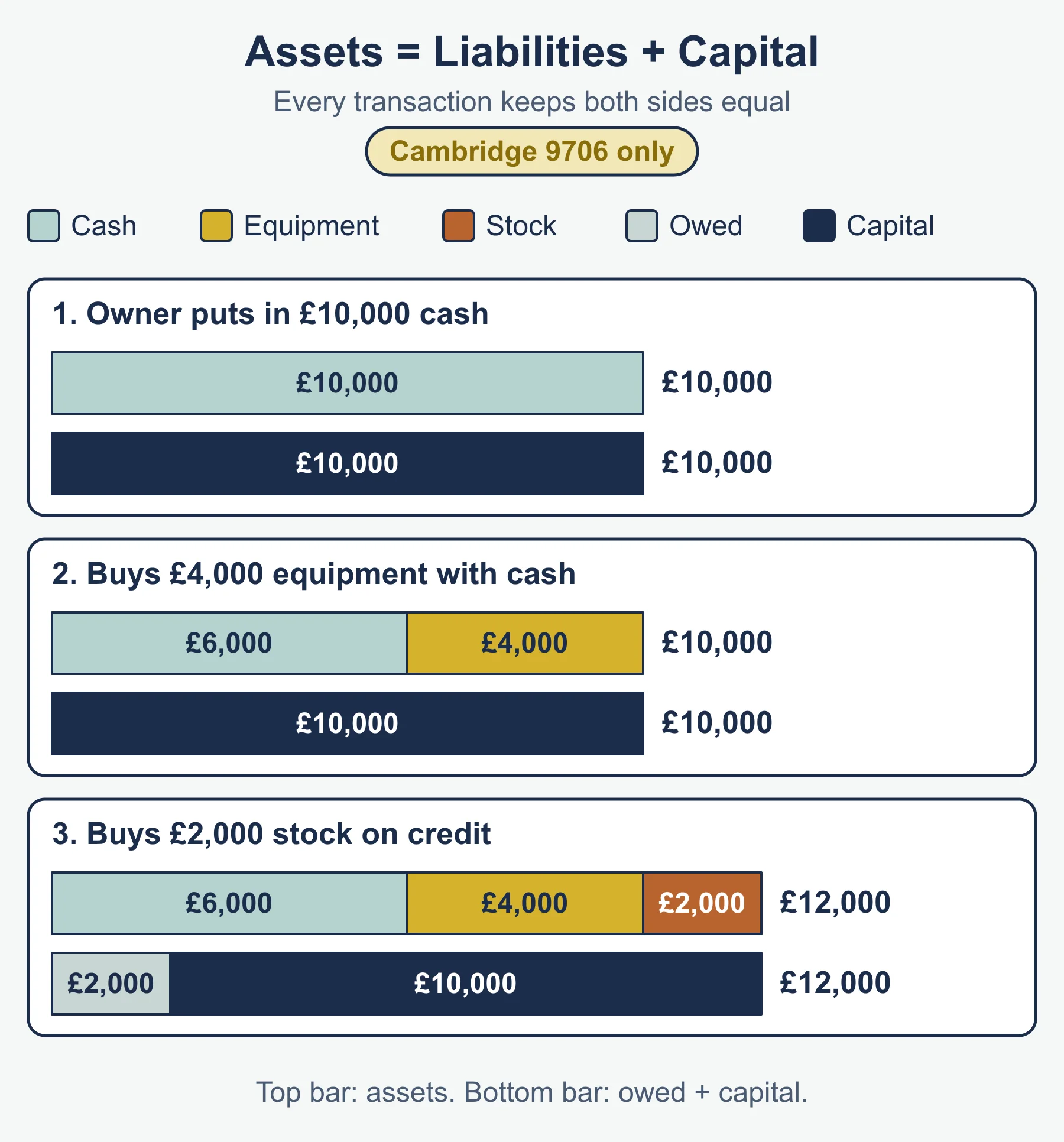
- Build the statement of financial position with sub-headings: non-current assets, current assets, current liabilities, non-current liabilities, then capital.
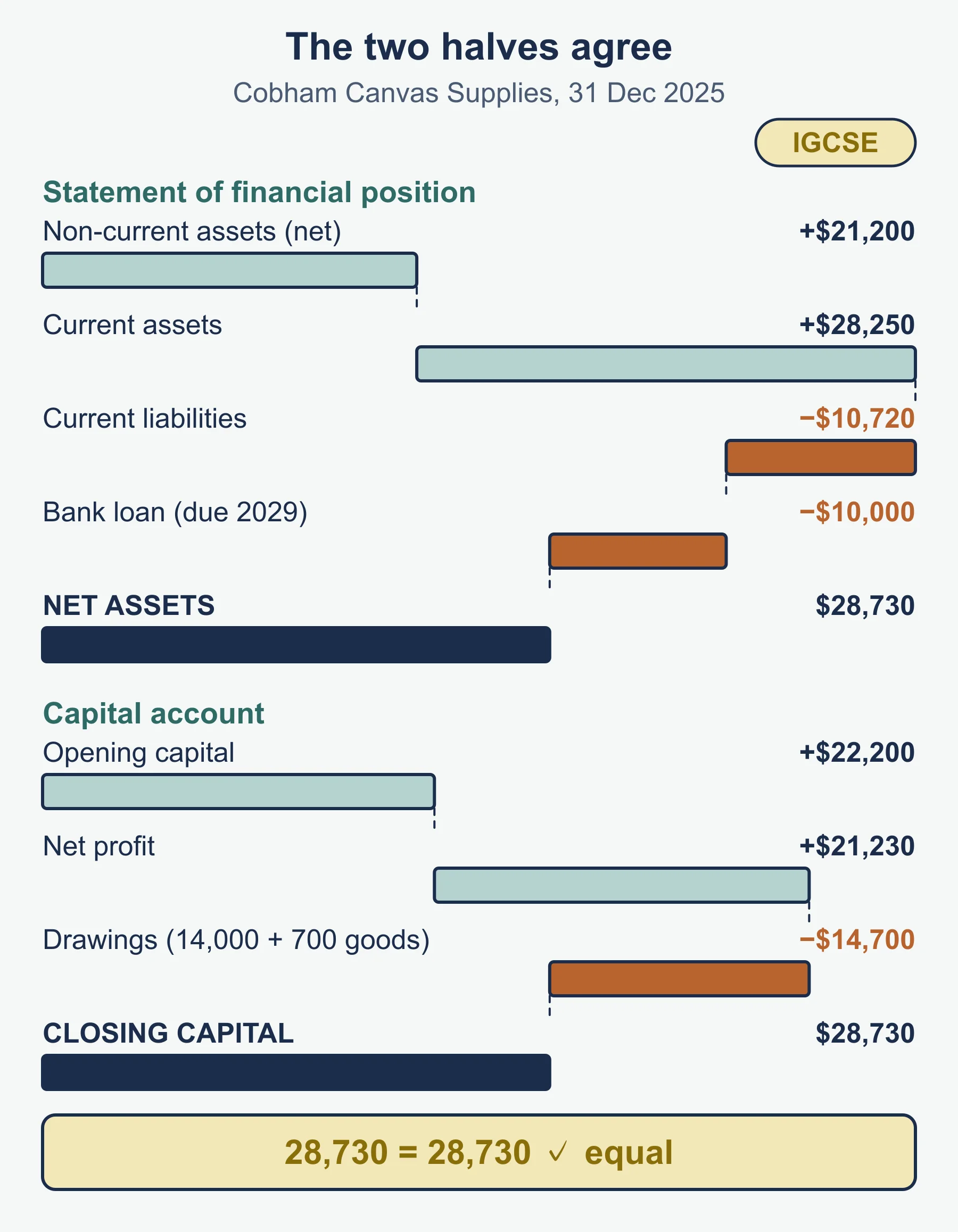
- Check that net assets equal closing capital.
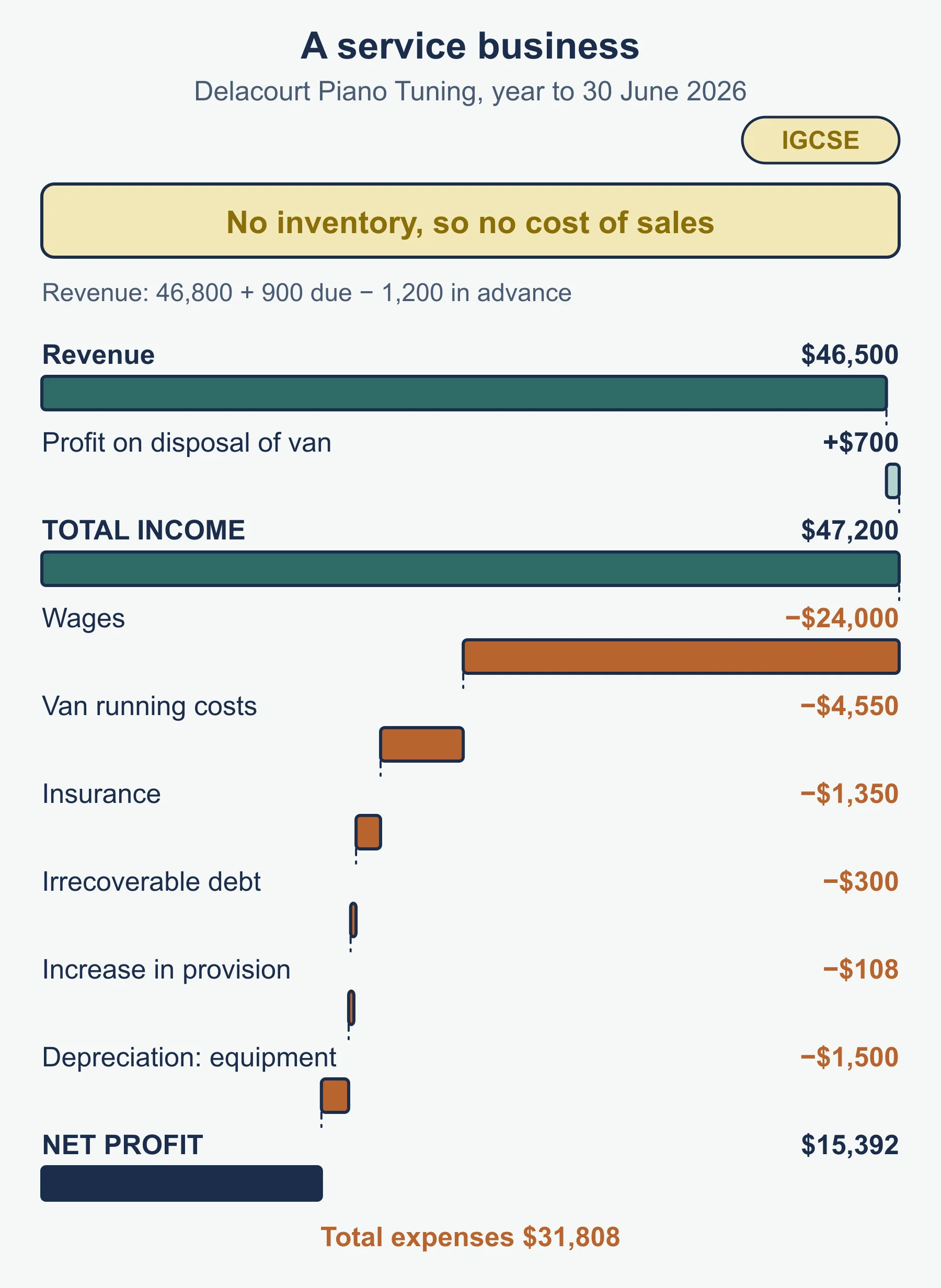
A service business has no inventory and no cost of sales. Its income statement runs from revenue to expenses.
Worked reminders (new figures)
Rent paid is 7,800 and 650 relates to next year, so the charge is 7,150. Commission received is 3,100 and 240 is due, so income is 3,340.
An asset cost 12,000 with residual value 2,000 and four years of life: straight line gives 2,500 a year. Reducing balance at 25% gives 3,000 in year 1 and 2,250 in year 2, leaving net book value 6,750.
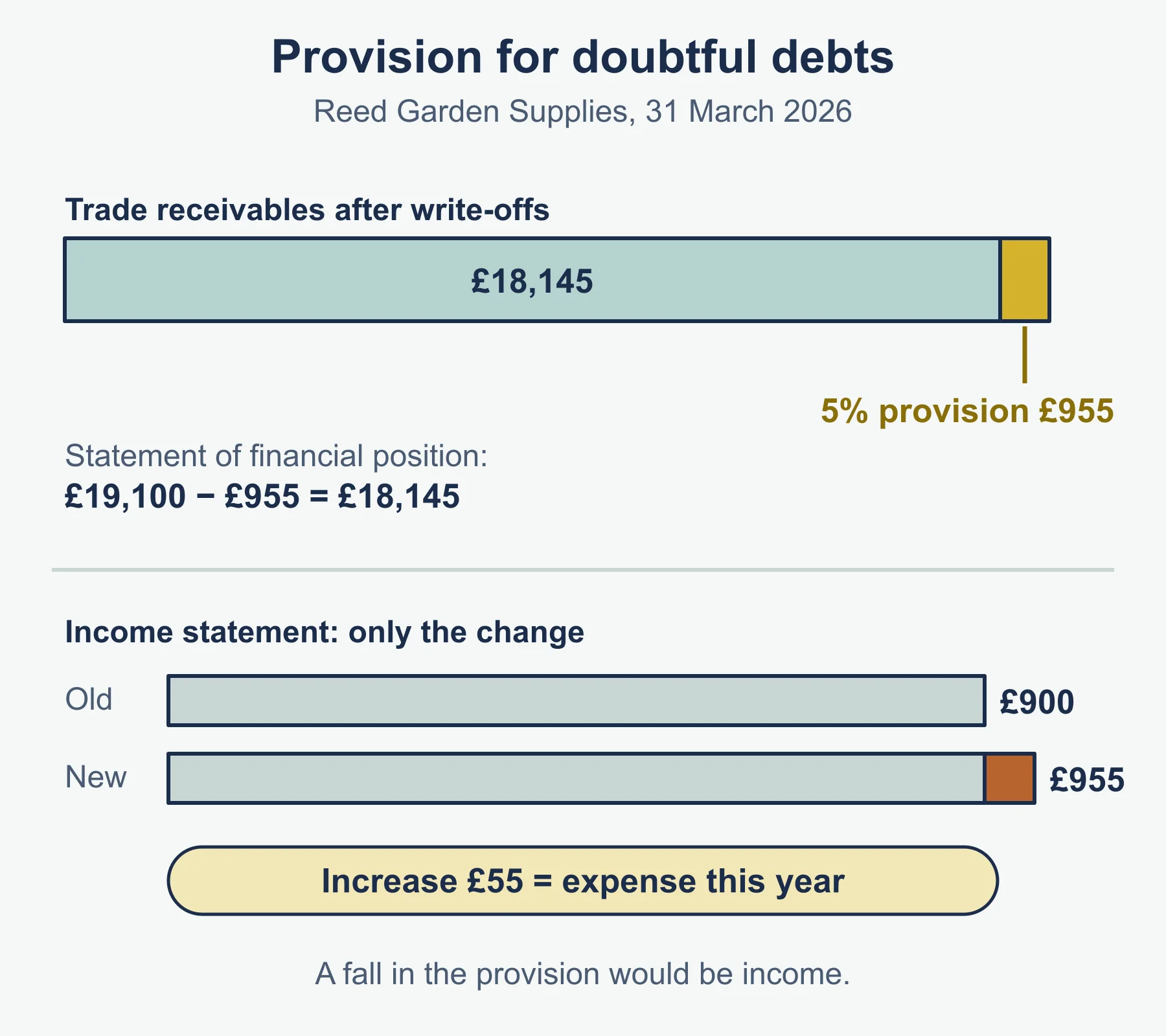
Trade receivables are 9,000 and 250 is irrecoverable. The remaining 8,750 at 2% gives a provision of 175. If the old provision was 120, charge 55. If it was 220, the provision falls by 45 and this is a reduction in expenses.
A machine cost 9,000 and has provision for depreciation of 6,300, so net book value is 2,700. Sold for 2,100, it makes a loss on disposal of 600.
Must-know distinctions
- Irrecoverable debt (a debt that will not be paid, an expense) versus provision for doubtful debts (an estimate against remaining receivables).
- Drawings (owner takes value out, reduces capital) versus expenses (running costs of the business).
- Capital expenditure (non-current assets, spread through depreciation) versus revenue expenditure (day-to-day costs, charged in full).
- Other payables (owed) versus other receivables (paid early).
- Income due (earned, not yet received) versus income received in advance (received, not yet earned).
Business types compared
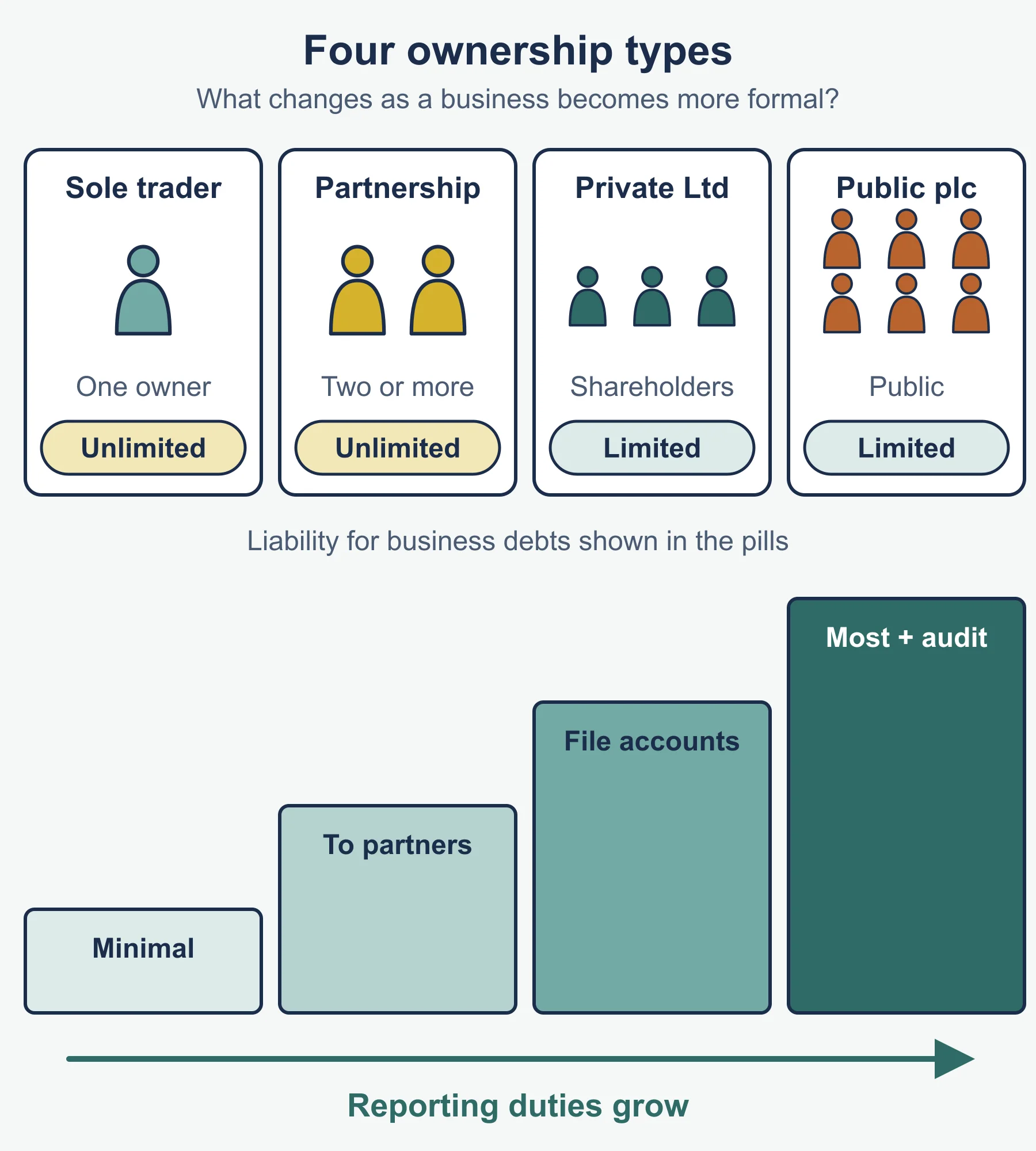
| Sole trader | Partnership | Limited company | |
|---|---|---|---|
| Owners | One | Two or more | Shareholders |
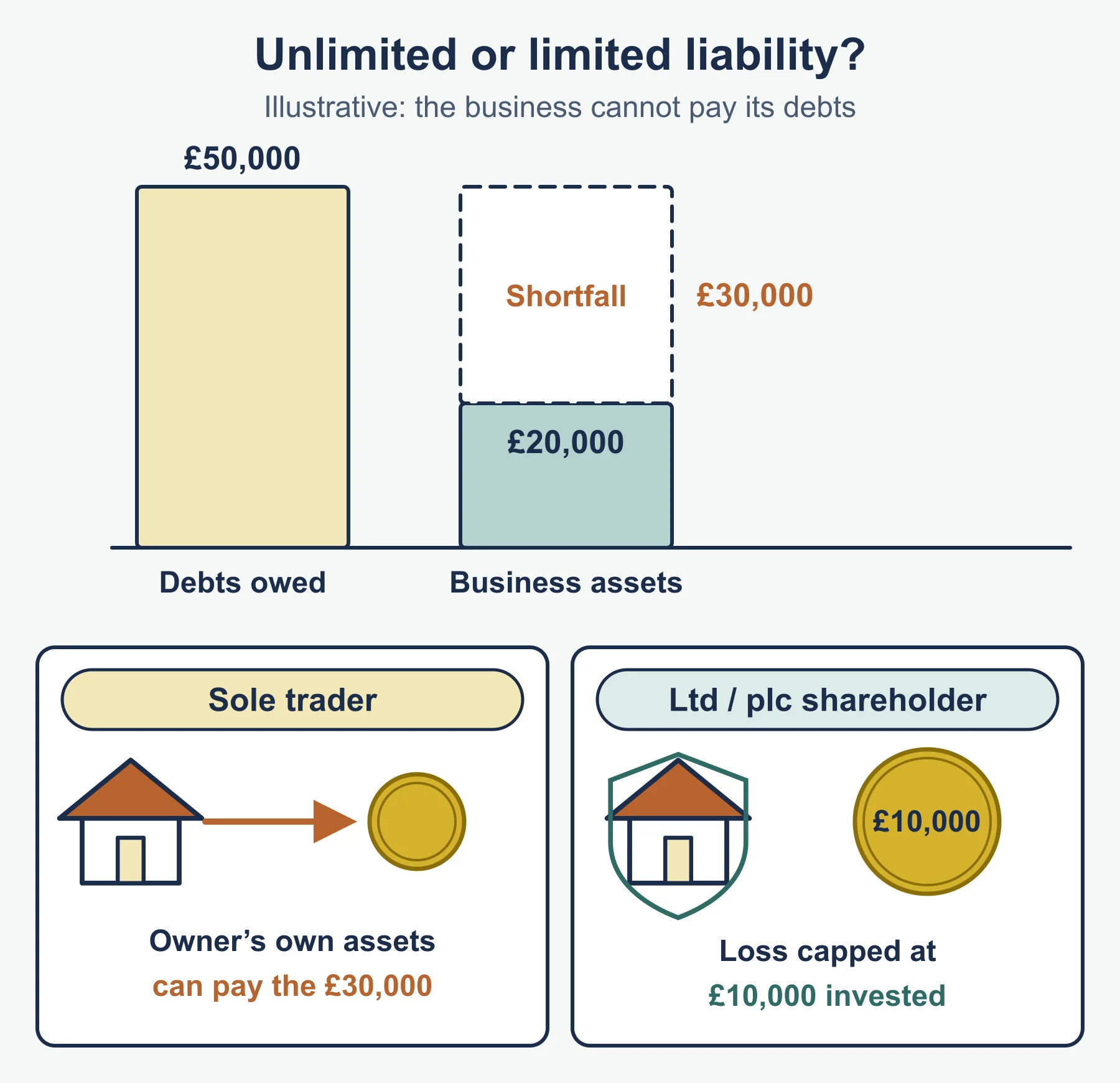
| Liability | Unlimited | Usually unlimited | Limited |
| Capital | Owner’s funds and borrowing | Partners’ funds, more than one source | Shares and loans, can be large |
| Control | Owner alone | Shared | Directors act for shareholders |
| Strength | Full profit and quick decisions | Shared skills and workload | Limited liability, continuity |
| Weakness | Risk and limited capital | Disputes, shared risk | Rules, cost, loss of control |
Distinguish share capital from loan capital for companies: shareholders own a company and share in its profit, while lenders are owed repayment and interest.
Layout to learn
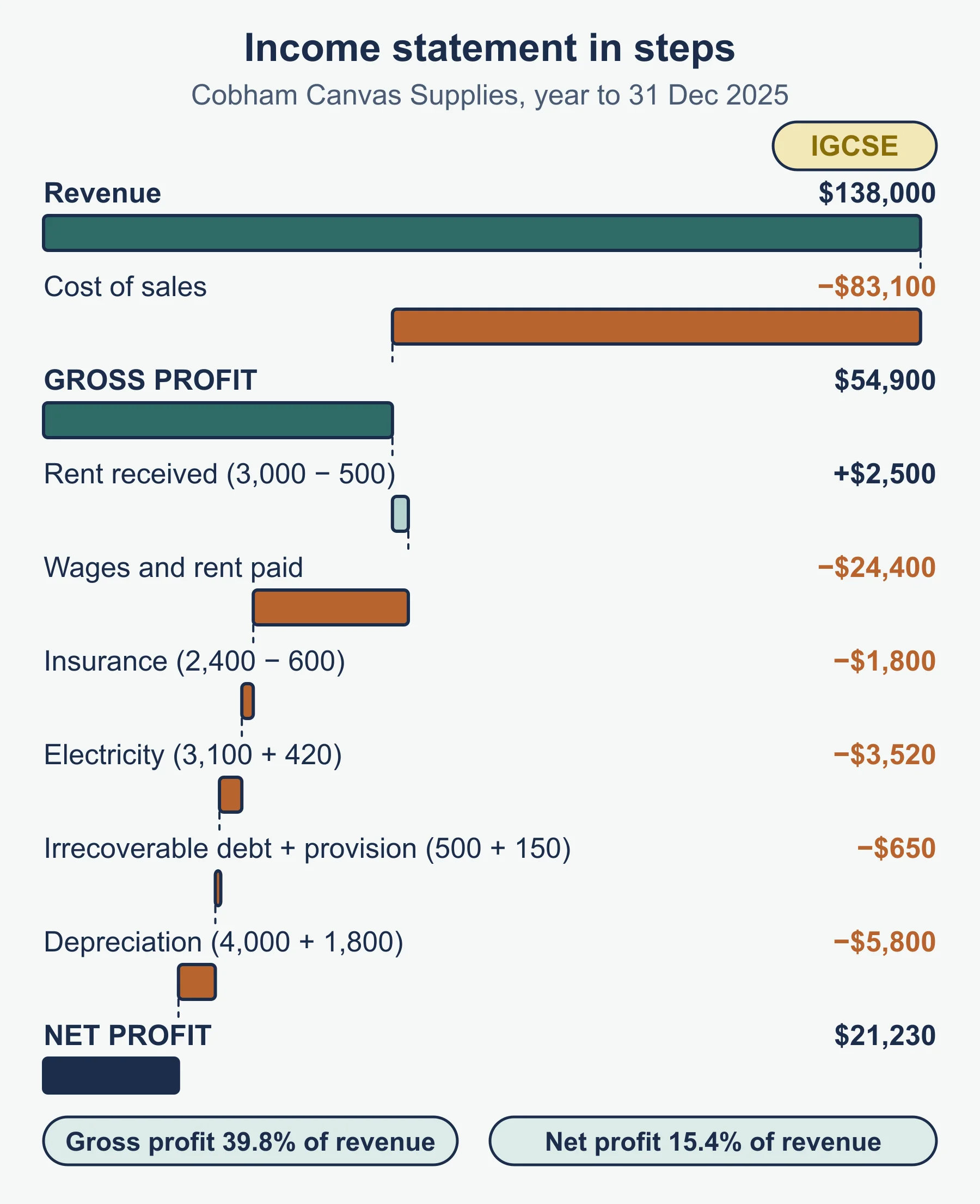
Income statement for the year ended ...
Revenue
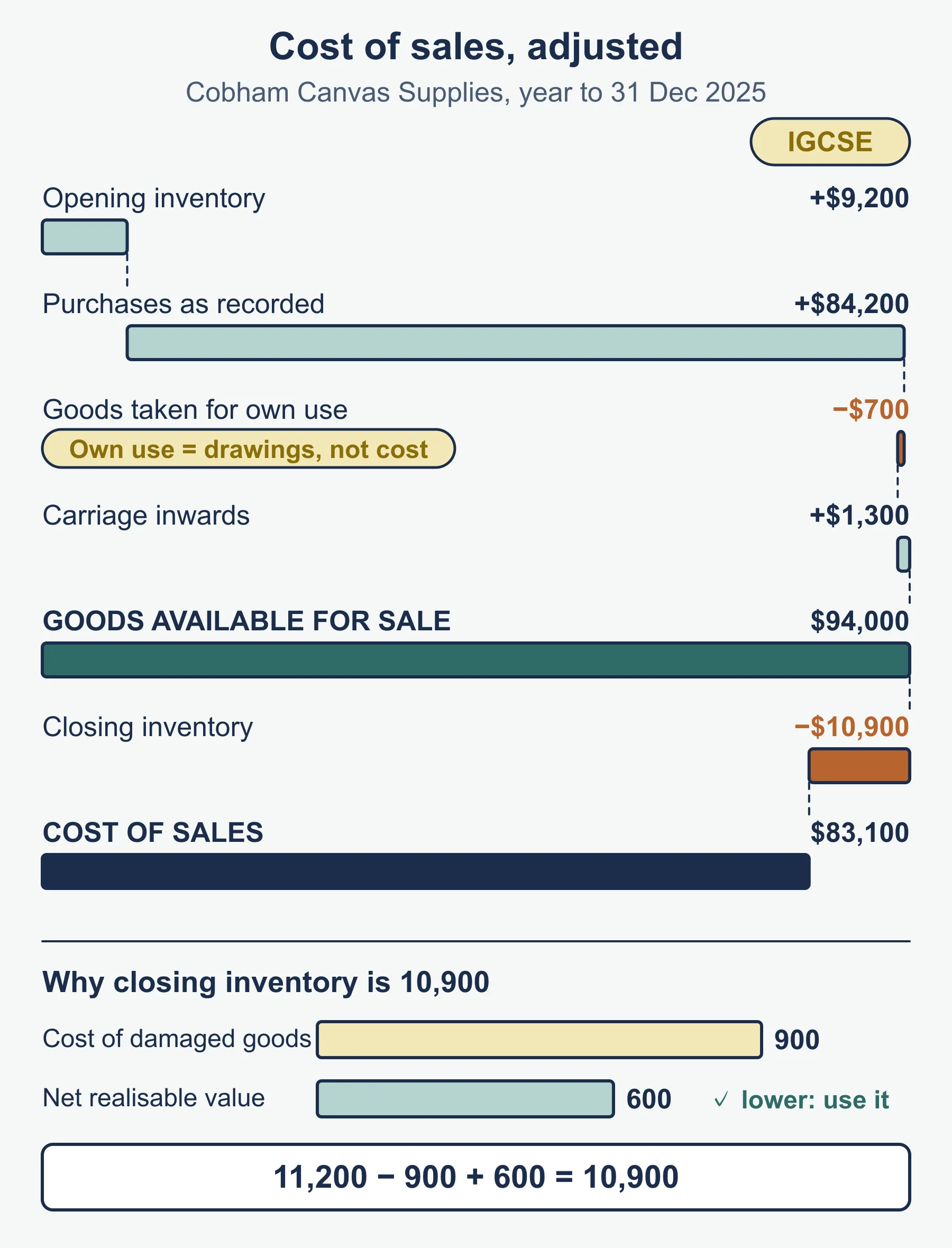
Less cost of sales: opening inventory + purchases (less own use)
   + carriage inwards - closing inventory
Gross profit
Add other income (income due, income received in advance adjusted)
Less expenses (each adjusted for payables, receivables, depreciation,
   irrecoverable debts, change in provision)
Net profit

Statement of financial position at ...
Non-current assets (cost, depreciation, net book value)
Current assets (inventory, trade receivables net, other receivables, bank)
Current liabilities (trade payables, other payables, income in advance)
Non-current liabilities (loans repayable later)
Capital: opening + net profit - drawings
A second full reminder: Penmore Trading
Revenue is 40,000. Opening inventory is 3,000, purchases are 26,000 (including 500 of goods the owner took), carriage inwards is 400 and closing inventory is 4,200. Wages are 6,000, rent is 2,400 with 200 still owing, depreciation is 800, and insurance paid is 900 with 150 relating to next year.
| Line | Working | Result |
|---|---|---|
| Cost of sales | 3,000 + 25,500 + 400 - 4,200 | 24,700 |
| Gross profit | 40,000 - 24,700 | 15,300 |
| Rent charge | 2,400 + 200 | 2,600 |
| Insurance charge | 900 - 150 | 750 |
| Total expenses | 6,000 + 2,600 + 800 + 750 | 10,150 |
| Net profit | 15,300 - 10,150 | 5,150 |
Gross profit is 38.25% of revenue and net profit is about 12.9%. On the statement of financial position, 200 appears in current liabilities and 150 in current assets. The 500 of own goods does not appear as an expense: it is in drawings.
Comment starters
- “Net profit rose, but drawings were higher still, so capital fell.”
- “Gross profit as a share of revenue fell, which may suggest lower selling prices or higher purchase costs.”
- “Net current assets are positive, so the business can cover short-term debts, although much of the total is inventory.”
- “Depreciation reduces profit but not cash, so profit and bank balance can move differently.”
Quick self-test
- Which concept explains deducting an expense paid in advance?
- Electricity paid in the year is 2,640. 310 is owing at the end and 250 was owing at the start. What is the charge?
- An asset has cost 14,000 and provision for depreciation of 3,500. Calculate depreciation at 20% reducing balance.
- Receivables after writing off a debt are 8,750, the provision is 2% and the old provision is 120. What is charged?
- Goods cost 2,400 and could be sold for 1,900 net. At what value are they included in inventory?
- The owner takes goods that cost 280. State the double entry.
- Opening capital is 15,000, net profit 9,800 and drawings 7,200. Find closing capital.
- Revenue is 58,000 and cost of sales 39,500. Find gross profit and the gross profit percentage to 1 decimal place.
- Give two disadvantages of being a sole trader.
- An asset cost 9,000, has provision for depreciation of 6,300 and is sold for 2,100. State the profit or loss.
- Fees of 240 are earned but unpaid. Where does this appear in the statement of financial position?
- Give one advantage of a limited company over a partnership.
Answers
- Accruals.
- 2,640 + 310 - 250 = 2,700.
- Net book value is 10,500, so 20% gives 2,100.
- 175 - 120 = 55 charged.
- 1,900, the lower figure.
- Debit drawings 280, credit purchases 280.
- 15,000 + 9,800 - 7,200 = 17,600.
- 18,500; 18,500 / 58,000 = 31.9%.
- Unlimited liability; capital limited to what the owner can raise.
- Net book value 2,700, proceeds 2,100, loss of 600.
- Other receivables, in current assets.
- Limited liability for shareholders (or easier to raise capital from shares).
Where marks are usually lost
- Using the whole provision as the charge instead of the change.
- Adding a prepaid expense instead of deducting it.
- Leaving goods for own use in purchases, or treating them as an expense.
- Showing inventory at selling price or ignoring a lower net realisable value.
- Applying the reducing balance percentage to cost every year instead of net book value.
- Putting income received in advance among assets.
- Showing profit on disposal as a deduction, or loss as income.
- Giving a list of features with no link to the business in the question.
- Stating a figure when asked to comment, without saying what it means.
Frequently asked questions
What adjustments are made to a sole trader’s final accounts? The usual adjustments are accruals and prepayments of expenses and income, depreciation of non-current assets, irrecoverable debts, the provision for doubtful debts, closing inventory and goods taken for own use. Each one changes a figure in the income statement and a matching figure in the statement of financial position.
What is the difference between an irrecoverable debt and a provision for doubtful debts? An irrecoverable debt is one that will not be paid, so it is written off as an expense and removed from trade receivables. A provision for doubtful debts is an estimate of debts that may not be paid; only the increase or decrease in the provision is charged or credited to the income statement.
Are FIFO, AVCO and LIFO examined in OxfordAQA IGCSE Accounting 9215? No. The specification states that FIFO, AVCO and LIFO inventory valuation methods are not examined, so closing inventory is valued at the lower of cost and net realisable value using the figures given.
How does a service business’s income statement differ from a trading business’s? A service business sells services rather than goods, so it has no inventory, no cost of sales and no gross profit. Its income statement starts with fees or revenue and deducts expenses directly to find the profit for the year.
Official syllabus
OxfordAQA International GCSE Accounting (9215), specification version 1.2, section 3.4, for exams from May/June 2026 onwards. Published by OxfordAQA.
Get free revision emails (optional)
Occasional emails with practice questions, worked explanations and links to free resources for the qualification and subjects you choose. No spam, and you can unsubscribe from any email. The free tools on this site never need an email.
Related resources
-
Study guides
OxfordAQA IGCSE Accounting: Clubs and non-profit making organisations (9215)
Study guide to OxfordAQA International GCSE Accounting 9215 club accounts: receipts and payments, trading account, income and expenditure, position.
Accounting · OxfordAQA · IGCSE
Read guide -
Practice questions
OxfordAQA IGCSE Accounting: Clubs and non-profit making organisations (9215) – Practice Questions
Original practice questions with full worked answers on club accounts for OxfordAQA International GCSE Accounting 9215: subscriptions, trading and surplus.
Accounting · OxfordAQA · IGCSE
Try questions -
Revision notes
OxfordAQA IGCSE Accounting: Clubs and non-profit making organisations (9215) – Revision Notes
Condensed revision notes for OxfordAQA International GCSE Accounting 9215 club accounts, with formulas, method steps, a worked reminder and a self-test.
Accounting · OxfordAQA · IGCSE
Revise topic
Related articles
-
teaching
A Level tuition in Dubai: Cambridge or Pearson Edexcel International A Level?
Schools in Dubai and Abu Dhabi teach either Cambridge International AS & A Level or Pearson Edexcel International A Level. How the two are structured, why it matters for tuition, and how online classes from Lahore work.
9 October 2026
-
curriculum guides
Choosing subjects at IGCSE and A Level
How subject choices at 14 and 16 affect university options later, and how to keep pathways open without overloading a timetable.
28 July 2026
Studying this with a teacher
Working through Accounting IGCSE?
This page is free and stays free. If you would rather be taught it, Marlbridge runs Accounting classes one-to-one and in small groups of up to 15, online in your own time zone. The first trial class is free. WhatsApp replies within an hour (8am–11pm Pakistan time, every day); email the same day.
OxfordAQA Accounting teachers at Marlbridge

