
Revision Notes
Edexcel A Level Urdu (9UR0): Bin Roye (بن روئے) – Revision Notes
9UR0 notes on the prescribed film Bin Roye (بن روئے), Momina Duraid (2015): themes, film technique, a model paragraph and a self-test.
- Subject
- Urdu Language
- Level
- A LEVELS
- Topic
- Prescribed literary texts and films
- Author
- Marlbridge Academic Team
- Updated
- Reviewed by
- Farheen Zehra (what this means)
Aligned to Pearson Edexcel A Level Urdu Language (9UR0), 2018. Official specification .
Syllabus page (what it covers and how it is assessed): Pearson Edexcel A Level Urdu Language.
Syllabus points this page covers
9UR0
- 5.4 بن روئے — مومنہ دُرید (2015)
Found an error? Report a correction.
Need help with this topic? Request a free trial class for A Level Urdu Language (9UR0).
Revision notes for 5.4 in the prescribed literary texts and films of Pearson Edexcel A Level Urdu (9UR0), Paper 2. For the full explanation of the paper, read the Translation into Urdu and Written Response to Works study guide and the Paper 2 revision notes.
The work
- Title: بن روئے (Bin Roye)
- Name given in the specification: مومنہ دُرید (Momina Duraid)
- Year: 2015
- Form: a prescribed film in Appendix 1.
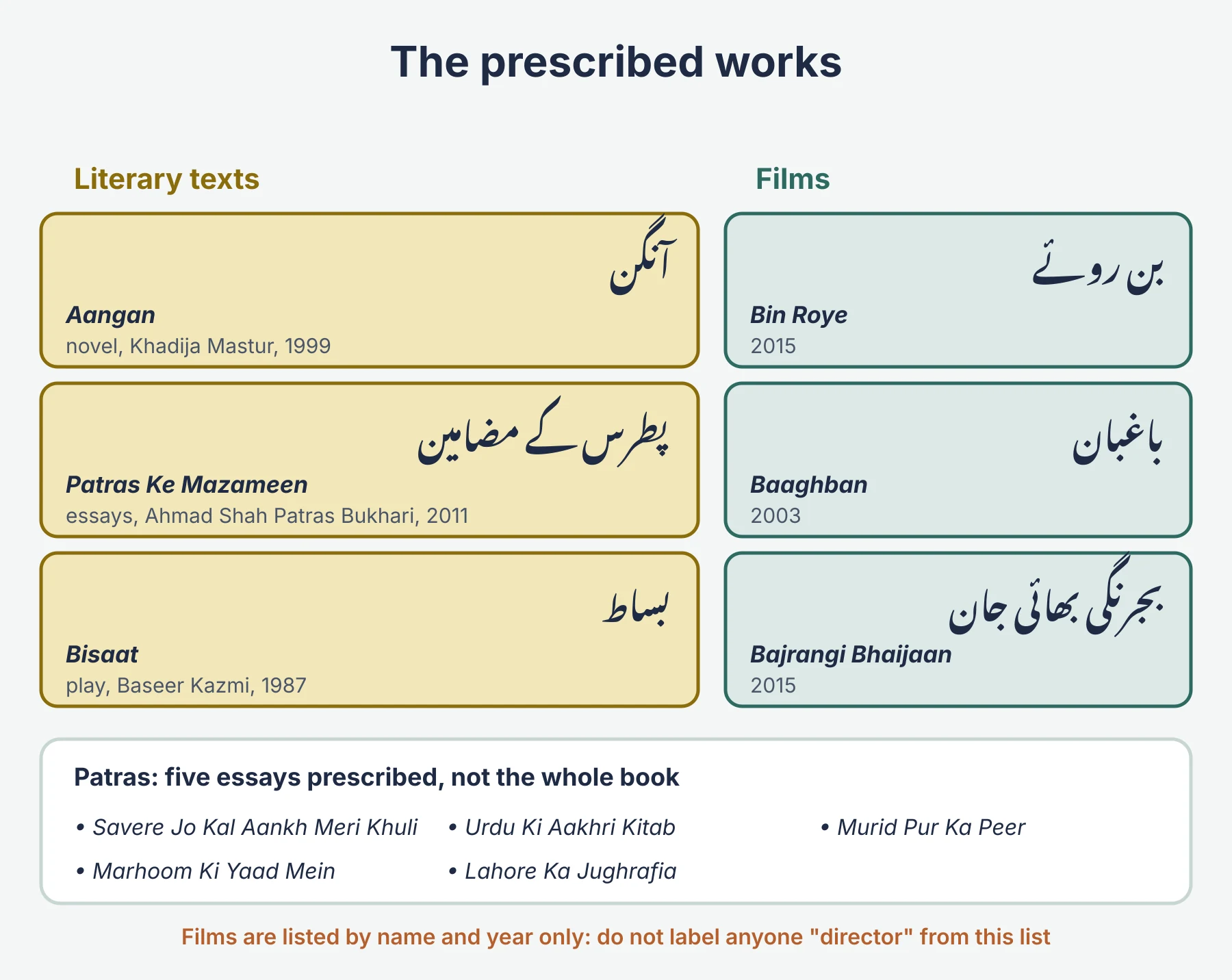
The specification gives each film as a name and a year only, with no role label, so do not write a name in as ‘director’ on the strength of the list alone. Momina Duraid produced the film.
What the film is about
Bin Roye is a Pakistani Urdu-language romantic family drama, with Mahira Khan and Humayun Saeed in the leading roles. Its heroine, صبا (Saba), loves ارتضیٰ (Irtaza), who has grown up as part of her family circle, but she does not tell him in time. The story follows how this unspoken love, misunderstanding, marriage and loss strain the relationships within the family, and how Saba grows through grief.
Use this outline only for orientation. In the exam you need your own specific references to scenes and turning points, gathered from watching the film closely.
The title
بن روئے means ‘without crying’. Ask how the title relates to the film’s treatment of grief and of feelings that are held back: who cries, who does not, and what the film suggests about hiding or expressing emotion.
Key themes and issues
- Love that is not spoken: the central tension comes from silence; consider what stops the heroine from expressing her feelings, and what the film suggests that silence costs.
- Family ties and expectations: decisions about love and marriage are bound up with the wishes and reactions of the wider family, which links the film to Theme 1, sub-theme 1.1, family.
- Women’s emotional lives: the film centres on a young woman’s inner experience; ask how far it gives her choice and agency.
- Grief and growing up: loss forces characters to change; trace how the heroine at the end differs from the heroine at the start.
- Celebration and sorrow: wedding festivities and family occasions sit beside moments of loss, a contrast typical of the genre.
Form and technique
- Genre: a romantic drama that draws on the conventions of Pakistani television drama, a strong tradition discussed in sub-theme 2.2, popular culture. Consider what the film gains or loses by following these conventions on the big screen.
- Music and songs: songs, including wedding songs, carry the mood of celebration and longing.
- Contrast: scenes of joy and scenes of grief are placed close together to intensify emotion.
- Close-ups and performance: much of the story is told through the actors’ faces and silences rather than words, which suits a film about unspoken feelings.
- Setting and costume: homes, family gatherings and wedding dress show the social world of the characters; notice how settings change as the heroine’s situation changes.
How it is examined
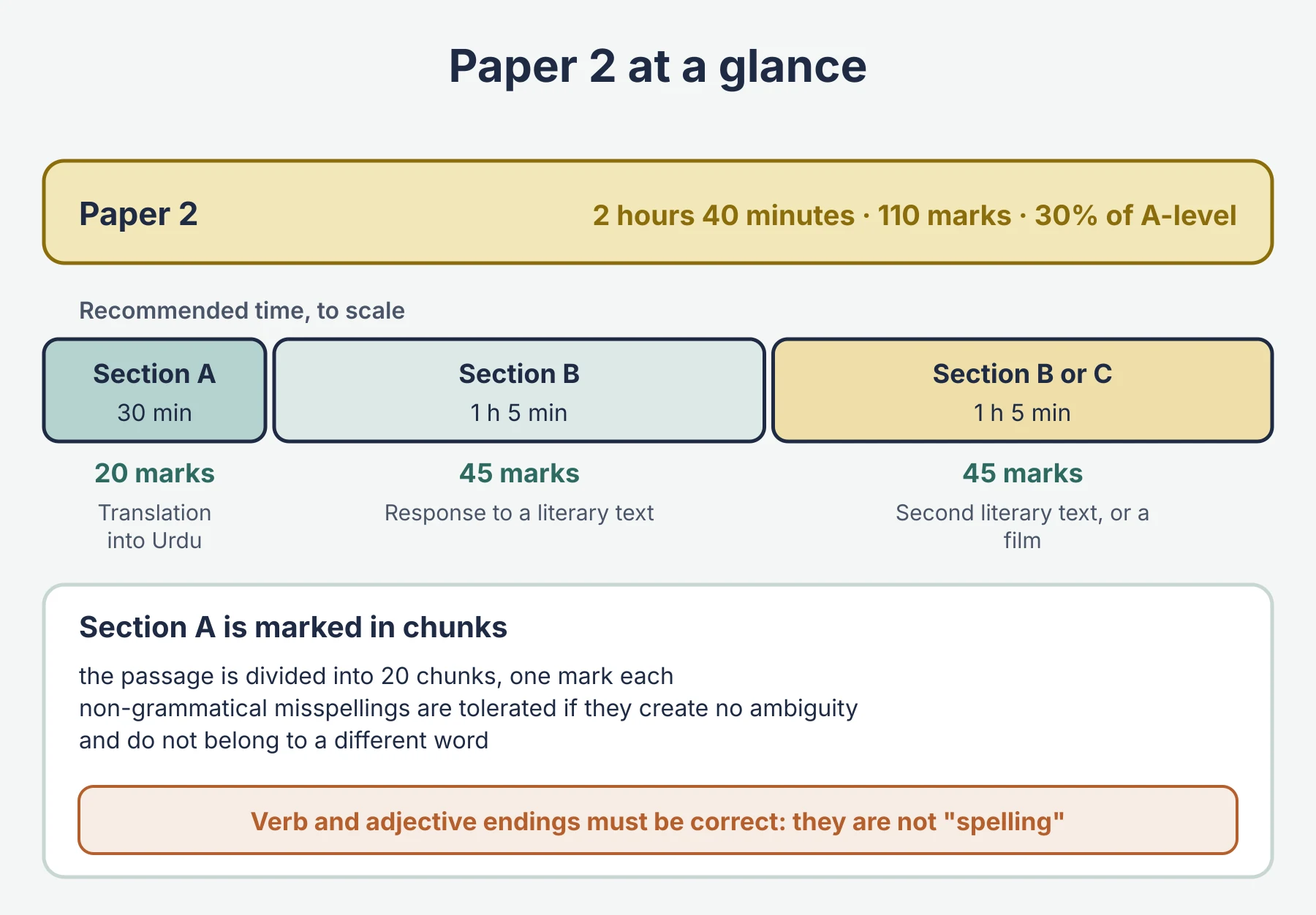
- Paper 2 is 2 hours 40 minutes, 110 marks, 30% of the A Level.
- Section C (film) is worth 45 marks and about 1 hour 5 minutes; you choose from two questions.
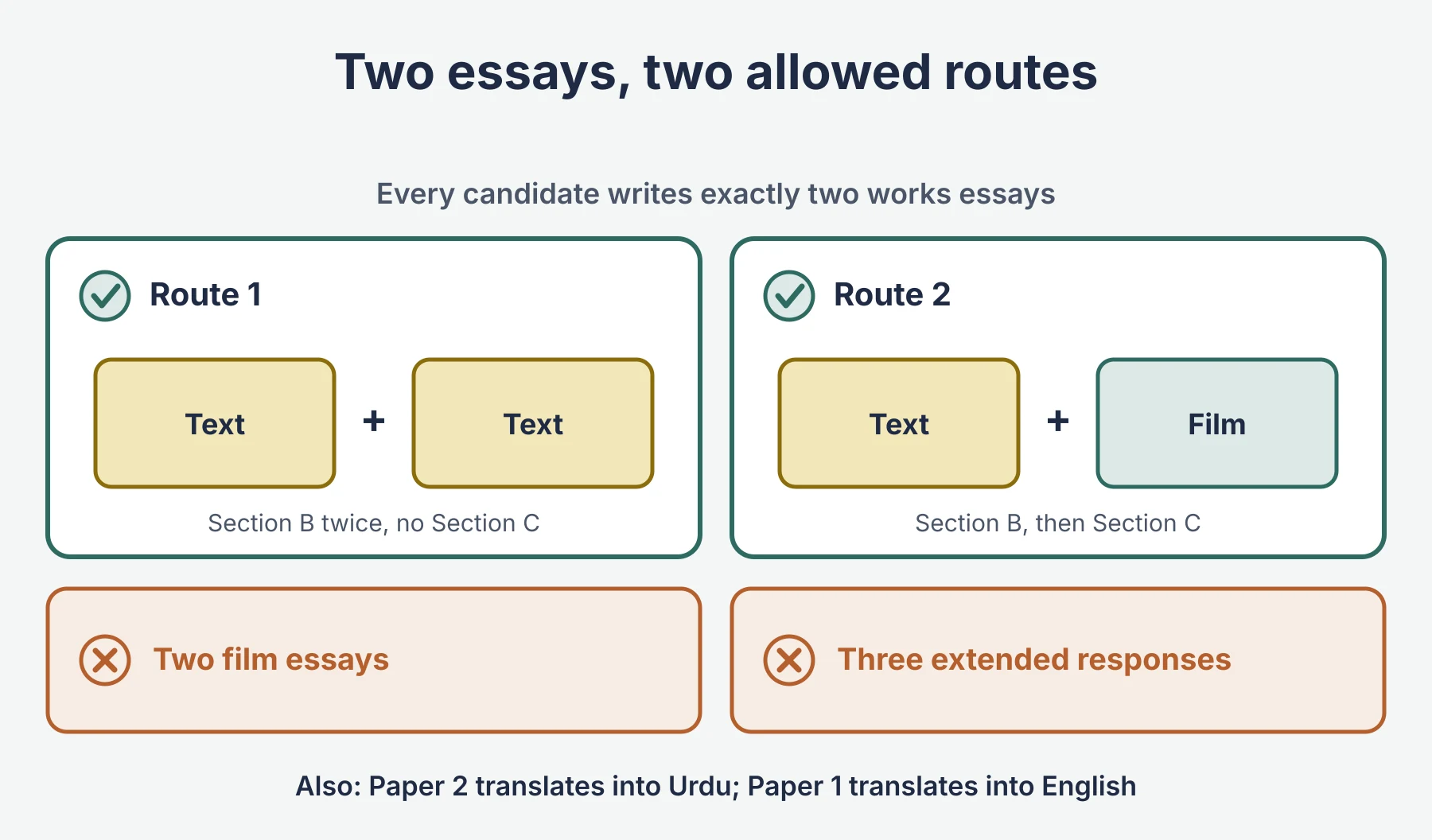
- You write exactly two extended responses: two literary texts, or one literary text and one film. Two films is never allowed.
- Marking criteria: critical and analytical response with cultural or social insight (AO4), range of grammatical structures and vocabulary (AO3), and accuracy of language (AO3). There are no AO1 or AO2 marks on Paper 2.
Approach and skills
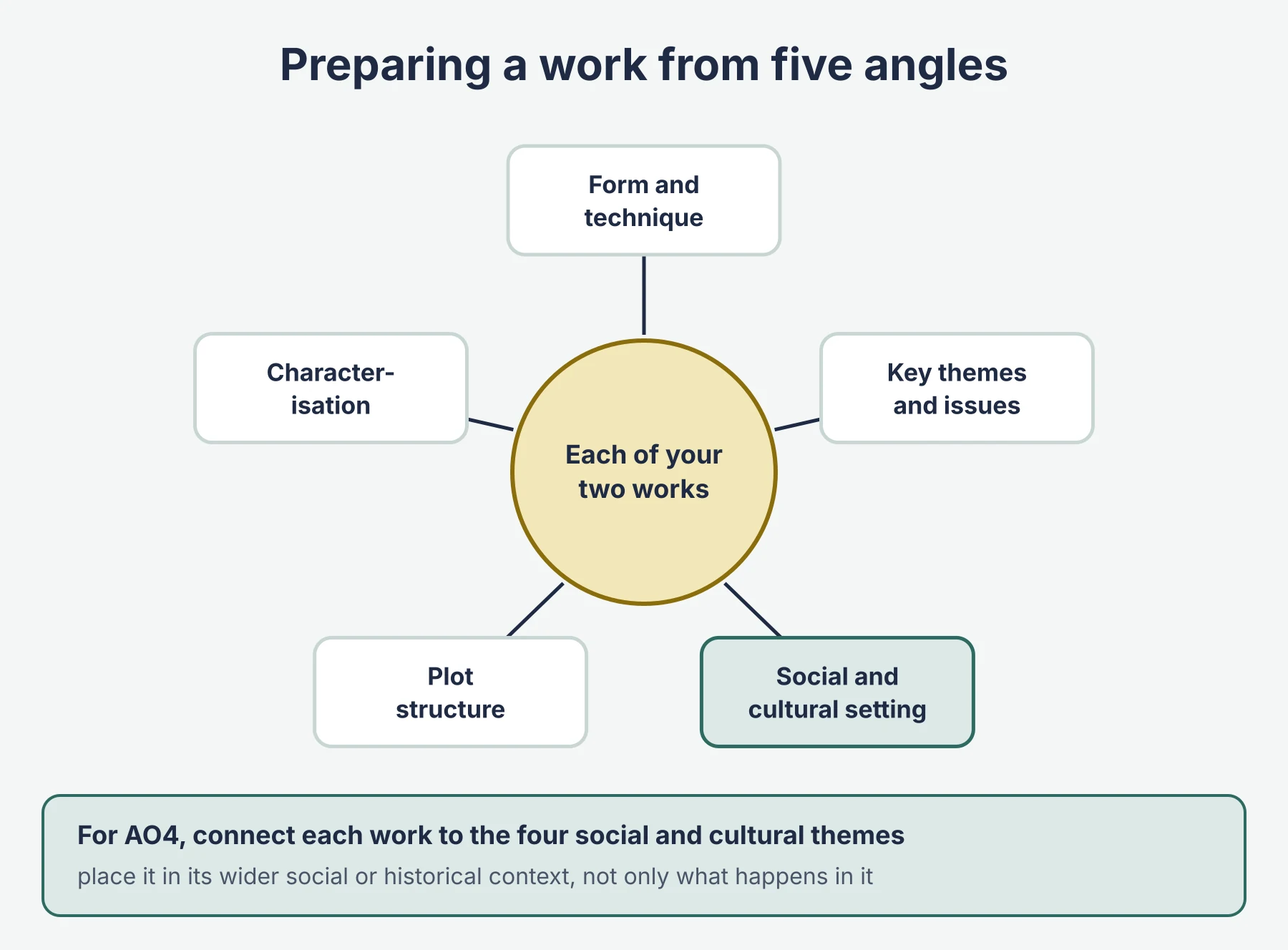
- Prepare against five angles: form and technique, key themes and issues, characterisation, plot structure, social and cultural setting.
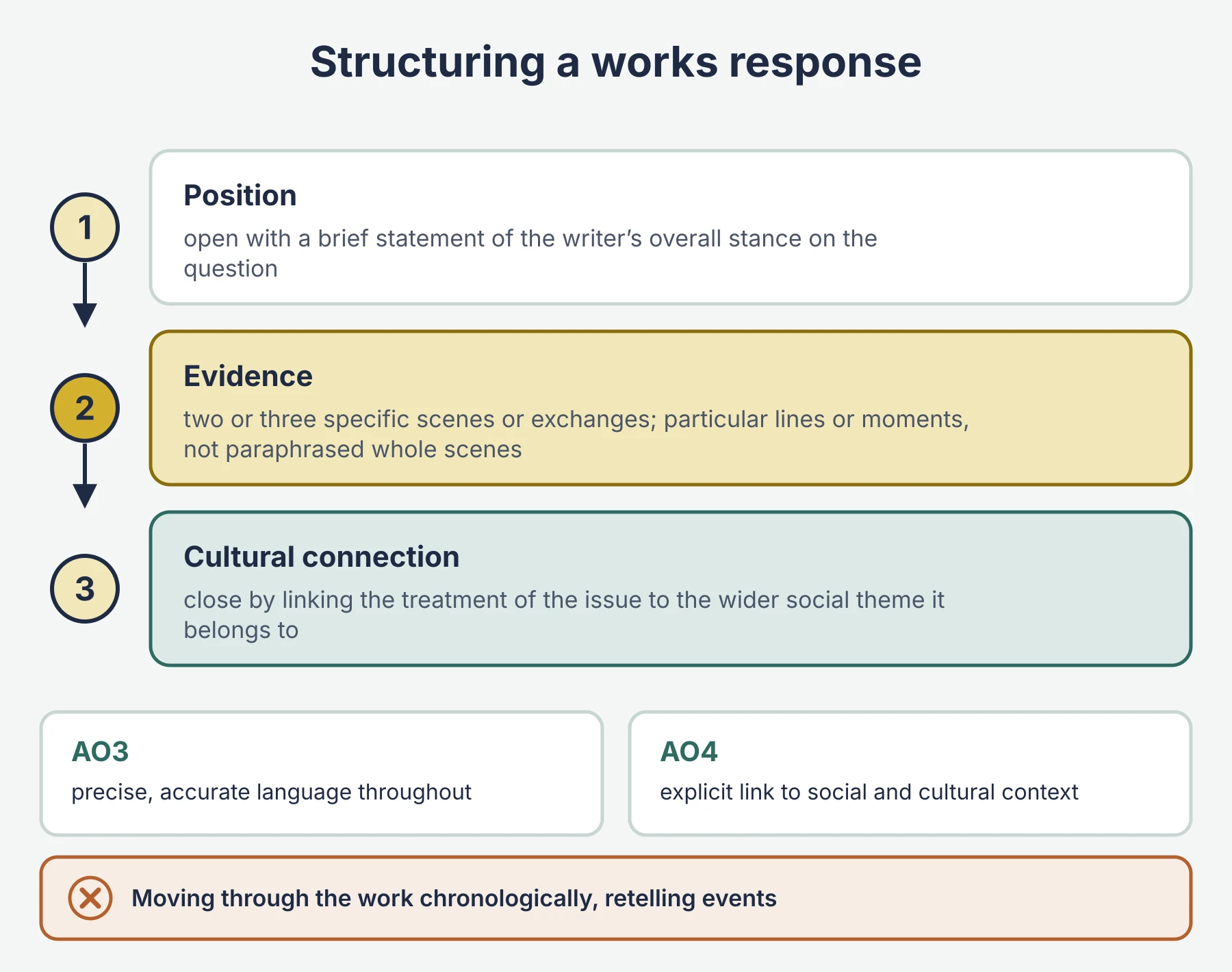
- Structure each answer as position, evidence, cultural connection: state your stance, support it with two or three specific points (not a retelling), then link the writer’s or film’s treatment of an issue to a broader social or cultural theme.
- Write in controlled Urdu with correct agreement, tense and spelling, and plan before you write.
- Use your own prepared references from the work; this page does not replace studying it.
Vocabulary for writing about the film
| Urdu | Meaning |
|---|---|
| رومانوی فلم | romantic film |
| ہیروئن | heroine |
| جذبات | feelings, emotions |
| خاموشی | silence |
| اظہار | expression |
| غلط فہمی | misunderstanding |
| غم | grief, sorrow |
| آنسو | tears |
| شادی کی تقریب | wedding celebration |
| خاندانی دباؤ | family pressure |
| پسند | choice, preference |
| کشمکش | inner conflict |
| تبدیلی | change |
| اداکاری | acting |
| موسیقی | music |
| منظر | scene |
| پیغام | message |
| فلم ساز | film-makers |
Useful sentences with grammar notes
- صبا اپنے دل کی بات ارتضیٰ سے نہیں کہہ پاتی۔ (Saba cannot manage to tell Irtaza what is in her heart.) کہہ پانا means ‘to manage to say’; feminine singular پاتی for صبا.
- فلم میں خوشی اور غم کے مناظر ایک دوسرے کے قریب رکھے گئے ہیں۔ (In the film, scenes of joy and grief are placed close to each other.) Passive agreeing with مناظر (masculine plural): رکھے گئے ہیں.
- اس کی خاموشی ہی کہانی کی کشمکش کا سبب بنتی ہے۔ (It is her silence that causes the conflict of the story.) The verb agrees with خاموشی (feminine): بنتی ہے. ہی adds emphasis.
- کہانی کے آخر تک صبا ایک زیادہ مضبوط انسان بن جاتی ہے۔ (By the end of the story, Saba becomes a stronger person.) Useful for tracing character development.
Model paragraph
Task: how does the film present the cost of unspoken feelings?
فلم “بن روئے” میں محبت کو ایک ایسے جذبے کے طور پر دکھایا گیا ہے جو اگر وقت پر ظاہر نہ کیا جائے تو دکھ کا سبب بن سکتا ہے۔ صبا اپنے دل کی بات ارتضیٰ سے نہیں کہہ پاتی، اور اسی خاموشی سے کہانی میں کشمکش پیدا ہوتی ہے۔ فلم سازوں نے خوشی کے مناظر، خصوصاً شادی کی تقریبات، اور غم کے لمحات کو آمنے سامنے رکھ کر جذبات کو زیادہ گہرا بنایا ہے۔ میرے خیال میں فلم یہ سوال بھی اٹھاتی ہے کہ ہمارے معاشرے میں خاص طور پر لڑکیوں کے لیے اپنی پسند کا اظہار کرنا کتنا مشکل ہوتا ہے۔
Translation: In the film Bin Roye, love is shown as a feeling that, if not expressed in time, can become a cause of sorrow. Saba cannot bring herself to tell Irtaza what is in her heart, and it is from this silence that the conflict in the story arises. By setting scenes of happiness, especially wedding celebrations, against moments of grief, the film-makers make the emotions deeper. In my view the film also raises the question of how difficult it is in our society, especially for girls, to express their own choice.
Why it works: a clear position, evidence from the central character, a technique (contrast) with its effect, and a cultural connection to social expectations. In a real answer, add one or two specific scenes of your own.
Essay prompts to prepare
- «فلم “بن روئے” میں خاموشی اور اظہار کے موضوع کا تجزیہ کیجیے۔» (Analyse the theme of silence and expression in Bin Roye.)
- «یہ فلم عورت کی پسند کو اہمیت دیتی ہے۔» (This film gives importance to a woman’s choice.) To what extent do you agree?
- How does the film use music and contrast to shape the audience’s emotions?
- How does the heroine change from the beginning of the film to the end?
Exam traps
- Retelling the story without connecting it to a theme weakens the AO4 mark.
- Attempting three responses, or choosing two films.
- Running over time on the first response and squeezing the second.
- Writing only about the love story and never about film technique.
- Making sweeping claims about all Pakistani families; link the film to social themes with care.
- Misspelling the characters’ names; learn صبا and ارتضیٰ.
Self-test
- Which name and year does the specification give for بن روئے?
- Which Paper 2 section covers a film?
- Can you study two films?
- Which five angles apply to a film?
- What should an answer evaluate?
- What does the title mean?
- What is the central source of tension in the story?
- Name two techniques the film uses to shape emotion.
- Which Theme 1 sub-theme links most closely to the film?
- Give the Urdu for ‘silence’, ‘expression’ and ‘misunderstanding’.
- In صبا اپنے دل کی بات ارتضیٰ سے نہیں کہہ پاتی, what does کہہ پانا mean?
- Translate: ‘by the end of the story, Saba becomes a stronger person’.
Answers: 1. مومنہ دُرید, 2015. 2. Section C, 45 marks, about 1 hour 5 minutes. 3. No. 4. Form and technique, themes and issues, characterisation, plot structure, social and cultural setting. 5. The film’s treatment of an issue, not just the story. 6. ‘Without crying’. 7. The heroine’s unspoken love: her silence leads to misunderstanding and conflict. 8. For example, songs and music, contrast between joy and grief, close-ups and performance. 9. Sub-theme 1.1, family. 10. خاموشی, اظہار and غلط فہمی. 11. To manage to say. 12. کہانی کے آخر تک صبا ایک زیادہ مضبوط انسان بن جاتی ہے۔
Related resources
-
Revision notes
Edexcel A Level Urdu (9UR0): Bisaat (بساط) – Revision Notes
9UR0 notes on the prescribed play Bisaat (بساط) by Baseer Kazmi (1987): the title, reading a play, an essay frame and a self-test.
Urdu Language · Pearson Edexcel · A Level
Revise topic -
Revision notes
Edexcel A Level Urdu (9UR0): Patras Ke Mazameen (پطرس کے مضامین) – Revision Notes
9UR0 notes on Patras Ke Mazameen (پطرس کے مضامین): the five set essays, humour techniques, a model paragraph and a self-test.
Urdu Language · Pearson Edexcel · A Level
Revise topic -
Study guides
Edexcel A Level Urdu (9UR0): Aangan (آنگن) by Khadija Mastur
9UR0 study guide to Aangan (آنگن): the five features examiners reward, the essay grids, an annotated model introduction and a 45-mark Section B plan.
Urdu Language · Pearson Edexcel · A Level
Read guide
Get free revision emails (optional)
Occasional emails with practice questions, worked explanations and links to free resources for the qualification and subjects you choose. No spam, and you can unsubscribe from any email. The free tools on this site never need an email.