
Revision Notes
OxfordAQA A-Level Business: The external environment (9625/9725) – Revision Notes
Condensed recall notes on market size, share, concentration ratio, barriers to entry, income elasticity and external changes for OxfordAQA Business.
- Subject
- Business
- Level
- AS LEVEL
- Topic
- What is business?
- Author
- Marlbridge Academic Team
- Updated
- Reviewed by
- Salman Ahmad (what this means)
Aligned to OxfordAQA A Level Business (9625, 9725), 9625: first teaching September 2018 (current cohorts). 9725: first teaching September 2026 (AS) / September 2027 (A2), the successor specification.. Official specification .
Syllabus page (what it covers and how it is assessed): OxfordAQA A Level Business.
Found an error? Report a correction.
Need help with this topic? Request a free trial class for A Level Business (9625 / 9725).
Quick recall for section 3.1.1.3, The external environment, in the OxfordAQA International AS and A-level Business specification (9625 for current cohorts, 9725 for its successor; the wording used here is from the 9725 document). Full explanations and longer worked examples are in the study guide. Test yourself with the practice questions. For the whole topic see the topic revision notes, the topic study guide and the topic practice paper. Course hub: OxfordAQA A-level Business. Printable list: checklist. Find weak spots first with the free diagnostics. The businesses and figures are invented.
Definitions to know
| Term | Meaning |
|---|---|
| Market size (volume) | Number of units sold in the market |
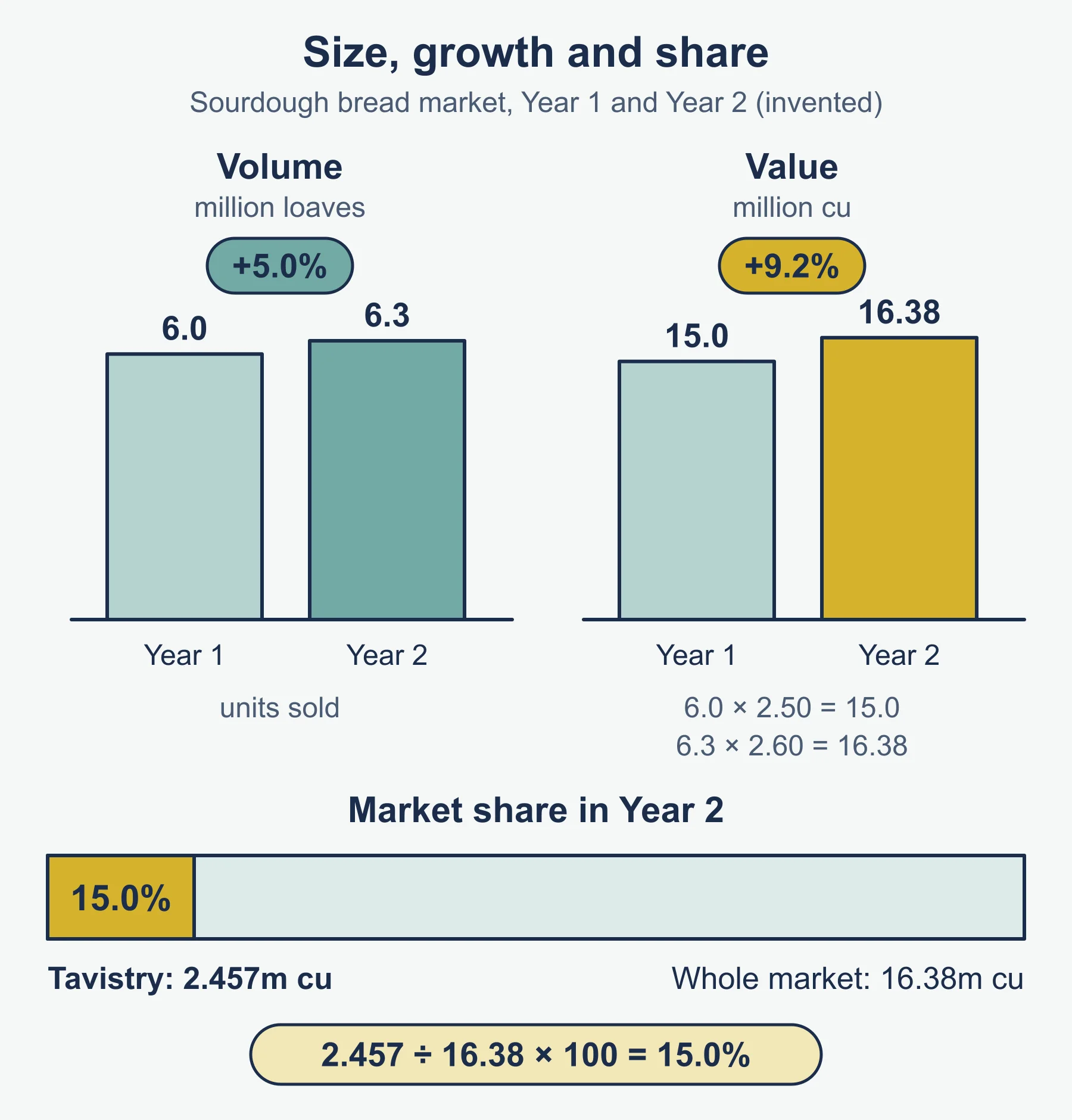
| Market size (value) | Sales revenue in the market, which is volume × average price |
| Market growth or decline | Percentage change in market size between two periods |
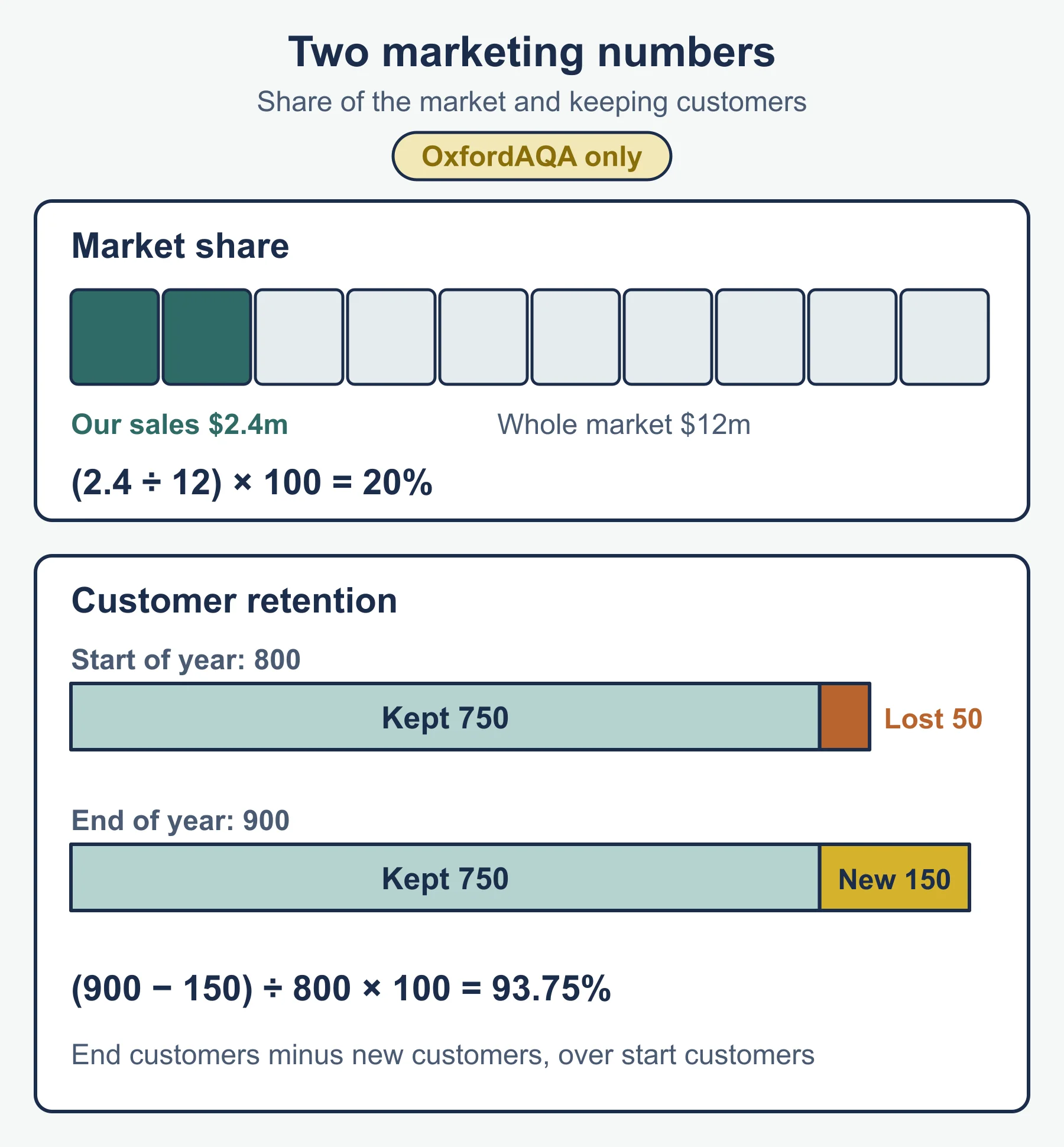
| Market share | A business’s sales as a percentage of total market sales |
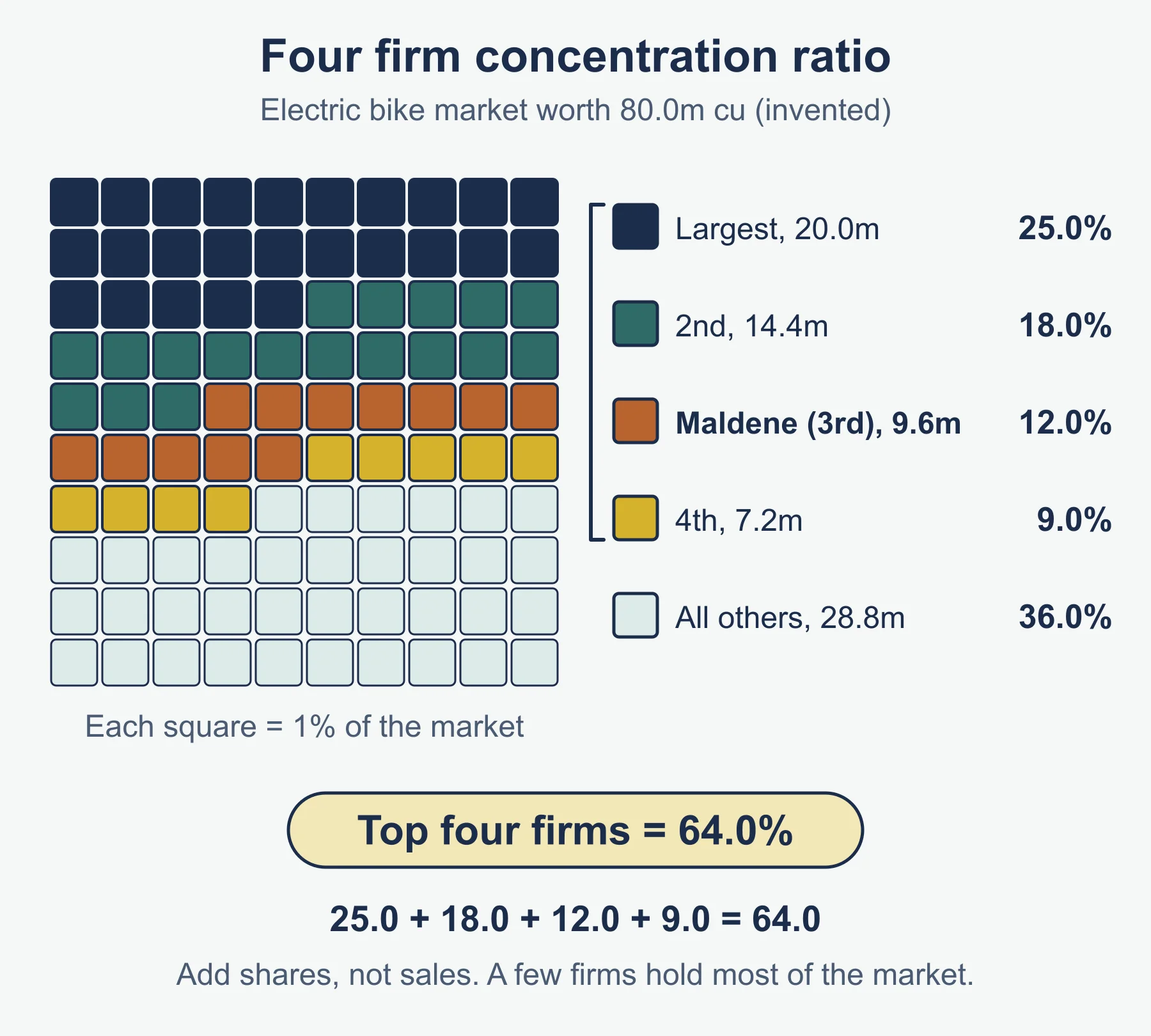
| Four firm concentration ratio | Combined market share of the four largest firms |
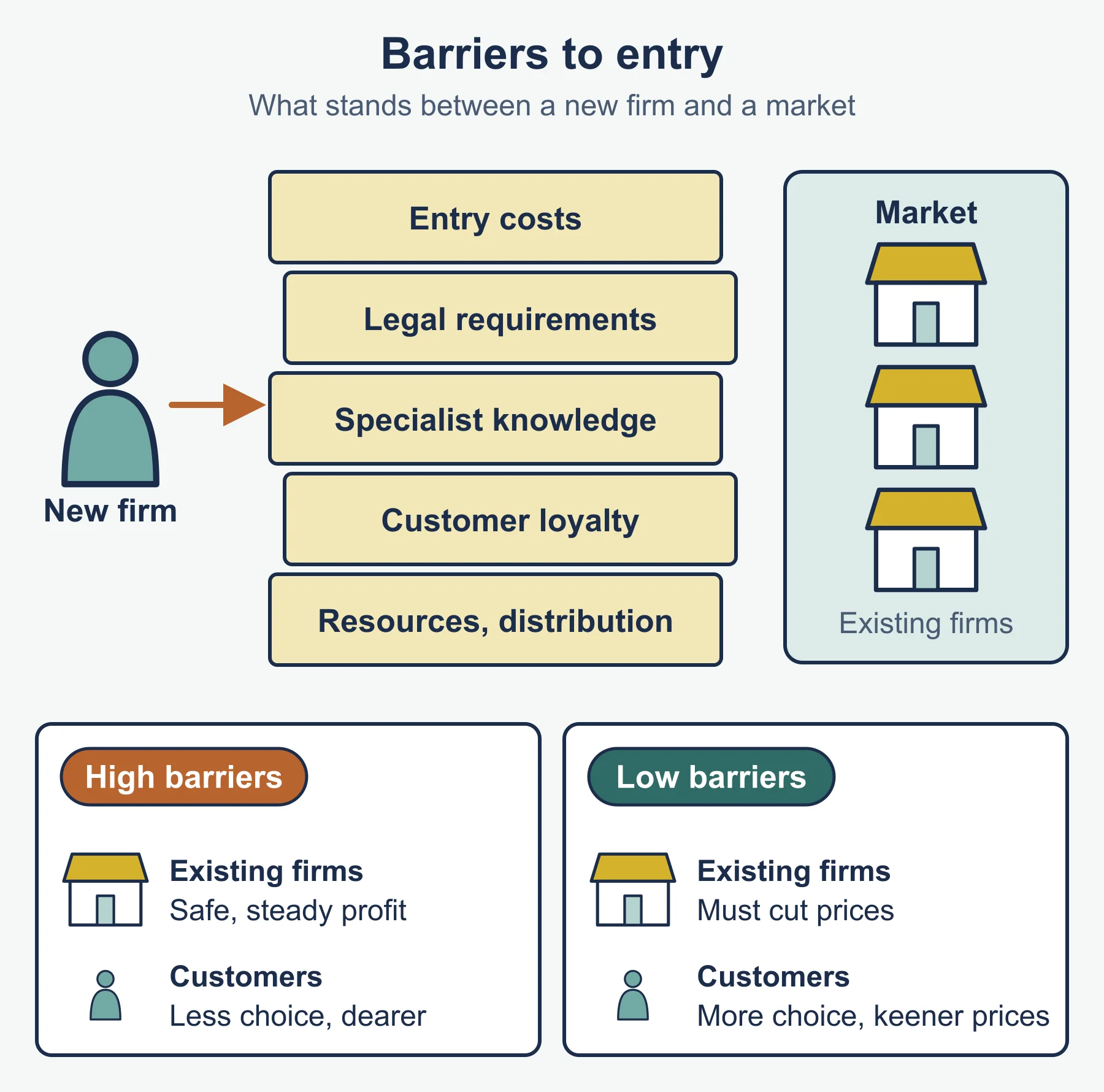
| Barrier to entry | Anything that makes it hard or costly for a new firm to enter a market |
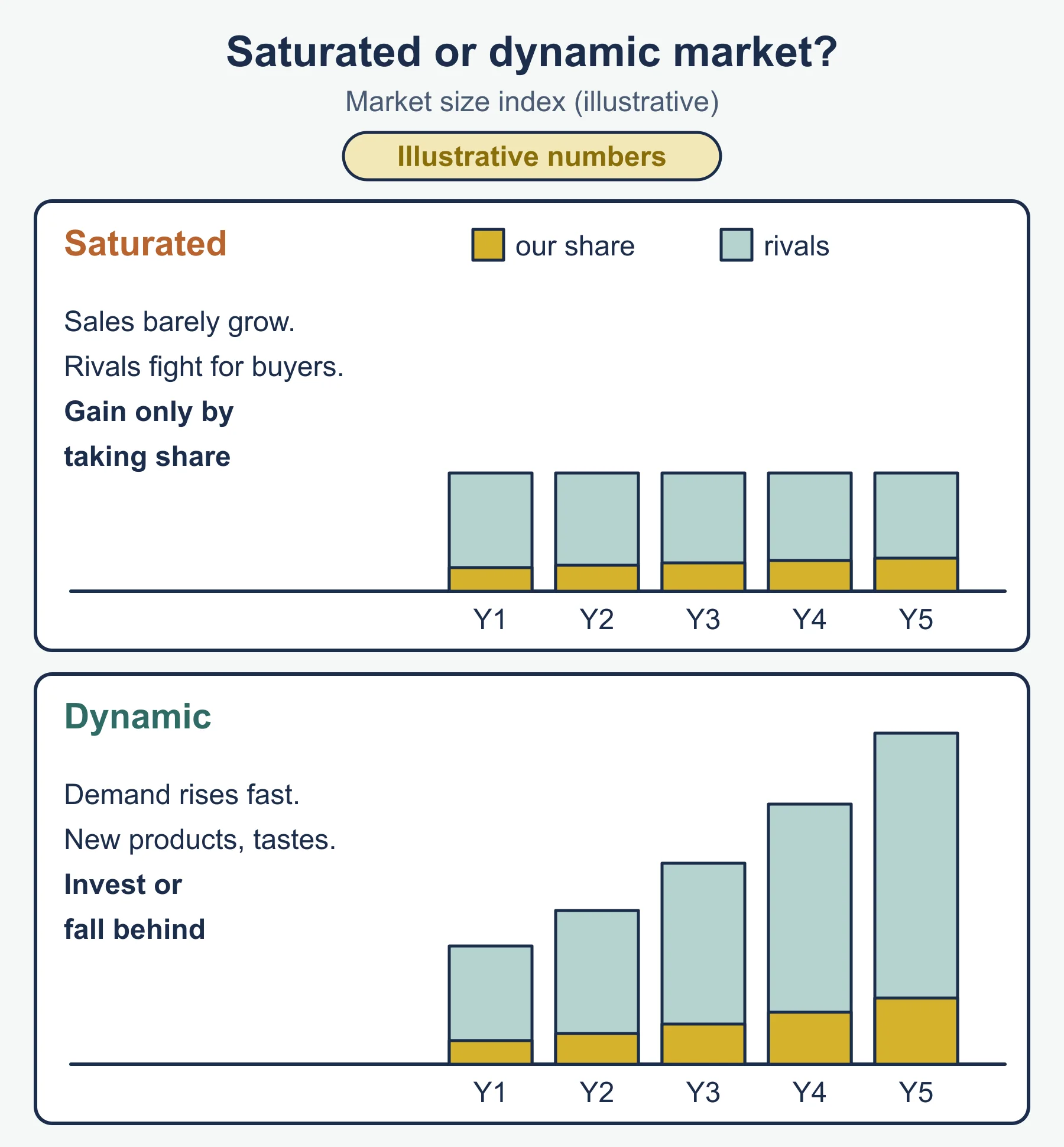
| Saturated market | Most potential buyers already buy; total sales barely grow |
| Dynamic market | A market that changes fast through new products, technology or tastes |
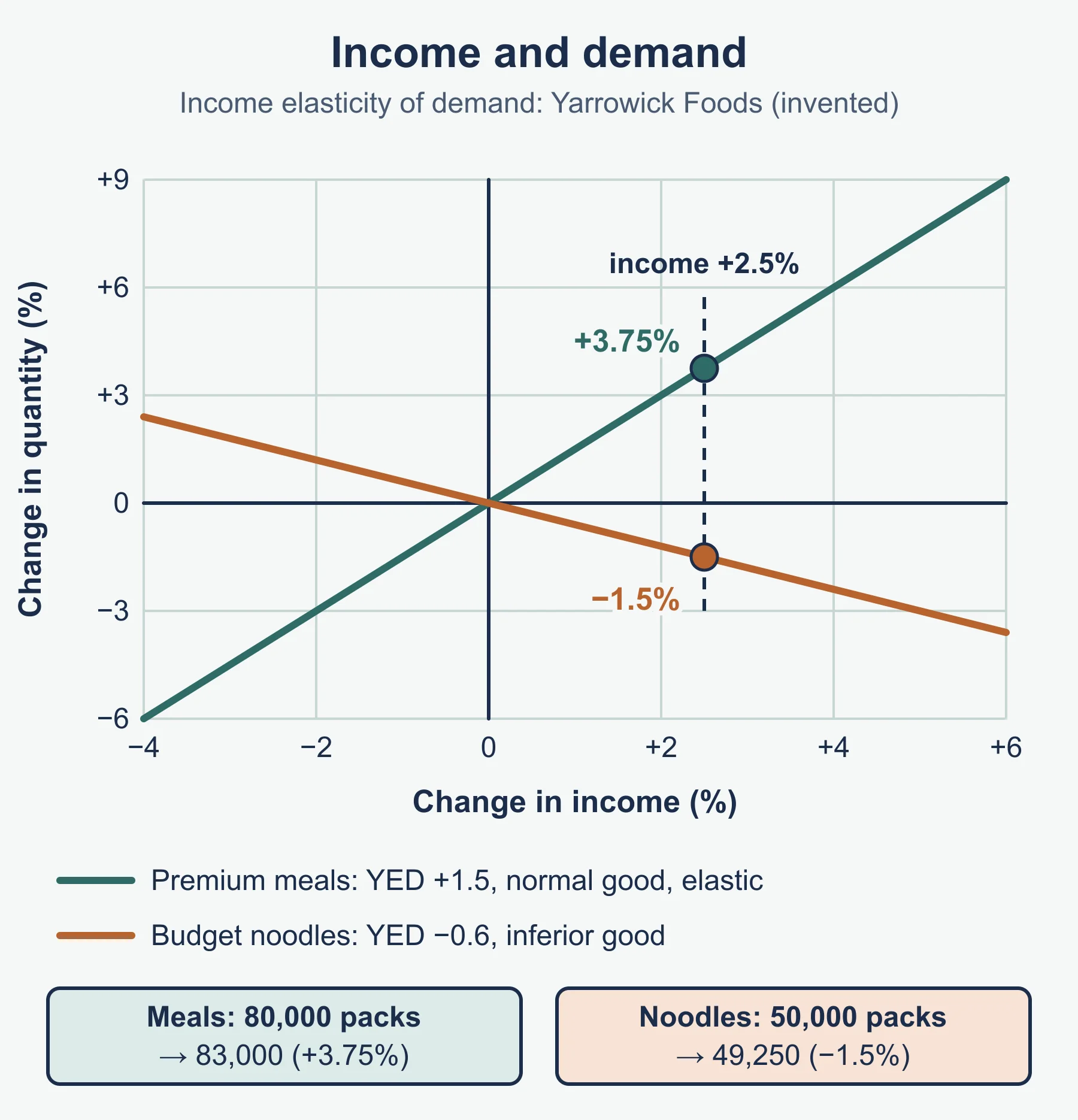
| Normal good | Demand rises when income rises (YED positive) |
| Inferior good | Demand falls when income rises (YED negative) |
| Income elasticity of demand (YED) | Responsiveness of quantity demanded to a change in income |
Formulae
| Measure | Form |
|---|---|
| Value of market | volume × average price |
| Growth (%) | (new - old) / old × 100 |
| Market share (%) | business sales / market sales × 100 |
| Four firm concentration ratio (%) | share 1 + share 2 + share 3 + share 4 |
| YED | % change in quantity demanded / % change in income |
| Change in quantity demanded (%) | YED × % change in income |
Method in steps
Percentage change:
- Subtract old from new.
- Divide by the OLD figure.
- Multiply by 100 and keep the sign. A minus sign means decline.
Concentration ratio:
- Rank the firms and pick the four largest.
- Turn each into a percentage share if given as sales.
- Add the four shares.
- Say what the answer means for competition and for barriers.
Applying YED:
- Write the YED with its sign.
- Multiply by the percentage change in income.
- Apply the percentage to the current quantity.
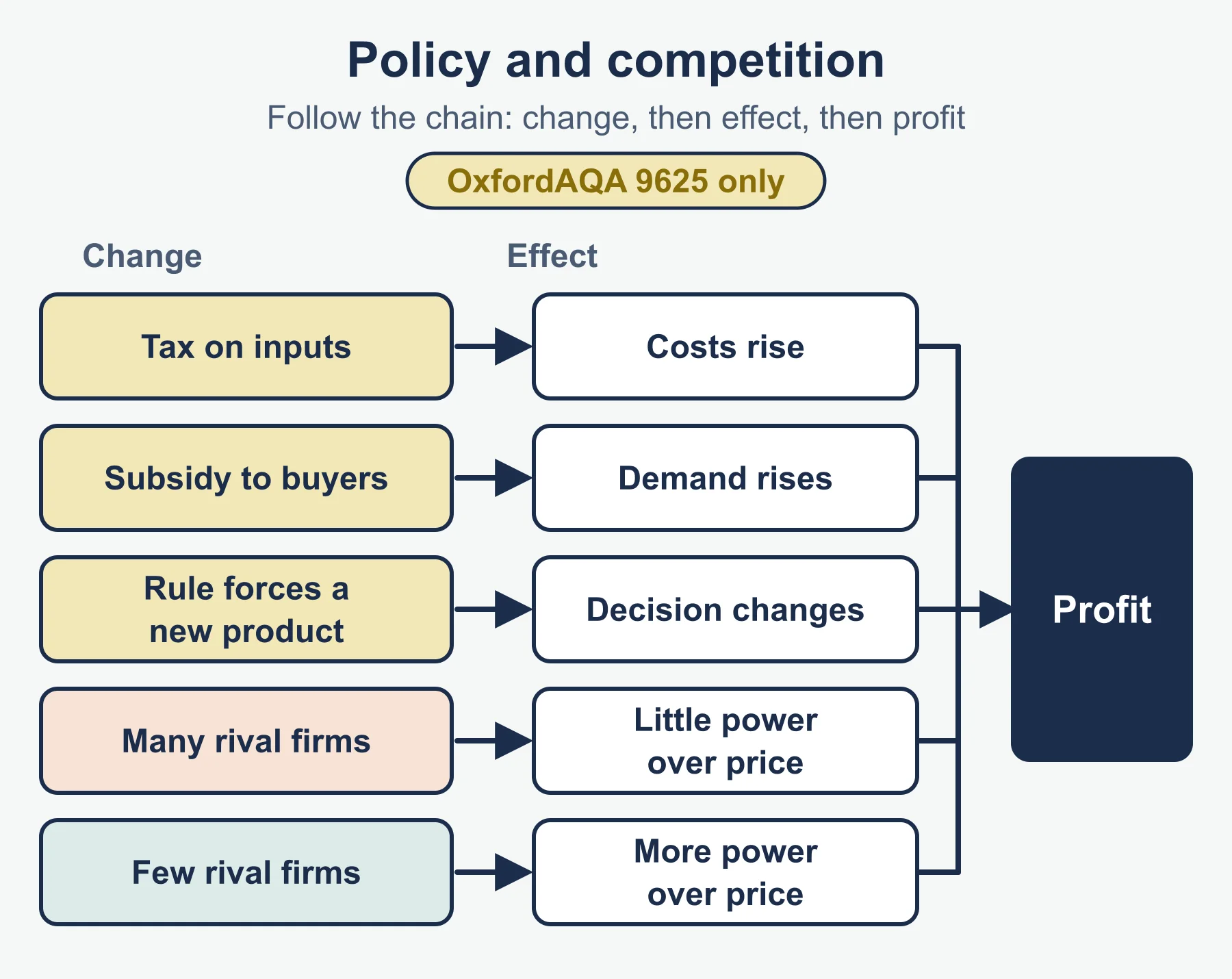
Answering “analyse the effect of change X”:
- Name the change and who it affects.
- Say which of costs, demand, decisions or profits moves and why.
- Link the chain to profit or a decision.
- For longer questions, weigh how big the effect is for THIS business and whether it is short or long term.
Worked reminders
Market data. A market sells 250,000 units at 18 currency units (cu) in Year 1 and 270,000 units at 17.50 cu in Year 2.
- Year 1 value: 250,000 × 18 = 4.5m cu. Year 2 value: 270,000 × 17.5 = 4.725m cu.
- Volume growth: 20,000 / 250,000 = 8.0%. Value growth: 0.225m / 4.5m = 5.0%.
- A firm with Year 2 sales of 1.134m cu has share 1.134 / 4.725 = 24.0%.
- Lesson: volume grew faster than value because the average price fell.
Concentration. Shares of the four largest firms are 31%, 22%, 17% and 11%. Ratio = 31 + 22 + 17 + 11 = 81%. A few firms hold most of the market.
YED. Income rises 10% and quantity demanded falls 3%. YED = -3 / 10 = -0.3. Negative, so inferior. A different product with YED +2.0 and income up 3% sees quantity rise 2.0 × 3 = 6%.
Barriers to entry
| Barrier | Why it blocks entry |
|---|---|
| Entry costs | Large sums needed for premises, equipment, stock or launch |
| Legal requirements | Licences or rules to be met before trading |
| Specialist knowledge | Skills take time and money to acquire |
| Loyalty to existing businesses | Customers will not switch without a strong reason |
| Access to resources or distribution | Scarce supplies or shelf space tied up by rivals |
| High barriers | Low barriers | |
|---|---|---|
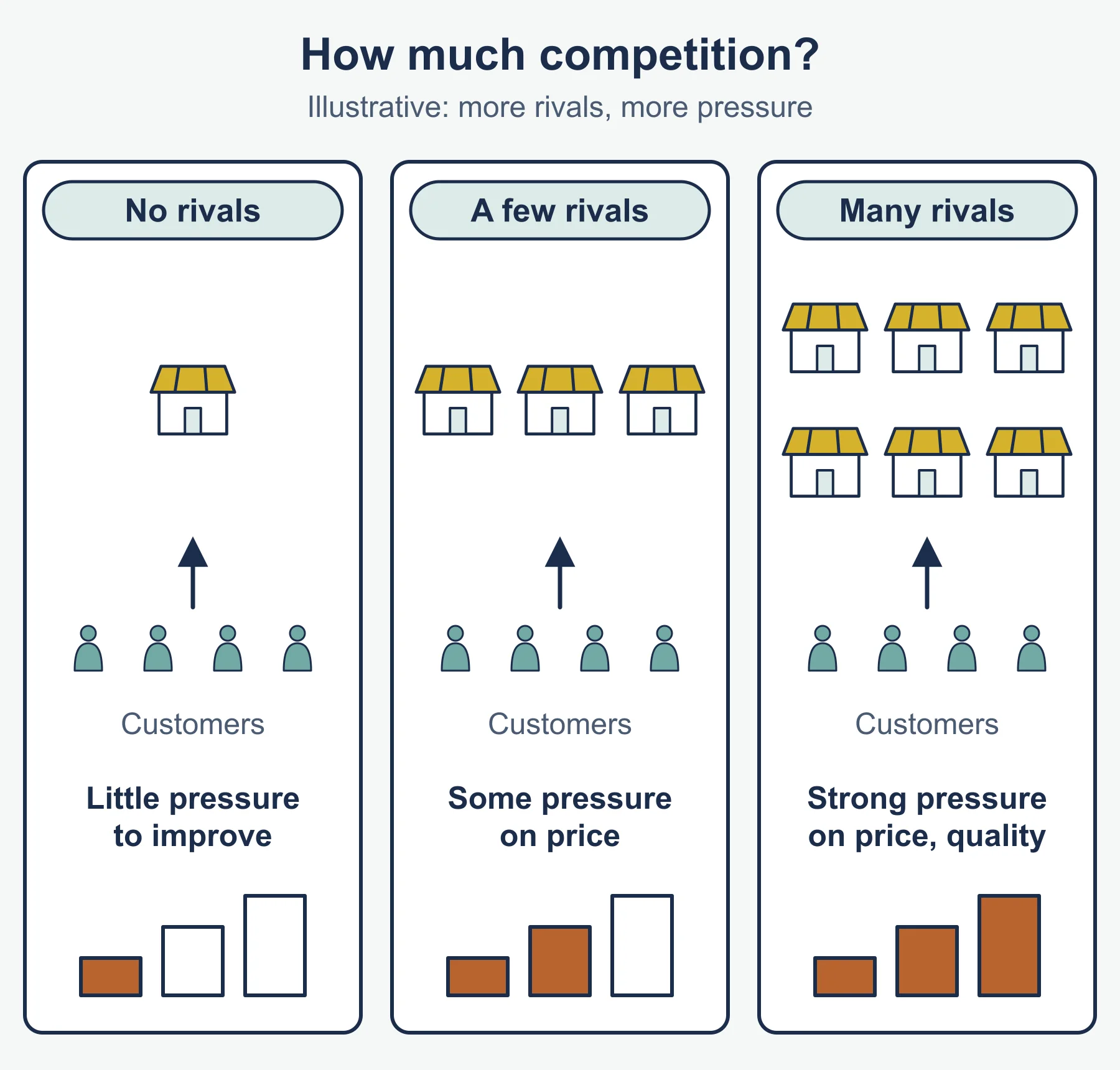
| Existing businesses | Protected; steadier share and profit; less pressure to cut price | Threatened by newcomers; pressure on price; need to keep improving |
| Customers | Less choice; possibly higher prices | More choice; keener prices; better service |
Market conditions
| Condition | Effect on demand | Likely decisions | Profit |
|---|---|---|---|
| Saturated | Total demand flat; gains come from rivals | Differentiate, promote, cut costs, find new segments | Squeezed if price cutting starts |
| Dynamic | Can change quickly in either direction | Invest in innovation and flexibility | High for adapters, low for laggards |
External changes at a glance
| Change | Effect on costs | Effect on demand | Decisions and profit |
|---|---|---|---|
| Income up | None directly | Normal goods up, inferior goods down | Shift range, stock and promotion |
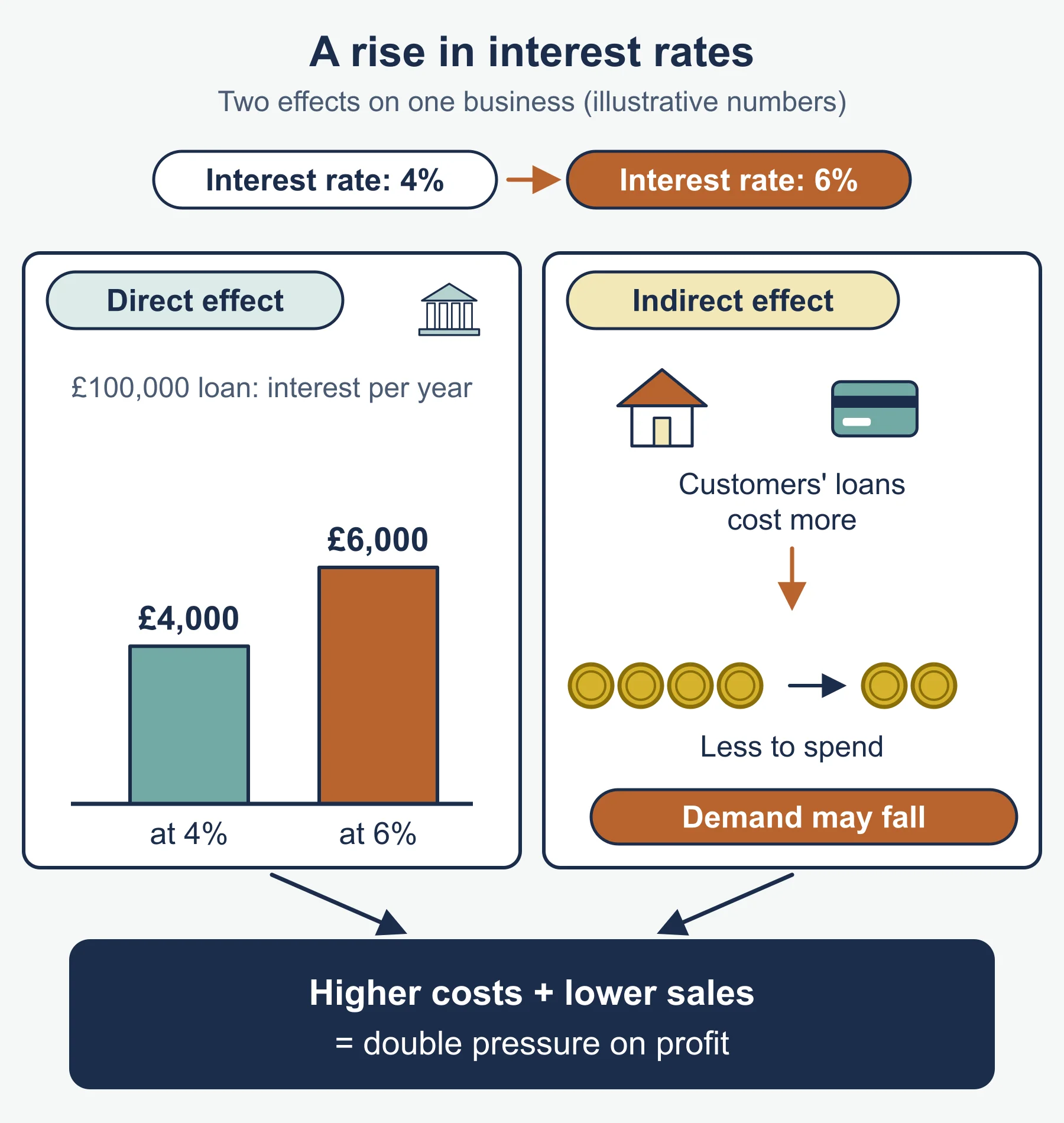
| Interest rates up | Dearer variable rate loans | Less spending on credit funded goods | Delay investment; lower profit |
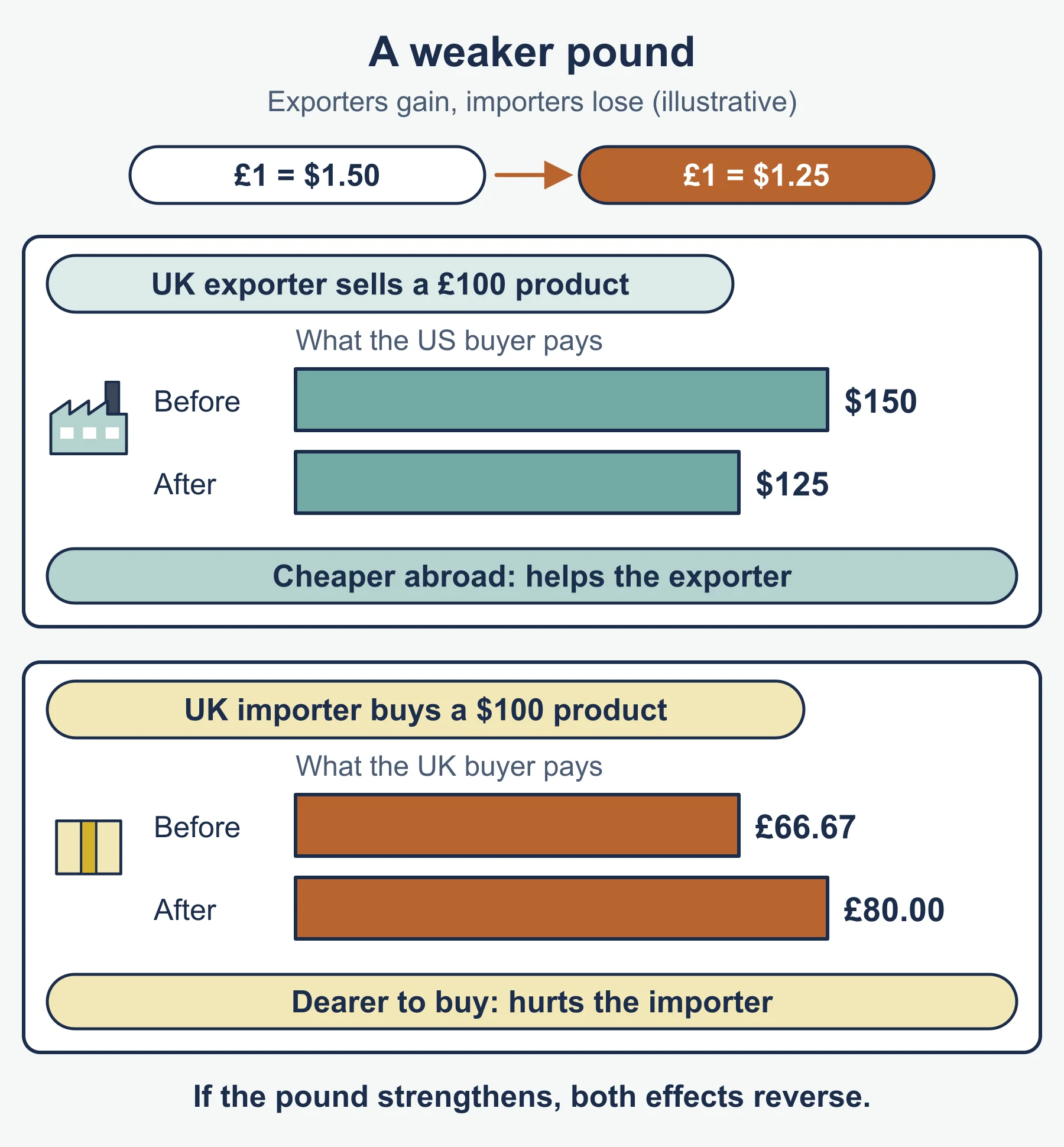
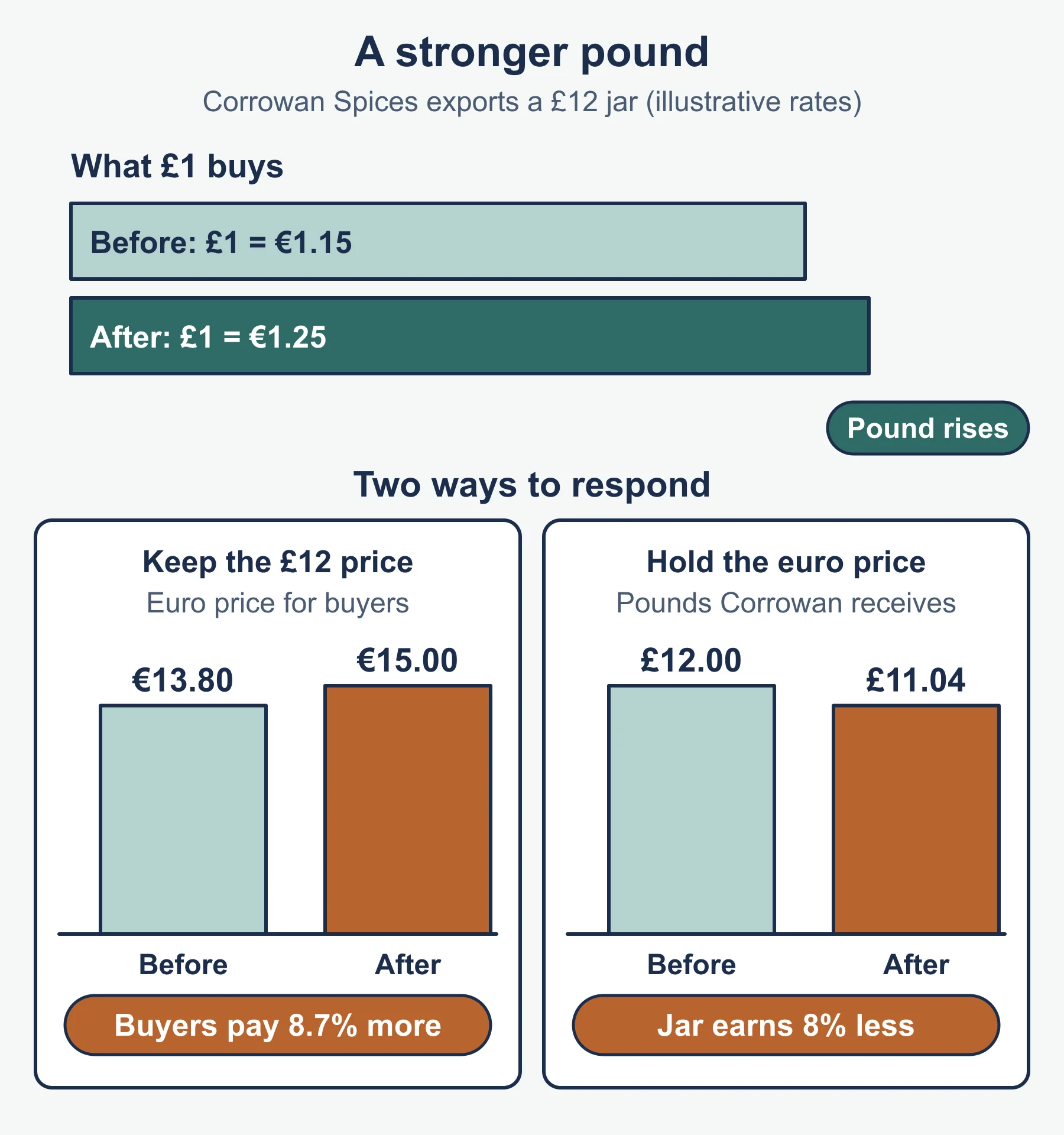
| Home currency stronger | Imports cheaper | Exports dearer abroad | Exporters lose competitiveness; importers gain |
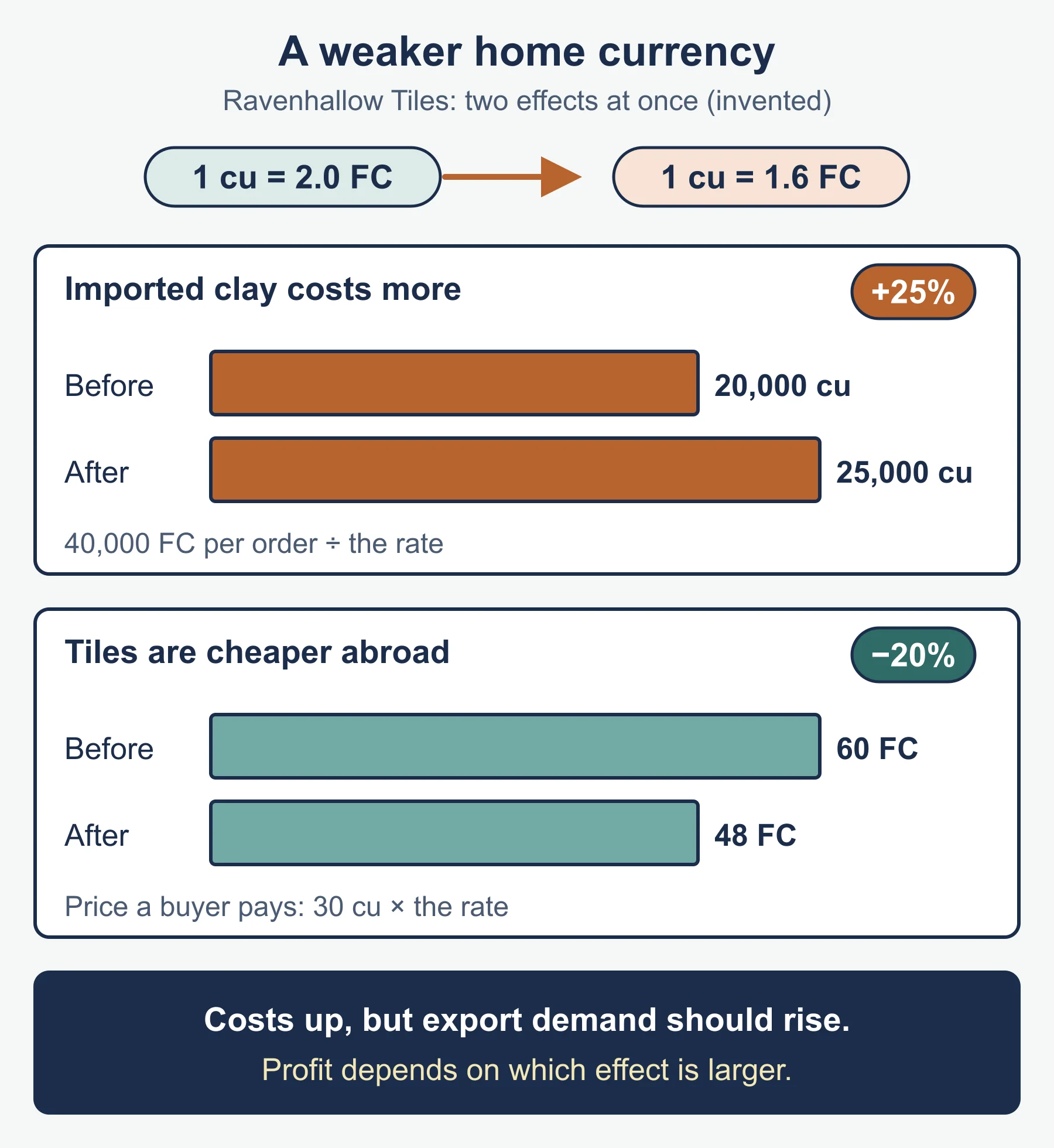
| Home currency weaker | Imports dearer | Exports cheaper abroad | The reverse |
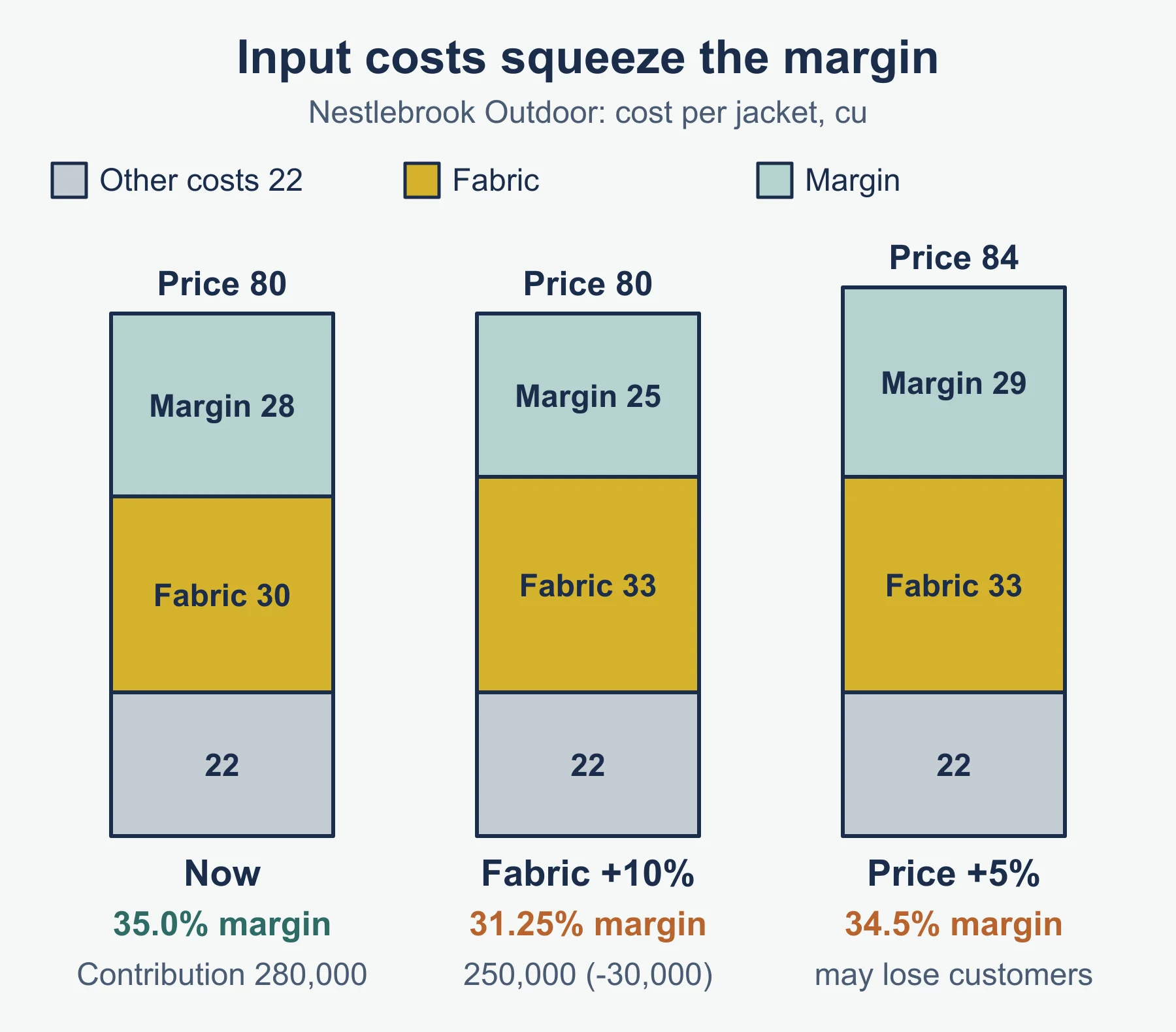
| Input costs up | Unit cost up | Falls if price is passed on | Margin squeezed or price raised |
| More competition | May need extra marketing spend | Share falls | Price pressure; profit falls |
Must-know distinctions
- Volume against value: a market can grow in volume and shrink in value if prices fall.
- Market size against market share: size describes the whole market, share describes one business.
- Concentration ratio against share: the ratio is the total of four shares, not one firm’s position.
- Inferior against low quality: “inferior” refers only to how demand responds to income.
- Elastic against inelastic YED: above 1 in absolute size is more responsive; below 1 is less.
- Strong against weak currency: strong makes imports cheap and exports dear; weak does the reverse.
Quick self-test
- A market is worth 48m cu and a firm sells 9.6m cu. What is its market share?
- Market volume falls from 40,000 to 34,000 units. State the percentage change.
- 120,000 units sell at an average price of 6.50 cu. What is the market value?
- The four largest firms have sales of 50m, 36m, 30m and 24m cu in a market worth 200m cu. Calculate the four firm concentration ratio.
- Income rises 8% and quantity demanded rises 12%. Calculate YED and state what type of good it is.
- YED is -0.4. Income rises 5% and sales are 25,000. Find the new sales figure.
- A firm borrows 120,000 cu at 4%, then the rate rises to 6%. By how much does annual interest rise?
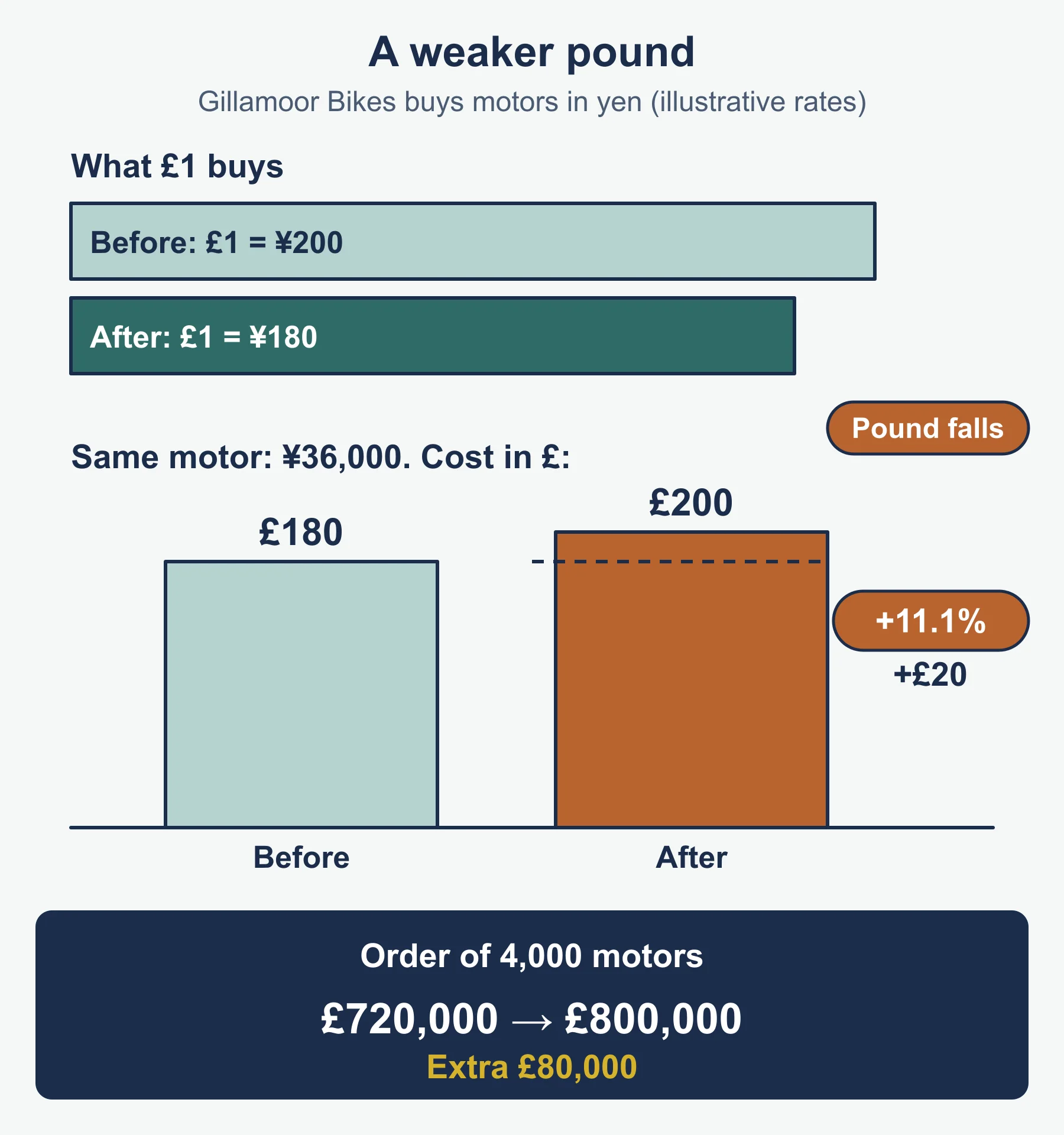
- A firm imports goods priced at 30,000 foreign currency units. At 1 cu = 1.5 units, then at 1 cu = 1.2 units, what is the cost in cu each time? Has the currency strengthened or weakened?
- Give two barriers to entry and say how low barriers affect customers.
- A product sells for 25 cu with a unit cost of 15 cu. All costs rise 10%. Find the new unit margin and margin as a percentage of price (price unchanged).
Answers
- 9.6 / 48 × 100 = 20.0%.
- (34,000 - 40,000) / 40,000 × 100 = -15%, a decline.
- 120,000 × 6.50 = 780,000 cu.
- (50 + 36 + 30 + 24) / 200 × 100 = 140 / 200 = 70%.
- 12 / 8 = +1.5; positive, so a normal good, and above 1 so income elastic.
- -0.4 × 5 = -2%; 25,000 × 0.98 = 24,500.
- Interest rises from 4,800 cu to 7,200 cu, an increase of 2,400 cu.
- 30,000 / 1.5 = 20,000 cu; 30,000 / 1.2 = 25,000 cu. The home currency has weakened and imports cost 25% more.
- For example entry costs and legal requirements. Low barriers mean more choice, keener prices and pressure on firms to improve quality and service.
- New unit cost 15 × 1.10 = 16.5 cu; margin 25 - 16.5 = 8.5 cu; 8.5 / 25 × 100 = 34% (down from 40%).
Where marks are usually lost
- Dividing a percentage change by the new figure instead of the old one.
- Giving a concentration ratio as a sum of sales instead of a percentage.
- Quoting a growth rate with no sign, or with the wrong sign when the market has shrunk.
- Calling a good inferior because it is cheap or poor quality, with no mention of income.
- Writing “profit falls” with no chain: which cost or demand figure changed first?
- Giving general lists of effects of an interest rate or exchange rate change without applying them to the business in the case.
- Mixing up strong and weak currency, especially which helps an exporter.
- Writing only one side of barriers to entry: say who gains and who loses.
- Making a judgement in an evaluation answer with no reason or evidence for why one effect outweighs another.
Frequently asked questions
How do you calculate a four firm concentration ratio? Rank the firms, pick the four largest, turn each into a percentage share of the market and add the shares together. The answer should be given as a percentage.
How do you use income elasticity of demand to forecast sales? Multiply the YED, keeping its sign, by the percentage change in income to get the percentage change in quantity demanded, then apply it to current sales.
Can a market grow in volume but shrink in value? Yes. If prices fall far enough, more units can be sold while total sales value falls. That is why you should always say whether you are using volume or value.
How do you calculate the value of a market? The value of a market is its volume multiplied by the average price. Growth is then the change divided by the old figure, multiplied by 100.
Official syllabus
OxfordAQA International AS and A-level Business (9725), specification Version 1.1, section 3.1.1.3, for International AS exams May/June 2027 onwards and International A-level exams May/June 2028 onwards. The 9625 specification (Version 3.1, first teaching September 2018) also has a section 3.1.1.3, checked against its text: it lists the degree of competition (number of businesses), the extent of barriers to entry, and calculating and interpreting market size, market growth or decline and concentration ratio; and the effect of changes in incomes, interest rates, exchange rates, costs of inputs, government policies and competition (including from abroad). It does not list income elasticity of demand, normal and inferior goods or the four firm form of the ratio in that section; those points, and market share, come from the 9725 wording. Published by OxfordAQA.
Get free revision emails (optional)
Occasional emails with practice questions, worked explanations and links to free resources for the qualification and subjects you choose. No spam, and you can unsubscribe from any email. The free tools on this site never need an email.
Related resources
-
Study guides
OxfordAQA A-Level Business: The nature and purpose of business and Types of business ownership (9625/9725)
Study guide to OxfordAQA International AS Business 3.1.1.1 and 3.1.1.2: entrepreneurs, objectives, plans, ownership, shareholders and stakeholders.
Business · OxfordAQA · AS Level
Read guide -
Practice questions
OxfordAQA A-Level Business: The nature and purpose of business and Types of business ownership (9625/9725) – Practice Questions
Original practice questions with worked answers on OxfordAQA International AS Business 3.1.1.1 and 3.1.1.2: objectives, trees, ownership, shares.
Business · OxfordAQA · AS Level
Try questions -
Revision notes
OxfordAQA A-Level Business: The nature and purpose of business and Types of business ownership (9625/9725) – Revision Notes
Condensed OxfordAQA International AS Business notes on 3.1.1.1 and 3.1.1.2: formulas, ownership table, key distinctions and a checked self-test.
Business · OxfordAQA · AS Level
Revise topic
Related articles
-
teaching
A Level tuition in Dubai: Cambridge or Pearson Edexcel International A Level?
Schools in Dubai and Abu Dhabi teach either Cambridge International AS & A Level or Pearson Edexcel International A Level. How the two are structured, why it matters for tuition, and how online classes from Lahore work.
9 October 2026
-
curriculum guides
Choosing subjects at IGCSE and A Level
How subject choices at 14 and 16 affect university options later, and how to keep pathways open without overloading a timetable.
28 July 2026
Studying this with a teacher
Working through Business AS LEVEL?
This page is free and stays free. If you would rather be taught it, Marlbridge runs Business classes one-to-one and in small groups of up to 15, online in your own time zone. The first trial class is free. WhatsApp replies within an hour (8am–11pm Pakistan time, every day); email the same day.
OxfordAQA Business teachers at Marlbridge
