
Revision Notes
Cambridge IGCSE Environmental Management (0680): Energy resources – Revision Notes
Recall notes on fossil fuel formation, classifying energy resources, generating electricity and energy demand for 1.4 Energy resources, Cambridge IGCSE 0680.
- Subject
- Environmental Management
- Level
- IGCSE
- Topic
- Topic 1 – Natural Resources
- Author
- Marlbridge Academic Team
- Updated
- Reviewed by
- Azam Siddique (what this means)
Aligned to Cambridge IGCSE Environmental Management (0680), 2027-2029. Official specification .
Syllabus page (what it covers and how it is assessed): Cambridge IGCSE Environmental Management.
Syllabus points this page covers
0680
- 1.4 Energy resources
Found an error? Report a correction.
Need help with this topic? Request a free trial class for IGCSE Environmental Management (0680).
Condensed notes for sub-topic 1.4. Step-by-step explanations and two worked examples are in the Energy resources study guide.
Fossil fuel formation in sequences
Coal
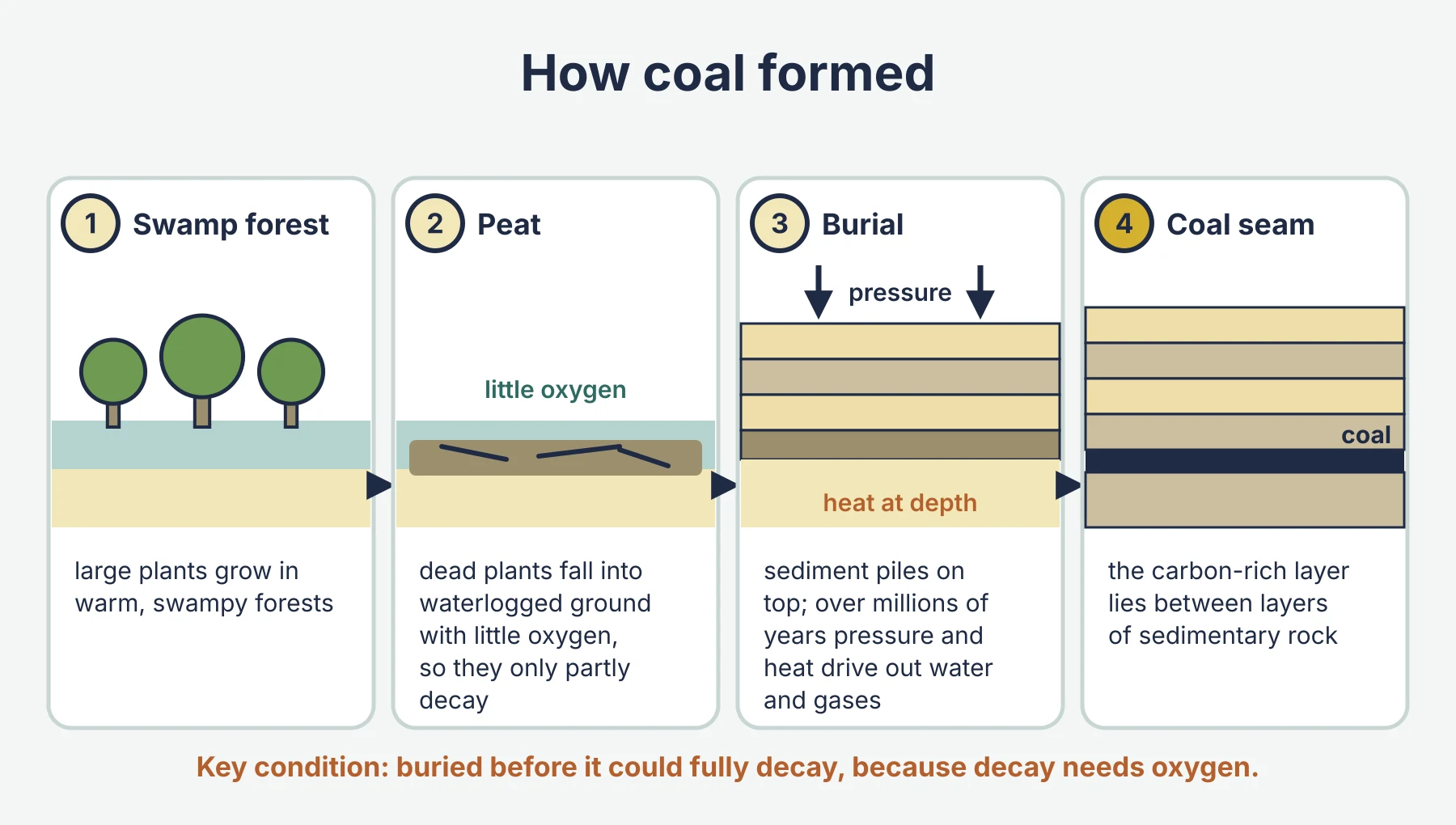
- Plants in warm, swampy forests die and fall into waterlogged ground.
- Little oxygen, so decay is incomplete: peat forms.
- Peat buried under sediment; compressed and heated over millions of years.
- Water and gases driven out; carbon content rises; coal seams form.
Oil and natural gas
- Plankton die and sink to the sea floor.
- Buried in mud with little oxygen, so decay is incomplete.
- Heat and pressure over millions of years convert the remains to oil and gas (more heat favours gas).
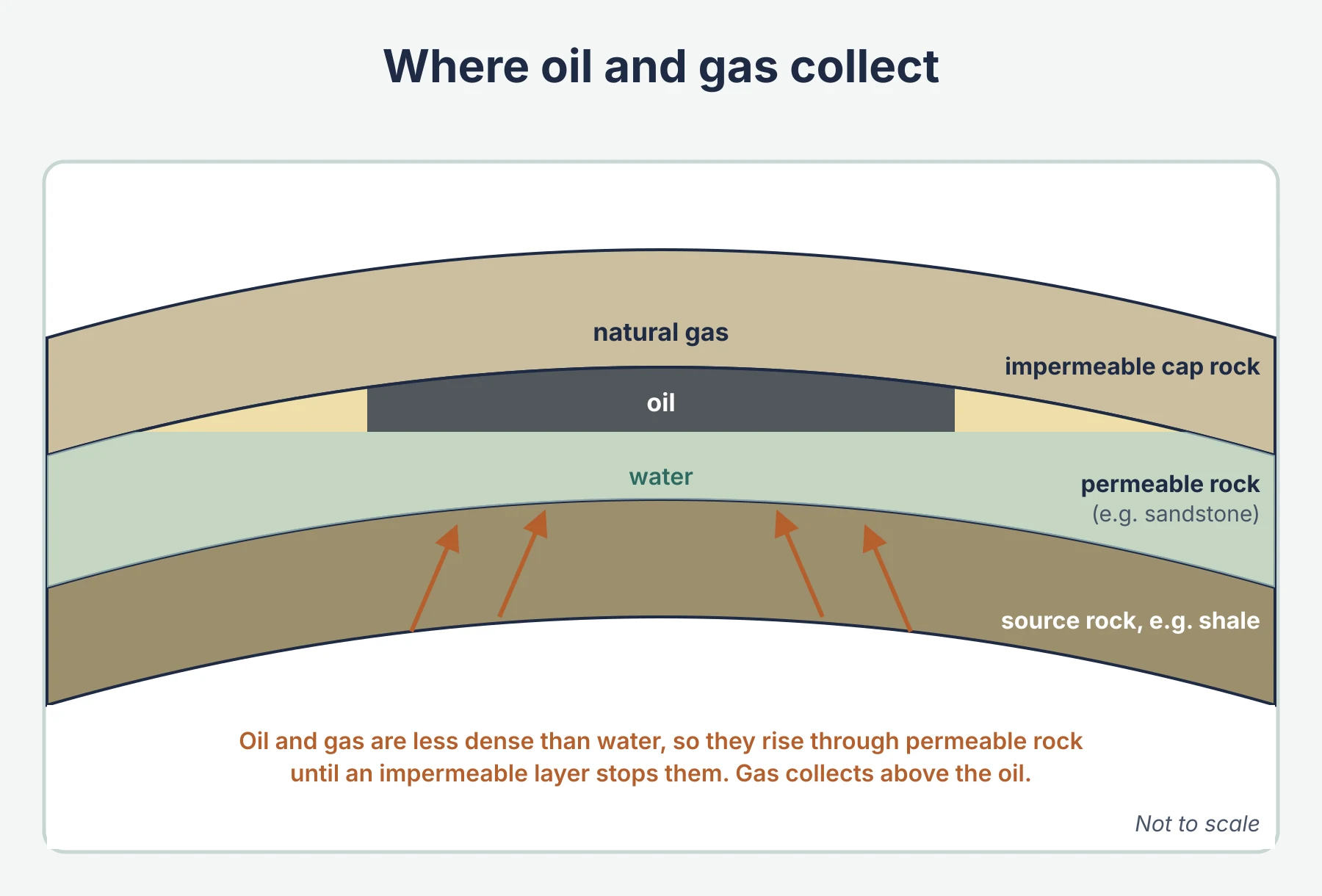
- Oil and gas rise through permeable rock and are trapped under impermeable rock in a reservoir; gas sits above oil.
Common thread: organisms → burial without oxygen → heat and pressure → millions of years.
Classification (learn the exact lists)
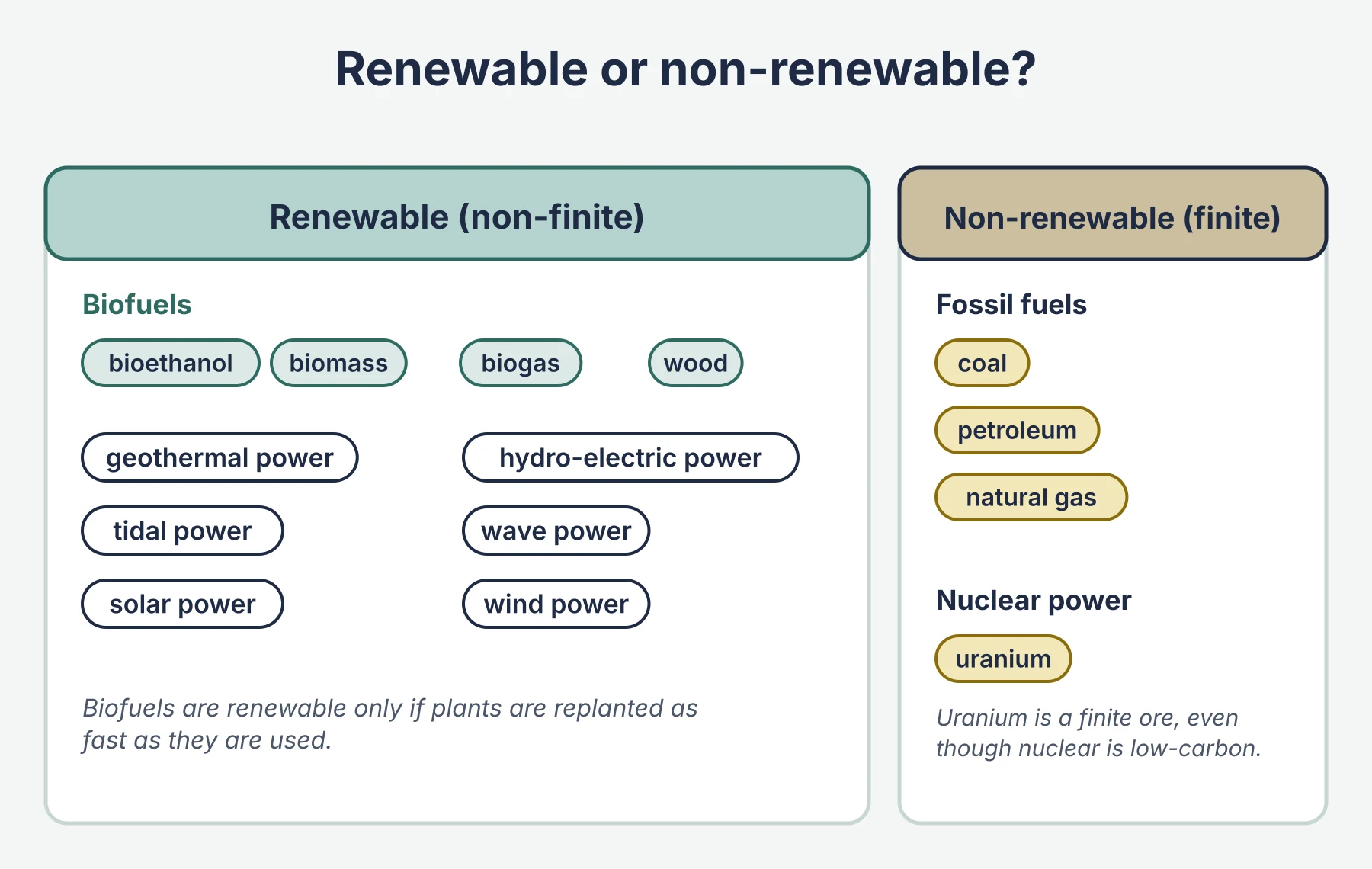
- Renewable (non-finite): biofuels (bioethanol, biomass, biogas, wood), geothermal, HEP, tidal, wave, solar, wind.
- Non-renewable (finite): fossil fuels (coal, petroleum, natural gas) and nuclear power using uranium.
The four biofuels
| Biofuel | What it is |
|---|---|
| Bioethanol | Liquid fuel from fermenting sugar from crops such as sugar cane or maize |
| Biomass | Plant or animal material burned directly, such as crop waste |
| Biogas | Methane-rich gas from bacteria breaking down manure, food waste or sewage without oxygen |
| Wood | Burned for heat and in some power stations |
Electricity generation chains
| Resource | Chain |
|---|---|
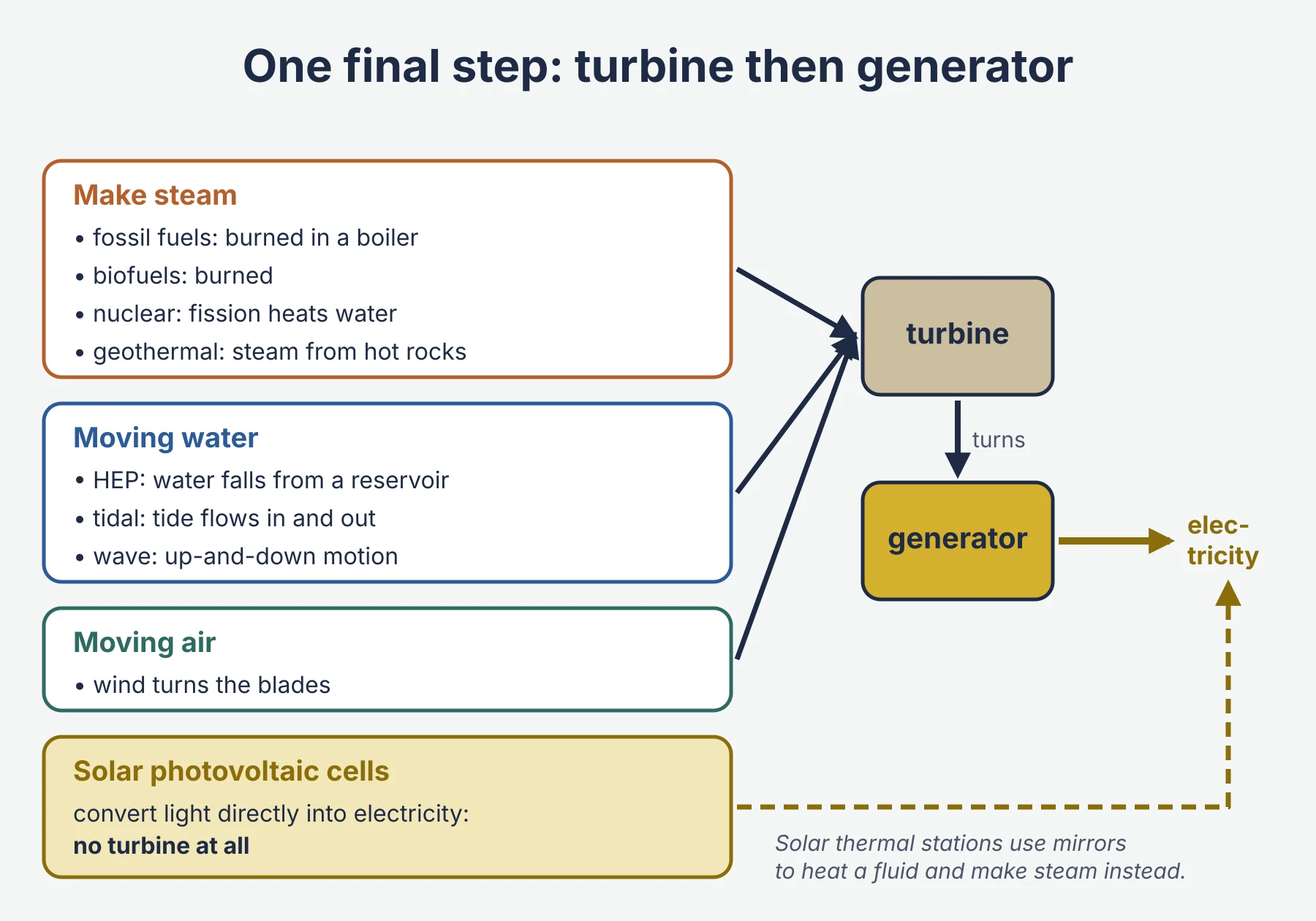
| Coal, oil, gas | Burn fuel → boil water → steam → turbine → generator |
| Biomass, wood | Burn → steam → turbine → generator |
| Biogas, bioethanol | Burn in engine or turbine → generator |
| Nuclear | Uranium fission → heat → steam → turbine → generator |
| Geothermal | Hot rocks heat water → steam piped up → turbine → generator |
| HEP | Water stored behind dam → falls through pipes → turbine → generator |
| Tidal | Rising and falling tide flows through barrage or sea-bed turbines → generator |
| Wave | Wave motion pushes air through a turbine or moves floating devices → generator |
| Wind | Wind turns blades → shaft → generator |
| Solar photovoltaic | Light → solar cells → electricity directly (no turbine) |
| Solar thermal | Mirrors focus sunlight → heat fluid → steam → turbine → generator |
One benefit and one limitation each
- Coal: reliable, large reserves | most carbon dioxide; sulfur dioxide and acid rain.
- Oil: easy to transport; fuels vehicles | spills; finite; unstable prices.
- Natural gas: less carbon dioxide than coal | still fossil; methane leaks.
- Nuclear: very low carbon dioxide in use; continuous | radioactive waste; high cost; accident risk.
- Biofuels: renewable if replanted; can use waste | land competes with food crops.
- Geothermal: continuous output | only in tectonically active areas.
- HEP: reliable, controllable | flooding land, displacing people.
- Tidal: predictable | few sites; estuary habitats changed.
- Wave: large potential on exposed coasts | storm damage; variable output.
- Solar: no fuel or emissions in use | nothing at night; large land area.
- Wind: no fuel; land below usable | intermittent; noise, visual impact.
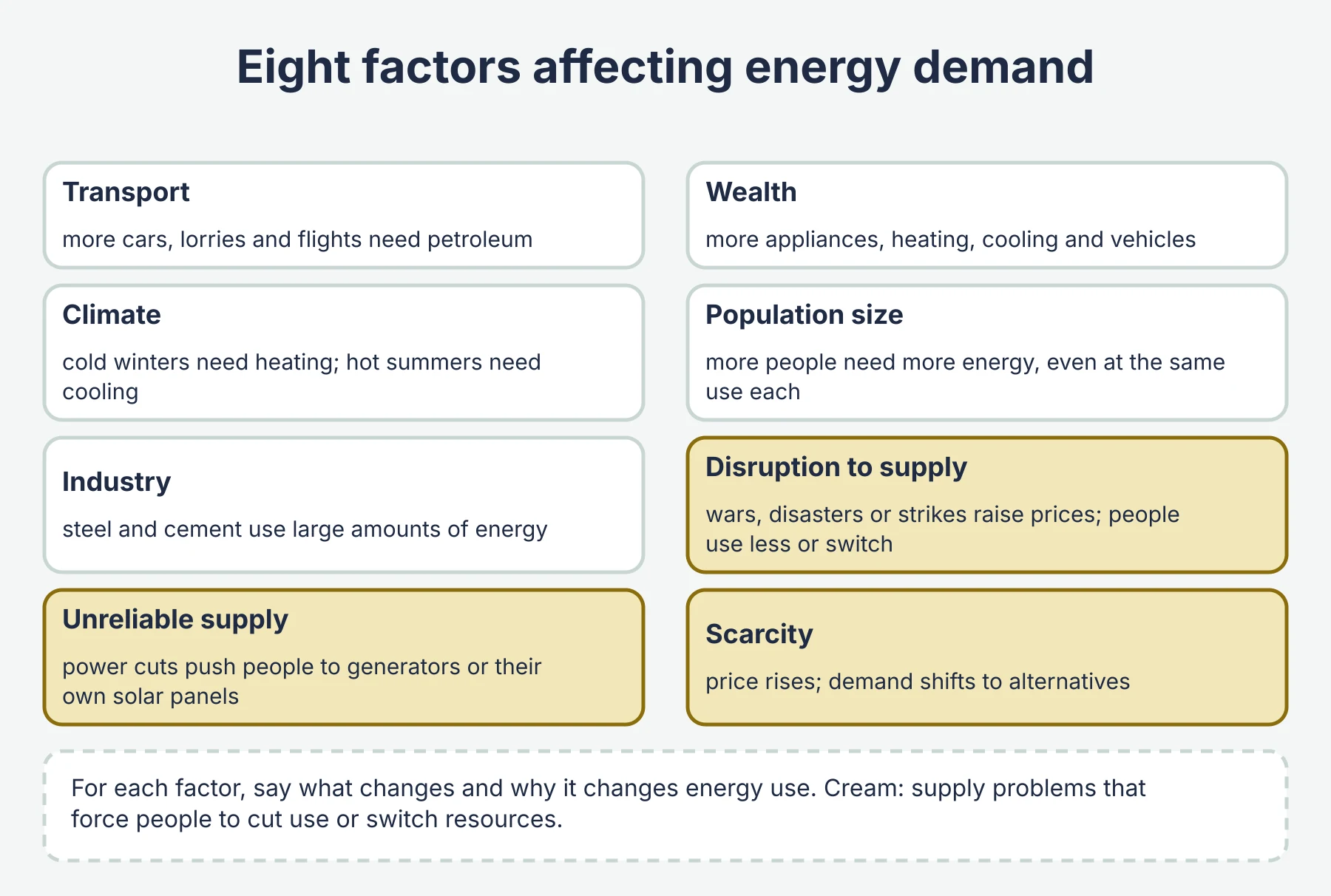
Eight demand factors with the mechanism
| Factor | Effect on demand | Why |
|---|---|---|
| Transport | Raises | More vehicles and flights burn petroleum |
| Personal and national wealth | Raises | More appliances, heating, cooling and cars per person |
| Climate | Raises in extreme climates | Heating in cold places, cooling in hot places |
| Human population size | Raises | More people need homes, transport and food |
| Industry | Raises | Manufacturing such as steel and cement is energy-intensive |
| Disruption to supply | Lowers or shifts | Shortages and higher prices force cuts or switching |
| Unreliable supply | Shifts | Power cuts push people to generators or their own solar panels |
| Scarcity of resources | Lowers or shifts | Rising price cuts use and raises demand for alternatives |
Data skills
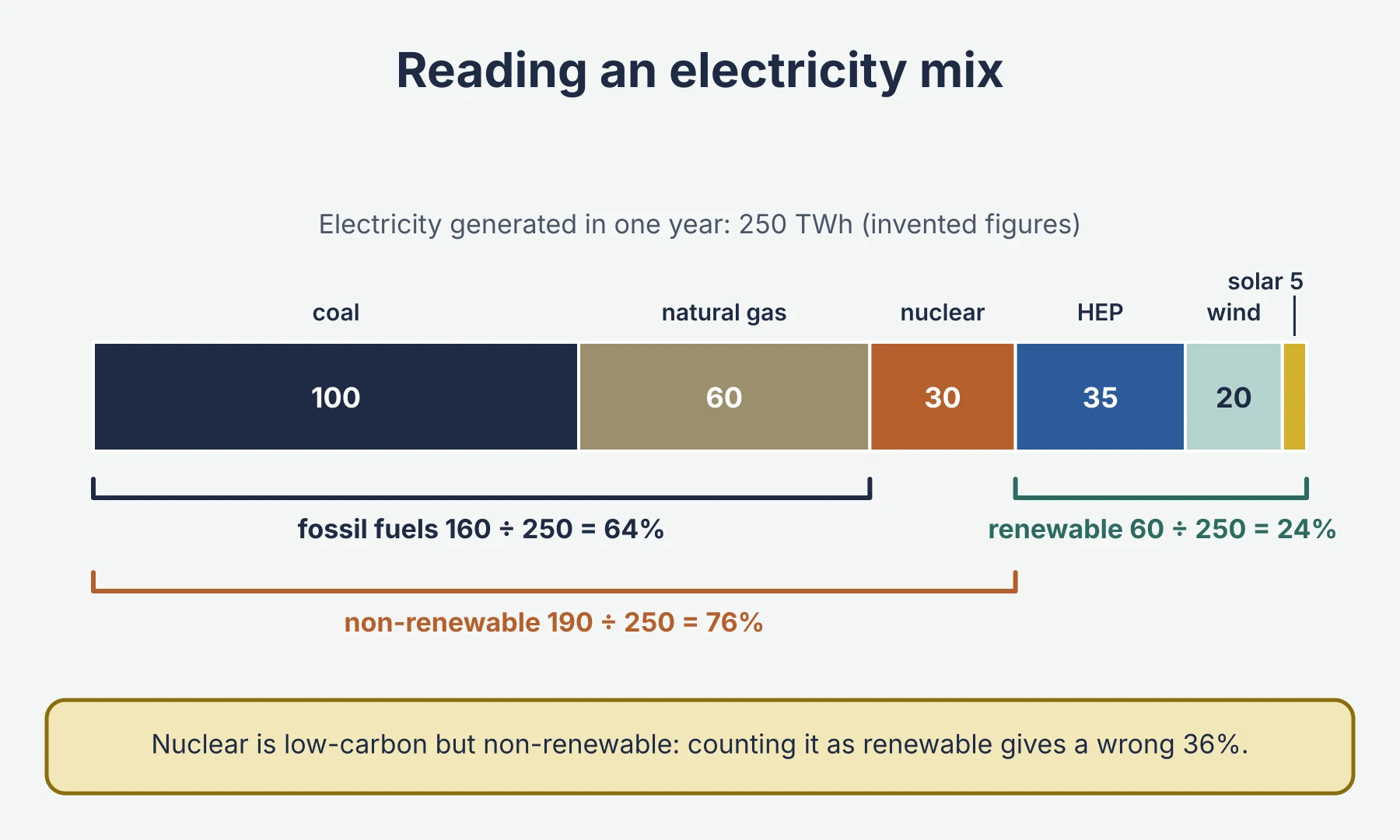
- Percentage share = part ÷ total × 100.
- Check every list in a data question for nuclear before calling something renewable.
- Quick check: 45 TWh of wind and solar out of 180 TWh total = 45 ÷ 180 × 100 = 25%.
Exam traps
- Nuclear is non-renewable, despite low carbon dioxide emissions.
- Coal comes from land plants; oil and gas from marine plankton.
- Leave out “lack of oxygen” and the formation answer is incomplete.
- Solar photovoltaic cells do not drive a turbine.
- Renewable does not mean harmless: give limitations for renewables too.
- Demand factors need a reason, not just a name.
Self-test
- Why did the plants that formed coal not decay completely?
- What is the first stage in the formation of coal from plant material?
- Which organisms formed oil and natural gas?
- Why do oil and gas collect beneath impermeable rock?
- Is nuclear power renewable or non-renewable?
- Name the four biofuels in the syllabus.
- Describe how a geothermal power station generates electricity.
- Which energy resource generates electricity without a turbine?
- Give one limitation of tidal power.
- Explain how climate affects energy demand.
- A country produces 40 TWh from coal, 30 TWh from gas, 20 TWh from nuclear and 10 TWh from wind. What percentage is renewable?
- How can an unreliable electricity supply change energy demand?
Answers
- They fell into waterlogged ground with little oxygen, so decomposers could not break them down.
- Peat forms from layers of partly decayed plant material.
- Plankton (tiny marine organisms).
- They are less dense and rise through permeable rock until an impermeable layer stops them.
- Non-renewable (uranium is finite).
- Bioethanol, biomass, biogas and wood.
- Hot water and steam from heated rocks are piped up through wells (or water is pumped down to be heated); the steam turns a turbine that drives a generator.
- Solar power using photovoltaic cells.
- Any one: few suitable sites; high building cost; changes estuary habitats.
- Cold climates need energy for heating and hot climates for cooling, so extreme climates raise demand.
- 10 ÷ 100 × 100 = 10%.
- Power cuts lead people and businesses to buy back-up generators or install their own solar panels, shifting demand to other resources.
Where to go next
Try the Energy resources practice questions, then revise the Conservation and management of energy resources revision notes.
Related resources
-
Revision notes
Cambridge IGCSE Environmental Management: Land — Revision Notes
Recall notes on soils and crop growth, food production and soil erosion for Topic 2 Land of Cambridge IGCSE Environmental Management 0680, 2027-2029 series.
Environmental Management · Cambridge · IGCSE
Revise topic -
Study guides
Cambridge IGCSE Environmental Management (0680): Extraction of rocks, ores and minerals
Mining methods, the factors behind extraction decisions, the impacts of mining and how damaged land is restored or repurposed, for Cambridge IGCSE 0680.
Environmental Management · Cambridge · IGCSE
Read guide -
Practice questions
Cambridge IGCSE Environmental Management (0680): Extraction of rocks, ores and minerals – Practice Questions
Original practice questions with full answers on mining methods, ore grade, extraction decisions, impacts and land restoration for Cambridge IGCSE 0680.
Environmental Management · Cambridge · IGCSE
Try questions
Get free revision emails (optional)
Occasional emails with practice questions, worked explanations and links to free resources for the qualification and subjects you choose. No spam, and you can unsubscribe from any email. The free tools on this site never need an email.