
Revision Notes
Edexcel A Level Urdu (9UR0): Bajrangi Bhaijaan (بجرنگی بھائی جان) – Revision Notes
9UR0 notes on the prescribed film Bajrangi Bhaijaan (بجرنگی بھائی جان), Kabir Khan (2015): themes, technique, a model paragraph and a self-test.
- Subject
- Urdu Language
- Level
- A LEVELS
- Topic
- Prescribed literary texts and films
- Author
- Marlbridge Academic Team
- Updated
- Reviewed by
- Farheen Zehra (what this means)
Aligned to Pearson Edexcel A Level Urdu Language (9UR0), 2018. Official specification .
Syllabus page (what it covers and how it is assessed): Pearson Edexcel A Level Urdu Language.
Syllabus points this page covers
9UR0
- 5.6 بجرنگی بھائی جان — کبیر خان (2015)
Found an error? Report a correction.
Need help with this topic? Request a free trial class for A Level Urdu Language (9UR0).
Revision notes for 5.6 in the prescribed literary texts and films of Pearson Edexcel A Level Urdu (9UR0), Paper 2. For the full explanation of the paper, read the Translation into Urdu and Written Response to Works study guide and the Paper 2 revision notes.
The work
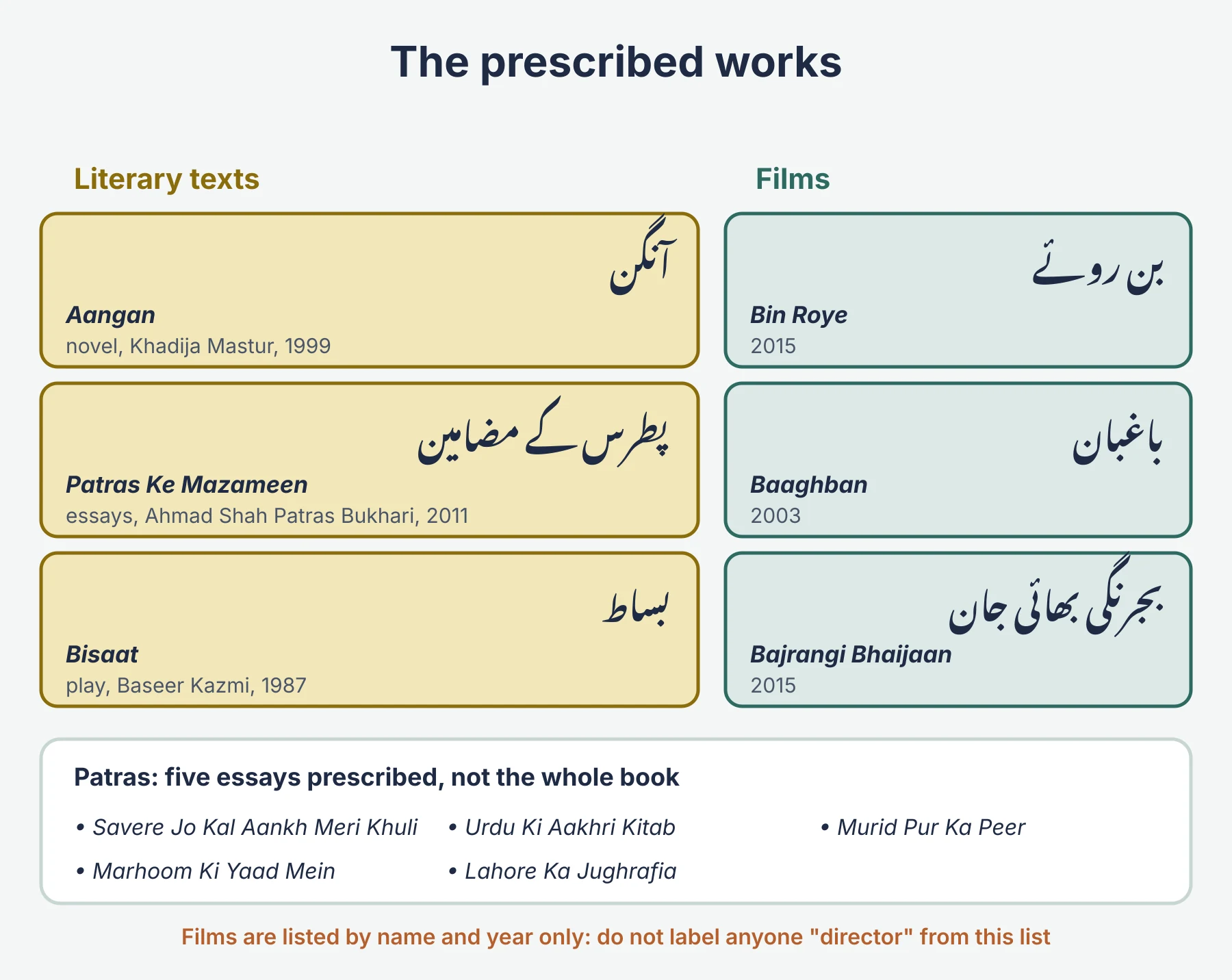
- Title: بجرنگی بھائی جان (Bajrangi Bhaijaan)
- Name given in the specification: کبیر خان (Kabir Khan)
- Year: 2015
- Form: a prescribed film in Appendix 1.
The specification gives each film as a name and a year only, with no role label, so do not write a name in as ‘director’ on the strength of the list alone.
What the film is about
A young Pakistani girl, شاہدہ (Shahida), who cannot speak, is separated from her mother in India after a journey across the border. She is found by پون (Pawan), a simple, honest man from India and a devoted follower of the Hindu deity Hanuman (also called Bajrang Bali, which gives Pawan the nickname ‘Bajrangi’). Not knowing her name, he calls her منی (Munni). When he discovers that she is Pakistani and Muslim, he decides, against every practical obstacle, to take her home himself. On his journey through Pakistan he is helped by a local television reporter, چاند نواب (Chand Nawab), whose footage of Pawan’s mission reaches ordinary people on both sides of the border. رسیکا (Rasika), the woman Pawan loves, supports his decision.
Use this outline only for orientation. In the exam you need your own specific references to scenes, gathered from watching the film closely.
The title
بجرنگی refers to Pawan’s devotion to Bajrang Bali, and بھائی جان is a respectful, affectionate way of addressing an elder brother, common among Muslims in South Asia. The combination of a Hindu devotional name and a Muslim form of address sums up the film’s message of friendship across religious lines.
Key themes and issues
- Humanity beyond borders: compassion for a lost child matters more than nationality or religion.
- India and Pakistan: the film shows ordinary people on both sides as kind and generous, in contrast to the suspicion between states, borders and officials.
- Religion and tolerance: Pawan keeps his own faith while learning to respect another; scenes at a mosque and a Sufi shrine show shared spaces of devotion.
- Honesty: Pawan’s refusal to lie, even when a lie would help him, is central to his character and to the comedy and tension of the journey.
- The power of the media: Chand Nawab’s video spreads goodwill rather than hatred, which links the film to Theme 2, sub-theme 2.3, the media.
- Migration and borders: visas, checkpoints and the border itself shape what people can do, a link to Theme 3.
Form and technique
- Journey structure: the film is built as a road journey; each stage brings a new obstacle and a new helper.
- Comedy and emotion: humour, often from Pawan’s honesty and naivety, is balanced with moments of danger and strong emotion.
- Songs and qawwali: music marks key emotional moments, including a qawwali at a Sufi shrine that reflects the film’s theme of shared devotion.
- Landscape: mountain settings make the journey visually striking and stress the distances that separate the girl from home.
- The climax at the border: the ending gathers crowds from both countries; consider whether it is moving, idealised, or both.
How it is examined
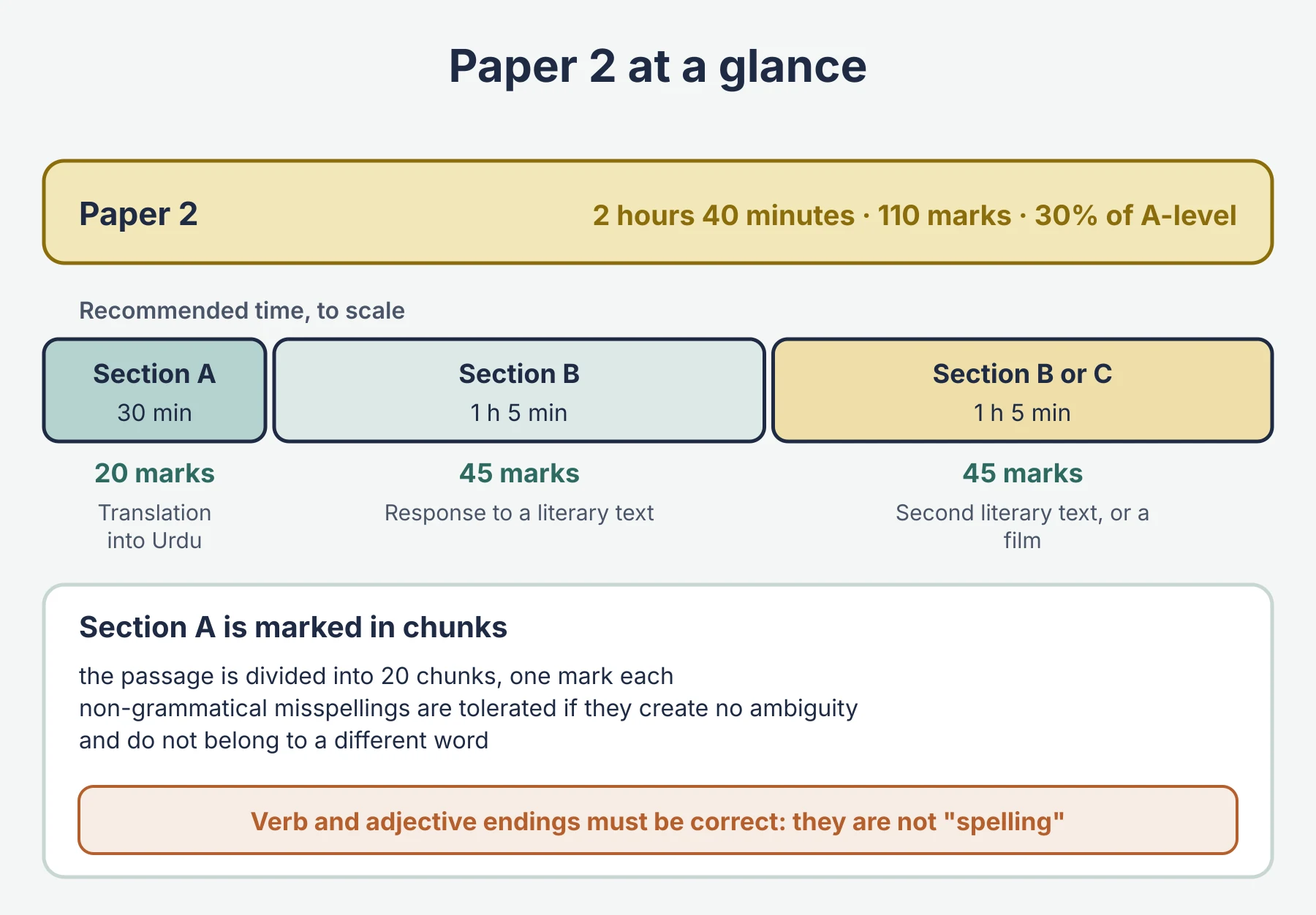
- Paper 2 is 2 hours 40 minutes, 110 marks, 30% of the A Level.
- Section C (film) is worth 45 marks and about 1 hour 5 minutes; you choose from two questions.
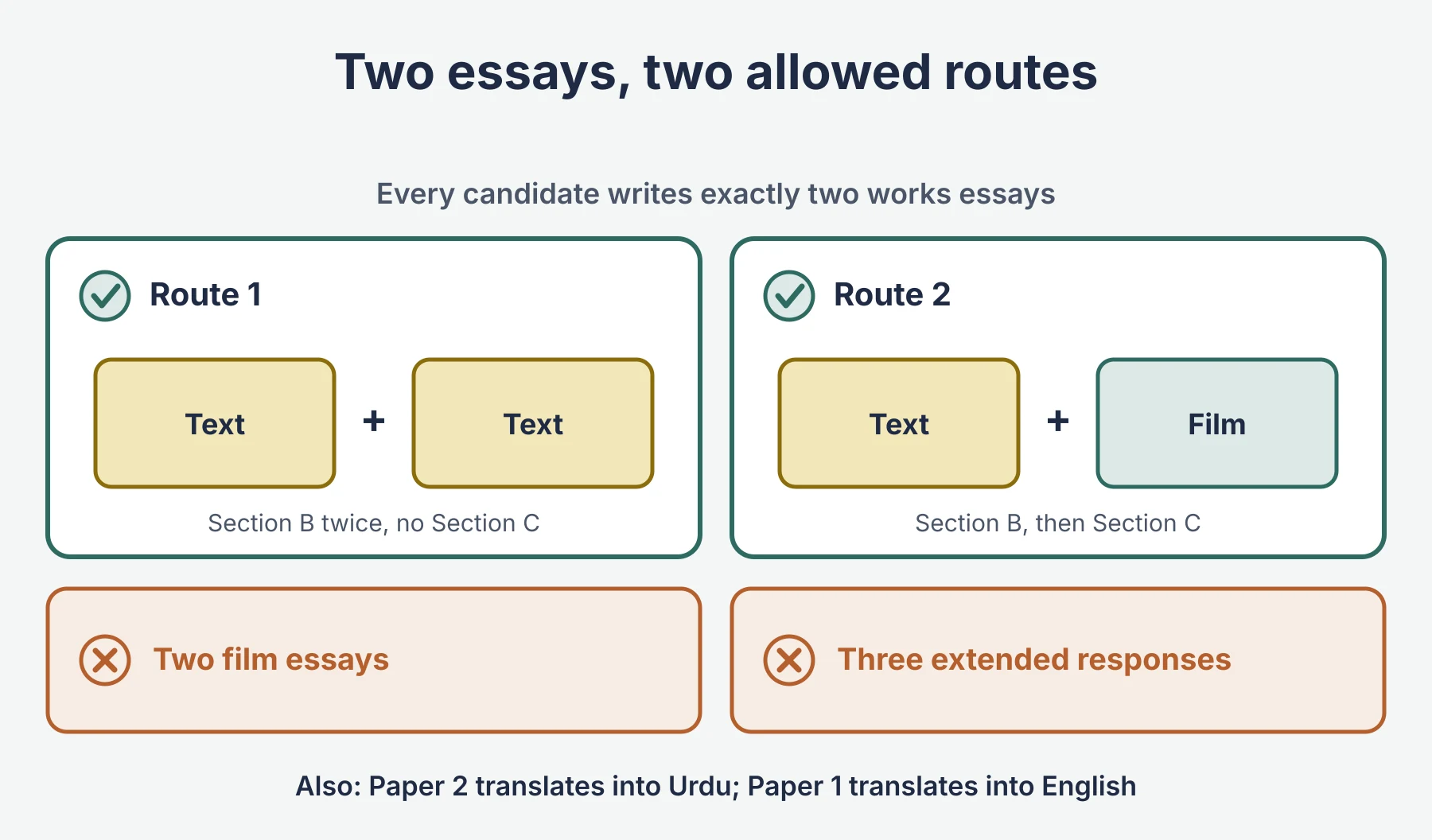
- You write exactly two extended responses: two literary texts, or one literary text and one film. Two films is never allowed.
- Marking criteria: critical and analytical response with cultural or social insight (AO4), range of grammatical structures and vocabulary (AO3), and accuracy of language (AO3). There are no AO1 or AO2 marks on Paper 2.
Approach and skills
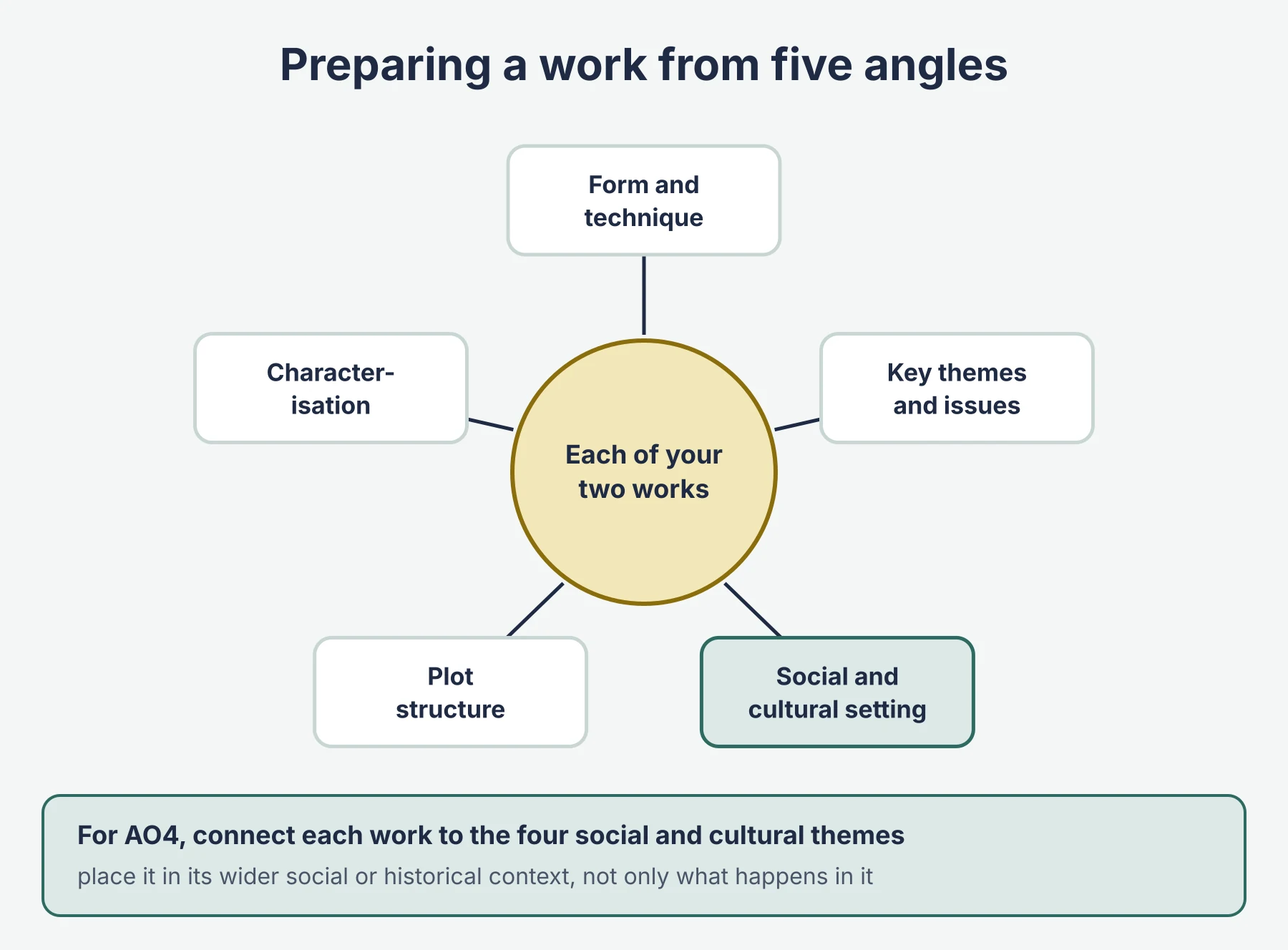
- Prepare against five angles: form and technique, key themes and issues, characterisation, plot structure, social and cultural setting.
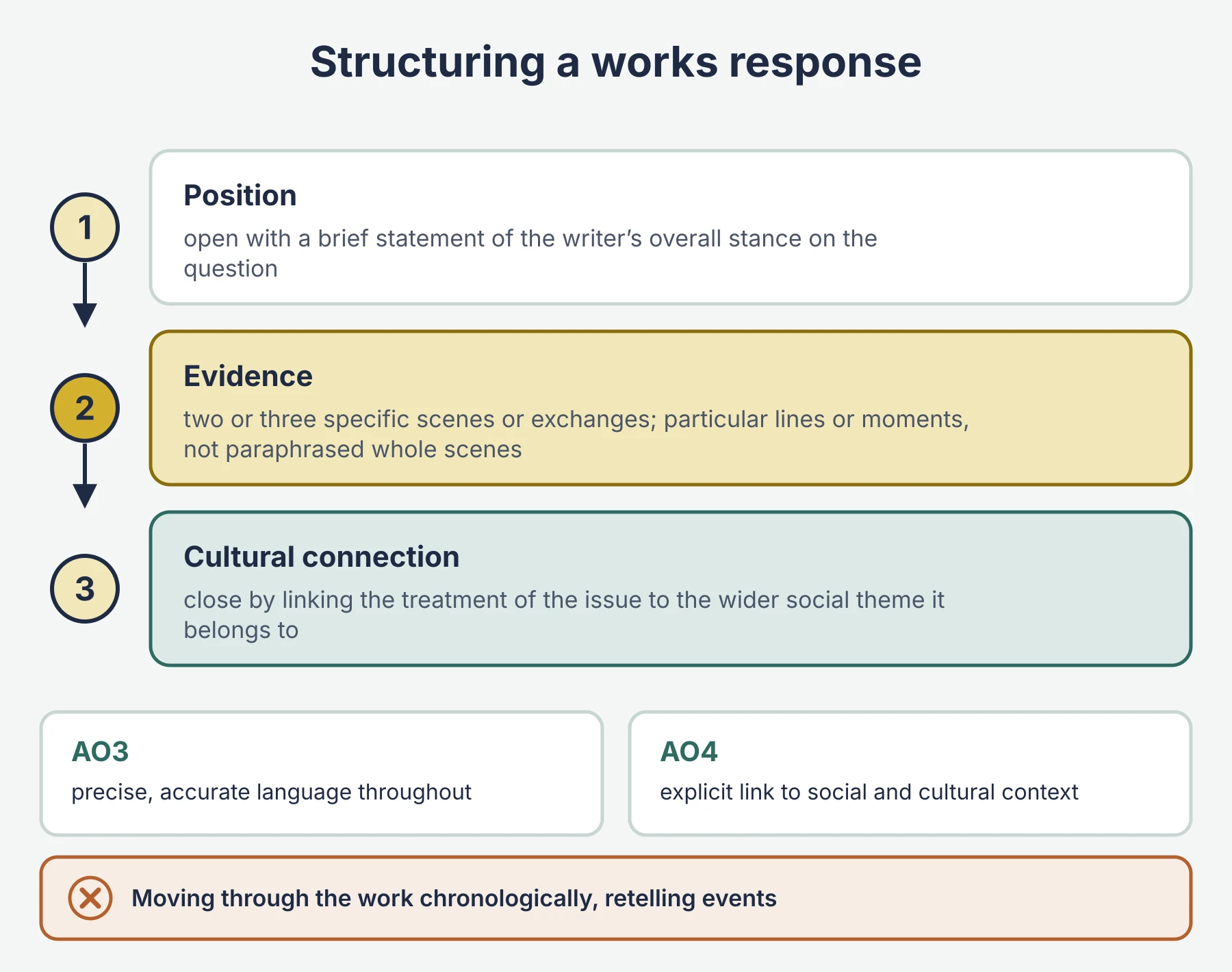
- Structure each answer as position, evidence, cultural connection: state your stance, support it with two or three specific points (not a retelling), then link the writer’s or film’s treatment of an issue to a broader social or cultural theme.
- Write in controlled Urdu with correct agreement, tense and spelling, and plan before you write.
- Use your own prepared references from the work; this page does not replace studying it.
Vocabulary for writing about the film
| Urdu | Meaning |
|---|---|
| انسانیت | humanity |
| ہمدردی | compassion, sympathy |
| سرحد | border |
| ویزا | visa |
| سفر | journey |
| مذہبی رواداری | religious tolerance |
| ایمان داری | honesty |
| صحافی | journalist |
| ویڈیو | video (feminine) |
| مزار | shrine |
| قوالی | qawwali |
| دشمنی | hostility |
| دوستی | friendship |
| پیغام | message |
| انجام | ending |
| مزاح | humour |
| جذباتی | emotional |
| ہمسایہ ملک | neighbouring country |
Useful sentences with grammar notes
- پون نے شاہدہ کو اس کے گھر پہنچانے کا فیصلہ کیا۔ (Pawan decided to take Shahida to her home.) With نے, the verb agrees with فیصلہ (masculine): کیا.
- چاند نواب کی بنائی ہوئی ویڈیو لوگوں کے دل بدل دیتی ہے۔ (The video made by Chand Nawab changes people’s hearts.) The participle بنائی ہوئی and the verb دیتی both agree with ویڈیو (feminine).
- فلم یہ دکھاتی ہے کہ عام لوگ سرحد کے دونوں طرف ایک جیسے ہیں۔ (The film shows that ordinary people are alike on both sides of the border.) فلم is feminine: دکھاتی ہے.
- پون جھوٹ بولنے کے بجائے مشکل راستہ اختیار کرتا ہے۔ (Instead of telling a lie, Pawan chooses the difficult path.) کے بجائے means ‘instead of’.
Model paragraph
Task: what message does the film give about the relationship between India and Pakistan?
فلم “بجرنگی بھائی جان” سرحدوں سے بڑھ کر انسانیت کا پیغام دیتی ہے۔ پون، جو ایک سچا اور سادہ دل انسان ہے، ایک ننھی پاکستانی بچی شاہدہ کو، جو بول نہیں سکتی، اس کے گھر پہنچانے کا فیصلہ کرتا ہے، حالانکہ ان کا مذہب اور ملک دونوں مختلف ہیں۔ اس سفر میں پاکستانی صحافی چاند نواب اس کا ساتھ دیتا ہے، اور اس کی بنائی ہوئی ویڈیو دونوں ملکوں کے عام لوگوں کے دل بدل دیتی ہے۔ اس طرح فلم یہ دکھاتی ہے کہ میڈیا نفرت کے بجائے محبت بھی پھیلا سکتا ہے۔ میرے خیال میں فلم کا انجام کچھ جذباتی ضرور ہے، لیکن اس کا پیغام آج کے دور میں بہت اہم ہے۔
Translation: The film Bajrangi Bhaijaan gives a message of humanity that goes beyond borders. Pawan, a truthful and simple-hearted man, decides to take a little Pakistani girl, Shahida, who cannot speak, to her home, although their religion and country are both different. On this journey the Pakistani journalist Chand Nawab supports him, and the video he makes changes the hearts of ordinary people in both countries. In this way the film shows that the media can spread love instead of hatred. In my view the film’s ending is certainly rather emotional, but its message is very important today.
Why it works: a clear position, evidence from character and plot, a cultural link to the media, and a balanced evaluation. In a real answer, add one or two specific scenes and comment on a technique such as music or the journey structure.
Essay prompts to prepare
- «فلم “بجرنگی بھائی جان” میں انسانیت اور مذہب کے موضوع کا تجزیہ کیجیے۔» (Analyse the theme of humanity and religion in Bajrangi Bhaijaan.)
- «یہ فلم پاک بھارت تعلقات کی ایک غیر حقیقی تصویر پیش کرتی ہے۔» (The film presents an unrealistic picture of relations between Pakistan and India.) To what extent do you agree?
- How is the character of Pawan developed through the journey?
- Examine the role of the media in the film.
Exam traps
- Retelling the story without connecting it to a theme weakens the AO4 mark.
- Attempting three responses, or choosing two films.
- Running over time on the first response and squeezing the second.
- Turning the essay into a political argument about India and Pakistan instead of analysing the film.
- Ignoring the film’s techniques: journey structure, music, comedy, landscape, the ending.
- Agreement slips with فلم and ویڈیو, which are both feminine.
Self-test
- Which name and year does the specification give for بجرنگی بھائی جان?
- Which combinations of works are allowed?
- How long should you spend on each extended response?
- How long is Paper 2 and how many marks?
- What is the weight of Paper 2?
- Who is Shahida, and why can she not explain where she comes from?
- Where does the nickname ‘Bajrangi’ come from, and what does بھائی جان mean?
- Who is Chand Nawab, and why is he important to the film’s themes?
- Name two themes of the film and link one to a theme of the qualification.
- Name two film techniques you could analyse.
- In چاند نواب کی بنائی ہوئی ویڈیو لوگوں کے دل بدل دیتی ہے, why are the forms feminine?
- Translate: ‘the film shows that ordinary people are alike on both sides of the border’.
Answers: 1. کبیر خان, 2015. 2. Two literary texts, or one literary text and one film. 3. About 1 hour 5 minutes. 4. 2 hours 40 minutes, 110 marks. 5. 30% of the A Level. 6. A young Pakistani girl separated from her mother in India; she cannot speak. 7. From Pawan’s devotion to Bajrang Bali (Hanuman); بھائی جان is a respectful, affectionate way to address an elder brother. 8. A Pakistani television reporter who helps Pawan; his video spreads goodwill, showing the positive power of the media. 9. For example, humanity beyond borders and the power of the media (linked to Theme 2, the media). 10. For example, the journey structure, songs and qawwali, comedy, landscape and the climax at the border. 11. They agree with ویڈیو, which is feminine. 12. فلم یہ دکھاتی ہے کہ عام لوگ سرحد کے دونوں طرف ایک جیسے ہیں۔
Related resources
-
Revision notes
Edexcel A Level Urdu (9UR0): Bin Roye (بن روئے) – Revision Notes
9UR0 notes on the prescribed film Bin Roye (بن روئے), Momina Duraid (2015): themes, film technique, a model paragraph and a self-test.
Urdu Language · Pearson Edexcel · A Level
Revise topic -
Revision notes
Edexcel A Level Urdu (9UR0): Bisaat (بساط) – Revision Notes
9UR0 notes on the prescribed play Bisaat (بساط) by Baseer Kazmi (1987): the title, reading a play, an essay frame and a self-test.
Urdu Language · Pearson Edexcel · A Level
Revise topic -
Revision notes
Edexcel A Level Urdu (9UR0): Patras Ke Mazameen (پطرس کے مضامین) – Revision Notes
9UR0 notes on Patras Ke Mazameen (پطرس کے مضامین): the five set essays, humour techniques, a model paragraph and a self-test.
Urdu Language · Pearson Edexcel · A Level
Revise topic
Get free revision emails (optional)
Occasional emails with practice questions, worked explanations and links to free resources for the qualification and subjects you choose. No spam, and you can unsubscribe from any email. The free tools on this site never need an email.